All recordingsPrices shown exclude VAT. (UK tax is not payable for deliveries to United States.) See Terms & Conditions for p&p rates. | |  | Bach & Vivaldi: Overtures, Sinfonias & Concertos
| | | In stock - usually despatched within 1 working day. |
|
|
| |  | Concerto à la Carte
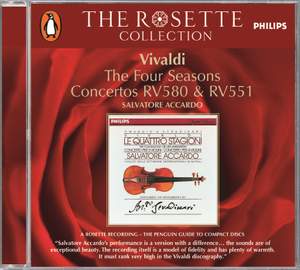
Albinoni: | Trumpet Concerto in C major John Wilbraham (trumpet) | Fasch, J F: | Concerto in D for trumpet, 2 oboes, strings and continuo, FaWV L: D1 | Gabrieli, G: | Canzon noni toni a 12, C 183 | Gretry: | Flute Concerto in C major Claude Monteux (flute) | Handel: | Concerto grosso, Op. 6 No. 4 in A minor, HWV322 | Hertel, J W: | Concerto a cinque in D | Leclair, J-M: | Flute Concerto Op. 7 No. 3 in C major Claude Monteux (flute) | Loeillet, Jacques: | Flute Concerto in D major Claude Monteux (flute) | Quantz: | Flute Concerto in D Major pour Potsdam Claude Monteux (flute) | Telemann: | Concerto TWV 53:D2 in D major for trumpet, 2 oboes, strings & b.c. John Wilbraham (trumpet) Concerto TWV 51:G9 in G major for viola, strings & b.c. Simon Streatfield (viola) | Vivaldi: | Concerto, Op. 3 No. 10 'Con quattro Violini e Violoncello obligato', RV 580 |
The partnership of Neville Marriner and the Academy of St. Martin in the Fields is possibly the most recorded of all partnerships in recorded classical music. This collection brings together three of their earliest concerto recordings: BAROQUE TRUMPET CONCERTOS, RECITAL FOR STRINGS and 18TH-CENTURY FLUTE CONCERTOS, the three LPs receiving their first complete release on CD. John Wilbraham and Claude Monteux were, respectively, the trumpet and flute soloists on these recordings. Crispness of ensemble, stylish delivery, flexible and febrile performances, and rich-toned recordings were their hallmarks. This pioneering 2CD set is issued in celebration of the Academy’s 50th anniversary this year and these recordings form part of a series of Marriner reissues on Eloquence. Some of Marriner and the Academy’s earliest concerto recordings for L’Oiseau-Lyre and Argo reissued on CD for the first time Forms part of a series of recordings with Marriner and the Academy. “Contains some playing of uncommon brilliance … John Wilbraham is one of the most athletic, clean-toned and brilliant of trumpeters today” Gramophone Magazine (Baroque Trumpet Concertos’: Telemann, Albinoni, Hertel, Fasch) “The most alert string-playing distinguishes this record … first-class quality of recording throughout” Gramophone Magazine (Recital for Strings’: Telemann, Gabrieli, Vivaldi, Handel) | | | In stock - usually despatched within 1 working day. |
|
|
| |  | Vivaldi - Concerti Per Archi
Berliner Barock Soloisten “Vivaldi favourites delightfully delivered by Berliners taking a Baroque holiday.” Gramophone Magazine, June 2008 | | | In stock - usually despatched within 1 working day. |
|
|
| |  | Vivaldi - L’ Estro Armonico, Op. 3 - Volume 2
Vivaldi: | Concerto, Op. 3 No. 7 'Con quattro Violini e Violoncello obligato', RV 567 Concerto, Op. 3 No. 8 'Con due Violini obligati', RV 522 Concerto, Op. 3 No. 9 'Con Violino Solo obligati', RV 230 Concerto, Op. 3 No. 10 'Con quattro Violini e Violoncello obligato', RV 580 Concerto, Op. 3 No. 11 'Con due Violini e Violoncello obligato', RV 565 Concerto, Op. 3 No. 12 'Con Violino Solo obligato', RV 265 |
| | | In stock - usually despatched within 1 working day. |
|
|
| |  | The Very Best of Vivaldi
Vivaldi: | The Four Seasons Concerto for 2 Trumpets, Strings & Continuo in C major, RV 537 Concerto for Guitar and 2 Violins in D major, RV 93 Concerto, Op. 3 No. 10 'Con quattro Violini e Violoncello obligato', RV 580 Gelosia, tu già rendi l’alma mia from Ottone in villa Trio Sonata, Op. 1 No. 12 for Two Violins & Continuo in D minor, RV 63 'La Follia' Gloria RV589: excerpts Flute Concerto, Op. 10 No. 2 in G minor, RV 439 'La notte' Concerto for 2 Mandolins, Strings and Continuo in G, R.532 Magnificat RV611: excerpts |
| | | In stock - usually despatched within 1 working day. |
|
|
| |  |
| | | In stock - usually despatched within 1 working day. |
|
|
| |  | Vivaldi - Violin Concertos
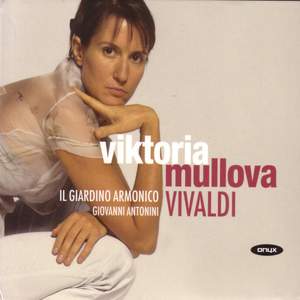
“Mullova teams up with one of the most sparkling of the baroque bands around.” BBC Music Magazine, Proms 2007 “Viktoria Mullova isn't quite a Baroque violinist – her Strad is fitted with gut strings, she's using a Baroque bow and she plays very stylishly – but there's something about her sound that betrays the modern virtuoso. Her vibrato is modest but it's used in a way that harks back to her conventional Russian training. Much more important than rating her on a scale of authenticity, however, is to note that it's top-class violin playing: the rhythms are lively and poised, all the passagework is beautifully clear and exact. The programme is excellent, too, in the way it shows the wide range of Vivaldi's imagination. The rarely encountered RV187 is a lovely piece, full of delightful original touches, in contrast to the better known Grosso Mogul which, despite its brilliance and its satisfying formal design, is oppressively short of significant ideas. Il Giardino Armonico provide an immensely spirited accompaniment, four members taking the extra solo roles in Op 3 No 10 with great style. Vivaldi's music needs strong contrasts in performance; it should create a sense of amazement, which these accounts supply in a striking and convincing way. The prevalence of ferocious accents, ultra-short off-the-string bowing, and exaggerated dynamic shading is a little troubling: the strongest, swiftest bow stroke should retain the character of a gesture, rather than a hammer blow. But whether or not you agree, you're likely to enjoy the vigour, colourful variety and sheer expertise of these performances.” Gramophone Classical Music Guide, 2010 | | | In stock - usually despatched within 1 working day. |
|
|
| |  | Vivaldi - The Viola da Gamba in Concerto
It is only recently that two seemingly unconnected names, those of Vivaldi and the viola da gamba, have been uttered in the same breath. The established, uncontested view on the matter was quite simply this: from the middle of the 17th century, the viol, which was still flourishing north of the Alps, had all but disappeared in Italy, where it had been replaced by the bass violin and, subsequently, by the cello. Yet, among the more than 800 surviving works by Antonio Vivaldi (1678-1741), five include movements for an instrument that Vivaldi refers to variously as "viola inglese" (English viol), "viola all inglese" or "violoncello all‚inglese". Clearly, the instrument was not a member of the violin family, although for centuries musicians have performed these parts on the baritone cello. In fact, it now seems clear from recent research that the viola da gamba had not entirely disappeared in Italy: Vivaldi was introduced to the viol by his father Giovanni Battista Vivaldi (the latter being employed at the Ospedale dei mendicanti in Venice, which boasted a consort of seven viols). In addition to his violin classes, from 1704 Antonio Vivaldi also taught the "viola all’inglese" at Ospedale della Pietà. Evidence has been found of numerous instruments being loaned to the institutions of the Pietà by rich Venetians. The golden age of the viol at the Pietà therefore exactly coincided with the period during which Vivaldi composed works including this instrument, around 1720. This album brings together all of Vivaldi's concerti containing one or several parts written expressly for the viola da gamba. Of these, three contain handwritten notes by the composer calling for the "viole all’inglese". The earliest, the Concerto in A Major RV 546, dates from 1720, giving a new lease of life to the use of this instrument; the contrast between the tones of the violin and the bass viol holds a special fascination. The Concerto Funebrein B flat major RV579, with soprano viola da gamba, lends a subtle tone to this highly expressive work. The Concerto con molti Istromenti in C major RV 555 uses two treble viols; it is an unusual work with some superb effects of instrumental colour. To these magnificent pieces are added the Concerto in F major RV 540 for violin and cello, the Concerto in B minor RV 580, with 4 violins and cello, and the Concerti in D minor and G minor, where the cello part is played by the viola da gamba. The original autographs, which are preserved in the Turin National Library, bear witness to Vivaldi’s extraordinary inventiveness in the combination of timbres and the development of the concertante and virtuoso language, which ranges from the elegiac Concerto Funebre to the dazzling Concerto per molti Istromenti. | | | In stock - usually despatched within 1 working day. |
|
|
| |  | Vivaldi - L'Estro Armonico, Op. 3
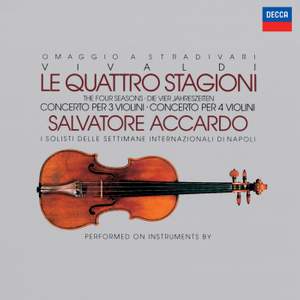
Vivaldi: | Concerto, Op. 3 No. 1 'Con quattro Violini obligati', RV 549 Concerto, Op. 3 No. 2 'Con due Violini e Violoncello obligato', RV 578 Concerto, Op. 3 No. 3 'Con Violino Solo obligato', RV 310 Concerto, Op. 3 No. 4 'Con quattro Violini obligati', RV 550 Concerto, Op. 3 No. 5 'Con due Violini obligati', RV 519 Concerto, Op. 3 No. 6 'Con Violino Solo obligato', RV 356 Concerto, Op. 3 No. 7 'Con quattro Violini e Violoncello obligato', RV 567 Concerto, Op. 3 No. 8 'Con due Violini obligati', RV 522 Concerto, Op. 3 No. 9 'Con Violino Solo obligati', RV 230 Concerto, Op. 3 No. 10 'Con quattro Violini e Violoncello obligato', RV 580 Concerto, Op. 3 No. 11 'Con due Violini e Violoncello obligato', RV 565 Concerto, Op. 3 No. 12 'Con Violino Solo obligato', RV 265 |
| | | (also available to download from $20.75) | In stock - usually despatched within 1 working day. |
|
|
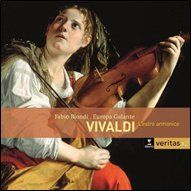
| |  |
Isabella Longo, Enrico Casazza, Raffaello Negri (violin), Mauricio Naddeo (violoncello) L'estro armonico, Fabio Biondi (violin and direction) “No other set of Vivaldi's concertos contains the sheer variety on display in L'estro armonico. The catalogue has seldom been without a decent recording of these ceaselessly fascinating works, though none begins to approach this version in respect of fantasy and exuberance. Fabio Biondi and his Italian ensemble, Europa Galante, bring something entirely fresh and vital to oft-performed repertoire, illuminating well-trodden paths with affective articulation and eloquently voiced inflexions. Not all of their extravagant, Mediterranean gestures, perhaps, will find favour with listeners; indeed, some of Biondi's own embellishments can be a little inapposite. Tempos are well chosen, by and large, and ensemble is clear-textured and evenly balanced. The continuo group, which includes harpsichord, organ, archlute and Baroque guitar, makes an important contribution to the overall success. This music is wonderful stuff, rejuvenating and immensely satisfying.” Gramophone Classical Music Guide, 2010 | | | In stock - usually despatched within 1 working day. |
|
|
| |
|