All recordingsPrices shown exclude VAT. (UK tax is not payable for deliveries to United States.) See Terms & Conditions for p&p rates. | |  | Otto Klemperer conducts Beethoven, Berlioz & MozartRecorded live at the Royal Festival Hall, London, January 1965
Although neither man lived in the country at the time, there could be little doubt that Otto Klemperer and Yehudi Menuhin were regarded in the mid 1960s as the UK’s leading ‘resident’ Beethoven performers, even though Menuhin had not taken part in the widely applauded Beethoven cycles that Klemperer and the Philharmonia had initiated in 1957. Indeed it seems that the two artists had not worked together since collaborating on the Schumann Violin Concerto in Los Angeles in November 1938. The collaboration was much anticipated. The Guardian wrote of ‘the unexpected conjunction of magician and monolith’ and warned that ‘a monolith can be severe to the point of dullness and a magician can sometimes seem to be using the wrong spell-book’. Its review found, however, that ‘the conjunction began to find its form... the slow movement brought the most ethereal music-making of all, and the finale became a relaxed country dance, something that might almost have fitted in the Pastoral Symphony’. Klemperer’s association with the Symphonie fantastique may have begun (during one of his periodic depressions) in Berlin in 1928 when, newly chosen as the Kroll Opera’s first music director, he was searching for more radical concert repertoire. The Fantastique did not appeal to him at the time (he probably just read the score without rehearsing or performing it) but he changed his mind rapidly after giving the work in concert in Los Angeles in December 1933 – ‘a work of a hyper-genius’ he told his wife.The Guardian’s 1966 concert review summed up Klemperer’s approach to the Fantastique in relation to the contemporary critical attitude to the work – ‘he pays Berlioz the very just compliment of treating him as a real symphonist and not merely as an atmospheric colorist’. But this is not the pure ‘classical’ interpretation of the score that it’s often portrayed as; rather is it a document of the fascination of one conductor (and a composer and an experienced leader of opera to boot) with radical music. | 
| | | In stock - usually despatched within 1 working day. |
|
|
| |  | Mozart, Brahms & Beethoven
“Stern’s well known strengths in Brahms, as evidenced in his studio recordings, are reprised here. He plays with a communicative classicism that embraces romanticised rubati - which elongates but never breaks the line - and which vests the music sometimes with a heartbreaking sense of pathos...The orchestra remains rather bluff...But never mind, it’s Stern’s show and Wöss accompanies admirably.” MusicWeb International, August 2012 | | | In stock - usually despatched within 1 working day. |
|
|
| |  | Beethoven & Mendelssohn: Violin Concertos
| | | In stock - usually despatched within 1 working day. |
|
|
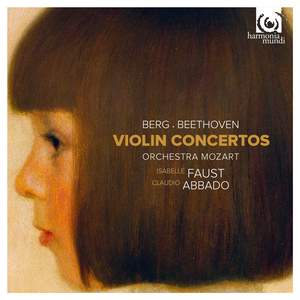
| |  | Beethoven & Berg: Violin Concertos
“My first collaboration with Claudio Abbado – with the Mahler Chamber Orchestra in 2008 – opened my eyes to a new way of understanding and experiencing the Beethoven Violin Concerto. He then expressed the wish to perform Alban Berg’s Violin Concerto, this time with the Orchestra Mozart. It seemed to him to be an obvious and natural continuation of the project to record these two works in further rehearsals and in concert and to produce a CD of them. To place these two masterpieces in such close proximity was something quite new for me. The rehearsals in Bologna in 2010 involved working on the two pieces directly after each other: the result was an intense journey through sorrow and suffering in Alban Berg, by way of the cathartic Bach chorale, to Beethoven at his most radiant, apparently leaving all earthly cares far behind him, which utterly enchanted every one of us. To make music with Claudio Abbado is an infinite joy, a genuine key to the magic of music. I would like to express here my sincerest thanks for his confidence and my boundless admiration for his artistry.” Isabelle Faust “listening to these wonderful performances side by side is cathartic...The journey is vividly delineated from the outset of the Berg. With Abbado drawing sonorities from his first-rate orchestra, Faust's limpid violin weaves subtly in and out of the music's dark and increasingly sorrowful fabric...The clouds immediately lift for the Beethoven...Faust's first entry is magical.” BBC Music Magazine, April 2012 ***** “Each note appears to shine with an inner glow...Under [Faust's] fingers, her Stradivarius produces an astonishingly varied range of sound to meet the demands of Berg’s concerto...The luminous sound of Abbado’s orchestra, a continuing glory, infuses the [Beethoven] concerto with a real sense of joy; I don’t know of any other interpretation that wears such a smile so lightly. Faust is a wonder on this disc, but Abbado is even more so.” The Times, 3rd February 2012 **** “Abbado’s hand-picked ensemble...produces a sound that is thoroughly apt to the particular world of each piece. Faust’s timbre and spectrum of emotion are similarly judged and communicated with arresting maturity and sensibility.
Likewise, she echoes the freshness and depth that Abbado stimulates in the orchestral playing of the Beethoven concerto, finding a mode of expression that is both lyrical and dynamic and contributing to a performance of real stature.” The Telegraph, 3rd February 2012 ***** “seamlessly reconciles intensity with gentle expressivity” Financial Times, 4th February 2012 “The Beethoven and Berg Violin Concertos aren't commonly paired on disc. However, in this case it seems like an inspired piece of programme planning, with an account of the Berg that plumbs its depths of melancholy, setting off a radiant, life-affirming performance of the Beethoven...Outstanding performances of both concertos, then; I'll want to return to them often.” Gramophone Magazine, March 2012 “Faust has already demonstrated her empathy with music from Bach to Jolivet, but her collaboration with Abbado is inspired. Indeed, both find more beauty in this challenging score than most interpreters on disc: Abbado gets sumptuous Middle European textures from his Bologna-based orchestra, also wonderfully transparent and airy in the Beethoven concerto, treated like expanded chamber music....A glorious disc.” Sunday Times, 26th February 2012 “The [Berg’s] expressive range, which includes vehemence as well as delicacy, is fully probed here.” Irish Times, 24th February 2012 **** “The unorthodox pairing...casts a curious spell in this thoughtful
performance...Faust's chaste, pale sound is offset against stained-glass woodwind and serene brass in the Berg, while bassoonist Guilhaume Santana is a glamorous dancing partner in the Beethoven.” The Independent, 4th March 2012 “Faust’s performance is special. There’s something warm and consolatory in her playing. She doesn’t overdo the sentimentality, and there’s as much rapture as regret. None of which would be possible without Abbado’s perfectly judged orchestral support; the violent outbursts in the second movement are rightly brutal and the work’s closing minutes are exquisite…Buy this disc for the Berg – possibly the work’s finest recording yet.” The Arts Desk, 21st April 2012 BBC Music Magazine
Disc of the month - April 2012 |
| | | In stock - usually despatched within 1 working day. |
|
|
| |  | Beethoven & Berg: Violin Concertos
Christian Ferras (1933-1982) was, alongside Jacques Thibaud, Zino Francescatti and Ginette Neveu, one of the great violinists who had a determining influence on the Franco-Belgian violin school: an art of playing the violin which is often associated with sensuality, elegance and a refined sound quality. Following his début in Paris in 1946 with the “Symphonie espagnole” by Édouard Lalo and Beethoven’s violin concerto, Ferras launched an international career. Together with the pianist Pierre Barbizet he formed a congenial duo which lasted for three decades. His cooperation with Herbert von Karajan and the Berlin Philharmonic during the 1960s marked the pinnacle of his career. Ferras had made his début with the Berlin Philharmonic as early as 1951. Under the baton of Karl Böhm, he performed the Beethoven violin concerto at the Titania Palast. On this occasion a studio recording was made at the Jesus-Christus-Kirche in Berlin which is presented here. It is fascinating to experience the beauty and confident serenity of Ferras’ interpretation of the solo part when he was only eighteen years old. A live recording from 1964 with the Radio Symphony Orchestra Berlin under the baton of the Italian-American conductor Massimo Freccia is an impressive document of Ferras’ reading of the Alban Berg violin concerto: he saw it as a primarily romantic work which he performed with great expressiveness to striking effect. Ferras’ career took a tragic turn when, towards the end of the 1960s, he began battling with depression and alcoholism which resulted in a gradual withdrawal from concert life. In 1975, he accepted a professorship at the Paris Conservatoire and in the following years he no longer performed publicly. Ferras returned to the concert platform once more in March 1982; however, only three weeks after his final concert on 25 August 1982, at the age of 49, he took his own life. | | | (also available to download from $10.50) | In stock - usually despatched within 1 working day. |
|
|
| |  | Beethoven & Mendelssohn: Violin Concertos
| | | In stock - usually despatched within 1 working day. |
|
|
| |  | Isabelle Faust: Violin Sonatas & Concertos
“A splendid calling card from one of today's most outstanding and versatile violinists, who plays it all with equal ease.” BBC Music Magazine, December 2011 ***** | | | In stock - usually despatched within 1 working day. |
|
|
| |  | Beethoven & Mozart - Violin Concertos
David Oistrakh is peerless in his performances of Mozart’s third concerto and the violin concerto by Beethoven. Recorded in 1958 and re-mastered for Regis. “Oistrakh's muscular way with Mozart could be old-fashioned, but is utterly beguiling. His Beethoven is a classic, with a subtle depth of tone and feeling. both are enhanced by Clutyens's expertly moulded contribution.” BBC Music Magazine, September 2010 **** “wonderful breadth of vision” Gramophone Magazine | | | In stock - usually despatched within 1 working day. |
|
|
| |  | Ruggiero Ricci - Romantic Violin Concertos
A double-CD of Romantic Violin Concertos celebrating the art of Ruggiero Ricci, this set includes the first international release on CD of the Ricci/Boult 1952 recording of the Beethoven. Boult characterised it as ‘perhaps the most thoughtful concerto, the one which needs for the violinist to be a great man as well as a great player’. Indeed it is a thoughtful and poised reading from both soloist and conductor, coupled with classic accounts of the Mendelssohn, Bruch and Dvorak. The booklet notes by Tully Potter include a biography of Ricci and (sometimes wry!) comments by the violinist himself on the recordings. [Beethoven] “I do not think we are likely to get a better recording for a long while” Gramophone [Bruch] "Ricci gives very good performances indeed of both concertos; caught out nowhere, even on the margin of intonation, by their technical demands in the outer movements, he manages also to communicate both poetry and impulse to the slow movements." Gramophone | | | In stock - usually despatched within 1 working day. |
|
|
| |  | Beethoven & Korngold - Violin Concertos
“Renaud Capuçon is one of today's outstanding violinists – less flashy than some, but a fabulously musical player who is as remarkable a chamber player as he is a concerto soloist,” wrote The Guardian in its review of the French violinist’s recent Virgin Classics CD of Mozart concertos, describing the disc as “a fine achievement”, while the Scottish newspaper The Sunday Herald felt that: “Capuçon's silvery tone and expressive phrasing of the slow movements … beautifully balance his brisk and exhilarating takes on the allegros and prestos….Don’t miss this one.” The BBC Music website pointed out that “Capuçon's style, perhaps because of his regular chamber work, is natural, understated and perceptive; the sound of a musician happily relaxed in his skin and not feeling the need to prove any virtuosic credentials. His performance here is lithe, graceful and refined, capturing vivacious humour with luminous upper-stringed sparkle, and colouring the slower movements with warm, musical poetry.” Capuçon’s Virgin Classics discography is substantial, but much of the focus has been on chamber music – only two previous discs have featured him in solo concertos. Now he takes on two highly constrasting works: Beethoven’s sublime concerto, a touchstone of any major violinist’s repertoire, and Korngold’s gorgeous work, written in 1945 for one legendary violinist, Bronislaw Huberman, but premiered in 1947 by another, Jascha Heifetz. Korngold, once known primarily for his spectacular film scores, has in recent years achieved a significant presence in opera houses and concert halls – notably with his early opera Die tote Stadt and with this concerto, which in fact draws on material that the composer originally produced for Hollywood movies, Another Dawn (1937), Juárez (1939), Anthony Adverse (1939) and The Prince and the Pauper (1937). Conducting the Rotterdam Philharmonic Orchestra is its Music Director, the thrilling young Canadian Yannick Nézet-Séguin, who took up his post in 2008 and who is also Principal Guest Conductor of the London Philharmonic Orchestra – an appointment which led to an award from the Royal Philharmonic Society in May 2009. “Renaud Capuçon approaches the Beethoven Concerto very much like the great virtuosos of the past through emphasising the work's lyrical and expressive qualities. …Capuçon is at pains to generate a real sense of forward momentum in the first movement of the Korngold. The opening melody is phrased with great warmth and tenderness... Capuçon and Znaider sounding magical in the Romance and exuberant in the finale.” BBC Music Magazine, January 2010 **** “His sweetly mellifluous reading of the [Beethoven] concerto captures its tranquil, smooth polish, the double-stopped cadenzas are silky smooth...Capucon’s reading [of the Korngold] embraces its filmic lushness, but the sweetly refined elegance stays, as does the unshowy treatment of the technical googlies. Altogether, an elegantly feel-good disc.” Charlotte Gardner, bbc.co.uk, 15th October 2009 “From the first few bars of the Beethoven concerto, the mood of Renaud Capuçon's performance is set. Yannick Nézet-Séguin nudges the music into life, without any fierce attacks or exaggerated dynamics...Capuçon's perfect intonation and exquisite phrasing are exactly what [the Korngold] requires” The Guardian, 16th October 2009 *** | | | In stock - usually despatched within 1 working day. |
|
|
| |
|