All recordingsPrices shown exclude VAT. (UK tax is not payable for deliveries to United States.) See Terms & Conditions for p&p rates. | |  | Schumann: Songs
Schumann: | Lieder und Gesänge aus Goethes Wilhelm Meister, Op. 98a Gedichte der Königin Maria Stuart, Op. 135 Requiem, Op. 90 No. 7 Frauenliebe und -leben, Op. 42 Der Nussbaum, Op. 25 No. 3 Die Lotosblume, Op. 25 No. 7 Widmung, Op. 25 No. 1 Lied der Suleika, Op. 25 No. 9 Liebeslied, Op. 51 No. 5 Die Soldatenbraut Op. 64 No. 1 Erstes Grün, Op. 35 No. 4 Das verlassene Mägdlein, Op. 64 No. 2 Tragödie Op. 64 No. 3 Der Einsiedler, Op. 83 No. 3 |
| | | In stock - usually despatched within 1 working day. |
|
|
| |  | The Flagstad Recitals Volume 1Schubert, Brahms, Schumann, Wolf & Strauss - Lieder
Brahms: | Vier ernste Gesänge, Op. 121 Treue Liebe, Op. 7, No. 1 Am Sonntag Morgen Op. 49 No. 1 Auf dem Kirchhofe, Op. 105 No. 4 Wie Melodien zieht es mir, Op. 105 No. 1 Alte Liebe, Op. 72 No. 1 Bei dir sind meine Gedanken (No. 2 from Sieben Lieder, Op. 95) Wir wandelten, wir zwei zusammen Op. 96/2 Dein blaues Auge, (No. 8 from Acht Lieder und Gesänge, Op. 59) | Schubert: | Dem Unendlichen, D291 (Klopstock) Erlkönig, D328 Am Grabe Anselmo's D504 Des Mädchens Klage D191b Ave Maria, D839 | Schumann: | Der Nussbaum, Op. 25 No. 3 Die Soldatenbraut Op. 64 No. 1 Meine Rose, Op. 90 No. 2 Liebeslied, Op. 51 No. 5 Die Lotosblume, Op. 25 No. 7 Widmung, Op. 25 No. 1 Lust der Sturmnacht, Op. 35 No. 1 In der Fremde (No. 1 from Liederkreis, Op. 39) Zum Schluß, Op. 25 No. 26 Previously Unpublished | Sinding: | Leit etter livet og liv det! Op. 55, No. 5 Sylvelin, Op. 55, No. 1 Der skreg en fugl, Op. 18, No. 5 Den Jomfru gik i valmu-Vang? Op. 50, No. 5 | Strauss, R: | Befreit, Op. 39 No. 4 Mit deinen blauen Augen, Op. 56 No. 4 Lob des Leidens, Op. 15 No. 3 Ich trage meine Minne, Op. 32 No. 1 Ständchen, Op. 17 No. 2 Geduld Op. 10 No. 5 | Wolf, H: | Gesang Weylas (No. 46 from Mörike-Lieder) Gebet (No. 28 from Mörike-Lieder) Über Nacht Lieder aus der Jugendzeit Der Freund (No. 1 from Eichendorff-Lieder) Heb’ auf dein blondes Haupt (No. 18 from Italienisches Liederbuch) Anakreons Grab (No. 29 from Goethe-Lieder) Morgenstimmung Zur Ruh, zur Ruh! |
The first of four 2-CD “Flagstad Recitals” features Kirsten Flagstad in Brahms and Schubert on CD1 as well as CD premieres of songs by Schumann (including her previously unpublished “Zum Schluss”), Strauss, Wolf and Sinding on CD2. Her great power and control placed her among those with the natural capacity for success in the ‘big’ songs with its special thrill, but there is no want of gentleness in the quieter ones. The American critic, Virgil Thomson, probably spoke for the whole audience when he wrote on Flagstad’s return to the United States in 1947: ‘Never in this writer’s concert-going lifetime has there been available any other vocal artistry of such sumptuous natural acoustics, such perfect technical control and such sound musicianship’. "Throughout, one is stirred by the sheer beauty of the sound." Gramophone “deeply felt … wonderfully radiant tone … very touching” [Brahms] “the operatic drama of Der Erlkönig is as memorable as the gently ravishing cantilena of Am Grabe Anselmos” The Penguin Guide to Bargain Compact Discs "…worth having for the Wolf group alone." Gramophone | | | In stock - usually despatched within 1 working day. |
|
|
| |  | Schumann/Heine Lieder
Schumann: | Liederkreis, Op. 24 Der arme Peter, Op. 53 No. 3 Die beiden Grenadiere, Op. 49 No. 1 Abends am Strand, Op. 45 No. 3 Die feindlichen Brüder, Op. 49 No. 2 Belsazar, Op. 57 Du bist wie eine Blume, Op. 25 No. 24 Was will die einsame Träne, Op. 25 No. 21 Die Lotosblume, Op. 25 No. 7 Tragödie Op. 64 No. 3 Es leuchtet meine Liebe, Op. 127 No. 3 Lehn deine Wang' Op. 142 No. 2 Dein Angesicht, Op. 127 No. 2 Mein Wagen rollet langsam, Op. 142 No. 4 |
ONYX is proud to present an exceptional Schumann recital by the outstanding Austrian baritone Florian Boesch. The recital consists of the greatest Heine settings, the op24 Liederkreis, plus many of the great Romances and Ballads including Belshazzar (Belsatzar). Boesch is rapidly becoming known as one of the most truthfully dramatic lieder interpreters of our day, and made a sensational debut at the Edinburgh Festival in 2005 with Martineau. Florian Boesch studied in Vienna with Robert Holl. In 2003 he made his operatic debut with Opernhaus Zürich as Papageno, and is now working with many of the world’s greatest conductors including Gergiev, Bychkov, Harnoncourt, Herreweghe, Viotti and Adam Fischer. Despite his opera work he is perhaps unusual in devoting much of his time to lieder with performances at London’s Wigmore Hall, Concertgebouw Amsterdam, Edinburgh Festival, Mozarteum Salzburg, Wiener Konzerthaus, Palais des Beaux-Arts Brussels, the Schubertiade Festival Schwarzenberg. “The Austrian baritone opens with an exquisitely gauged Liederkreis, Op 24, full of subtle emotional twists and turns. The rest is a carefully varied selection of settings of words by Heine.” Sunday Times, 3rd May 2009 **** “Having an accompanist as perceptive and exquisitely musical as Malcolm Martineau is a big asset, these are lieder performances of very high quality indeed.” The Guardian, 1st May 2009 **** “There is much to enjoy in Boesch's dramatic, intensely "lived" performances, and in the imaginative playing of Malcolm Martineau (ultra-sensitive in Schumann's secretive piano postludes).” Gramophone Magazine, Awards Issue 2009 | | | In stock - usually despatched within 1 working day. |
|
|
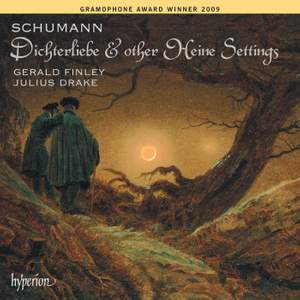
| |  | Schumann - Dichterliebe & other Heine settings
Schumann: | Tragödie Op. 64 No. 3 Die beiden Grenadiere, Op. 49 No. 1 Abends am Strand, Op. 45 No. 3 Die feindlichen Brüder, Op. 49 No. 2 Der arme Peter, Op. 53 No. 3 Belsazar, Op. 57 Die Lotosblume, Op. 25 No. 7 Was will die einsame Träne, Op. 25 No. 21 Du bist wie eine Blume, Op. 25 No. 24 Lehn deine Wang' Op. 142 No. 2 song originally conceived for Dichterliebe Es leuchtet meine Liebe, Op. 127 No. 3 song originally conceived for Dichterliebe Dein Angesicht, Op. 127 No. 2 song originally conceived for Dichterliebe Mein Wagen rollet langsam, Op. 142 No. 4 song originally conceived for Dichterliebe Dichterliebe, Op. 48 |
Why another Dichterliebe recording? Because Gerald Finley has simply one of the greatest voices of his generation, and is an artist at the peak of his powers. He brings to this noble song cycle the supreme technical ability and penetrating musical understanding that characterize all his performances, whether on the concert platform, in the recording studio or on the great opera stages of the world. This is his fourth disc with collaborator Julius Drake, and the partnership has proved to be a uniquely rewarding one. This fine recital also includes many of Schumann’s other Heine settings. The extremes of elation and despair in Heine’s poetry stimulated Schumann to write some of his most poignant and unforgettable songs. This is truly a disc to treasure. “[Finley] brings eloquence to the text and maturity to his interpretations, but with a still youthful-sounding voice. Darker and more “bassy” of tone than Dieskau, he is especially impressive in the sardonic and bitter songs...Finley is a gripping narrator, too, in the tale of Belshazzar’s feast, and can refine his voice to the most arresting of internalised confidences in the love songs to Clara Wieck.” Sunday Times, 14th September 2008 **** “Finley is a much less knowing, more direct performer than Fischer-Dieskau, concentrating less on precise verbal nuance (though his German diction is wonderfully clear) than on more generalised expressive contours, but the effect is still overwhelmingly powerful.” Andrew Clements, The Guardian, 5th September 2008 ***** “Doubts as to whether the world needs yet another Dichterliebe are allayed by a performance that probes the extremes of Schumann's evocation of remembered, blighted love. Gerald Finley's burnished baritone is one of the most beautiful voices to have recorded the cycle.” The Telegraph, 6th September 2008 “Finley's performance gives huge pleasure and insight…” BBC Music Magazine, September 2008 **** “In close collusion with the ever-sentient Julius Drake, Gerald Finley gives one of the most beautifully sung an intensely experience performances on dic of Schumann's cycle of rapture, disillusion and tender regret. This is a Dichterliebe firmly in the past tense, the poet-lover achingly resigned from the outset. Singer and pianist are just as compelling in the other Heine settings here.” Gramophone Magazine, November 2008 “Isserlis's mobile, feeling but never gushing legato lines… Hough's winged, crystalline partnership.” BBC Music Magazine, December 2005 “[Finley] sings Schumann's great song-cycle with much tonal beauty and feeling, above all capturing the deep disillusion of Schumann's inspiration” Penguin Guide, 2010 edition **** “In close collusion with the ever-sentient Julius Drake, Gerald Finley gives one of the most beautifully sung and intensely experienced performances on disc of Schumann's cycle of rapture, disillusion and tender regret. This is a Dichterliebe firmly in the past tense, the poetlover achingly resigned from the outset. Finley sings the second song, 'Aus meinen Tränen', as if in a trance, and lingers luxuriantly, even masochistically, over the remembered 'Ich liebe dich' in 'Wenn ich' in deine Augen seh''. Yet here and elsewhere some dangerously slow tempi are vindicated by the acuity of his verbal and musical responses. Where most singers end 'Im Rhein' in wistful tenderness, Finley infuses his final words with a wry bitterness. The disenchantment of 'Ich grolle nicht' is already glimpsed. In the cycle's latter stages Finley veers between numb reverie and acerbic self-dramatisation. The birds' assuaging response in 'Am leuchtenden Sommermorgen' is magical, barely breathed, the mounting trauma of the funereal dream-song 'Ich hab' im Traum geweinet' chillingly conveyed, the dissolving vision of the penultimate 'Aus alten Märchen' relived with ineffable sadness. Adding a cutting edge to his warm, mahogany baritone, Finley imbues the final song with savage irony, before the rueful, healing close. Throughout, Drake's playing is a model of clarity and acutely observed detail (he is more attentive than most to bass-lines), epitomised in his fluid, exquisitely voiced epilogue. Singer and pianist are just as compelling in the other Heine settings here. The church acoustic is more resonant than is ideal for Lieder, though that hardly detracts from a glorious Schumann recital.” Gramophone Classical Music Guide, 2010 “Grotesquerie, beauty, irony, sentimentality and overwhelming passion mingle to breathtaking effect...His in-the-moment honesty is matched note-for-note by pianist Julius Drake, who partners him with a superb sense of drama and detail. It's a recital which can stand comparison with the greatest Schumann recordings.” METRO | | | In stock - usually despatched within 1 working day. |
|
|
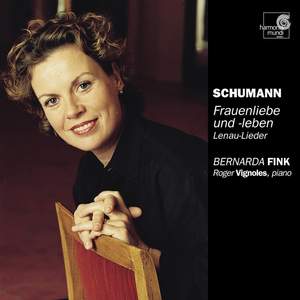
| |  | Schumann - Frauenliebe und Leben
Schumann: | Frauenliebe und -leben, Op. 42 Gedichte (6) und Requiem, Op. 90 Mignon ('Kennst du das Land, wo die Zitronen blühn'), Op. 79 No. 29 Der Nussbaum, Op. 25 No. 3 Aufträge, Op. 77 No. 5 Die Lotosblume, Op. 25 No. 7 Ständchen, Op. 36 No. 2 Nachtlied, Op. 96 No. 1 Der Sandmann, Op. 79 No. 13 Das verlassene Mägdlein, Op. 64 No. 2 Die Kartenlegerin, Op. 31 No. 2 |
‘The value of Schumann’s songs lies chiefly in their spiritual depth, and in this respect they belong with the greatest and most magnificent inexistence; indeed on can say, with regard to the finest of them, that there are few creative works that can be placed quite beside them.’ Franz Brendel “one of the loveliest accounts of Schumann's cycle on disc. [Fink] is outstanding, too, in the beautiful late Lenau settings, and there's supremely musical piano-playing from Vignoles.” Sunday Times | | | In stock - usually despatched within 1 working day. |
|
|
| |  | The Tokyo Recitals 1988-1990
Granados: | Tonadillas: No. 6, El majo timido | Hahn, R: | A Chloris Fleur fanée Quand je fus pros au pavillon | Morante, M G: | Five traditional Catalan Songs | Nin: | El paño murciano (from Cantos populares españoles) El Vito (from Cantos populares españoles) | Ravel: | Chanson de la mariée Là-bas, vers l’eglise Quel gallant m’est comparable Chanson des cueilleuses de lentisques Tout gai! | Schubert: | Der Tod und das Mädchen, D531 Die Forelle, D550 Ave Maria, D839 Erlkönig, D328 | Schumann: | Aus den östlichen Rosen, Op. 25 No. 25 Intermezzo (No. 2 from Liederkreis, Op. 39) Aus den hebräischen Gesängen, Op. 25 No. 15 Der Nussbaum, Op. 25 No. 3 Die Lotosblume, Op. 25 No. 7 Frühlingsnacht (No. 12 from Liederkreis, Op. 39) |
| | | In stock - usually despatched within 1 working day. |
|
|
| |  | Schumann: | Dichterliebe, Op. 48 Liederkreis, Op. 24 Liederkreis, Op. 39 Liederreihe Op. 35 Der Himmel hat eine Träne geweint, Op. 37 No. 1 Ich hab' in mich gesogen, Op. 37 No. 5 Rose, Meer und Sonne , Op. 37 No. 9 Mein Wagen rollet langsam, Op. 142 No. 4 Der arme Peter, Op. 53 No. 3 Tragödie Op. 64 No. 3 Lehn deine Wang' Op. 142 No. 2 Du bist wie eine Blume, Op. 25 No. 24 Was will die einsame Träne, Op. 25 No. 21 Die Lotosblume, Op. 25 No. 7 Widmung, Op. 25 No. 1 Freisinn, Op. 25 No. 2 Zwei Venetianische Lieder, Op. 25 Nos. 17 & 18 Der Nussbaum, Op. 25 No. 3 Aus dem Schenkenbuch im Divan I, Op. 25 No. 5 Aus dem Schenkenbuch im Divan II, Op. 25 No. 6 Aus den östlichen Rosen, Op. 25 No. 25 Zum Schluß, Op. 25 No. 26 |
Wolfgang Holzmair and Imogen Cooper's lieder partnership is the stuff of dreams and their traversal of the Schumann repertoire has won them international plaudits both, for performance as well as the sound engineering on these Philips recordings. Here, brought together for the first time as a collection, is their complete traversal of a vast selection of Robert Schumann's lieder, including all the cycles - the two sets of Liederkreis, the 'Kerner Lieder' and Dichterliebe. Included too are individual songs to poems by Heine and Ruckert, as well as a selection of Myrthen. Two songs Rose, Meer und Sonne, Op. 37 No. 9 and Aus den ostlichen Rosen, Op. 25 No. 25, only appeared previously as part of an Imogen Cooper anthology and are here included to well and truly complete the duo's Schumann survey. “Singer and pianist work together almost by instinct in thinking themselves into the very heart of these songs... Holzmair's plangent, very Viennese voice bespeaks the vulnerability that lies at the soul of Robert's Eusebius side, heard to mesmeric effect in the great, slower songs of Op 35, but he is just as capable of tramping the ways with Schumann when he is in his Florestan mood.... [Imogen Cooper's] playing throughout the programme is at once supportive of her partner and individual in itself. The recording is faultless” Gramophone Magazine “Holzmair with his light, tenorish baritone proves a perfect poet in Dichterliebe and Imogen Cooper is an inspired accompanist....[In Liederkreis], too, Holzmair proves a masterly interpreter alert and intense but finely controlled....The sound throughout is impressive,” Penguin Guide, 2010 edition *** “I was transfixed by the sheer artistry... Rarely have I heard so sensitive, intelligent and gloriously musical a partnership... no one could have asked for more attentive, detailed expressions nor more complete harmony of feeling between singer and pianist” The Independent | | | In stock - usually despatched within 1 working day. |
|
|
| |  | Diana Damrau: Recital at Baden Baden & Documentary 'Diva Divina'From the Festspielhaus Baden-Baden
Debussy: | Nuit d'étoiles Le Lilas Fleur des blés (André Girod) Claire de lune (song) Mandoline (Verlaine) Beau Soir Apparition - song (1884) Arabesque No. 1 | Fauré: | Impromptu No. 6 in D flat major for harp, Op. 86 Après un rêve, Op. 7 No. 1 Clair de Lune, Op. 46 No. 2 Sérénade toscane Op. 3 No. 2 Les berceaux, Op. 23 No. 1 Adieu, Op. 21 No. 3, from Poème d'un jour Notre amour Op. 23 No. 2 | Gounod: | Ave Maria | Schumann: | Lied der Suleika, Op. 25 No. 9 Der Nussbaum, Op. 25 No. 3 Die Lotosblume, Op. 25 No. 7 Er ist's! Op. 79 No. 23 (Eduard Mörike) Widmung, Op. 25 No. 1 | Strauss, R: | Nichts, Op. 10 No. 2 Freundliche Vision, Op. 48 No. 1 All mein Gedanken ... Op. 21 No. 1 Wiegenlied, Op. 41 No. 1 Die Nacht, Op. 10 No. 3 Morgen, Op. 27 No. 4 Kling! Op. 48 No. 3 Ständchen, Op. 17 No. 2 |
This DVD, centered on the dazzling German soprano Diana Damrau, complements a ravishing recital with a fascinating documentary. In March 2013, Damrau achieved “a daring victory” (in the words of the New York Times) when the Metropolitan Opera witnessed her first-ever performances of Verdi’s La traviata. In recent years she has made the transition from glittering, stratospheric roles such as Mozart’s Queen of the Night and Strauss’ Zerbinetta to lyrical heroines of greater emotional complexity, such as Gilda in Rigoletto, Adina in L’elisir d’amore and Lucia di Lammermoor. A series of triumphs at the Met have made her a favourite singer in New York – as she is in other leading opera houses around the world. In the documentary, Diana Damrau – Diva Divina, the soprano explains that, when she was just 12 years old, it was La traviata (in Franco Zeffirelli’s lavish 1982 cinematic version) that inspired her to make a career in opera. The documentary, directed by Beatrix Conrad, follows Damrau over the course of nine months, covering operatic performances and rehearsals in Geneva, New York, Paris and Munich, recitals, recordings and the arrival of her first child, Alexander. The recital, filmed at the impressive Festspielhaus in Baden-Baden, pairs Damrau with the French harpist Xavier de Maistre in an exquisite selection of songs by Schumann, Fauré, Debussy and Strauss. Among the best-loved items in the programme are: Schumann’s ‘Widmung’; both Fauré’s and Debussy’s settings of Verlaine’s poem ‘Clair de lune’; Fauré’s ‘Après un rêve’; a harp arrangement of Debussy’s piano Arabesque No 1; Strauss’ ‘Morgen‘ and ‘Ständchen’ and, among the encores, the famed Bach-Gounod ‘Ave Maria’. In the course of 2013, Damrau and de Maistre will also perform together in concert seasons in Washington D.C., Paris, Geneva, Lyon, Reykjavik, Hamburg, Munich and London and at festivals in Menton, Gstaad, Schwarzenberg and Grafenegg. Reviewing the performance in Baden-Baden – for which the audience joined Damrau and de Maistre on the stage, rather than being distanced from them in the expansive auditorium – the Badische Neueste Nachrichten wrote of Damrau as a recitalist “whose vocal material and abilities as a storyteller approach perfection”, while the Badisches Tagblatt said:” Damrau’s diction is a pleasure, her vocal flexibility amazing. She sings phrases with ample breath, while her nuanced shadings create subtle changes of mood from song to song.” Die Rheinpfalz described the “gentle, sometimes ethereal tones of the harp” as being in perfect harmony with the “exceptionally subtle and detailed vocal art of the soprano … particularly exceptional are the delicate tracery and colours of Diana Damrau’s singing. Her shaping and accenting of the text is meticulous, her phrasing is of great sensitivity and her dynamics are richly nuanced, yet her song performances are never mannered, rather always full of lyrical feeling.” | 
| | | Scheduled for release on 27 May 2013. Order it now and we will deliver it as soon as it is available. |
|
|
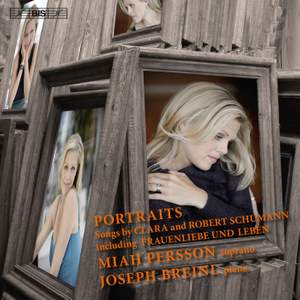
| |  | Clara and Robert Schumann: Portraits
Schumann: | Widmung, Op. 25 No. 1 Der Nussbaum, Op. 25 No. 3 Die Lotosblume, Op. 25 No. 7 Lied der Suleika, Op. 25 No. 9 Lied der Braut I, Op. 25 No. 11 Lied der Braut II, Op. 25 No. 12 Gedichte der Königin Maria Stuart, Op. 135 Volksliedchen, Op. 51 No. 2 Der Himmel hat eine Träne geweint, Op. 37 No. 1 Frauenliebe und -leben, Op. 42 | Schumann, Clara: | Ich stand in dunkeln Träumen Liebeszauber, Op. 13 No. 3 Ich hab’ in deinem Auge, Op. 13 No. 5 Lorelei (Text: Heinrich Heine) 3 Lieder Op. 12 |
Women in love, in pain and in emotional turmoil – such is the subject matter of most of the songs that Swedish soprano Miah Persson and pianist Joseph Breinl have chosen for this recital of works by Robert and Clara Schumann. The year of Robert and Clara’s wedding is often called Schumann’s Liederjahr; during this ‘year of song’ he composed more than 150 songs, and his wedding gift to Clara was in fact a song cycle, Myrthen, Op. 25. Sixteen songs dated 1840 can be found here, including the Frauenliebe und Leben cycle, the crowning achievement of the year. But Robert also encouraged Clara to write songs and in 1841 they jointly published a collection entitled The Spring of Love. Clara had composed three of the songs (the 3 Lieder, Op. 12) and Robert the remaining nine, including Der Himmel hat eine Träne geweint This disc also features Robert’s final song cycle – composed in 1852 and focussing on the life and tragic end of Mary Stuart, Queen of Scots – along with four of Clara’s last songs. As well as being well-known in opera houses across the world, Miah Persson is increasingly in demand as a recitalist, performing regularly with Joseph Breinl. “Miah Persson's bright, guileless soprano ideally expresses ['Ihr Bild''s] very special simplicity and tenderness. And her accompanist, Joseph Breinl, relishes the pianistic delights of her Lorelei...Persson's Frauenliebe und -Leben also very much tunes in to her own vocal sensibility. This performance rings with exuberant delight: there's a girlish excitement, a racing pulse, and an enraptured confidence, leading to a final song of fierce grief.” BBC Music Magazine, November 2011 **** “Her voice is pure, her diction is terrific, and her musicality shines out of every note. And there's superb partnership from Breinl at every turn...A beautifully programmed, intimate and moving recital” Classic FM Magazine, November 2011 **** “her naturally sweet, gleaming tone can encompass deeper, more sensuous shadings, as in her dreamy 'Die Lotosblume'...In Frauenliebe und -leben Persson's youthful freshness of tone and eagerness of manner are constant assets. No performance of these songs could be less mawkish or matronly...an enterprising recital from a soprano of charm, intelligence and natural communicative gifts.” Gramophone Magazine, November 2011 | | | (also available to download from $10.50) | Usually despatched in 2 - 3 working days. (Available now to download.) |
|
|
| |  | Daniel Marty: Airs & Melodies
Daniel Marty is well known as an opera singer but on this CD his performances of works by 18th century composers are particularly illuminating. Also included are the 12 songs of Georges Migot, composed in 1950 and quite a rarity. | | | Usually despatched in 2 - 3 working days. |
|
|
| |
|