Prices shown exclude VAT. (UK tax is not payable for deliveries to United States.) See Terms & Conditions for p&p rates. | |  | Diana Damrau: Recital at Baden Baden & Documentary 'Diva Divina'From the Festspielhaus Baden-Baden
Debussy: | Nuit d'étoiles Le Lilas Fleur des blés (André Girod) Claire de lune (song) Mandoline (Verlaine) Beau Soir Apparition - song (1884) Arabesque No. 1 | Fauré: | Impromptu No. 6 in D flat major for harp, Op. 86 Après un rêve, Op. 7 No. 1 Clair de Lune, Op. 46 No. 2 Sérénade toscane Op. 3 No. 2 Les berceaux, Op. 23 No. 1 Adieu, Op. 21 No. 3, from Poème d'un jour Notre amour Op. 23 No. 2 | Gounod: | Ave Maria | Schumann: | Lied der Suleika, Op. 25 No. 9 Der Nussbaum, Op. 25 No. 3 Die Lotosblume, Op. 25 No. 7 Er ist's! Op. 79 No. 23 (Eduard Mörike) Widmung, Op. 25 No. 1 | Strauss, R: | Nichts, Op. 10 No. 2 Freundliche Vision, Op. 48 No. 1 All mein Gedanken ... Op. 21 No. 1 Wiegenlied, Op. 41 No. 1 Die Nacht, Op. 10 No. 3 Morgen, Op. 27 No. 4 Kling! Op. 48 No. 3 Ständchen, Op. 17 No. 2 |
This DVD, centered on the dazzling German soprano Diana Damrau, complements a ravishing recital with a fascinating documentary. In March 2013, Damrau achieved “a daring victory” (in the words of the New York Times) when the Metropolitan Opera witnessed her first-ever performances of Verdi’s La traviata. In recent years she has made the transition from glittering, stratospheric roles such as Mozart’s Queen of the Night and Strauss’ Zerbinetta to lyrical heroines of greater emotional complexity, such as Gilda in Rigoletto, Adina in L’elisir d’amore and Lucia di Lammermoor. A series of triumphs at the Met have made her a favourite singer in New York – as she is in other leading opera houses around the world. In the documentary, Diana Damrau – Diva Divina, the soprano explains that, when she was just 12 years old, it was La traviata (in Franco Zeffirelli’s lavish 1982 cinematic version) that inspired her to make a career in opera. The documentary, directed by Beatrix Conrad, follows Damrau over the course of nine months, covering operatic performances and rehearsals in Geneva, New York, Paris and Munich, recitals, recordings and the arrival of her first child, Alexander. The recital, filmed at the impressive Festspielhaus in Baden-Baden, pairs Damrau with the French harpist Xavier de Maistre in an exquisite selection of songs by Schumann, Fauré, Debussy and Strauss. Among the best-loved items in the programme are: Schumann’s ‘Widmung’; both Fauré’s and Debussy’s settings of Verlaine’s poem ‘Clair de lune’; Fauré’s ‘Après un rêve’; a harp arrangement of Debussy’s piano Arabesque No 1; Strauss’ ‘Morgen‘ and ‘Ständchen’ and, among the encores, the famed Bach-Gounod ‘Ave Maria’. In the course of 2013, Damrau and de Maistre will also perform together in concert seasons in Washington D.C., Paris, Geneva, Lyon, Reykjavik, Hamburg, Munich and London and at festivals in Menton, Gstaad, Schwarzenberg and Grafenegg. Reviewing the performance in Baden-Baden – for which the audience joined Damrau and de Maistre on the stage, rather than being distanced from them in the expansive auditorium – the Badische Neueste Nachrichten wrote of Damrau as a recitalist “whose vocal material and abilities as a storyteller approach perfection”, while the Badisches Tagblatt said:” Damrau’s diction is a pleasure, her vocal flexibility amazing. She sings phrases with ample breath, while her nuanced shadings create subtle changes of mood from song to song.” Die Rheinpfalz described the “gentle, sometimes ethereal tones of the harp” as being in perfect harmony with the “exceptionally subtle and detailed vocal art of the soprano … particularly exceptional are the delicate tracery and colours of Diana Damrau’s singing. Her shaping and accenting of the text is meticulous, her phrasing is of great sensitivity and her dynamics are richly nuanced, yet her song performances are never mannered, rather always full of lyrical feeling.” | 
| | | In stock - usually despatched within 1 working day. |
|
|
| |  | The Best of Elisabeth Schwarzkopf
anon.: | S'Schatzli Gerald Moore (piano) | Dvorak: | Songs My Mother Taught Me, Op. 55 No. 4 Gerald Moore (piano) | Humperdinck: | Abendsegen 'Abends will ich schlafen gehn' (Hänsel und Gretel) Elisabeth Grummer (Hansel) Philharmonia Orchestra, Herbert von Karajan | Lehár: | Meine Lippen sie Kussen so heiss (from Giuditta) Philharmonia Orchestra, Otto Ackermann Viljalied (from Die lustige Witwe) Philharmonia Orchestra, Otto Ackermann | Mozart: | Porgi amor (from Le nozze di Figaro) Vienna Philharmonic Orchestra, Herbert von Karajan Dove sono i bei momenti (from Le nozze di Figaro) Vienna Philharmonic Orchestra, Herbert von Karajan Come scoglio (from Così fan tutte) Philharmonia Orchestra, Herbert von Karajan In quali eccessi ... Mi tradì quell'alma ingrate (from Don Giovanni) Philharmonia Orchestra, Carlo Maria Giulini | Quilter: | Drink to me only Gerald Moore (piano) | Schubert: | Der Musensohn, D764 (Goethe) Edwin Fischer (piano) Gretchen am Spinnrade, D118 Edwin Fischer (piano) Die Forelle, D550 Edwin Fischer (piano) | Schumann: | Der Nussbaum, Op. 25 No. 3 Gerald Moore (piano) | Strauss, J, II: | Klänge der Heimat (from Die Fledermaus) Philharmonia Orchestra, Herbert von Karajan | Strauss, R: | Wiegenlied, Op. 41 No. 1 Gerald Moore (piano)
12. Viljalied (Die Lustige Witwe:Lehár) 5:13 Da geht er hin (from Der Rosenkavalier, Op. 59) Philharmonia Orchestra, Herbert von Karajan | Zeller: | Der Obersteiger: Sei nicht bös’ from Der Vogelhändler Philharmonia Orchestra, Otto Ackermann |
| | | In stock - usually despatched within 1 working day. |
|
|
| |  | Schumann Favourite Songs
“full unblemished tone, faultless legato...thoughtful phrasing - many pleasures to offer” Gramophone Magazine “Felicity Lott is a connoisseur's artist, far greater than many more illustrious and publicised rivals...here with great poise and completely unaffected artistry...treasurable” Penguin Guide | | | In stock - usually despatched within 1 working day. |
|
|
| |  | Summertime
Arne: | Where the Bee Sucks | Barber, S: | Sure on this shining night, Op. 13 No. 3 The Monk and His Cat (No. 8 from Hermit Songs) | Berlioz: | L'Île inconnue (from Les Nuits d'été) Villanelle (from Les nuits d'été, Op. 7) | Bernstein: | My House (from Peter Pan) | Brahms: | Meine Liebe ist grün, Op. 63 No. 5 | Bridge: | Go Not, Happy Day | Delius: | To Daffodils | Elgar: | The Shepherd's Song | Fauré: | Clair de Lune, Op. 46 No. 2 Soir Op. 83 No. 2 Notre amour Op. 23 No. 2 | Fraser-Simson: | Vespers | Gershwin: | Summertime (from Porgy and Bess) | Head, M: | The Little Road to Bethlehem | Ireland: | The Trellis | Lehmann: | Ah, moon of my delight | Porter, C: | The Tale of the Oyster | Quilter: | Now sleeps the crimson petal, Op. 3 No. 2 (Tennyson) Who is Sylvia Love's Philosophy, Op. 3 No. 1 (Shelley) | Rutter: | The Lord bless you and keep you | Schubert: | Auf dem Wasser zu singen, D774 | Schumann: | Der Nussbaum, Op. 25 No. 3 | trad.: | The Lark in the Clear Air | Vaughan Williams: | Orpheus With His Lute | Warlock: | Sleep | Wood, Haydn: | A brown bird singing |
Dame Felicity Lott, revered British soprano, says of this CD: “ Summertime also has many of my favourite songs in English, French and German. We made the CD at a friend`s house, and the sessions were so relaxed, with no London traffic to cause endless retakes! It`s a real mix of beautiful songs of all kinds, on a summer theme. I chose songs I loved, from Gershwin to Christopher Robin…. Three centuries of song are represented here, and, as BBC Music Magazine's Hilary Finch put it “such is the skill of Johnson's programming that the entire recital seems to be a single, sustained exhalation of rapture and reflection” She went on to say: The upper reaches of Lott's still gleaming soprano inhabit Barber's 'Shining Night' and Fauré's Clair de lune'. And her robust English version of Schubert's 'Who is Sylvia?' finds an irresistible companion in Arne's 'Where the Bee Sucks', with its veritable midsummer night's dream of an accompaniment from Johnson. The artists' palpable sense of joy and well-being gathers momentum as they visit Berlioz's 'L'île inconnue' and as they sing on the water with Schubert. . . . And Lott and Johnson know well that the only way to face sentiment is to acknowledge its own integrity, as they do when they listen to Haydn Wood's 'Little Brown Bird' and eavesdrop with Fraser-Simson on Christopher Robin saying his prayers. This CD features songs from a great variety of composers - Gershwin, Barber, Cole Porter, Bernstein, Brahms, Schubert, Arne, Schumann, Berlioz, and many more. A full 29 tracks of summer-themed songs! | | | In stock - usually despatched within 1 working day. |
|
|
| |  | Schumann: Songs
Schumann: | Lieder und Gesänge aus Goethes Wilhelm Meister, Op. 98a Gedichte der Königin Maria Stuart, Op. 135 Requiem, Op. 90 No. 7 Frauenliebe und -leben, Op. 42 Der Nussbaum, Op. 25 No. 3 Die Lotosblume, Op. 25 No. 7 Widmung, Op. 25 No. 1 Lied der Suleika, Op. 25 No. 9 Liebeslied, Op. 51 No. 5 Die Soldatenbraut Op. 64 No. 1 Erstes Grün, Op. 35 No. 4 Das verlassene Mägdlein, Op. 64 No. 2 Tragödie Op. 64 No. 3 Der Einsiedler, Op. 83 No. 3 |
| | | In stock - usually despatched within 1 working day. |
|
|
| |  | The Flagstad Recitals Volume 1Schubert, Brahms, Schumann, Wolf & Strauss - Lieder
Brahms: | Vier ernste Gesänge, Op. 121 Treue Liebe, Op. 7, No. 1 Am Sonntag Morgen Op. 49 No. 1 Auf dem Kirchhofe, Op. 105 No. 4 Wie Melodien zieht es mir, Op. 105 No. 1 Alte Liebe, Op. 72 No. 1 Bei dir sind meine Gedanken (No. 2 from Sieben Lieder, Op. 95) Wir wandelten, wir zwei zusammen Op. 96/2 Dein blaues Auge, (No. 8 from Acht Lieder und Gesänge, Op. 59) | Schubert: | Dem Unendlichen, D291 (Klopstock) Erlkönig, D328 Am Grabe Anselmo's D504 Des Mädchens Klage D191b Ave Maria, D839 | Schumann: | Der Nussbaum, Op. 25 No. 3 Die Soldatenbraut Op. 64 No. 1 Meine Rose, Op. 90 No. 2 Liebeslied, Op. 51 No. 5 Die Lotosblume, Op. 25 No. 7 Widmung, Op. 25 No. 1 Lust der Sturmnacht, Op. 35 No. 1 In der Fremde (No. 1 from Liederkreis, Op. 39) Zum Schluß, Op. 25 No. 26 Previously Unpublished | Sinding: | Leit etter livet og liv det! Op. 55, No. 5 Sylvelin, Op. 55, No. 1 Der skreg en fugl, Op. 18, No. 5 Den Jomfru gik i valmu-Vang? Op. 50, No. 5 | Strauss, R: | Befreit, Op. 39 No. 4 Mit deinen blauen Augen, Op. 56 No. 4 Lob des Leidens, Op. 15 No. 3 Ich trage meine Minne, Op. 32 No. 1 Ständchen, Op. 17 No. 2 Geduld Op. 10 No. 5 | Wolf, H: | Gesang Weylas (No. 46 from Mörike-Lieder) Gebet (No. 28 from Mörike-Lieder) Über Nacht Lieder aus der Jugendzeit Der Freund (No. 1 from Eichendorff-Lieder) Heb’ auf dein blondes Haupt (No. 18 from Italienisches Liederbuch) Anakreons Grab (No. 29 from Goethe-Lieder) Morgenstimmung Zur Ruh, zur Ruh! |
The first of four 2-CD “Flagstad Recitals” features Kirsten Flagstad in Brahms and Schubert on CD1 as well as CD premieres of songs by Schumann (including her previously unpublished “Zum Schluss”), Strauss, Wolf and Sinding on CD2. Her great power and control placed her among those with the natural capacity for success in the ‘big’ songs with its special thrill, but there is no want of gentleness in the quieter ones. The American critic, Virgil Thomson, probably spoke for the whole audience when he wrote on Flagstad’s return to the United States in 1947: ‘Never in this writer’s concert-going lifetime has there been available any other vocal artistry of such sumptuous natural acoustics, such perfect technical control and such sound musicianship’. "Throughout, one is stirred by the sheer beauty of the sound." Gramophone “deeply felt … wonderfully radiant tone … very touching” [Brahms] “the operatic drama of Der Erlkönig is as memorable as the gently ravishing cantilena of Am Grabe Anselmos” The Penguin Guide to Bargain Compact Discs "…worth having for the Wolf group alone." Gramophone | | | In stock - usually despatched within 1 working day. |
|
|
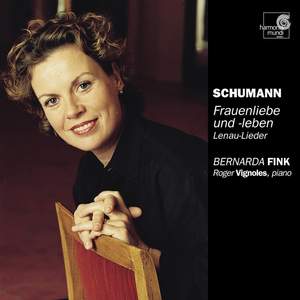
| |  | Schumann - Frauenliebe und Leben
Schumann: | Frauenliebe und -leben, Op. 42 Gedichte (6) und Requiem, Op. 90 Mignon ('Kennst du das Land, wo die Zitronen blühn'), Op. 79 No. 29 Der Nussbaum, Op. 25 No. 3 Aufträge, Op. 77 No. 5 Die Lotosblume, Op. 25 No. 7 Ständchen, Op. 36 No. 2 Nachtlied, Op. 96 No. 1 Der Sandmann, Op. 79 No. 13 Das verlassene Mägdlein, Op. 64 No. 2 Die Kartenlegerin, Op. 31 No. 2 |
‘The value of Schumann’s songs lies chiefly in their spiritual depth, and in this respect they belong with the greatest and most magnificent inexistence; indeed on can say, with regard to the finest of them, that there are few creative works that can be placed quite beside them.’ Franz Brendel “one of the loveliest accounts of Schumann's cycle on disc. [Fink] is outstanding, too, in the beautiful late Lenau settings, and there's supremely musical piano-playing from Vignoles.” Sunday Times | | | In stock - usually despatched within 1 working day. |
|
|
| |  | The Tokyo Recitals 1988-1990
Granados: | Tonadillas: No. 6, El majo timido | Hahn, R: | A Chloris Fleur fanée Quand je fus pros au pavillon | Morante, M G: | Five traditional Catalan Songs | Nin: | El paño murciano (from Cantos populares españoles) El Vito (from Cantos populares españoles) | Ravel: | Chanson de la mariée Là-bas, vers l’eglise Quel gallant m’est comparable Chanson des cueilleuses de lentisques Tout gai! | Schubert: | Der Tod und das Mädchen, D531 Die Forelle, D550 Ave Maria, D839 Erlkönig, D328 | Schumann: | Aus den östlichen Rosen, Op. 25 No. 25 Intermezzo (No. 2 from Liederkreis, Op. 39) Aus den hebräischen Gesängen, Op. 25 No. 15 Der Nussbaum, Op. 25 No. 3 Die Lotosblume, Op. 25 No. 7 Frühlingsnacht (No. 12 from Liederkreis, Op. 39) |
| | | In stock - usually despatched within 1 working day. |
|
|
| |  | Schumann: | Dichterliebe, Op. 48 Liederkreis, Op. 24 Liederkreis, Op. 39 Liederreihe Op. 35 Der Himmel hat eine Träne geweint, Op. 37 No. 1 Ich hab' in mich gesogen, Op. 37 No. 5 Rose, Meer und Sonne , Op. 37 No. 9 Mein Wagen rollet langsam, Op. 142 No. 4 Der arme Peter, Op. 53 No. 3 Tragödie Op. 64 No. 3 Lehn deine Wang' Op. 142 No. 2 Du bist wie eine Blume, Op. 25 No. 24 Was will die einsame Träne, Op. 25 No. 21 Die Lotosblume, Op. 25 No. 7 Widmung, Op. 25 No. 1 Freisinn, Op. 25 No. 2 Zwei Venetianische Lieder, Op. 25 Nos. 17 & 18 Der Nussbaum, Op. 25 No. 3 Aus dem Schenkenbuch im Divan I, Op. 25 No. 5 Aus dem Schenkenbuch im Divan II, Op. 25 No. 6 Aus den östlichen Rosen, Op. 25 No. 25 Zum Schluß, Op. 25 No. 26 |
Wolfgang Holzmair and Imogen Cooper's lieder partnership is the stuff of dreams and their traversal of the Schumann repertoire has won them international plaudits both, for performance as well as the sound engineering on these Philips recordings. Here, brought together for the first time as a collection, is their complete traversal of a vast selection of Robert Schumann's lieder, including all the cycles - the two sets of Liederkreis, the 'Kerner Lieder' and Dichterliebe. Included too are individual songs to poems by Heine and Ruckert, as well as a selection of Myrthen. Two songs Rose, Meer und Sonne, Op. 37 No. 9 and Aus den ostlichen Rosen, Op. 25 No. 25, only appeared previously as part of an Imogen Cooper anthology and are here included to well and truly complete the duo's Schumann survey. “Singer and pianist work together almost by instinct in thinking themselves into the very heart of these songs... Holzmair's plangent, very Viennese voice bespeaks the vulnerability that lies at the soul of Robert's Eusebius side, heard to mesmeric effect in the great, slower songs of Op 35, but he is just as capable of tramping the ways with Schumann when he is in his Florestan mood.... [Imogen Cooper's] playing throughout the programme is at once supportive of her partner and individual in itself. The recording is faultless” Gramophone Magazine “Holzmair with his light, tenorish baritone proves a perfect poet in Dichterliebe and Imogen Cooper is an inspired accompanist....[In Liederkreis], too, Holzmair proves a masterly interpreter alert and intense but finely controlled....The sound throughout is impressive,” Penguin Guide, 2010 edition *** “I was transfixed by the sheer artistry... Rarely have I heard so sensitive, intelligent and gloriously musical a partnership... no one could have asked for more attentive, detailed expressions nor more complete harmony of feeling between singer and pianist” The Independent | | | In stock - usually despatched within 1 working day. |
|
|
| |  | Voci a cordeSongs with Harp
Cherubini: | Four Italian Duets | Mendelssohn: | Wie kann ich froh und lustig sein? (Kaufmann) Lieblingsplätzchen, Op. 99 No. 3 Maiglöckchen und die Blümelein, Op. 63 No. 6 Abendlied Auf Flügeln des Gesanges, Op. 34 No. 2 Gruß, Op. 19a No. 5 Abschiedslied der Zugvögel, Op. 63 No. 2 | Mendelssohn, Fanny: | Leichte Silbertwolken schweben Wenn ich in deine Augen sehe (Heine) Mein Liebchen, wir saßen beisammen Zeigt mir den Weg Verschiedene Trauer | Schumann: | Die Schwalben Op. 79/21 So wahr die Sonne scheinet, Op. 37, No. 12 Aus den östlichen Rosen, Op. 25 No. 25 Drei Duette Op. 43: No. 1 'Schön Blümelein' Drei Duette Op. 43: No. 2 'Wenn ich ein Vöglein wär' Mailied Op. 79/10 Der Nussbaum, Op. 25 No. 3 | Spohr: | Fantasy in C minor, Op. 35 |
Maria Graf (harp), Christine Wolff (soprano) & Britta Schwarz (alto) Together with the soloists Christine Wolff, Britta Schwarz, and Maria Graf, Rondeau Production approaches this Romantic Zeitgeist from a new perspective: well-known and unknown duets are clothed in fresh robes by the accompanying harp, and the spirit of chamber music making in private homes is reawakened. | | | (also available to download from $11.00) | Usually despatched in 2 - 3 working days. (Available now to download.) |
|
|
| |
|