All recordingsPrices shown exclude VAT. (UK tax is not payable for deliveries to United States.) See Terms & Conditions for p&p rates. | |  | Rene Kollo sings Wagner and Strauss
Expressiveness and intelligent acting: For Herbert von Karajan he was the ideal Wagner singer. But René Kollo didn’t only shine as a heroic tenor. He also possessed immense versatility, reaching a large audience both as an expressive actor on the opera stage, and with his concert and television appearances and in his roles in operetta films. And for all these different activities, he never forsook his credibility as a “serious” singer. This Electrola recital with Kollo features Christian Thielemann on the rostrum – still at the outset of his career in 1992, but in the meantime one of the leading conductors of Wagner and Strauss. | 
| | | In stock - usually despatched within 1 working day. |
|
|
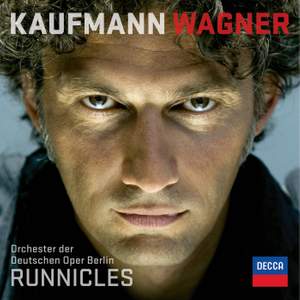
| |  | Kaufmann: Wagner
Kaufmann’s fifth solo album on Decca is specially recorded for the Wagner anniversary year by the world’s leading Wagner tenor. Kaufmann and Wagner is a classic combination: “For any Wagnerians who've been slumbering, Fafner-like, in their caves during the last few years, here's your wake-up call: Jonas Kaufmann is the tenor we've been waiting for” (Washington Post). A selection of the great Heldentenor scenes and arias coupled with the complete (and rarely recorded by the tenor voice) Wesendonck Lieder. Also includes scenes from Die Walküre, Siegfried , Die Meistersinger von Nürnberg, Tannhäuser and Lohengrin (extended Grail Scene – Gralserzählung - with its original second verse). Joined by one of the most formidable combinations in the opera world today – the chorus and orchestra of the Deutsche Oper, Berlin, under director Donald Runnicles – this recording is also a sonic spectacular, made in Decca’s time-honoured tradition. “This new disc is mostly magnificent, but had me pining for more...Kaufmann may never sing Siegfried in the theatre, but the Forest Murmurs here, in an usually extended version, makes one long to hear him in the complete role; the Tannhäuser Rome Narration even more so, a shattering account...all told this is a further testimony to [Kaufmann's] lonely greatness among contemporary Wagner tenors.” BBC Music Magazine, May 2013 ***** “a matchless Wagner recital...Tannhäuser’s Act 3 Rome Narration is a triumph of heroic timbre, dramatic intensity and musical sensibility...The gem for me is the Wesendonck Lieder, intended for soprano and yet, thanks to singing of such melting ardour, perfectly “owned” by the world’s leading Wagner tenor.” Financial Times, 2nd February 2013 ***** “Turn immediately to the Tannhäuser excerpt...Kaufmann both darkens and stresses up his voice to portray the failed pilgrim's predicament...The other operatic excerpts...also find the tenor pushing the confines of a recital disc excitingly towards the level of live performance...the disc is something of a triumph.” Gramophone Magazine, May 2013 “When I listen to Wagner, this is how I dream it should sound.” Musical Toronto, 5th February 2013 “To judge from the performances on this wide-ranging sampler, the Met's new Parsifal seems ready for coronation as the reigning Wagnerian tenor of his generation.” Opera News, April 2013 “Kaufmann is so careful that the sudden fire of some of his operatic performances can shock...[He] lets us in to the naivety and the purity of [Siegfried]...his enacting of Tannhäuser’s “Rome Narrative...is tremendously effective...it is as near to an internal Tannhäuser as we are going to get” Opera Today, April 2013 “As Siegmund, his dark, baritonal timbre comes into its own. In Rienzi’s Prayer and Tannhäuser’s Roman narration, his Italianate timbre — surely what Wagner wanted — easily negotiates the bel canto turns and grace notes overlooked by burlier singers...No Wagner tenor sings Lieder with such musicianship, colour and sensitivity. With this glorious disc, Kaufmann sets a standard for our time.” Sunday Times, 3rd February 2013 “His artistry is exceptional. His sexy, heroic way with Siegmund, and the marvellous introversion he brings to Lohengrin's In Fernem Land, leave us in no doubt as to why he is today's interpreter of choice for both roles. Yet he brings the same insight and intensity to his new material...Best of all is Rienzi's prayer, in which his almost oceanic tone blends with the elegance of the fine Mozart singer he once was.” The Telegraph, 7th March 2013 **** | 
| | | In stock - usually despatched within 1 working day. |
|
|
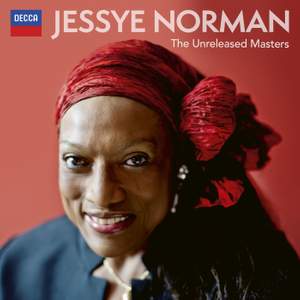
| |  | The Very Best of Jessye Norman
If anyone may lay claim to the title of prima donna assoluta of the late 20th century, it is surely Jessye Norman. She is one of the great communicators. Whether in the intimate setting of the Wigmore Hall in London, or the huge space of the Metropolitan Opera House, New York, she can give each listener the sense that her song is directed straight at them. Jessye Norman was born in Augusta, Georgia, in 1945. She studied at Howard University, the Peabody Conservatory and the University of Michigan. In 1968 she won the Munich International Music Competition, and this led to an invitation to sing in Berlin at the Deutsche Oper, where she made her debut as Elisabeth in Wagner's Tannhäuser. After that her career blossomed and she went on to conquer the world’s greatest opera houses including La Scala in Milan and the Metropolitan in New York. One of her greatest triumphs in New York was in 1982, in Robert Wilson's Great Day in the Morning, and in 1989 she was invited to sing the Marseillaise for the 14 July celebrations in the Place de la Concorde. The music on these CDs presents a cross-section of Jessye Norman's repertory, in German and French opera, in Lieder and mélodie, in oratorio and even operetta. Since Wagner's Tannhäuser provided Jessye Norman with her first stage role, it is appropriate to begin with two arias from that opera. Senta's ballad from Der fliegende Holländer tells the story of the Flying Dutchman, who is condemned to sail the seas for eternity unless he can find a woman who will remain faithful unto death. The Wesendonck- Lieder were composed by Wagner in 1857–8 as a tribute to Mathilde Wesendonck, the wife of his friend Otto; particularly in 'Im Treibhaus' and 'Träume', they look forward to Tristan und Isolde. The three Schubert songs, and the solo from Brahms's German Requiem, bring the German part of the programme to a rapturous conclusion. From Offenbach’s Les Contes d’Hoffmann Jessye Norman sings the role of Giulietta, a Venetian courtesan, who ruins the hero, Hoffmann, by urging him to take part in a duel, and then in a symbolic gesture demands from him the ultimate sacrifice – the gift of his reflection. 'The face that launched a thousand ships' – Helen of Troy in La Belle Hélène – is another kind of temptress, and shows the full extent of Norman's comic gifts. In the song cycles by Ravel and Poulenc we glimpse a different side of the artist. La Fraîcheur et le feu was composed in 1950 for the baritone Pierre Bernac, Poulenc's greatest interpreter; in the 1960s, Bernac gave many master-classes covering the whole world of French song, and Jessye Norman was one of his students. The poems set are entitled Vue donne vie (‘Sight gives life'), but Poulenc asked the author, Paul Eluard, to give him a new title for the song-cycle. 'Unis la fraîcheur et le feu' is the opening line of the fifth song: 'Unite the coolness and the fire'. That is exactly what Jessye Norman has always done, and – in Bernac's words – she has done it with 'profound humanity'. | | | In stock - usually despatched within 1 working day. |
|
|
| |  | Birgit Nilsson sings Wagner
Wagner: | Schlafst du, Gast? Ich bin's! (from Die Walküre) Helge Brilioth (Siegmund) Orchestra of the Royal Opera House, Covent Garden, Leif Segerstam Dies alles – hab’ ich nun geträumt? (from Parsifal) Helge Brilioth (Parsifal), Norman Bailey (Amfortas) Orchestra of the Royal Opera House, Covent Garden, Leif Segerstam Gerechter Gott! (from Rienzi) London Symphony Orchestra, Sir Colin Davis Johohoe! Traft ihr das Schiff im Meere an 'Senta's Ballad' (from Der fliegende Holländer) The John Alldis Choir & London Symphony Orchestra, Sir Colin Davis Weh mir, so nah (from Die Feen) London Symphony Orchestra, Sir Colin Davis Wesendonck-Lieder (5) London Symphony Orchestra, Sir Colin Davis Tristan und Isolde: Prelude to Act 1 Wiener Philharmoniker, Hans Knappertsbusch Wie lachend sie mir Lieder singen (from Tristan und Isolde) Grace Hoffmann (Brangäne) Wiener Philharmoniker, Hans Knappertsbusch Tristan und Isolde: Prelude & Liebestod Wiener Philharmoniker, Hans Knappertsbusch |
Birgit Nilsson. Richard Wagner. It was an operatic marriage made in heaven that lasted for over twenty years and, thanks to recordings, continues to thrill music lovers around the world. She sang her first Wagnerian part in Stockholm. It was Senta in Der fliegende Holländer. It was greeted rapturously and throughout her long career it was for her Wagner and Strauss roles that she was most noted. Many of the greatest recordings of music dramas and operas by these composers have featured her, and many appear on Decca. However, she also made two Wagner records for Philips – one with Leif Segerstam in 1974 of extended scenes from Walküre and Parsifal, another, in 1972, with Colin Davis of the Wesendonck-Lieder and extracts from Der fliegende Holländer, Rienzi and the little-known early Wagner opera, Die Feen (The Fairies). Also included are scenes from Tristan und Isolde, one of her great calling cards and of which she made at least two live recordings, one studio recording with Georg Solti, and another of scenes (with Grace Hoffman as Brangäne) with Hans Knappertsbusch. Nilsson’s voice had the clear, silvery sound that seems to be characteristic of Scandinavian singers. It was rock solid, encompassed over two octaves, and was perfectly even, top to bottom. It was also enormous. Especially in the upper part of the voice it could take on a laser-like quality that simply sliced through the densest orchestral sound and speared listeners to the backs of their seats. That meant the great moments of a Wagnerian opera were truly monumental – a surging orchestra and a soprano who dominated everything, combined into an overwhelming climax as Wagner must have heard in his dreams. Here is a snapshot of some of those great moments, captured on record, and bringing together three complete LPs – two made for Philips (Segerstam, Davis) and one for Decca (Knappertsbusch). “Her Kundry, in the most crucial scene of the opera, is lulling, sensuous, the menace more sinister because it is not revealed in any hardness of tone or phrasing … It is an immensely subtle performance, a proper reconciliation of great vocal gifts with an intelligent understanding of the most difficult moment of the most difficult of all operas. […] a showpiece for Miss Nilsson's great powers” Gramophone Magazine (Parsifal, Walküre) “Even allowing for the fact that these were demonstration records when they first appeared, the sound on this CD is astonishing in its lifelike presence and its warmth. As nobody has surpassed Knappertsbusch to this day as a Wagner conductor in the inevitable sweep and grandeur of his direction […] What glorious singing Nilsson gives us; full throated in the great passage, “O blinde Augen!”, which she ends with an electrifying top B natural, producing another (no mere glancing at the note) on "lacht" just before her thrilling singing of the curse.” Gramophone Magazine (Tristan und Isolde) | | | In stock - usually despatched within 1 working day. |
|
|
| |  | Stephanie Blythe sings Brahms, Wagner and Mahler
The American mezzo Stephanie Blythe sings three works of high Romanticism, all depicting, in different ways, a sense of loneliness, abandonment and spiritual crisis. Brahms’ autobiographical Alto Rhapsody for alto, male chorus and orchestra has long been one of the core works of the alto/mezzo repertoire; Wagner’s intimate Wesendonck-Lieder are performed here in Henze’s version for chamber ensemble, while the heart-wrenching Abschied (Farewell) from Das Lied von der Erde is heard in the delicate arrangement by Mahler’s disciple Schoenberg. | | | In stock - usually despatched within 1 working day. |
|
|
| |  | The Flagstad Recitals Volume 3Wagner & Mahler
The third volume of The Flagstad Recitals couples music by Wagner and Mahler. Flagstad’s LP of Wagner scenes recorded with Hans Knappertsbusch is complemented by the “Todesverkündigung” from Act II of Die Walküre with Sir Georg Solti as well as the “Immolation Scene” from Götterdämmerung from a Norwegian broadcast performance conducted by Øivin Fjeldstad. Also included are the two Mahler song cycles Flagstad recorded with Sir Adrian Boult and the Vienna Philharmonic. In his booklet notes John Steane asks us to “remember (for it is easy to forget) that in this recording we hear the voice of a woman over 60. It is still possible to feel, as Desmond Shawe-Taylor did when hearing her years earlier in a concert performance with Furtwängler, that the ‘sumptuous, saturated tone-quality of this sort has almost vanished from the world’.” ‘It is wonderful to hear how the great soprano can produce the softest flute-like tone on a high G, fining it down to vanishing point’ [Mahler: ‘Ging heut’ morgen über’s Feld’ from Lieder eines fahrenden Gesellen] Gramophone [Wesendon-Lieder] “…beautifully played on this disc, as is everything else, by the Vienna Philharmonic Orchestra conducted by Knappertsbusch. Flagstad's deeper insight into the music shows particularly in ‘Stehe still!’ and ‘Im Treibhaus’ but she is very well suited by all five songs." Gramophone [Kindertotenlieder] “That glorious voice is heard here in a very fine recording, and Sir Adrian and the Vienna Philharmonic form a happy combination. And in any case, Flagstad sings these particular songs most beautifully; Lieder on this scale finds in her a fine and sensitive interpreter. Incredible that she was 62 at the time." Gramophone “Flagstad was a superb Sieglinde, and her glorious voice is perfectly suited to the rich inspiration of the Wesendonk-Lieder … one of the finest Brünnhildes of our time” The Penguin Guide to Bargain Compact Discs | | | In stock - usually despatched within 1 working day. |
|
|
| |  | Wagner: Overtures, Marches ...
| | | In stock - usually despatched within 1 working day. |
|
|
| |  | Wagner & Liszt - Lieder
Liszt: | Im Rhein, im schönen Strome, S272 Die Lorelei Ich möchte hingehn, S.296 Vergiftet sind meine Lieder, S.289 Schwebe, schwebe, blaues Auge, S. 305 Blume und Duft Der du von dem Himmel bist (Goethe), S279 Es rauschen die Winde, S294 O quand je dors (Hugo), S282 Sonetti di Petrarca (3) for voice & piano, S270 | Wagner: | Wesendonck-Lieder (5) |
Konrad Jarnot (baritone) & Alexander Schmalcz (piano) | | | (also available to download from $10.50) | In stock - usually despatched within 1 working day. |
|
|
| |  |
| | | In stock - usually despatched within 1 working day. |
|
|
| |  | Adrianne Pieczonka Sings Strauss & Wagner
| | | In stock - usually despatched within 1 working day. |
|
|
| |
|