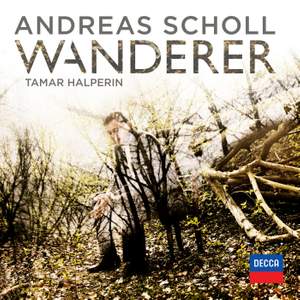
All recordingsPrices shown exclude VAT. (UK tax is not payable for deliveries to United States.) See Terms & Conditions for p&p rates. | |  | Andreas Scholl: Wanderer
Brahms: | In stiller Nacht (No. 42 from Deutsche Volkslieder, WoO 33) Es ging ein Maidlein zarte (No. 21 from Deutsche Volkslieder, WoO 33) Mein Mädel hat einen Rosenmund (No. 25 from Deutsche Volkslieder, WoO 33) All mein Gedanken, die ich hab (No. 30 from Deutsche Volkslieder, WoO 33) Da unten im Tale (No. 6 from Deutsche Volkslieder, WoO 33) Gut'n Abend, gut'n Abend, mein tausiger Schatz (No. 4 from Deutsche Volkslieder, WoO 33) Intermezzo in A major, Op. 118 No. 2 piano solo | Haydn: | The Wanderer, Hob. XXVIa:32 Recollection, Hob. XXVIa:26 Despair, Hob. XXVIa:28 | Mozart: | Das Veilchen, K476 Abendempfindung an Laura, K523 Rondo in F major K494 piano solo Ridente la calma, K152 | Schubert: | German Dance D145 No. 6 in B minor piano solo Im Haine, D738 Abendstern, D806 An Mignon D161 Der Tod und das Mädchen, D531 Der Jüngling auf dem Hügel, D702 Ave Maria, D839 Du bist die Ruh D776 (Rückert) |
A new and exquisite collection of German songs from counter-tenor Andreas Scholl, providing a perfect balance between text and music. The choice of music reflects Scholl’s belief that music need not be confined in performance to a particular voice type, as long as “the singer’s approach is true.” Scholl pulls off a bravura display in Schubert’s An Mignon, singing in both the counter-tenor and baritone register. The performance of these songs reveals an intuitive understanding between singer and accompanist, Andreas Scholl and Tamar Halperin. “Scholl is seeking out that place in German Lieder where folksong seems to transmute into art song: simplicity is all, and the Brahms songs are performed with virtually no interpretative gloss, allowing words to speak purely through the register and harmonic underlay of their setting.” BBC Music Magazine, January 2013 **** “Scholl brings the same commitment to the Classical and Romantic repertory as he does to Purcell and Dowland. His priorities, as he states on the packaging, are 'simplicity and sincerity'...As a recitalist, Scholl is less a story-teller than a weaver of spells, unleashing a fully conceived emotional state and sustaining it.” Gramophone Magazine, January 2013 “On one level Wanderer gives the listener abundant pleasure...Scholl’s diligent phrasing, purity of tone and lack of tricks bring...rewards...His piano partner, Tamar Halperin, is deft and poetic...Listen a little deeper, though, and limits to this pleasure emerge. Up at the top of Scholl’s register the more the voice seems trapped in a narrow pipe with no room for clear articulation of words or subtle changes of colour and weight.” The Times, 2nd November 2012 *** | | | In stock - usually despatched within 1 working day. |
|
|
| |  | Schubert: Goethe Songs
Schubert: | Am Flusse D160 (Goethe) Schäfers Klagelied, D121 (Goethe) Meeres Stille, D216, Op. 3 No. 2 (Goethe) Heidenröslein, D257 Jägers Abendlied, Second Setting, D368 Sehnsucht, D123 Die Liebe (Klarchens Lied), D210 Trost in Tränen, D120 Rastlose Liebe, D138 Nähe des Geliebten, D162 Der Fischer, D225 (Goethe) Erster Verlust, D226 (Goethe) Der König in Thule, D367 Harfenspieler I 'Wer sich der Einsamkeit ergibt', D478 Harfenspieler II 'An die Türen will ich schleichen, D479 Harfenspieler III 'Wer nie sein Brot mit Tränen ass', D480 An Schwager Kronos, D369 An Mignon D161 Ganymed, D544 (Goethe) An die Entfernte, D765 (Goethe) Versunken D715 (Goethe) An den Mond, D259 (Goethe) Der Musensohn, D764 (Goethe) Auf dem See, D543 (Goethe) Geistes-Gruss, D142 |
| | | In stock - usually despatched within 1 working day. |
|
|
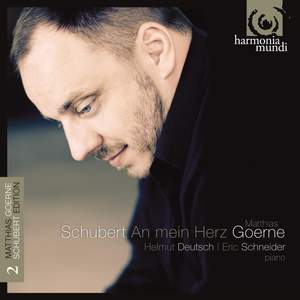
| |  | Schubert Lieder Volume 2: An Mein Herz
Schubert: | Der Jungling und der Tod, D545 (Spaun) Das Lied im Grünen, D917 Die Herbstnacht (Wehmut) D404 (Salis-Seewis) Ins stille Land, D403 Abschied von der Harfe D406 (Salis-Seewis) Drang in die Ferne, D770 An Mein Herz D860 Der Wanderer, D649 (Friedrich von Schlegel) Über Wildemann D884 (Ernst Schulze) Klage D371 Am Bach im Fruhling, D361 An die Laute D905 Des Fräuleins Liebeslauschen, D698 Augenlied, D297 (Mayrhofer) Du bist die Ruh D776 (Rückert) An die Musik D547 An eine Quelle D530 (Claudius) Der Sänger am Felsen, D482 Abschied von der Harfe D406 (Salis-Seewis) Liedesend, D473 (Mayrhofer) Das Heimweh, D456 (Winkler) Auf der Donau, D553 (Mayrhofer) Wie Ulfru fischt, D525 (Mayrhofer) Die Sternennacht D670 (Mayrhofer) Ruckweg, D476 (Mayrhofer) Geheimnis, D491 (Mayrhofer) Gondelfahrer, D808 Abendstern, D806 Der Sieg D805 (Mayrhofer) Nachtstück, D672 (Mayrhofer) Auflösung, D807 Heiss mich nicht reden, D877/2 Nur wer die Sehnsucht kennt, D877/4 An Mignon D161 Harfenspieler I 'Wer sich der Einsamkeit ergibt', D478 Am Flusse D160 (Goethe) Nähe des Geliebten, D162 Der Fischer, D225 (Goethe) Auf dem See, D543 (Goethe) Wonne der Wehmut D260 (Goethe) Willkommen und Abschied, D767 |
Matthias Goerne has received worldwide praise for his warm, fluid baritone and his profound interpretations. Highly respected as a Lieder singer, he is a frequent guest at renowned festivals and prestigious venues like the Carnegie and Wigmore Halls. From 2008 to 2011, Matthias Goerne will perform and record Schubert on 11 CDs for harmonia mundi and important venues all over the world will present the complete series of Schubert recitals with Matthias Goerne in their coming seasons. This second volume speaks of death, of the 'Wanderer', and of the relationship between Schubert and his poets . . . For this occasion the singer has called on two travelling companions who have left a lasting artistic impression on the world of lieder: Eric Schneider and Helmut Deutsch. Helmut Deutsch's career as a song accompanist began with Irmgard Seefried; he spent twelve years in an intensive collaboration with Hermann Prey, and has been the partner of many other celebrated singers. Eric Schneider has appeared notably with Christine Schäfer, Matthias Goerne, Christiane Oelze and Stephan Genz. He is a regular guest with these partners at the Schwarzenberg Schubertiade, Salzburg Festival and the Tanglewood Summer Music Festival. “Goerne… and Schneider offer grave and solemn performances of Goethe's Mignon and Harper songs, before ending on a higher note, celebrating the eternal joy of love in 'Willkommen and Abschied'.” BBC Music Magazine, February 2009 **** “Battered by Bryn Terfel dramatics, the ears cried out for a pure dose of lieder from a master of the craft. Matthias Goerne… seems to own a different shade of baritonal colour for every syllable Schubert wrote. The voice is sweet and serene, even at fff, and
the shifts that Goerne applies to the changing of seasons and the fickleness of love are done with enviable delicacy. More reticent than Fischer-Dieskau or Thomas Quasthoff to bend a line for expressive
emphasis, when Goerne takes a liberty the effect is breath stopping… T his is not an album to gorge at one go. Take it two songs a night before bedtime, and it might see you through to the end of recession.” Norman Lebrecht, Evening Standard CD of the Week “Goerne used to record for Decca, but it apparently had no interest in his 12-volume Schubert compendium, so the less ruthlessly commercial Harmonia Mundi comes to the rescue, for which the France-based company deserves the highest praise. From a vocal point of view, few male singers,
even Fischer-Dieskau, command such a rich palette of colours as Goerne does here…he goes where Dieskau never ventured: he includes two of Mignon's songs, Heiss' mich nicht reden and Nur wer die Sehnsucht kennt, as well as the Harper trilogy… In the middle Harper song, Mayrhofer's
Nachtstück and Nähe des Geliebten (Nearness of the Beloved), Goerne approaches the sublime and captures perfectly the wry wit of Goethe's sly dig at water-nymphery, Der Fischer, in which the surprise encounter of an angler with a "moist woman" is wryly underlined by Schubert. Luxury
support from Deutsch and Schneider sets the seal on an outstanding issue.” Sunday Times Classical CD of the Week “This promises to be a landmark series, up there with Hans Hotter and Fischer-Dieskau.” The Observer “Here elegy, fatalism and death-longing predominate and in such repertoire Goerne's mellow, darkly rounded timbre, expressive diction and care – rare in Lieder singers today – for a true, 'bound' line are well nigh ideal. Even at the most anguished fortissimo, his tone never grows harsh or hectoring. Perfectionism like Goerne's has inevitably provoked charges of over-calculation. Some might protest at the ultra-slow tempo for Du bist die Ruh. Yet Goerne's beauty of tone and phrasing (founded on seemingly superhuman reserves of breath), and a rapt intensity that rises to spiritual radiance in the final verse are mesmerising. At a more conventional tempo, he sings An die Musik as a simple, sincere confession of faith, with affectionate touches of rubato (and how eloquently Helmut Deutsch's left hand duets with the voice). Elsewhere Goerne's unsentimental tenderness can illuminate little-known songs that seem ordinary on the printed page – Abschied von der Harfe, say, or the quasi-operatic lament Der Sänger amFelsen. He even appropriates, successfully, two of Mignon's songs, giving one of the most desolate and – in the central section – disturbed performances of Nur wer die Sehnsucht kennt you will hear. True to form, Goerne makes an uncommonly melancholy serenader in An die Laute and DesMädchens Liebeslauschen, which never smiles. Yet he can lighten up, as in the story-telling of DerFischer and Wie Ulfru fischt. Like Deutsch on the first disc, Eric Schneider fully matches Goerne in acumen and command of colour, not least in a performance of Nachtstück of mingled grandeur, mystery and compassionate gentleness.” Gramophone Classical Music Guide, 2010 “Goerne's virtuoso vocal sculpting draws you into the inner landscape of each song, his warm, expressive baritone shaping detail often understated by lesser artists. This promises to be a landmark series, up there with Hans Hotter and Fischer-Dieskau.” The Guardian, 12th October 2008 | | | In stock - usually despatched within 1 working day. |
|
|
| |  | The Hyperion Schubert Edition - Complete Songs Volume 10Schubert in 1815 (II)
'Hill's work here is inspired enough to place him in a line of tenor-interpreters of Schubert that leads from Erb and Patzak through Schreier to Rolfe Johnson. In legato, tone and above all understanding his readings are little short of ideal, from start to finish' (Gramophone) | | | In stock - usually despatched within 1 working day. |
|
|
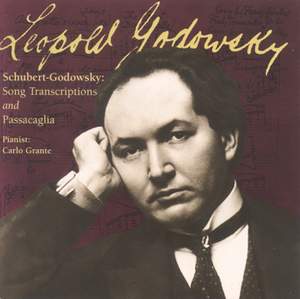
| |  | Godowsky Edition, Vol. 1Schubert-Godowsky: Song Transcriptions for Piano
Schubert: | Wohin? (No. 2 from Die schöne Müllerin, D795) Gute Nacht (No. 1 from Winterreise, D911) Das Wandern (No. 1 from Die schöne Müllerin, D795) Die junge Nonne, D828 Litanei auf das Fest Allerseelen, D343 Die Forelle, D550 Wiegenlied, D498 Morgengruss (No. 8 from Die schöne Müllerin, D795) An Mignon D161 Liebesbotschaft, D957 No.1 Heidenröslein, D257 Ungeduld (No. 7 from Die schöne Müllerin, D795) Unfinished Symphony Theme: Passacaglia |
| | | (also available to download from $10.50) | Usually despatched in 2 - 3 working days. (Available now to download.) |
|
|
| |  | Volume 13 - Goethe Volume 2
Schubert: | Sehnsucht (Nur wer die Sehnsucht kennt) (Mignon's Song), D310a (Goethe) Rastlose Liebe, D138 Nähe des Geliebten, D162 Die Liebe (Klarchens Lied), D210 Gretchen am Spinnrade, D118 Szene aus Faust D126 (Goethe) Gretchen im Zwinger D564 Sehnsucht (Nur wer die Sehnsucht kennt) D359 Suleika I, D720 Suleika II, D717 Sehnsucht (Nur wer die Sehnsucht kennt), D481 An Mignon D161 Mignon I (Heiß mich nicht reden) D726 Mignon II (So laßt mich scheinen) D727 Wonne der Wehmut D260 (Goethe) Schweizerlied D559 (Goethe) Die Spinnerin, D247 (Goethe) Die Liebende schreibt D673 Gesange Aus 'wilhelm Meister' D877 (Goethe) Kennst du das Land (Mignons Gesang), D321 Sehnsucht (Nur wer die Sehnsucht kennt) (Mignon's Song), D310b (Goethe) |
| | | (also available to download from $6.00) | Usually despatched in 2 - 3 working days. (Available now to download.) |
|
|
| |  | Zueignung - DedicationSongs for Baritone
Brahms: | An die Nachtigall, Op. 46 No. 4 (Text: L.C.H. Hölty) An den Mond, Op. 71 No. 2 (Text: K. Simrock) An ein Veilchen, Op. 49 No. 2 (Text: L.C.H. Hölty) | Foerster: | An die Laute, Op. 60 No. 1 (text: J.F. Rochlitz) | Gounod: | A toi mon coeur (Text: Jules Barbier) | Hahn, R: | À Chloris | Mozart: | An Chloë, K524 An die Hoffnung, K390 | Schubert: | An Mignon D161 An den Tod D518 (Schubart) An den Mond, D193 An die Leier, D737 (Bruchmann) An die Musik D547 An Mein Herz D860 | Strauss, R: | Zueignung, Op. 10 No. 1 | Wolf, H: | An eine Æolsharfe (No. 11 from Mörike-Lieder) |
| | | (also available to download from $10.50) | Usually despatched in 2 - 3 working days. (Available now to download.) |
|
|
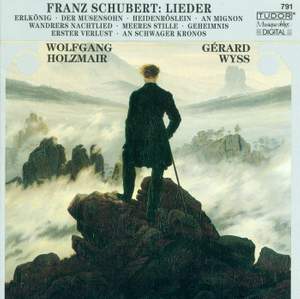
| |  | Schubert: Goethe-Lieder
Schubert: | Erlkönig, D328 Wonne der Wehmut D260 (Goethe) An den Mond, D259 (Goethe) Geheimes, D719 (Goethe) Versunken D715 (Goethe) Hoffnung, D295 Wandrers Nachtlied II 'Über allen Gipfeln ist Ruh', D768 Rastlose Liebe, D138 Jägers Abendlied, Second Setting, D368 Wandrers Nachtlied I 'Der du von dem Himmel bist', D224 An Mignon D161 Ganymed, D544 (Goethe) An Schwager Kronos, D369 Der König in Thule, D367 Am Flusse, D766 Erster Verlust, D226 (Goethe) Der Rattenfänger, D255 Meeres Stille, D216, Op. 3 No. 2 (Goethe) Schäfers Klagelied, D121 (Goethe) Heidenröslein, D257 An die Entfernte, D765 (Goethe) Der Musensohn, D764 (Goethe) |
| |
|
| |  | Dietrich Fischer-Dieskau: Seine Größten Erfolge
Beethoven: | Ha! Welch ein Augenblick! (from Fidelio) Adelaide, Op. 46 Andenken, WoO 136 Der Zufriedene, Op. 75 No. 6 Lied aus der Ferne, WoO 137 Sehnsucht (Die stille Nacht undunkelt), WoO 146 Der Wachtelschlag, WoO 129 An die Hoffnung, Op. 94 Der Kuss, Op. 128 Die Liebe, Op. 52 No. 6 Das Liedchen von der Ruhe, Op. 52 No. 3 Abendlied unter'm gestirten Himmel, WoO 150 Resignation, WoO 149 Zärtliche Liebe 'Ich liebe dich', WoO 123 In questa tomba oscura, WoO.133 Maigesang, Op. 52 No. 4 Marmotte, Op. 52 No. 7 Lieder (6), Op. 75: excerpts Songs (3) , Op. 83 Lieder von Gellert (6), Op. 48 | Bizet: | Au fond du temple saint (from Les Pêcheurs de Perles) sung in German as 'Im tempel Brahmas kniet' | Brahms: | Wie bist du, meine Königin Op. 32 No. 9 Nicht mehr zu dir zu gehen, Op. 32 No. 2 Der Strom, der neben mir verrauschte, Op. 32 No. 4 Du sprichst, daß ich mich täuschte, Op. 32 No. 6 Wehe, so willst du mich wieder, Op. 32 No. 5 Nachtwandler, Op. 86 No. 3 In Waldeseinsamkeit, Op. 85 No. 6 Die schöne Magelone, Op. 33 Denn wir haben hie keine bleibende Statt (from Ein Deutsches Requiem, Op. 45) Vier ernste Gesänge, Op. 121 | Donizetti: | Cruda, funesta smania (from Lucia di Lammermoor) sung in German as 'Wut, heissen Durst nach Rache' | Gluck: | O du, die ich so innig liebe (from Iphigenie in Aulis) | Humperdinck: | Wohin bist du gegangen? (from Königskinder) Verdorben! Gestorben! (from Königskinder) | Lortzing: | Einst spielt' ich mit Zepter, mit Krone und Stern (from Zar und Zimmermann) Nun ist's vollbracht!...Schwanensang, Schwanenklang (from Undine) Wie freundlich strahlt...Heiterkeit und Fröhlichkeit (from Der Wildschütz) | Mahler: | Lieder eines fahrenden Gesellen (4 songs, complete) Kindertotenlieder | Mozart: | Der Vogelfänger bin ich, ja (from Die Zauberflöte) Bei Männern, welche Liebe fühlen (from Die Zauberflöte) Fin ch'han dal vino (from Don Giovanni) sung in German as 'Auf, zu dem Feste' La ci darem la mano (from Don Giovanni) sung in German as 'Reich mir die Hand, mein Leben' Deh! vieni alla finestra (from Don Giovanni) sung in German as 'Feinsliebchen, komm ans Fenster' Hai gia vinta la causa! (from Le nozze di Figaro) sung in German as 'Der Prozess schon gewonnen' | Nicolai, C O: | In einem Waschkorb? (from Die lustigen Weiber von Windsor) | Pfitzner: | Den heil'gen Geist, der die Konzilien leitet (from Palestrina) | Puccini: | O Mimi, tu piu non torni (from La Bohème) sung in German as 'Ach Geliebte, nie kehrst du wieder' Addio dolce svegliare (from La Bohème) sung in German as 'Lebt wohl, ihr süssen Stunden' Addio, fiorito asil (from Madama Butterfly) sung in German as 'Leb wohl, mein Blütenreich' Rudolf Schock (tenor) | Schubert: | An die Musik D547 An Mignon D161 Wandrers Nachtlied II 'Über allen Gipfeln ist Ruh', D768 An den Frühling, D338 Nacht und Träume, D827 Erlkönig, D328 Rastlose Liebe, D138 Der Zwerg, D771 (Collin) Der Kreuzzug D932 (Leitner) Schwanengesang, D957 Die schöne Müllerin, D795 Winterreise D911 | Schumann: | Wanderlied (No. 3 from 12 Gedichte, Op. 35) Erstes Grün, Op. 35 No. 4 Sehnsucht nach der Waldgegend, Op. 35 No. 5 'Wär' ich nie aus euch gegangen' Auf das Trinkglas eines verstorbenen Freundes Stille Liebe, Op. 35 No. 8 Lust der Sturmnacht, Op. 35 No. 1 Wanderung, Op. 35 No. 7 'Wohlauf und frisch gewandert ins unbekannte Land!' Liederkreis, Op. 39 Dichterliebe, Op. 48 Myrthen, Op. 25 | Strauss, R: | Sie woll'n mich heiraten, sagt mein Vater (from Arabella) Wozu noch, Mädchen Op. 19 No. 1 O wärst du mein Op. 26 No. 2 Befreit, Op. 39 No. 4 Herr Lenz Op. 37 No. 5 Die Nacht, Op. 10 No. 3 Ach weh mir unglückhaftem Mann, Op. 21 No. 4 Schlichte Weisen, Op. 21 | Verdi: | Alla vita che t'arride (from Un ballo in maschera) sung in German as 'Für dein Glück und für dein Leben' Alzati…Eri tu che macchiavi quell'anima (from Un Ballo in Maschera) sung in German as 'Erhebe dich!...Ja, nur du hast dies Herz mir entwendet' In braccio alle dovizie (from I Vespri Siciliani) sung in German as 'In Glanz und Pracht regier' ich hier' Dio, che nell'alma infondere (from Don Carlo) sung in German as 'Gott, der entflammte der Liebe heisse Glut' Signora! Per vostra maestà (from Don Carlo) sung in German as 'Vernehmt, ich komme' Son io, mio Carlo... Io morro (from Don Carlo) sung in German as 'Ich bin's, mein Carlos' | Wagner: | O du, mein holder Abendstern (from Tannhäuser) Als du in kuhnem Sange uns bestrittest (from Tannhäuser) Blick ich umher in diesem edlen Kreise (from Tannhäuser) | Wolf, H: | Harfenspieler I (No. 1 from Goethe-Lieder) Harfenspieler II (No. 2 from Goethe-Lieder) Harfenspieler III (No. 3 from Goethe-Lieder) Phänomen (No. 32 from Goethe-Lieder) Ob de Koran von Ewigkeit sei? (No. 34 from Goethe-Lieder) Erschaffen und Beleben (No. 33 from Goethe-Lieder) Lebe wohl (No. 36 from Mörike-Lieder) In der Frühe (No. 24 from Mörike-Lieder) Verschwiegene Liebe (No. 3 from Eichendorff-Lieder) |
The death has recently been announced of one of the greatest singers of the 20th century, the German baritone Dieterich Fisher-Dieskau. Over a career spanning almost half a century Fisher-Dieskau performed all over the world with most of the major conductors, orchestras, and opera companies. He was particularly renowned for his interpretations of the lieder repertoire, especially the songs of Schubert. This 10CD set which was originally released in July 2011 covers a wide range of his performances in all areas of the vocal art. | | | Usually despatched in 4 - 5 working days. |
|
|
| |
|