Prices shown exclude VAT. (UK tax is not payable for deliveries to United States.) See Terms & Conditions for p&p rates. | |  | Meditation: The Beautiful Music of Massenet
| | Des Grieux’s Lodgings (Act 2, Scene 2) Manon — Ballet based on extracts from works by Jules Massenet, arranged and orchestrated by Leighton Lucas with the collaboration of Hilda Gaunt Orchestra of the Royal Opera House, Covent Garden, Richard Bonynge | Massenet: | Meditation (from Thaïs) Nigel Kennedy (violin) National Philharmonic Orchestra, Richard Bonynge De cet affreux combat…Pleurez, mes yeux ! (from Le Cid) Joan Sutherland London Symphony Orchestra, Richard Bonynge Pourquoi me reveiller (from Werther) Luciano Pavarotti National Philharmonic Orchestra, Oliviero de Fabritiis Il est doux, il est bon (from Hérodiade) Angela Gheorghiu Orchestra del Teatro Regio di Torino, John Mauceri Je suis seul, seul enfin... Ah fuyez douce image (from Manon) Jonas Kaufmann Prague Philharmonic Orchestra, Marco Armiliato Esprits de l'air! Esprits de l'onde! (from Esclarmonde) Joan Sutherland National Philharmonic Orchestra, Richard Bonynge Dance of the Spirits (Esclarmonde) John Alldis Choir & National Philharmonic Orchestra, Richard Bonynge Où suis-je? (Esclarmonde) Giacomo Aragall John Alldis Choir & National Philharmonic Orchestra, Richard Bonynge Ah! je suis seule, seule enfin! (Thaïs) Renée Fleming Orchestre National Bordeaux Aquitaine, Yves Abel Dis-moi que je suis belle (from Thaïs) Renée Fleming Orchestre National Bordeaux Aquitaine, Yves Abel Valse très lente National Philharmonic Orchestra, Richard Bonynge Vive amour qui rêve (from Chérubin) Angela Gheorghiu Orchestra e coro del Teatro Regio di Torino, John Mauceri Instant charmant … En fermant les yeux (from Manon) Joseph Calleja & Tatiana Lisnic Academy of St Martin in the Fields, Carlo Rizzi Ah, que mes soeurs ... Reste au foyer, petit grillon (from Cendrillon) Joan Sutherland L’Orchestre de la Suisse Romande, Richard Bonynge Je ne sais pas si je veille (from Werther) José Carreras Orchestra of the Royal Opera House, Covent Garden, Sir Colin Davis Va! Laisse couler mes larmes (from Werther) Marilyn Horne Wiener Opernorchester, Henry Lewis Oh! si les fleurs avaient des yeux Joan Sutherland New Philharmonia Orchestra, Richard Bonynge La Vierge: Le Dernier Sommeil de la vierge (Légende sacrée) |
Jules Massenet, who died 100 years ago in 1912, was a French composer best known for his operas, and was widely considered in his day to be one of the greatest melodists of his time, alongside Puccini. The Best of Massenet includes his most popular music, performed by a starry cast of artists, including Luciano Pavarotti, Joan Sutherland, Jonas Kaufmann, Renée Fleming, Joseph Calleja, Angela Gheorghiu and Marilyn Horne. Soon after his death, Massenet's style went out of fashion, and today he is best known for the popular violin showpiece Méditation from his opera Thaïs (performed here by Nigel Kennedy), and is unfairly regarded by many as something of a one-hit wonder. Opera and ballet aficionados have known otherwise for some time and that he is in truth one of classical music’s best-kept secrets. 2012, the centenary year of his death, is the perfect opportunity time to introduce a wider audience to the exquisite charms and beauty of his music. | | | (Sorry, download not available in your country) | In stock - usually despatched within 1 working day. |
|
|
| |  | Massenet: Operatic and Orchestral Favourites
Massenet: | Le Cid - Ballet music Recorded at Kingsway Hall, London on 14-16 July 1952 London Symphony Orchestra, Robert Irving Phèdre: Overture Recorded at Maison de la Mutualité, Paris on 1 June 1951 Orchestre de l’Opéra-Comique, Paris, Albert Wolff Werther: Prelude & La nuit de Noël Recorded at Maison de la Mutualité, Paris on 1 June 1951 Orchestre de l’Opéra-Comique, Paris, Albert Wolff Scènes alsaciennes Recorded at the Salle Apollo Paris on 15 September 1953 Orchestre Lamoureux, Jean Fournet La Vierge: Le Dernier Sommeil de la vierge (Légende sacrée) Recorded at Walthamstow Town Hall, London 7 – 18 December 1953 Royal Philharmonic Orchestra, Sir Thomas Beecham Scènes pittoresques Recorded at the Salle Apollo Paris on 15 September 1953 Orchestre Lamoureux, Jean Fournet Ô noble lame étincelante (from Le Cid) Recorded on 2 February 1933 Georges Thill Eugène Bigot Pleurez, mes yeux (Le Cid) Recorded on 16 May 1930 Germaine Cernay Gustave Cloez Dis-moi que je suis belle (from Thaïs) Recorded on 08 November 1927 Fanny Heldy Piero Coppola Te souvient-il du lumineux voyage (from Thaïs) Recorded on 14 January 1947 Dorothy Kirsten, Robert Merrill RCA Victor Orchestra, Jean Morel Il est doux, il est bon (from Hérodiade) Recorded in Paris on 29 March 1928 Ninon Vallin Gustave Cloëz Calmez donc vos fureurs…Jean, je te revois (from Hérodiade) Recorded on 21 November 1932 César Vezzani, Jeanne Guyla Fleurissait une rose au bord de chemin (from Le jongleur de Notre-Dame) Recorded in Camden, New Jersey, USA on 11 October 1926 Marcel Journet Je suis encore tout étourdie (from Manon) Recorded on 26 March 1928 Emma Luart Gustave Cloëz On l'appelle Manon (from Manon) Recorded on 26 March 1928 Emma Luart, Gaston Micheletti Gustave Cloëz Adieu, notre petite table (from Manon) Recorded on 7 June 1945 Bidú Sayão Fausto Cleva Je marche sur tous les chemins (from Manon) Recorded on 27 March 1928 Emma Luart Gustave Cloëz Obéissons quand leur voix appelle (from Manon) Recorded in 1928 Emma Luart Gustave Cloëz Instant charmant … En fermant les yeux (from Manon) Recorded in Paris in 1916 Edmond Clément with orchestra Je suis seul, seul enfin... Ah fuyez douce image (from Manon) Recorded in Paris in 1916 Edmond Clément with orchestra Promesse de mon avenir (from Le roi de Lahore) Recorded at Salle du Conservatoire, Paris 30 November 1929 Arthur Endrèze Henri Defosse J'aurais sur ma poitrine (from Werther) Recorded on 10 May 1927 Georges Thill Fernand Heuteur Va! Laisse couler mes larmes (from Werther) Recorded in Paris on 13 April 1927 Ninon Vallin Gustave Cloëz Ah! mon courage m’abandonne!... Seigneur Dieu (from Werther) Recorded in Paris on 13 April 1927 Ninon Vallin Gustave Cloëz Pourquoi me reveiller (from Werther) Recorded between 1950 - 1952 Cesare Valletti Orchestra Lirica della Cetra di Torino, Arturo Basile Elégie Recorded on 19 May 1926 Rosa Ponselle (soprano), Alfred Lennartz (cello) Rosario Bourdon |
2012 is the centenary of Jules Massenet’s death. Several of his operas have received important revivals this year Unlike most other Massenet albums released this year this 2CD set celebrates equally his orchestral music (now becoming familiar once again in the concert hall after several years of neglect) and his operas. Although the performances were recorded in the mono era, the majority of vocal extracts stem from a golden period of French music-making (1910s-1930s) and the orchestral recordings have been rated by critics as sonically ahead of their time. Singers include Edmond Clément, Ninon Vallin, Georges Thill, Emma Luart, Bidu Sayão, Marcel Journet, Fanny Heldy and Cesare Valletti in roles they made famous. Jean Fournet, Albert Wolff, Robert Irving and Sir Thomas Beecham conduct the works for orchestra. | | | Usually despatched in 4 - 5 working days. |
|
|
| |  | Giulietta Simionato - Portrait of a Legendrecordings 1949-1960
Bellini: | Deh! Tu bell'anima (from I Capuleti) recorded in 1954 | Berlin, I: | Anything you can do I can do better (from Annie Get Your Gun) recorded in 1956 Luciano Bettarini (piano) | Bizet: | L'amour est un oiseau rebelle 'Habanera' (from Carmen) recorded in 1951; sung in Italian as 'E l'amore uno strano augello' | Donizetti: | O mio Fernando (from La Favorita) recorded in 1955 Orchestra Maggio Musicale Fiorentino, Alberto Erede | Gordigiani: | L’addio del pastore recorded in 1960 (taken from a complete performance of Die Fledermaus) Ettore Bastianini (baritone) Wiener Philharmoniker, Herbert von Karajan | Mascagni: | Voi lo sapete o mamma (from Cavalleria rusticana) recorded in 1954 Orchestra RAI Torino, Arturo Basile | Massenet: | Va! Laisse couler mes larmes (from Werther) recorded in 1951; sung in Italian as 'Va non e mal se piango' | Paër: | Il bacio della partenza recorded in 1956 Luciano Bettarini (piano) | Rossini: | Nacqui all'affanno, al pianto...Non più mesta (from La Cenerentola) recorded in 1949 Orchestra RAI Torino, Mario Rossi Una voce poco fa (from Il barbiere di Siviglia) recorded in 1950 Orchestra RAI Milano, Fernando Previtali Cruda sorte! Amor tiranno! (from L'Italiana in Algeri) recorded in 1954 Orchestra del Teatro alla Scala Milano, Carlo Maria Giulini O patria...Di tanti palpiti (from Tancredi) recorded in 1956 Orchestra RAI Milano, Nino Sanzogno | Saint-Saëns: | Printemps qui commence (from Samson et Dalila) recorded in 1951; sung in Italian as 'O Aprile foriero' | Thomas, Ambroise: | Connais-tu le pays (from Mignon) recorded in 1949; sung in Italian as 'Non conosci il bel suol?' | Verdi: | O don fatale (from Don Carlo) recorded in 1954 Stride la vampa (from Il Trovatore) recorded in 1956 Orchestre du Grand Théâtre de Genève, Alberto Erede Re dell’abisso affretati (Un ballo in maschera) recorded in 1960 Orchestra and Chorus of the Accademie Santa Cecilia Roma, Sir Georg Solti |
| | | Usually despatched in 2 - 3 working days. |
|
|
| |  | Jeanne Gerville-Réache
Jeanne Gerville-Réache (mezzo) with Madame Charles Cahier (mezzo) This singer possessed a remarkably beautiful voice, an excellent singing technique and a wide vocal range. After her debut in 1899, her career began successfully in Europe. She moved to North America in 1907 and was immensely popular there until her sudden death in 1915. She is particularly remembered for her portrayal of Dalila and Gluck’s Orfeo. | | | Usually despatched in 2 - 3 working days. |
|
|
| |  | Chante l'Opera Francais
| | | Usually despatched in 4 - 5 working days. |
|
|
| |  | Nadezhda Obukhova
Nadezhda Obukhova (mezzo) | | | Usually despatched in 2 - 3 working days. |
|
|
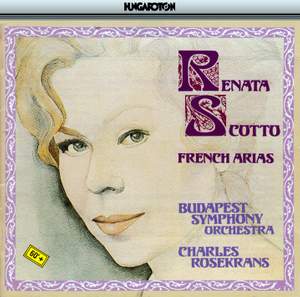
| |  | Renata Scotto: The French Album Vol. 1
| | | Usually despatched in 4 - 5 working days. |
|
|
| |  | Victoria de los Ángeles: The Voice of an Angel
Bach, J C: | Ah! lamenta, oh bella Irene | Barbieri, F: | Canción de Paloma (from El Barberillo de Lavapiés) Profesores de la Orquesta Nacional de España, Rafael Frühbeck de Burgos | Barrera Saavedra: | Adiós Granada (from Emigrantes) arr. de los Angeles Victoria de los Angeles (guitar) | Beethoven: | Oh! would I were but that sweet linnet, WoO. 154 No. 9 Eduard Drolc (violin), Irmgard Poppen (cello) He promised me at parting, WoO. 154 No. 12 They bid me slight my Dermot dear, WoO. 152 No. 8 Eduard Drolc (violin), Irmgard Poppen (cello), Gerald Moore (piano) | Bizet: | Carmen (highlights) Nicolai Gedda (Don Jose), Denise Monteil (Micaela), Marcelle Croisier (Frasquita), Monique Linval (Mercédès) Chœurs et Orchestre National da la Radiodiffusion Française, Sir Thomas Beecham | Brahms: | Wiegenlied, Op. 49 No. 4 (Lullaby) Dein blaues Auge, (No. 8 from Acht Lieder und Gesänge, Op. 59) Vergebliches Ständchen, Op. 84 No. 4 Gerald Moore (piano) Sapphische Ode, Op. 94 No. 4 Gerald Moore (piano) | Caballero: | Romanza de Pilar (from Gigantes y cabezudos) Profesores de la Orquesta Nacional de España, Rafael Frühbeck de Burgos | Canteloube: | Songs of the Auvergne Orchestre des Concerts Lamoureux, Jean-Pierre Jacquillat | Catalani: | Ebben? Ne andrò lontana (from La Wally) Orchestra del Teatro dell’Opera di Roma, Giuseppe Morelli | Chapí: | Canción de Pastora (from La patria chica) Rafael Frühbeck de Burgos Canción de la gitana (from La chavala) Profesores de la Orquesta Nacional de España, Rafael Frühbeck de Burgos Carceleras from Las hijas de Zebedeo Sinfonia of London, Rafael Frühbeck de Burgos | Chueca: | La gran vía: Tango de la menegilda Rafael Frühbeck de Burgos La gran vía: Chotís del eliseo madrilène Profesores de la Orquesta Nacional de España, Rafael Frühbeck de Burgos | Debussy: | Fêtes galantes - Set 1 Gonzalo Soriano (piano) | Delibes: | Les filles de Cadix | Duparc: | L'Invitation au voyage Orchestre de la Société des Concerts du Conservatoire, Georges Prêtre | Dvorak: | Als die alte Mutter (No. 4 from Zigeunermelodien, op. 55) Moglichkeit Der Apfel, Op. 38 No. 2 Gerald Moore (piano) | Falla: | La vida breve: ‘Vivan los que rien!' Alli está! Riyendo (from La vida breve) Philharmonia Orchestra, Stanford Robinson El sombrero de tres picos: Overture Philharmonia Orchestra with Chorus, Rafael Frühbeck de Burgos El Amor Brujo: excerpts Philharmonia Orchestra, Carlo Maria Giulini Siete Canciones populares españolas Gonzalo Soriano (piano) | Fauré: | Tristesse, Op. 6 No. 2 Au bord de l'eau, Op. 8 No. 1 (Prudhomme) Les roses d'Ispahan Op. 39 No. 4 Toujours!, Op. 21 No. 2 Gonzalo Soriano (piano) | Gounod: | Ah! Je ris de me voir (from Faust) Il se fait tard ! Adieu ! (from Faust) Nicolai Gedda (Faust), Boris Christoff (Mephistopheles) Orchestre du Théâtre National de l’Opéra, André Cluytens | Granados: | Tonadillas: No. 2, Callejeo Tonadillas: No. 11, El tra la la y el punteado Gerald Moore (piano) Goyescas: Quejas ó La Maja y el Ruiseñor New Philharmonia Orchestra, Rafael Frühbeck de Burgos Iban al pinar Gracia mía Alicia de Larrocha (piano) | Grieg: | Ich liebe Dich, Op. 5 No. 3 | Guridi Bidaola: | Jota (from Six canciones castellanas) Gerald Moore (piano) | Hahn, R: | L'Enamourée Trois jours de vendange Le rossignol des lilas Gonzalo Soriano (piano) | Handel: | Joshua: Oh! had I Jubal's lyre Gerald Moore (piano) | Haydn: | Schlaf in deiner engen Kammer Eduard Drolc (violin), Irmgard Poppen (cello) | Leoncavallo: | Qual fiamma avea nel guardo!.... Hui! Stridono lassù (from I Pagliacci) RCA Victor Orchestra, Renato Cellini | Lleó Balbastre: | Couplets babilónicos (from La corte del Faraón) Profesores de la Orquesta Nacional de España, Rafael Frühbeck de Burgos | Lorca: | Canciónes (13) españolas antiguas: Anda, jaleo Canciónes (13) españolas antiguas: Los cuatro muleros Canciónes (13) españolas antiguas: Las tres hojas Canciónes (13) españolas antiguas: Los mozos de Monleón Canciónes (13) españolas antiguas: Las morillas de Jaén Canciónes (13) españolas antiguas: Sevillanas del Siglo XVIII Miguel Zanetti (piano) | Luna, P: | El Niño Judío: De España vengo Profesores de la Orquesta Nacional de España, Rafael Frühbeck de Burgos | Martini, J P: | Plaisir d'amour | Mascagni: | Voi lo sapete o mamma (from Cavalleria rusticana) Orchestra del Teatro dell’Opera di Roma, Giuseppe Morelli | Massenet: | Allons! Il le faut pour lui-même!... Adieu, notre petite table (from Manon) Je marche sur tous les chemins (from Manon) Chœurs et Orchestre du Théâtre National de l’Opéra-Comique, Pierre Monteux Werther! Werther!…Je vous écris de ma petite chambre (from Werther) Va! Laisse couler mes larmes (from Werther) Orchestre de Paris, Georges Prêtre | Mendelssohn: | Auf Flügeln des Gesanges, Op. 34 No. 2 | Montsalvatge: | Canciones negras (5) Orchestre de la Société des Concerts du Conservatoire, Rafael Frühbeck de Burgos | Mozart: | Porgi amor (from Le nozze di Figaro) Orchestra del Teatro dell’Opera di Roma, Giuseppe Morelli Ecco quel fiero istante, K346 Elisabeth Schwarzkopf (soprano), Dietrich Fischer Dieskau (baritone), Gerald Moore (piano) | Nin: | Granadina (from Cantos populares españoles) Gerald Moore (piano) | Offenbach: | Elle a fui, la tourterelle (from Les Contes d' Hoffmann) Orchestre de la Société des Concerts du Conservatoire, André Cluytens | Ovalle: | Azulao Profesores de la Orquesta Nacional de España, Rafael Frühbeck de Burgos | Puccini: | Si, mi chiamano Mimi (from La Bohème) O soave fanciulla (from La Bohème) Donde lieta usci (from La Bohème) Jussi Björling (Rodolfo), Robert Merrill (Marcello) RCA Victor Orchestra, Sir Thomas Beecham O mio babbino caro (from Gianni Schicchi) Orchestra del Teatro dell Opera di Roma, Tullio Serafin Ancora un passo…Spira sul mare (from Madama Butterfly) Jussi Björling (Pinkerton), Mario Sereni (Sharpless) Bimba dagli occhi pieni di malia (from Madama Butterfly) Jussi Björling (Pinkerton) Un bel di vedremo (from Madama Butterfly) Con onor muore (from Madama Butterfly) Coro e Orchestra del Theatro dell’Opera di Roma, Gabriele Santini | Purcell: | Let us Wander not Unseen (from The Indian Queen, Z630) Lost is my quiet for ever, Z502 Gerald Moore (piano) | Ravel: | La Flûte enchantée (Shéhérazade No. 2) Orchestre de la Société des Concerts du Conservatoire, Georges Prêtre | Rossini: | Nacqui all'affanno, al pianto...Non più mesta (from La Cenerentola) Giuseppe Morelli Una voce poco fa (from Il barbiere di Siviglia) Royal Philharmonic Orchestra, Vittorio Gui | Sadero: | Era la vo Profesores de la Orquesta Nacional de España, Rafael Frühbeck de Burgos | Scarlatti, A: | Le violette Gerald Moore (piano) | Schubert: | Der Tod und das Mädchen, D531 Wohin? (No. 2 from Die schöne Müllerin, D795) An die Musik D547 Gerald Moore (piano) | Serrano: | Cancion de la gitana (from Le alegria del battallon) Rafael Frühbeck de Burgos Escena lírica (Los claveles) Rafael Frühbeck de Burgos Romanza de Gloria (Los de Aragón) Profesores de la Orquesta Nacional de España, Rafael Frühbeck de Burgos | Stanford: | An Irish Lullaby | Tchaikovsky: | Schottische Ballade, Op. 46 No. 2 Gerald Moore (piano), Dietrich-Fischer Dieskau (baritone) | Toldrá: | Cançó de grumet (A l’ombra del Leidoner) Gonzalo Soriano (piano) | Turina: | Saeta en forme de Salve a la Virgen de la Esperanza, Op. 60 Poema en forma de canciones, Op. 19: No. 3, 'Cantares' Philharmonia Orchestra, Walter Susskind | Valls Gorina: | Canciones Sefarditas Jean-Claude Gérard (flute), Oscar Ghiglia (guitar) | Valverde: | Clavelitos Gerald Moore (piano) | Verdi: | Surta è la notte...Ernani! Ernani, involami (from Ernani) Era più calmo? (from Otello) Mia madre aveva...Piangea cantando...Ave Maria (from Otello) Orchestra del Teatro dell’Opera di Roma, Giuseppe Morelli Come in quest'ora bruna (from Simon Boccanegra) Orchestra del Teatro dell’Opera di Roma, Gabriele Santini Libiamo, ne' lieti calici (from La Traviata) È strano! è strano!...Ah! fors è lui (from La traviata) Teneste la promessa...Addio, del passato (from La Traviata) Carlo del Monte (Alfredo) Coro e Orchestra del Teatro dell’Opera di Roma, Tullio Serafin | Villa-Lobos: | Bachianas Brasileiras No. 5: Aria (Cantilena) Bachianas brasileiras no 5 ; Dança (martelo) Orchestre National de la Radiodiffusion Française, Heitor Villa-Lobos | Wagner: | Dich, teure Halle (from Tannhauser) Einsam in trüben Tagen (from Lohengrin) Orchestra del Teatro dell’Opera di Roma, Giuseppe Morelli | Yradier: | La Paloma Profesores de la Orquesta Nacional de España, Rafael Frühbeck de Burgos |
| | | In stock - usually despatched within 1 working day. |
|
|
| |  | Marilyn Horne - The Complete Decca Recitals
Bach, J S: | Magnificat in D major, BWV243: Et exsultavit Magnificat in D major, BWV243: Esurientes implevit bonis Christmas Oratorio, BWV248: Schlafe, mein Liebster St Matthew Passion, BWV244: Erbarme dich Bist du bei mir, BWV508 | Beethoven: | Abscheulicher! Wo eilst du hin? (from Fidelio) | Bellini: | Lieto del dolce incarco…Se Romeo t'uccise un figlio (from I Capuleti e i Montecchi) | Bizet: | L'amour est un oiseau rebelle 'Habanera' (from Carmen) Près des remparts de Séville (Séguedille) (from Carmen) Adieux de l'hotesse Arabe Chanson d'Avril Vieille chanson Absence | Copland: | Old American Songs: excerpts | Debussy: | Trois chansons de Bilitis | Donizetti: | Deciso è dunque...le richezze (from La Figlia del Reggimento) | Falla: | Siete Canciones populares españolas | Gluck: | J'ai perdu mon Eurydice (from Orphée et Eurydice) Divinités du Styx (from Alceste) | Gounod: | Ô ma lyre immortelle (from Sapho) | Handel: | Messiah: O thou that tellest good tidings to Zion Messiah: I know that my Redeemer liveth Scacciata dal suo nido (from Rodelina) Dove sei, amato bene? (from Rodelinda) Vivi, tiranno, io t'ho scampato (from Rodelinda) | Mahler: | Rückert-Lieder (5 songs, complete) Lieder eines fahrenden Gesellen (4 songs, complete) Kindertotenlieder | Massenet: | Ces lettres! (from Werther) Va! Laisse couler mes larmes (from Werther) | Meyerbeer: | Ah, mon fils! (from Le Prophète) O prêtres de Baal (from Le Prophète) Nobles seigneurs, salut! (from Les Huguenots) | Mozart: | Parto, parto, ma tu ben mio (from La Clemenza di Tito) | Nin: | Villancico Castellano (from Villancicos Españolas) Jesus de Nazareth (from Villancicos Españolas) Villancico Asturiano (from Villancicos Españolas) Villancico Andaluz (from Villancicos Españolas) | Rossini: | Una voce poco fa (from Il barbiere di Siviglia) Assisa a' piè d'un salice (from Otello) Di tanti palpiti (from Tancredi) Bel raggio lusinghier (from Semiramide) Pronti abbiamo...Amici in ogni evento...Pensa alla patria (from L'Italiana in Algeri) Eccomi alfine in Babilonia (from Semiramide) Cruda sorte! Amor tiranno! (from L'Italiana in Algeri) Nacqui all'affanno, al pianto...Non più mesta (from La Cenerentola) L'ora fatal s'appressa ... Giusto ciel! (from L'Assedio di Corinto) Mura felici (from La donna del lago) Tanti affetti in tal momento (from La donna del lago) Non temer, d' un basso affetto (from Maometto II) | Saint-Saëns: | Printemps qui commence (from Samson et Dalila) Mon cœur s'ouvre à ta voix (from Samson et Dalila) | Schubert: | Im Frühling, D882 Nacht und Träume, D827 Die junge Nonne, D828 Fischerweise, D881 (Schlechta) | Schumann: | Die Lotosblume, Op. 25 No. 7 Aus den hebräischen Gesängen, Op. 25 No. 15 Die Kartenlegerin, Op. 31 No. 2 Abendlied, Op. 85 No. 12 | Strauss, R: | Schön sind, doch kalt die Himmelssterne, Op. 19, No. 3 Für fünfzehn Pfennige Op. 36 No. 2 Befreit, Op. 39 No. 4 | Thomas, Ambroise: | Connais-tu le pays (from Mignon) Me voici dans son boudoir 'Gavotte' (from Mignon) Elle est là! Près de lui! (from Mignon) | Verdi: | Stride la vampa (from Il Trovatore) Condotta ell’era in ceppi (from Il Trovatore) | Wagner: | Wesendonck-Lieder (5) | Wolf, H: | Auf einer Wanderung (No. 15 from Mörike-Lieder) Der Genesene an die Hoffnung (No. 1 from Mörike-Lieder) Mein Liebster hat zu Tische mich geladen (No. 25 from Italienisches Liederbuch) |
and traditional American folk songs
The great American mezzo-soprano Marilyn Horne celebrated her her 70th birthday in January 2004 and that year also marked 50 years since her professional debut. Horne’s debut in 1954 was in in Los Angeles. That same year her name and voice was brought to many more people than could ever hear her in the opera house through the 1954 film Carmen Jones in which she sang the dubbed voice of Dorothy Dandridge. Her Covent Garden debut was as Marie in Wozzeck (sung in English at that time) in 1964 – she had made her San Francisco debut in 1960 with the same role. It was with Joan Sutherland that Marilyn Horne found the perfect vocal partner and their performances in the great bel canto operas by Rossini, Bellini and Donizetti took the opera world by storm in the 1960s and early 1970s. By the time she retired in 1998, Marilyn Horne’s long and distinguished career embraced an enormous variety of operatic roles, as well as a wide variety of solo song ranging from Schubert, Schumann and Mahler through to modern American songs. Such a wide repertory was due to the sheer range of her voice and its remarkable flexibility, a voice that could sustain long lines of melody as well as negotiate the most florid vocal pyrotechnics. Marilyn Horne participated in a number of complete opera recordings (among them classic recordings of Norma and Semiramide with Joan Sutherland) for Decca and also made ten recital programmes. The complete recitals are now reissued in their entirety as a Collector Edition on 11 CDs and preserve the original sequence of music as presented on vinyl; the original LP cover art is reproduced for the CD sleeves. “When every single item brings wonderment it is impossible to single out one above the rest, and the recording is outstandingly vivid...her Rossini recital is one of the most cherishable among all Rossini records ever issued. The voice is in glorious condition, rich and firm throughout its spectacular range, and is consistently used with artistry and imagination, as well as brilliant virtuosity in coloratura. By any reckoning, this is thrilling singing.” Penguin Guide, 2011 edition | | | Usually despatched in 2 - 3 working days. |
|
|
| |
|