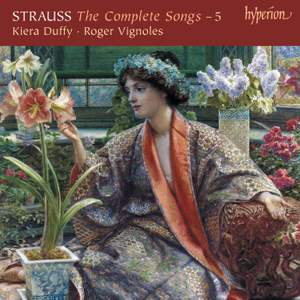
Prices shown exclude VAT. (UK tax is not payable for deliveries to United States.) See Terms & Conditions for p&p rates. | |  | Richard Strauss: The Complete Songs 5
Strauss, R: | Mädchenblumen (4 songs), Op. 22 Fruhlingsgedrange, Op. 26 No. 1 Morgen, Op. 27 No. 4 Hat gesagt - bleibt's nicht dabei, Op. 36 No. 3 Meinem Kinde, Op. 37 No. 3 Mein Auge Op. 37 No. 4 Herr Lenz Op. 37 No. 5 Junghexenlied, Op. 39 No. 2 Muttertändelei, Op. 43 No. 2 Einkehr, Op. 47 No. 4 Ich Schwebe, Op. 48 No. 2 Kling! Op. 48 No. 3 Brentano Lieder Op. 68, Nos. 1-6 |
A further instalment of this major Hyperion project introduces the American soprano Kiera Duffy, whose performances in the concert hall and on the opera stage have received the highest praise. This series, skilfully masterminded by the accompanist Roger Vignoles, is carefully shaped around the talents of each singer and strives to serve the cause of both neglected treasures and essential Strauss masterworks. The majority of the music in this beautifully shaped recital was composed between 1888 and 1900, with the exception of the glorious and virtuosic Op 68 Brentano-Lieder, which owes its richness and fluency to the composer’s experience of opera composition. Duffy gives an impeccable performance, revealing a deep understanding of the complexity of the music, and tackles the final expansive Lied der Frauen with unwavering stamina and faultless intonation. Perceptive booklet notes from Vignoles, and full texts and translations are also included. “Duffy's is a light, bright soprano with a stylish sense of phrasing and some rapturous top Bs in her armoury...Two stand out: the harmonically wayward 'Junghexenlied', where Duffy has the right abrasive edge and hint of witchy malice, and the radiant 'Als mir dein Lied erklang'” BBC Music Magazine, December 2011 *** “The main work here is the Brentano Lieder of 1918, and it is often said that no single soprano can perform the whole cycle adequately. Duffy manages better than most, partly because there is a cutting edge in her tone...Vignoles, the Strauss pianist par excellence, is infinitely supportive and keeps the volume down to a sensible level.” The Guardian, 10th November 2011 **** “The technically accomplished and conscientious American Kiera Duffy has the clean, bright tone required for the more upbeat numbers such as Kling, but her Morgen doesn’t float through the ether and elsewhere she can sound a little hard-edged.” The Telegraph, 11th November 2011 *** “She certainly gives a strong interpretation of the six Brentano Lieder, Op. 68, with Vignoles's powerful closing 'Lied der Frauen' a highlight...and both artists are equally impressive in the strongly characterised 'Junghexenlied'...Duffy is also appealing in the gentler songs, such as the tender 'Meinem Kinde', but elsewhere at times one wishes for more varied tonal colour and less climactic passion.” Gramophone Magazine, January 2012 “If the songs of Op. 68 are the most immediately compelling Lieder here, there are other treasures too...after an impeccable entry [in 'Morgen!'], Duffy embraces one of Strauss's most heartfelt melodies before darkening her silvery tone to huge effect in the final lines.” International Record Review, January 2012 | | | In stock - usually despatched within 1 working day. |
|
|
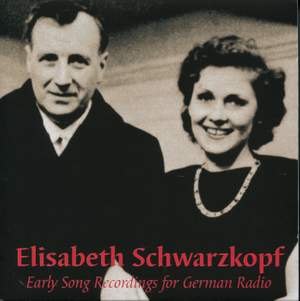
| |  | Elisabeth Schwarzkopf - Early Song Recordings for German Radio
anon.: | Volkslied aus dem Berner Oberland O du liebs Aengeli Die Beruhigte (Bayerisches Volkslied) Z'lauterbach Han | Beethoven: | Das Geheimnis, WoO 145 | Brahms: | Da unten im Tale (No. 6 from Deutsche Volkslieder, WoO 33) | Busoni: | Unter den Linden, Op. 18 No. 2 | Cornelius: | Heimatgedenken, Op. 16 No. 1 Die Duftigen Graese, Op. 16 No. 4 with Josef Greindl (bass) | Humperdinck: | Winterlied, EHWV 90 | Loewe, C: | Vogelsang, Op. 9 No. 3 Abendstunde, Op. 130 No. 3 Fruehlingsankunft, Op. 130, 5 Der Spaziergang, Op. 9 No. 4 Die Verliebte Schaeferin, Op. 9 No. 3 Die Sylphide, Op. 9 No. 2 Zeislein, Op. 62 No. 1 Irrlichter, Op. 62 No. 6 O süße Mutter, Op. 62 No. 3 Kind und Mädchen, Op. 62 No. 2 Die Blume der Eingebung, Op. 63 No. 6 Das Glockenspiel mit der Phantasie Frühling, Op. 107 No. 3 | Mozart: | Die Verschweigung, K518 Oiseaux, si tous les ans, K307 | Rameau: | Hyppolyte et Aricie: Rossignols amoureux | Reger: | Ich glaub, Op. 18 No. 2 Viola d'amour, Op. 55 Waldseligkeit, Op. 62 No. 2 Die Verschmähte, Op. 70 No. 8 Wiegenlied, Op. 79d, 1 | Rossini: | Soirées musicales: La Danza | Schumann: | Volksliedchen, Op. 51 No. 2 | Strauss, J, II: | Geschichten aus dem Wienerwald, Op. 325 | Strauss, R: | Hat gesagt - bleibt's nicht dabei, Op. 36 No. 3 Morgen, Op. 27 No. 4 Schlagende Herzen Op. 29 No. 2 | Verdi: | Lo spazzacamino | Wolf, H: | Philine (No. 8 from Goethe-Lieder) |
“In these 1940s recordings of a wide range of repertoire, Elisabeth Schwarzkopf's voice sounds soubrettish, with injections of her own inimitable charm.” BBC Music Magazine, May 2007 **** | | | (also available to download from $21.00) | In stock - usually despatched within 1 working day. |
|
|
| |  | Richard Strauss: Vier Letzte Liederand other songs
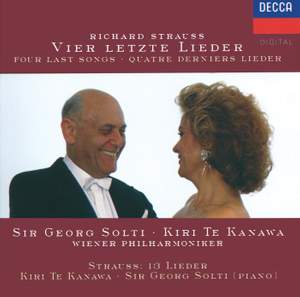
Strauss, R: | Four Last Songs Malven, AV 304 Hat gesagt - bleibt's nicht dabei, Op. 36 No. 3 Muttertändelei, Op. 43 No. 2 Madrigal, Op.15, No. 1 Ständchen, Op. 17 No. 2 Schlechtes Wetter, Op. 69 No. 5 Allerseelen, Op. 10 No. 8 Die Nacht, Op. 10 No. 3 Cäcilie, Op. 27 No. 2 All mein Gedanken ... Op. 21 No. 1 Begegnung (Meeting), AV 72 Morgen, Op. 27 No. 4 Zueignung, Op. 10 No. 1 |
| | | In stock - usually despatched within 1 working day. |
|
|
| |  | Berg: | Sieben frühe Lieder | Korngold: | Op.9, No. 4 Liebesbriefchen 3 Lieder Op. 18 5 Lieder Op. 38 Abschiedslieder (Songs of Farewell), Op. 14 Sonett für Wien, Op. 41 | Strauss, R: | Das Rosenband, Op. 36 No. 1 Ich trage meine Minne, Op. 32 No. 1 Hat gesagt - bleibt's nicht dabei, Op. 36 No. 3 Meinem Kinde, Op. 37 No. 3 Die Sieben Siegel Op. 46/3 Befreit, Op. 39 No. 4 Wie sollten wir geheim sie halten, Op. 19 No. 4 |
| | | In stock - usually despatched within 1 working day. |
|
|
| |  | Strauss: Lieder
Strauss, R: | Xenion, AV131 Nichts, Op. 10 No. 2 Die Nacht, Op. 10 No. 3 Allerseelen, Op. 10 No. 8 Ständchen, Op. 17 No. 2 Cäcilie, Op. 27 No. 2 Heimliche Aufforderung, Op. 27 No. 3 Morgen, Op. 27 No. 4 Traum durch die Dämmerung, Op. 29 No. 1 Schlagende Herzen Op. 29 No. 2 Blauer Sommer, Op. 31 No. 1 Das Rosenband, Op. 36 No. 1 Hat gesagt - bleibt's nicht dabei, Op. 36 No. 3 Befreit, Op. 39 No. 4 Muttertändelei, Op. 43 No. 2 Freundliche Vision, Op. 48 No. 1 Waldseligkeit, Op. 49 No. 1 Säusle, Liebe Myrte, Op. 68 No. 3 Einerlei, Op. 69 No. 3 Schlechtes Wetter, Op. 69 No. 5 Four Last Songs |
| 
| | | Usually despatched in 2 - 3 working days. |
|
|
| |  | Après un rêve
Fauré: | Les roses d'Ispahan Op. 39 No. 4 Clair de Lune, Op. 46 No. 2 Mandoline, Op. 58 No. 1 (Verlaine) Automne, Op. 18 No. 3 | Pfitzner: | Alte Weisen, Op. 33 | Reger: | Volkslied aus Franken – Waldeinsamkeit, Op. 76, No. 3 Beim Schneewetter, Op. 76 No. 6 Schlecht’ Wetter, Op. 76 No. 7 Friede, Op. 76 No. 25 | Respighi: | Quattro Rispetti toscani | Strauss, R: | Für fünfzehn Pfennige Op. 36 No. 2 Schlagende Herzen Op. 29 No. 2 Schlechtes Wetter, Op. 69 No. 5 Hat gesagt - bleibt's nicht dabei, Op. 36 No. 3 Mädchenblumen (4 songs), Op. 22 | Wolf-Ferrari: | Rispetti (4), Op. 11 |
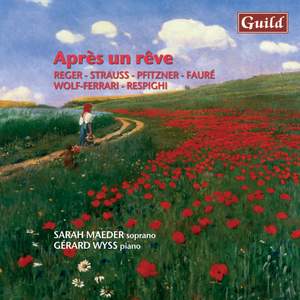
Sarah Maeder (soprano), Gérard Wyss (piano) This is a unique recital of lieder by composers who were contemporaries of one another whose music is likely to appeal to the same music-lover. Alongside relatively familiar songs by Richard Strauss and Gabriel Fauré, from whence the CD takes its title, we are pleased to include rarely-heard examples from Reger, Pfitzner and Wolf-Ferrari. Sarah Maeder is a much-admired soprano who has made a special study of this repertoire, and she is excellently accompanied by the talented Gérard Wyss, to produce a recording that will be highly-prized by connoisseurs of this distinguished repertoire. “Maeder can certainly turn on the charm but never goes coy, sings always with accuracy, purity and freshness, and articulates very clearly. She is also very fortunate in her accompanist. Gerard Wyss is a class act.” International Record Review, November 2011 | | | Usually despatched in 8 - 10 working days. |
|
|
| |  | Lieder by Schubert, Strauss & SchoenbergBayerischen Staatsoper, Cuvilliés-Theater 23/7/1984
Lucia Popp was an absolute audience favourite for several decades. Besides her great operatic roles – first as a coloratura soprano, then in the lyric fach – she always maintained a large concert and lieder repertoire that demonstrated in equal degree her great musicality and charm. At the Munich Opera Festival in 1984, Lucia Popp presented a combination of lesser-known songs of well-known composers in a programme that formed a musically colourful and harmonious whole. This live recording, made in the intimate rococo hall of the Cuvilliés Theatre, allows us to experience that concert once again. Lucia Popp was partnered there by Irwin Gage, whose musical qualities matched her own, yet who refrained from placing himself in the foreground. With their opening selection of Schubert they were able to transfix the audience in such a manner that the ensuing group of Schoenberg’s early songs Op. 2 seemed to follow on quite naturally. In Strauss’s Ophelia Songs, Popp displayed her extraordinary ability to portray a stage character swiftly, yet in a manner wellrounded and accurate, by purely vocal means. The last quarter of this song recital, also devoted to Strauss, was the most popular and was received with frenetic applause. These songs reached a magnificent climax in the encore 'Allerseelen'. This was followed by a return to Schubert with 'An Silvia'. It rounded off a dramatically conceived evening of German Romanticism, a superb example of how Popp could present her admirers with a performance deeply felt in its artistry, but never calculating or sentimental. It makes one regret all the more her all-too-early death. Recorded at the Cuvilliés Theatre on 25th July, 1984 “The music of Richard Strauss suited Popp as if she were wearing a tailor-made gown. In that composer's three songs of Ophelia, the soprano places that hapless heroine vividly before us. Gage's accompaniment deftly complements his partner's giddiness...Here, then, is a memorable reminder that we'll never stop missing Lucia Popp.” International Record Review, September 2010 | | | Usually despatched in 3 - 4 working days. |
|
|
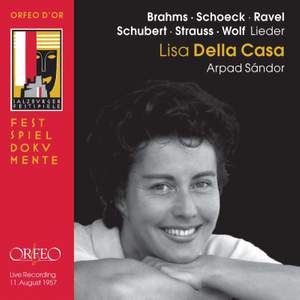
| |  | Lisa Della CasaLive Recording 1957
Brahms: | Wie Melodien zieht es mir, Op. 105 No. 1 Feldeinsamkeit, Op. 86 No. 2 Von ewiger Liebe, Op. 43 No. 1 Meine Liebe ist grün, Op. 63 No. 5 | Ravel: | Chanson française Chanson italienne Chanson espagnole | Schoeck: | Sieh' mich Heil'ger, wie ich bin Mit vollen Atemzügen | Schubert: | Lachen und Weinen, D777 Im Frühling, D882 Du bist die Ruh D776 (Rückert) Gretchen am Spinnrade, D118 | Strauss, R: | Der Stern, Op. 69 No. 1 Waldseligkeit, Op. 49 No. 1 Einerlei, Op. 69 No. 3 Befreit, Op. 39 No. 4 Hat gesagt - bleibt's nicht dabei, Op. 36 No. 3 Schlechtes Wetter, Op. 69 No. 5 | Wolf, H: | Der Gärtner (No. 17 from Mörike-Lieder) Er ist's (No. 6 from Mörike-Lieder) |
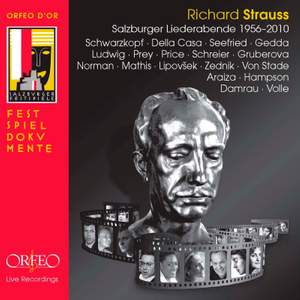
Although Lisa Della Casa sang in many operas in Salzburg, she gave only a single lieder recital: in 1957 in the Grosser Saal of the Mozarteum, accompanied by the Hungarian pianist Arpad Sándor, esteemed chamber music partner of musicians such as Fritz Kreisler and Jascha Heifetz.Anyone who had not expected lieder to be a speciality of this lyric soprano would soon be disabused: with the incomparable clarity and simplicity of her melodic line and her precise and unaffected articulation, Lisa Della Casa excelled with touchstones of the repertoire by Schubert and Brahms. She also honoured her compatriot Othmar Schoeck (who had died the previous spring) with her performance of two lieder from his new setting of Goethe's singspiel libretto Erwin und Elmire. She also included in her programme three of the Chansons populaires by Ravel, 1957 being the 20th anniversary of his death. Naturally, she concluded her recital with a group of lieder by Richard Strauss, the composer with whose works her name is still most associated.A unique delight made available to the modern audience thanks to this Orfeo recording. | | | Usually despatched in 3 - 4 working days. |
|
|
| |  | Elisabeth Schwarzkopf interprets songs by Wolf, Schubert & Strauss
A document out of the ordinary: Elisabeth Schwarzkopf's Lieder recordings with her accompanist Michael Raucheisen, made on 6th January 1958 at the RIAS studios in Berlin, are an impressive example of the fruitful cooperation between these two artists. They performed together as early as 1942, at the beginning of Schwarzkopf's glittering career, and more than one and a half decades later this artistic partnership drew to a close with these recordings.These interpretations of selected songs by Wolf, Schubert and Strauss, made available for the first time, reveal new facets of her creative art.The CD is completed with music by Purcell, Arne and Quilter - Elisabeth Schwarzkopf and Michael Raucheisen at the height of their abilities. | | | Usually despatched in 3 - 4 working days. |
|
|
| |  | Strauss - Rote Rosen
Strauss, R: | Rote Rosen, AV76 Malven, AV 304 Leises Lied, Op. 39 No. 1 Junghexenlied, Op. 39 No. 2 Cäcilie, Op. 27 No. 2 Befreit, Op. 39 No. 4 Drei Lieder der Ophelia Op. 67 Allerseelen, Op. 10 No. 8 Ich Schwebe, Op. 48 No. 2 Muttertändelei, Op. 43 No. 2 Einerlei, Op. 69 No. 3 Schlechtes Wetter, Op. 69 No. 5 Das Rosenband, Op. 36 No. 1 Hat gesagt - bleibt's nicht dabei, Op. 36 No. 3 All mein Gedanken ... Op. 21 No. 1 Du meines Herzens Krönelein, Op. 21 No. 2 Meinem Kinde, Op. 37 No. 3 Mein Auge Op. 37 No. 4 Morgen, Op. 27 No. 4 with Ulf Wallin (violin) |
Richard Strauss, the great composer of symphonic poems and grand operas, wrote solo songs throughout his life: his first compositions, performed within his family circle, were songs and his setting of the poem Malven (Mallows) was to be the last piece he completed. Taking a keen interest in the possibilities and limitations of the human voice, Strauss in the solo song genre found the opportunity to try out various musical options and to discover his own individual style. But the writing of songs also served as a form of relaxation, a way of passing the time. The result is a varied spectrum of atmospheres, moods and emotions: from the jesting tone of Hat gesagt — bleibt’s nicht dabei to the heart-felt declaration of love in Cäcilie and the portrayal of madness of the Three Songs of Ophelia. Camilla Tilling, whose successful opera career in a very short time has taken her to some of the world’s most prestigious venues — including Covent Garden, the Metropolitan, La Scala and La Monnaie — made her international breakthrough in the role of Sophie in Strauss’s Der Rosenkavalier. Ever since, Strauss’s music has held a special place for her, and on her first solo recording she has chosen to perform some of her favourites among his songs. She is partnered by the fine German pianist Paul Rivinius, with violinist Ulf Wallin making a guest appearance in Morgen!, where he plays the solo that Strauss added when making an orchestral version of the song. Camilla recently starred in the recent production of Hansel and Gretel at the Royal Opera House, Covent Garden, to great acclaim: “But the second cast was terrific - better on points than the first, with a particularly enchanting Gretel from Camilla Tilling, who had…personal sweetness and vocal charm”. The Telegraph “The programme interweaves familiar songs with comparative rarities such as Junghexenlied and Mein Auge. Her Ophelia Lieder, placed at the halfway mark and gleaming with aggression as well as sorrow, ranks among the great Strauss performances. There's some lovely stuff elsewhere, too, all of it done with a great naturalness of expression that never turns arch.” The Guardian, 8th May 2009 **** | | | (also available to download from $10.50) | Usually despatched in 2 - 3 working days. (Available now to download.) |
|
|
| |
|