All recordingsPrices shown exclude VAT. (UK tax is not payable for deliveries to United States.) See Terms & Conditions for p&p rates. | |  | Satie: Ballets, Piano Works & Rarities
Erik Satie (1866-1924) was one of music's most unconventional characters. After two unsuccessful periods of study at the Paris Conservatoire he moved to Montmartre, earning a living as a composer and café pianist in an establishment that was frequented by the artistic community. He soon became friends with many of the literary and artistic names of the time, including Debussy and Ravel. The first disc in this collection of Satie's works starts with what are his two most popular pieces, here in Debussy's 1897 arrangements for orchestra. There follows two of Satie's best-known ballet scores, Parade and Relâche and the disc ends with the lesser-known Mercure and Messe des pauvres, a curious piece for organ and choir. The second disc is made up of a good selection of songs, including two versions of the quintessentially French song Je te veux, and ends with two short instrumental pieces. | | | In stock - usually despatched within 1 working day. |
|
|
| |  | Satie - Avant-Dernieres Pensees
"My aim in these two discs has been to offer the richest possible panorama of Satie's piano and chamber music, ranging over his whole lifetime. . . .Immersed in the world of Satie, we were touched, often deeply moved by the trust he shows in his interpreters." Alexandre Tharaud “It's carefully planned and never dull, largely thanks to Tharaud's exquisite keyboard shading.” The Guardian, 6th February 2009 **** “The popular first Gymnopédie and Gnossienne are here, beautifully played by Tharaud. Real interest lies in the second disc, with a mix of duets for piano with violin, voice, trumpet, plus veteran chanteuse Juliette, in "Chez le docteur", celebrating intestines, liver, kidney and spleen in sardonic chanson. All highly visceral.” The Observer, 1st March 2009 “Few collections of Satie's music have captured this much misunderstood, multi-faceted composer remotely as well as this marvellous two-disc set from Alexandre Tharaud. His approach is more intelligent than the usual anodyne offerings… Tharaud is able to make
the leaps from visionary to flippant, sublimely beautiful to downright silly with ease, but it is his willingness to take risks that really impresses… it is hard to think of a better introduction to Satie's music than this truly enjoyable collection.” BBC Music Magazine “Few collections of Satie's music have captured this much misunderstood, multi-faceted composer remotely as well as this marvellous two-disc set from Alexandre Tharaud. Tharaud is able to make the leaps from visionary to flippant, sublimely beautiful to downright silly with ease and his willingness to take risks really impresses.” BBC Music Magazine, April 2009 ***** | | | In stock - usually despatched within 1 working day. |
|
|
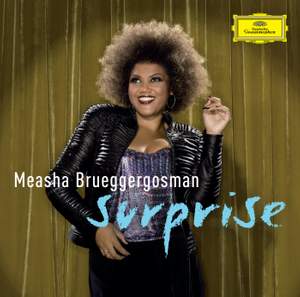
| |  | Measha Brueggergosman - SurpriseCabaret Songs
“The voice is a full soprano, well focused, with a "snarling" edge used to great effect in the Bolcom songs. In the Schoenberg she employs a more obviously operatic style, with a gentle vibrato. …there is an enormous amount to enjoy here from a hugely talented singer.” Gramophone Magazine, April 2008 “A triumphant DG debut recital for the Yellow Label’s new signing. Measha Brueggergosman (remember that name – no easy feat, granted) is expressive and at times deliciously wicked. The voice isn’t entirely even yet, but it’s already
a gorgeous, fascinating sound.” Gramophone Magazine “William Bolcom's Cabaret Songs (there are 28 of them in all) were composed for his wife Joan Morris, who recorded them with the composer at the piano in the 1970s. For Measha Brueggergosman's first solo recording, Bolcom has orchestrated seven of them into a nifty little song–cycle. The mood is generally slightly sinister, from the opening 'Surprise!' ('When she tried to drink iodine from a paper cup'), through a worrying tale of crime and punishment, 'Amor!', to the best–known of the songs, the Weill–style 'Black Max'. This bears the subtitle 'As told by the de Kooning boys', and all the verses by Bolcom's long–time lyricist and librettist Arnold Weinstein have overtones of surrealism and world–weary irony, suitable for one who lived out his days in that seediest of grand hotels, The Chelsea. It's a brave man who sets out to orchestrate Schoenberg, and Patrick Davin's reworkings of the Brettl-Lieder inevitably have a softening effect (just one, 'Der Nachtwandler', has Schoenberg's own orchestration). Brueggergosman deals with them in a straightforward way, without trying to overload them with charm or significance. The voice is a full soprano, well focused, with a 'snarling' edge used to great effect in the Bolcom songs. In the Schoenberg she employs a more obviously operatic style, with a gentle vibrato. The BBC Symphony Orchestra under David Robertson play with considerable spirit, above all in Bolcom's really gorgeous orchestration of Satie's 'Je te veux'. This and the other chansons composed for Paulette Darty ('Tendrement' and 'La diva de l'empire') go well, but 'L'omnibus automobile' is taken too fast, so that much of the crazy humour of Vincent Hyspa's poem is lost. No matter, there is an enormous amount to enjoy here from a hugely talented singer.” Gramophone Classical Music Guide, 2010 | | | Usually despatched in 2 - 3 working days. |
|
|
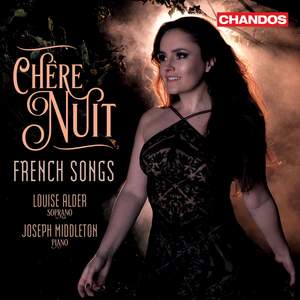
| |  | Clair de LuneFrench Songs
| | | Usually despatched in 2 - 3 working days. |
|
|
| |  | The Magic of Satie
| | | (Sorry, download not available in your country) | Usually despatched in 8 - 10 working days. |
|
|
| |  | The Music of SatieWorks for Piano, Orchestra and Voice
Elaine Bonazzi (mezzo-soprano), Frank Glazer (piano), Millard Taylor (violin), Richard Dias (piano) Orchestra of Radio Luxembourg, Ensemble 'Die Reihe', Louis de Froment, Friedrich Cerha | | | Usually despatched in 8 - 10 working days. |
|
|
| |  | The Best of Satie
| | | (also available to download from $6.00) | Usually despatched in 2 - 3 working days. (Available now to download.) |
|
|
| |  | La Vie Est Une Parade
Patrice Michaels (soprano) Chicago Chamber Musicians, Paul Freeman | | | (also available to download from $10.50) | Usually despatched in 2 - 3 working days. (Available now to download.) |
|
|
| |  | Erik Satie: Complete Piano Works, Volume 4
| | | Usually despatched in 2 - 3 working days. |
|
|
| |  | Elly Ameling: The Dutch Nightingale
Bach, J S: | Cantata BWV202 'Weichet Nur, betrübte Schatten' (Wedding Cantata) Cantata BWV209 'Non sa che sia dolore' (Italian Cantata) Cantata BWV80 'Ein feste Burg ist unser Gott': Komm in mein Herzenshaus Cantata BWV147 'Herz und Mund und Tat und Leben': Bereite dir, Jesu, noch itzo die Bahn Cantata BWV149 'Man singet mit Freuden vom Sieg': Gottes Engel weichen nie St John Passion, BWV245: Ich folge dir gleichfalls St John Passion, BWV245: Zerfliesse, mein Herze Christmas Oratorio, BWV248: Nur ein Wink von seinen Händen Cantata BWV93 'Wer nur den lieben Gott läßt walten': Ich will auf den Herren schau'n Cantata BWV177 'Ich ruf zu dir, Herr Jesu Christ': Verleih', dass ich aus Herzens Grund Cantata BWV94 'Was frag ich nach der Welt': Es halt es mit der blinden Welt Cantata BWV202 'Weichet Nur, betrübte Schatten' (Wedding Cantata): Sich üben im Lieben Cantata BWV144 'Nimm, was dein ist, und gehe hin': Genügsamkeit Cantata BWV89 'Was soll ich aus dir machen, Ephraim?': Gerechter Gott, ach, rechnest du? Cantata BWV21 'Ich hatte viel Bekümmernis': Seufzer, tränen, kummer, not Flosst, mein Heiland, flosst dein Namen (from Christmas Oratorio) Cantata BWV187 'Es wartet alles auf dich': Gott versorget alles Leben Cantata BWV199 'Mein Herze schwimmt im Blut': Stumme Seufzer, stille Klagen Cantata BWV98 'Was Gott tut, das ist wohlgetan': Hört, ihr Augen, auf zu weinen Erfullet, ihr himmlischen, gottlichen Flammen (Wie schon leuchtet der Morgenstern BWV1) Cantata BWV75 'Die Elenden sollen essen': Erfüllet, ihr himmloschen göttlichen Flamen Cantata BWV74 'Wer mich liebet, der wird mein Wort halten': Komm, mein Herze steht dir offen Mass in F major, BWV233: Qui tollis peccata mundi | Beethoven: | Wonne der Wehmut, Op. 83 No. 1 Mass in C major, Op. 86: Kyrie | Beginiker: | Ecce nova guadia Nun wiegen wir das Kindlein | Brahms: | Da unten im Tale (No. 6 from Deutsche Volkslieder, WoO 33) Geistliches Wiegenlied, Op. 91 No. 2 | Chausson: | Les Papillons, Op. 2 No. 3 (Gautier) Le Colibri, Op. 2 No. 7 (de Lisle) | Debussy: | Nuit d'étoiles Fleur des blés (André Girod) Dans le jardin Fêtes galantes - Set 1 Proses Lyriques Trois Poèmes de Stéphane Mallarmé Noël des enfants qui n'ont plus de maison | Duparc: | Chanson triste | Fauré: | Le papillon et la fleur, Op. 1 No. 1 Rêve d'amour, Op. 5 No. 2 Dans les ruines d'une abbaye Op. 2 No. 1 Seule! Op. 3 No. 1 L'aurore Puisqu'ici-bas toute âme Op. 10 No. 1 Tarentelle Op. 10 No. 2 Au bord de l'eau, Op. 8 No. 1 (Prudhomme) Automne, Op. 18 No. 3 Le parfum impérissable Op. 76 No. 1 Arpège, Op. 76 No. 2 (Samain) Pleurs d'or Op. 72 Chanson de Melisande Soir Op. 83 No. 2 Chanson Op. 94 Vocalise-étude La chanson d'Ève, Op. 95 Le jardin clos Op. 106 C'est la paix Op. 114 Après un rêve, Op. 7 No. 1 | Grieg: | Ich liebe Dich, Op. 5 No. 3 | Hahn, R: | Si mes vers avaient des ailes | Haydn: | The Mermaid's Song, Hob. XXVIa:25 Ein Magd, ein' Dienerin, Hob. XXVIId:1 | Loewe, C: | Niemand hat's gesehn, Op. 9, H.X/4 | Mahler: | Symphony No. 4 in G major: Wir geniessen den himmlischen Leben | Marchesi: | La Folletta | Mendelssohn: | Auf Flügeln des Gesanges, Op. 34 No. 2 | Mozart: | Ridente la calma, K152 Oiseaux, si tous les ans, K307 Dans un bois solitaire, K308 Die Zufriedenheit, K473 Komm, liebe Zither, K351 Warnung 'Männer suchen stehts zu naschen', K433 Das Veilchen, K476 Sei du mein Trost, K391 Der Zauberer, K472 Das Lied der Trennung, K519 Als Luise die Briefe, K520 Das Traumbild, K.530 Un moto di gioia, K579 Die Verschweigung, K518 Die kleine Spinnerin, K531 Abendempfindung an Laura, K523 Die Alte K517 An Chloë, K524 Sehnsucht nach dem Frühlinge, K596 | Poulenc: | Airs chantés Trois Poèmes de Louise Lalanne Cinq Poèmes de Max Jacob La courte paille Fancy Colloque Trois poèmes de Louise de Vilmorin Ce doux petit visage Fiançailles pour rire | Satie: | La diva de l'empire Je te veux | Scarlatti, A: | Le violette | Schubert: | Auf dem Wasser zu singen, D774 Auf dem See, D543 (Goethe) Erlafsee D586 (Mayrhofer) Die Forelle, D550 Die gefangenen Sänger D712 (Schlegel) Verklarung D59 (Herder, after Pope) Der Jungling und der Tod, D545 (Spaun) Suleika I, D720 Suleika II, D717 Raste Krieger, Krieg ist aus (Ellens Gesang I), D837 Jäger, ruhe von der Jagd (Ellens Gesang II), D838 Ave Maria, D839 Gretchen am Spinnrade, D118 Trost im Liede, D546 (Schober) An die Musik D547 Ganymed, D544 (Goethe) Trost im Liede, D546 (Schober) An die Musik D547 Ganymed, D544 (Goethe) Frühlingsglaube, D686 Liebe schwarmt auf allen Wegen, D239 No. 6 (Goethe) Lachen und Weinen, D777 Ständchen 'Horch! Horch! die Lerch!', D889 Der Hirt auf dem Felsen, D965 (Von Chezy / Muller) Im Frühling, D882 Amalia, D195 (Schiller) Atys D585 Seligkeit D433 (Holty) | Stölzel: | Bist du bei mir | Stravinsky: | Pastorale | trad.: | As I sat on a sunny bank Sweet was the song In Dulci Jubilo Uff'm Berge O suver maecht van Israel Klein, klein Jezuken Canco de nadal Baile de Nadal Baile de Córdoba Baile Andaluz Entre le boeuf et l'ane gris L'appel des bergers Noël pour l'amour de Marie Noël des jouets |
Born Elisabeth Sara Ameling on 8 February 1933 in Rotterdam, the Dutch soprano known as Elly Ameling won first prize at the Vocal Concours in ’s- Hertogenbosch in Holland in 1956, and the Concours International de Musique in Geneva in 1958. She gave her first formal recital in Amsterdam in 1961 and went on to perform for more than thirty years in virtually every major cultural centre in the world as one of the greatest singers of our age, renowned for her warm, unaffected personality, purity of tone and effortless technique. She made her career mainly as a concert and lieder singer, with some appearances in opera (Mozart and Haydn), and became renowned for her recitals of French and German songs and for her superlative interpretative gifts. CD 1 begins with two solo cantatas for soprano by Johann Sebastian Bach – the famous Wedding Cantata (BWV202) and ‘Non sa che sia dolore’ (BWV209) – followed by further arias from Bach cantatas and oratorios. CD 2 presents more music by Bach, with a collection of beautiful soprano arias from cantatas, accompanied by oboe and bass continuo. The oboe soloist is the Dutch virtuoso Han de Vries, who plays three different types of instrument, namely the normal oboe, the ‘oboe da caccia’ and the ‘oboe d’amore’, as specified by the composer, to striking musical effect in the various arias. In CD 3 Ameling shows her skill as an unrivalled interpreter of the music of Schubert with a collection of the composer’s best-known and most popular Lieder including ‘Die Forelle’, ‘Ave Maria’, ‘Gretchen am Spinnrade’ and ‘An die Musik. The piano accompanists are Irwin Gage and Jörg Demus. CD 4 opens with Schubert’s great showpiece for soprano and clarinet: ‘Der Hirt auf dem Felsen’ (‘The Shepherd on the Rock’), in which the clarinet soloist is George Pietersen, plus three other Schubert songs. These are followed by a group of songs by Mozart, including ‘Ridente la calma’, ‘Dans un bois solitaire’ and ‘Un moto di gioia’. The soprano is accompanied by Irwin Gage in the Schubert and Jörg Demus in the Mozart. In CDs 5 and 6, Ameling moves into the field of French song, for which she was trained by the famous French baritone Pierre Bernac. Her repertoire here encompasses many well-known songs by Gabriel Fauré, Claude Debussy and Francis Poulenc. She is accompanied by the distinguished pianist Dalton Baldwin, with whom she frequently performed. In CD 7 we hear a collection of much loved popular songs, typical of the mixed programmes with which the artist always delighted her audiences at recitals. These include Mendelssohn’s ‘Auf Flügeln des Gesanges’ (‘On Wings of Song’) and Grieg’s ‘Ich liebe dich’ (‘I Love You’). The disc closes with a further group of French mélodies by Poulenc. The final CD begins with a collection of Christmas songs from many lands, to which Ms Ameling brings her own special charm. Then comes a typical example of Ameling as a participant in a large-scale liturgical work, in the Kyrie from Beethoven’s Mass in C, where her clearly focussed voice blends perfectly with those of her three fellow soloists. The programme ends with the finale from Mahler’s Fourth Symphony, in which Ameling is heard as the radiant soprano soloist extolling the joys of heaven in a child-like way, with the Pittsburgh Symphony Orchestra conducted by André Previn. | | | In stock - usually despatched within 1 working day. |
|
|
| |
|