All recordingsPrices shown exclude VAT. (UK tax is not payable for deliveries to United States.) See Terms & Conditions for p&p rates. | |  | Puccini: Opera Arias
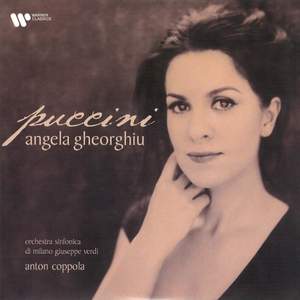
“Everything Gheorghiu achieves here is technically assured, thought through and emotionally rewarding. This is a deeply satisfying traversal of the Puccini canon.” Gramophone Magazine | | | In stock - usually despatched within 1 working day. |
|
|
| |  | The Very Best of Kiri Te Kanawa
Bizet: | Me voilà seule…Comme autrefois (from Les Pêcheurs de Perles) | Charpentier, G: | Depuis le jour (from Louise) | Cilea: | Ecco: respiro appena. Io son l'umile ancella (from Adriana Lecouvreur) | Duparc: | L'Invitation au voyage Le Manoir de Rosemonde | Giordano, U: | La mamma morta (from Andrea Chénier) | Korngold: | Glück, das mir verbleib 'Marietta's Lied' (from Die Tote Stadt) | Massenet: | Je marche sur tous les chemins (from Manon) | Mozart: | Ach, ich fühl's (from Die Zauberflöte, K620) | Offenbach: | Elle a fui, la tourterelle (from Les Contes d' Hoffmann) | Puccini: | Signore, ascolta! (from Turandot) | Ravel: | La Flûte enchantée (Shéhérazade No. 2) | Strauss, R: | Da geht er hin (from Der Rosenkavalier, Op. 59) | Verdi: | Attendo,attendo.. Addio del passato (from La Traviata) | Wagner: | Dich, teure Halle (from Tannhauser) | Weber: | Wie nahte mir der Schlummer … Leise, leise, fromme Weise (from Der Freischütz) |
The glamorous soprano Kiri Te Kanawa was born in 1944 in Gisborne, on the east coast of the North Island of New Zealand. After winning a number of major vocal competitions in Australia, she came to London in 1966 to study singing at the London Opera Centre, where she trained for three years. Then in 1970 she was accepted by the Royal Opera at Covent Garden as a junior member of the company. Her big break came in 1971, when she was chosen to sing the Countess in a new production of Le nozze di Figaro.. It was something of a gamble for the Covent Garden management to cast an inexperienced singer in such an important role, but on the opening night Kiri’s performance stole the show. After the Covent Garden Nozze di Figaro, an international career was assured. With a carefully chosen repertoire that included the principal soprano roles of Mozart, as well as a number of Verdi, Puccini and Richard Strauss heroines, Kiri went on to triumph in the major opera houses of the world. She first appeared at the Salzburg Festival in 1979 and became a regular and much-loved performer at Glyndebourne, a venue for which she has a particularly strong affection, and in 1981 Kiri was chosen to sing at the wedding of Prince Charles and Lady Diana Spencer in St Paul's Cathedral, an event seen by a world-wide television audience estimated at more than 600 million people Not surprisingly, her vibrant but creamy voice, together with her attractive stage presence, made her an ideal interpreter of the main Richard Strauss roles, and it was not long before she was singing the Marschallin in Der Rosenkavalier, a part with which she scored a particular success. After a number of popular Italian and French arias, Kiriis heard in this programme in the Marschallin's Act I monologue, 'Da geht er hin', as well as in arias from several other German operas, including Wagner's Tannhäuser, Der Freischutz by Weber and Korngold's unjustly neglected romantic masterpiece Die tote Stadt. As a brief reminder of Kiri's achievements on the concert stage, the first CD closes with three orchestral songs by the French composers Ravel and Duparc, all of which show off the lustrous beauty of her voice to full advantage. In addition to opera and so-called serious music however, Kiri is also a great enthusiast for the lighter repertoire, including folk music and the songs of Broadway and Tin Pan Alley. When performing this material, she uses the warm, lower part of her rich voice to give idiomatic performances of songs by some of America's greatest composers of popular music, such as George Gershwin, Jerome Kern, Irving Berlin and Cole Porter. Also heard here are Franz Gruber's familiar Christmas carol 'Silent Night' and a number of traditional British folk songs. These are followed by two Maori songs, in which Kiri is joined by a group of Maori singers and a number of specialist musicians who together capture the authentic style of these fascinating pieces. | | | In stock - usually despatched within 1 working day. |
|
|
| |  | Puccini ≡ Passion
Cheryl Barker first broke the hearts of audiences worldwide as Mimì in Baz Luhrman’s imaginative production of La bohème. In Puccini ≡ Passion the radiant Australian soprano delivers beguiling performances in a panoply of Puccini’s heroines in favourite arias, accompanied by the State Orchestra of Victoria under the baton of Richard Bonynge. Opera expert Rodney Milnes comments in the booklet: “Puccini famously liked to write about "little women", but he gave them "big" music, which is one thing that makes Cheryl Barker so ideal an interpreter of his soprano roles ... her lyric soprano, with an indefinably sweet vibrancy built in to the tone, adds immeasurably to her appeal. With that vibrancy comes a sense of vulnerability, which helps her bring the characters alive in both vocal and dramatic terms ... This most welcome disc allows her to present an overview of Puccini's women from the very beginning.” Issued for the first time on SACD, this disc is for all lovers of Puccini, encompassing his most popular soprano arias from Manon Lescaut, Tosca, La bohème and Madama Butterfly, one of Barker’s favourite roles, as well as arias from Le Villi, Edgar, La rondine, Suor Angelica, Gianni Schicci and Turandot. Barker ends with two little known treasures, the folksong-like ‘E l’uccellino’, and ‘Sole e amore’, an 1888 song whose melody Puccini later re-used in La bohème. And in a departure from his usual repertoire Richard Bonynge brings fresh imagination and sparkle to Puccini’s masterful orchestral palette. Cheryl Barker’s most recent CD, also for Melba and released in 2011, was Pure Diva (MR301129), a very personal tribute to her teacher and fellow Australian soprano, the great Dame Joan Hammond. | | | In stock - usually despatched within 1 working day. |
|
|
| |  | Puccini: La Bohème
| | | In stock - usually despatched within 1 working day. |
|
|
| |  | The Opera Album 2011
Bizet: | Votre toast je peux vous le rendre 'Toreador Song' (from Carmen) Bryn Terfel (bass-baritone) L'amour est un oiseau rebelle 'Habanera' (from Carmen) Tatiana Troyanos (mezzo) Au fond du temple saint (from Les Pêcheurs de Perles) Luciano Pavarotti (tenor), Nicolai Ghiaurov (bass) La fleur que tu m'avais jetée (from Carmen) Plácido Domingo (tenor) Les tringles des sistres tintaient (from Carmen) Magdalena Kozená (mezzo) | Delibes: | Lakmé: Dôme épais (Flower Duet) Joan Sutherland (soprano), Jane Berbié (mezzo) | Donizetti: | Una furtiva lagrima (from L'elisir d'amore) Juan Diego Flórez (tenor) | Dvorak: | Mesícku na nebi hlubokém 'Song to the Moon' (from Rusalka) Pilar Lorengar (soprano) | Gluck: | Che faro' senza Euridice? (from Orfeo ed Euridice) Andreas Scholl (countertenor) | Gounod: | Ah! Je veux vivre dans ce rêve (from Roméo et Juliette) Renée Fleming (soprano) Gloire immortelle de nos aïeux (from Faust) Richard Bonynge | Handel: | Lascia ch'io pianga (from Rinaldo) Cecilia Bartoli (mezzo) Ombra mai fu (from Serse) Andreas Scholl (countertenor) | Leoncavallo: | Vesti la giubba (from I Pagliacci) Jonas Kaufmann (tenor) | Mozart: | Der Vogelfänger bin ich, ja (from Die Zauberflöte) Hermann Prey (baritone) La ci darem la mano (from Don Giovanni) Ingvar Wixell (baritone), Mirella Freni (soprano) Der Hölle Rache kocht in meinem Herzen (from Die Zauberflöte) Patricia Petibon (soprano) | Offenbach: | Barcarolle (from Les Contes d'Hoffmann ) Joan Sutherland (soprano), Huguette Tourangeau (mezzo) Le jugement de Pâris - Au Mont Ida (from La Belle Hélène) Joseph Calleja (tenor) | Puccini: | Quando me'n vo (from La Bohème) Anna Netrebko (soprano) E lucevan le stelle (from Tosca) Andrea Bocelli (tenor) Humming Chorus (from Madama Butterfly) Giuseppe Sinopoli Nessun dorma (from Turandot) Luciano Pavarotti (tenor) Vissi d'arte (from Tosca) Kiri Te Kanawa (soprano) Si, mi chiamano Mimi (from La Bohème) Angela Gheorghiu (soprano) Signore, ascolta! (from Turandot) Montserrat Caballé (soprano) Chi il bel sogno di Doretta (from La Rondine) Renata Tebaldi (soprano) | Rossini: | Una voce poco fa (from Il barbiere di Siviglia) Teresa Berganza (mezzo) Largo al factotum (from Il barbiere di Siviglia) Leo Nucci (baritone) | Saint-Saëns: | Mon cœur s'ouvre à ta voix (from Samson et Dalila) Marilyn Horne (mezzo) | Verdi: | Anvil Chorus (from Il Trovatore) Sir Georg Solti La donna è mobile (from Rigoletto) Roberto Alagna (tenor) Libiamo, ne' lieti calici (from La Traviata) Plácido Domingo (tenor), Ileana Cotrubas (soprano) Di quella pira (from Il trovatore) José Carreras (tenor) Sempre libera (from La Traviata) Kiri Te Kanawa (soprano) Questa o quella (from Rigoletto) Rolando Villazón (tenor) Va, pensiero (from Nabucco) Silvio Varviso Celeste Aida (from Aida) Luciano Pavarotti (tenor) | Wagner: | Mild und leise 'Isolde's Liebestod' (from Tristan und Isolde) Birgit Nilsson (soprano) |
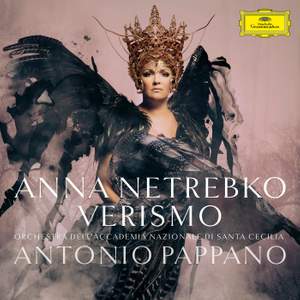
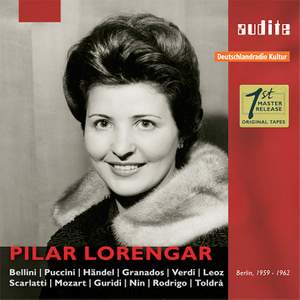
This magnificent collection features the some of the greatest opera stars of all time: Cecilia Bartoli, Anna Netrebko, Bryn Terfel, Renée Fleming, Andrea Bocelli Luciano Pavarotti, Dame Joan Sutherland, Plácido Domingo, Dame Kiri Te Kanawa and José Carreras. With a carefully chosen selection of perennially popular arias, duets and choruses, this enchanting collection creates the perfect introduction to opera. With 40 tracks and over 2½ hours of music this collection is outstanding value for money. Includes Pavarotti’s classic recording of the most popular opera aria of all, Puccini’s ‘Nessun dorma’. | | | In stock - usually despatched within 1 working day. |
|
|
| |  | Renata Tebaldi sings Puccini and Verdi Favourites
“If you were to have just one Tebaldi CD in your collection this must be it. Each aria is an object lesson in how to sing this repertoire.” BBC Music Magazine, August 2011 ***** “To hear Tebaldi in (say) Butterfly's Un bel di...is to be reminded that hers are the classic virtues: those of beautiful tone, musical feeling, sincere utterance. And if for these qualities she was supreme among her contemporary Italian sopranos, she surely stands head and shoulders above any of the present generation” Gramophone Magazine “the recital rightly concentrates on her stereo remakes of the key Puccini operas...voice still creamily fresh. Vissi d'arte (1959) is particularly beautiful...thrilling in Verdi, too, as the splendid Ritorna vincitor! vibrantly demonstrates...this recital should disappoint no-one.” Penguin Guide | | | In stock - usually despatched within 1 working day. |
|
|
| |  | Maria Callas: Love SongsArias by Verdi, Puccini, Ponchielli, Giordano, Catalani, Wagner & Donizetti
Rigoletto - Gualtier malde! Caro nome Madame Butterfly - Un bel di vedremo La Boheme - Si, mi chiamano mimi Turandot - Signore, ascolta Lucia Di Lammermoor - Il dolce suono Tristan und Isolde - Dolce e calmo
| | | (also available to download from $10.50) | In stock - usually despatched within 1 working day. |
|
|
| |  | Divos and Divas
Bellini: | Casta Diva (from Norma) Cecilia Bartoli (mezzo) Orchestra La Scintilla, Adam Fischer | Bizet: | La fleur que tu m'avais jetée (from Carmen) Plácido Domingo (tenor) London Philharmonic Orchestra, Georg Solti | Capua: | O sole mio José Carreras (tenor) English Chamber Orchestra, Edoardo Muller | Catalani: | Ebben? Ne andrò lontana (from La Wally) Angela Gheorghiu (soprano) Orchestra del Teatro Regio di Torino, John Mauceri | Charpentier, G: | Depuis le jour (from Louise) Nicole Cabell (soprano) London Philharmonic Orchestra, Andrew Davis | Donizetti: | Una furtiva lagrima (from L'elisir d'amore) Juan Diego Flórez (tenor) Orchestra Sinfonica di Milano Giuseppe Verdi, Riccardo Frizza Quanto è bella, quanto è cara! (from L'Elisir d'amore) Roberto Alagna (tenor) Orchestre de l'Opera National de Lyon, Evelino Pidò | Dvorak: | Mesícku na nebi hlubokém 'Song to the Moon' (from Rusalka) Renée Fleming (soprano) London Symphony Orchestra, Georg Solti | Glinka: | Vdali ot milogo (from Ruslan and Lyudmila) Anna Netrebko (soprano) Kirov Orchestra & Chorus, Valery Gergiev | Handel: | Lascia la spina (from Il Trionfo del Tempo e del Disinganno) Cecilia Bartoli (mezzo) Les Musiciens du Louvre, Marc Minkowski Semele: Endless Pleasure Danielle de Niese (soprano) Les Arts Florissants, William Christie | Lara, Augustin: | Granada Juan Diego Flórez (tenor) Fort Worth Symphony Orchestra, Miguel Harth-Bedoya | Lehár: | Dein ist mein ganzes Herz (from Das Land des Lächelns) Plácido Domingo (tenor) Orchestra del Teatro dell'Opera di Roma & Orchestra del Maggio Musicale Fiorentino, Zubin Mehta | Mozart: | Deh! vieni alla finestra (from Don Giovanni) Bryn Terfel (bass-baritone) London Philharmonic Orchestra, Georg Solti Non piu andrai, farfallone amoroso (from Le Nozze di Figaro) Erwin Schrott (bass-baritone) Orquestra de la Comunitat Valencian, Riccardo Frizza Porgi amor (from Le nozze di Figaro) Kiri Te Kanawa (soprano) London Philharmonic Orchestra, Georg Solti | Puccini: | Che gelida manina (from La Bohème) Jonas Kaufmann (tenor) Prague Philharmonic Orchestra, Marco Armiliato Firenze è come un albero fiorito (from Gianni Schicchi) Roberto Alagna (tenor) Orchestra del Maggio Musicale Fiorentino, Bruno Bartoletti Addio, fiorito asil (from Madama Butterfly) Joseph Calleja (tenor) Orchestra Sinfonica di Milano Giuseppe Verdi, Riccardo Chailly O mio babbino caro (from Gianni Schicchi) Renée Fleming (soprano) London Philharmonic Orchestra, Charles Mackerras Vissi d'arte (from Tosca) Montserrat Caballé (soprano) Orchestra of the Royal Opera House, Covent Garden, Colin Davis Signore, ascolta! (from Turandot) Montserrat Caballé (soprano) London Philharmonic Orchestra, Zubin Mehta Quando me'n vo (from La Bohème) Nicole Cabell (soprano) London Philharmonic Orchestra, Andrew Davis E lucevan le stelle (from Tosca) José Carreras (tenor) Orchestra of the Royal Opera House, Covent Garden, Colin Davis | Saint-Saëns: | Mon cœur s'ouvre à ta voix (from Samson et Dalila) Olga Borodina (mezzo) Orchestra of the Welsh National Opera, Carlo Rizzi | Schönberg, C-M: | Stars (from Les Misérables) Bryn Terfel (bass-baritone) Orchestra of the Welsh National Opera, Paul Gemignani | Strauss, J, II: | Nun's Chorus from Casanova Kiri Te Kanawa (soprano) The Mormon Tabernacle Choir, Utah Symphony, Julius Rudel | Verdi: | La donna è mobile (from Rigoletto) Joseph Calleja (tenor) Orchestra Sinfonica di Milano Giuseppe Verdi, Riccardo Chailly Pace, pace mio Dio! (from La forza del destino) Angela Gheorghiu (soprano) Orchestra Sinfonica di Milano Giuseppe Verdi, Riccardo Chailly | Wagner: | Morgenlich leuchtend im rosigen Schein 'Prize Song' (from Die Meistersinger von Nürnberg) Jonas Kaufmann (tenor) Prague Philharmonic Orchestra, Marco Armiliato |
The greatest opera stars in the world - together in one 2-CD set. A unique collection of all the great genuine opera stars appearing on the world's stages today. A galaxy of great names performing opera's best-loved arias and classic melodies. CD 1 ("The Divos") features celebrated performances from Roberto Alagna, Juan Diego Flórez, Jonas Kaufmann, Plácido Domingo, Bryn Terfel, José Carreras, Josef Calleja and Erwin Schrott CD 2 ("The Divas") features outstanding recordings by Cecilia Bartoli, Renée Fleming, Anna Netrebko, Angela Gheorghiu, Montserrat Caballé, Nicole Cabell, Olga Borodina, and Kiri te Kanawa A fabulous showcase of today's top vocal talent 2 CDs for the price of one | | | In stock - usually despatched within 1 working day. |
|
|
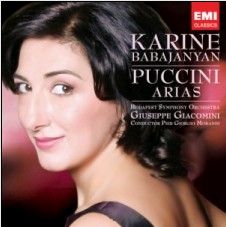
| |  | Karine Babajanyan – Puccini Arias
Armenian soprano Karine Babajanyan has made an international impact as Cio-Cio San in numerous Madama Butterfly productions and is one of today's outstanding performers of Puccini’s divas. “Karine Babajanyan succeeds not only acting wise but also gives us a musically complex portrayal of the title heroin...” the press wrote about her debut at the Opera House Graz as Cio-Cio-San, a role she has since performed at the New National Theatre Tokyo, the Hamburg State Opera, the Opera House Frankfurt, the State Theatres of Saarbrucken and Wiesbaden, and at the Stuttgart State Opera. Karine Babajanyan began her musical education with piano lessons at the age of seven and continued with singing and choir direction studies at the Erivan City Conservatory, graduating with distinction. After participating in master classes in Italy the young artist returned to her native country. Here, she received her first engagement at the Armenian National Opera. The versatile artist is hailed by both the press and the public for her “…warm-timbred, youthful dramatic voice…” in all the important roles of her repertoire e.g. the Contessa in ‘Le nozze di Figaro’, Fiordiligi in ‘Cosi fan tutte’, Mimi in ‘La Bohéme’, Leonora in ‘Il Trovatore’, just to name a few. In 2007 the attractive soprano made her widely noticed debut as Tosca at the Bregenz Festival in Austria – seen by cinema-goers worldwide in the opera scene in the James Bond film ‘Quantum Of Solace’. Further guest performances took Karine to the Aalto Theatre in Essen, the Mannheim National Theatre, to Bern, Basle, Oslo, Dorset and Mexico, where she keeps celebrating triumphs in roles such as Tatjana (Eugen Onegin), Norma, Leonora (La forza del destino), Maria (Mazeppa)‚ Maddalena (Andrea Chénier) and the press comments “not only is her voice true, powerful and beautiful, but she has that natural presence with which only few are blessed”. “There was great excitement at the British debut of Armenian soprano Karine Babajanyan in the title role, and she fully satisfied the anticipation. She has attracted rave reviews in Germany, Switzerland and Israel, and local audiences were indeed fortunate to see this remarkable singer so early in her career. Not only is her voice true, powerful and beautiful, but she has that natural presence with which only few are blessed, and her performance was magnetic” Blackmore Vale Magazine on Karine Babajanyan’s UK debut in Norma with Dorset Opera “Her technique sounds rock solid and her musical instincts are unerring. The surprise of the disc is the excellent condition of the 68-year-old Giuseppe Giacomini in the Butterfly and Manon Lescaut duets. He rounds off with a ringing Nessun dorma that puts most tenors half his age to shame.” Sunday Times, 5th April 2009 *** “Thanks partly to her appearance in the opera scene in Quantum of Solace, the Armenian soprano Karine Babajanyan is reaching a wide audience. Her appearance as Tosca is echoed here in a stirring "Vissi D'Arte", while her experience as Cio-Cio San comes through in the Butterfly arias "Un Bel Di, Vedremo" and the duet "Bimba Dagli Occhi Pieni Di Malia"; her partner in that, Giuseppe Giacomini, gets a showcase in "Nessun Dorma".” The Independent, 27th March 2009 *** | | | In stock - usually despatched within 1 working day. |
|
|
| |  | Puccini’s Heroines
“The clamorous reception given by the MET audience echoed my approbation; she is a finished glorious artist with a big divinely beautiful voice and a superior understanding of style, timing, and emotion… A tall, extremely pretty women, Diener also has a quality I find quite rare on today's opera stages: dignity. She radiated effortless and dignified self-possession that rendered important and touching actions that too often can seem to be only meaningless capers. I long to hear her again in anything she cares to sing.” Classical Singer | | | In stock - usually despatched within 1 working day. |
|
|
| |
|