Prices shown exclude VAT. (UK tax is not payable for deliveries to United States.) See Terms & Conditions for p&p rates. | |  | Benjamin Britten
| | | In stock - usually despatched within 1 working day. |
|
|
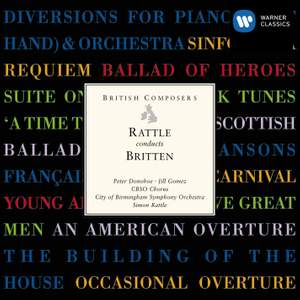
| |  | Rattle conducts Britten
| | | In stock - usually despatched within 1 working day. |
|
|
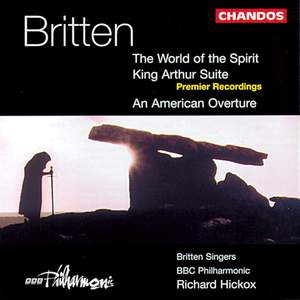
| |  | Britten - The World of the Spirit
“Hickox's performance of the Coplandesque AnAmerican Overture has exemplary polish, commitment and dash. The remaining items owe their revival to the efforts of Paul Hindmarsh. Britten wrote his incidental music for a BBC radio dramatisation of the King Arthur legend in 1937. It was the first of his 28 radio commissions and contains much high-quality invention. Hindmarsh has fashioned the 23-year-old composer's inventive inspiration into a terrific fourmovement orchestral suite lasting some 25 minutes, which Hickox and the BBC PO devour with audible relish. The 'radio cantata' The World of the Spirit dates from May 1938. Commissioned by the BBC as a successor to The Company of Heaven (1937), it intersperses sung and spoken texts chosen by R Ellis Roberts. Again, Britten's fertile compositional powers are much in evidence. The work contains a whole string of memorable numbers, from the lilting barcarolle- like treatment of Emily Brontë's 'With wide-embracing love', via the joyful strut and swagger of Part-2's concluding 'The Spirit of the Lord' with its unmistakable echoes of Walton's Belshazzar's Feast, to a strikingly imaginative setting of Gerard Manley Hopkins's God'sGrandeur. Framing the 42-minute edifice are two radiant settings of the Whitsuntide plainsong, Veni Creator Spiritus – an idea possibly inspired by a recent encounter with Mahler's Eighth Symphony at the Queen's Hall under Sir Henry Wood. The recording is superbly wide in its range and offers a realistic quality.” Gramophone Classical Music Guide, 2010 | | | (also available to download from $10.50) | Usually despatched in 2 - 3 working days. (Available now to download.) |
|
|
| |  |
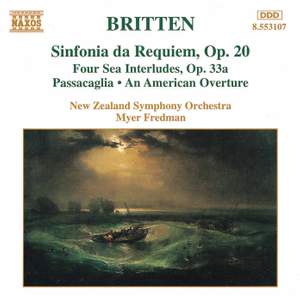
“Myer Fredman conducts warm and purposeful performances of this group of orchestral works....a full-ranging recording.” Penguin Guide | | | (also available to download from $6.00) | Usually despatched in 2 - 3 working days. (Available now to download.) |
|
|
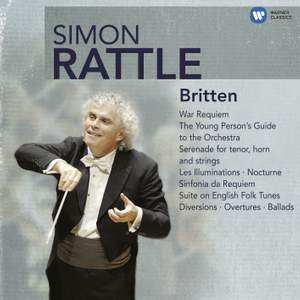
| |  | Simon Rattle conducts Britten
Britten: | An American Overture Ballad of Heroes, Op. 14 Robert Tear (tenor) Diversions for piano (left hand) and orchestra, Op. 21 Peter Donohoe (piano) The Building of the House Overture Praise We Great Men Alison Hargan (soprano), Mary King (contralto), Robert Tear (tenor) & Willard White (bass) Suite on English Folk Tunes 'A Time there was', Op. 90 Peter Walden (cor anglais) Canadian Carnival Overture, Op. 19 Wesley Warren (trumpet) Young Apollo, Op. 16 Peter Donohoe (piano), Felix Kok & Jeremy Ballard (violins), Peter Cole (viola), Michal Kaznowski (cello) Quatre Chansons Françaises Jill Gomez (soprano) Scottish Ballad, Op. 26 Peter Donohoe & Philip Fowke (pianos) Occasional Overture, Op. 38 Sinfonia da Requiem, Op. 20 Les illuminations, Op. 18 Berliner Philharmoniker Serenade for Tenor, Horn & Strings, Op. 31 Ian Bostridge (tenor) & Radek Baborák (horn) Berliner Philharmoniker Nocturne, Op. 60 for tenor, obbligato instruments and strings Ian Bostridge (tenor) Berliner Philharmoniker War Requiem, Op. 66 Elisabeth Söderström (soprano), Robert Tear (tenor), Sir Thomas Allen (baritone) & Mark Blatchly (chamber organ) Boys of Christ Church Cathedral, Oxford, CBSO Chorus & City of Birmingham Symphony Orchestra The Young Person's Guide to the Orchestra, Op. 34 City of Birmingham Symphony Orchestra Russian Funeral |
On the face of it one would have thought that there was little in common between Igor Stravinsky (1882-1971) and Benjamin Britten (1913-1976), two interesting facts prove otherwise. Britten, born in Lowestoft in Suffolk on 22nd November (St. Cecilia’s Day), had already and studied with Frank Bridge by the time he went to Gresham’s School in Holt, Norfolk, in September 1928. The Master in charge of music on meeting him remarked “Oh, you’re the boy who likes Stravinsky!” Today that remark might be considered a compliment, at that time Stravinsky was reviled as THAT composer who had perpetrated the outrage called “The Rite of Spring” fifteen years earlier. The funeral service for Stravinsky, who died on 6th April 1971 in New York, was held as he had requested in Venice nine days later and he was laid to rest near his friend and ballet impresario, Serge Diaghilev, on the Island of San Michele. Britten, too, had a great love for Venice as can be heard in his last opera based on Thomas Mann’s “Death in Venice”. Both composers are also high on Sir Simon Rattle’s list of favourite composers. In 2003 he and his Berlin Philharmonic gave workshops and a performance of Stravinsky’s Rite of Spring to the city’s disadvantaged children and as a past Artistic Director of Britten’s beloved Aldeburgh Festival he has conducted many of his works including a number of those that had been found after the death of the composer. The box of Stravinsky contains works from all parts of his musical life including six ballets; three major ones from his youth – The Firebird, showing the inspired palette for exotic colour learnt from his teacher, Rimsky-Korsakov, Petrushka (in its revised version of 1947) and The Rite of Spring; two in his Neo-Classical style – Apollo and Pulcinella and extracts from Agon which shows the influence of his studies of serial technique as expounded by Anton Webern. There are also a number of his works that were inspired by jazz. The box of Britten contains besides the three great song cycles (Les Illuminations, Serenade for Tenor, Horn & Strings and Nocturne) the “War Requiem”, “Sinfonia da Requiem”, the ever popular “Young Person’s Guide to the Orchestra” and the most remarkable set of songs written in French when he was 15, “Quatre Chansons Françaises”. | | | In stock - usually despatched within 1 working day. |
|
|
| |  | Britten: Orchestral Works (Britten Centenary Edition)
Britten: | Sinfonia da Requiem, Op. 20 Four Sea Interludes and Passacaglia from Peter Grimes, Op. 33 The Young Person's Guide to the Orchestra, Op. 34 Violin Concerto in D minor Op. 15 Piano Concerto, Op. 13 Young Apollo, Op. 16 Canadian Carnival Overture, Op. 19 Scottish Ballad, Op. 26 Diversions for piano (left hand) and orchestra, Op. 21 Occasional Overture, Op. 38 The Building of the House Overture An American Overture Simple Symphony, Op. 4 Variations on a theme of Frank Bridge, Op. 10 Prelude & Fugue for 18 strings, Op. 29 Lachrymae for viola & strings, Op. 48a Gloriana - Symphonic Suite Op. 53a Men of Goodwill (Variations on a Christmas Carol for orchestra) Symphony for Cello and Orchestra, Op. 68 Russian Funeral Matinées musicales (after Rossini), Op. 24 Soirées musicales (after Rossini), Op. 9 Sinfonietta, Op. 1 Suite on English Folk Tunes 'A Time there was', Op. 90 The Tocher (Rossini Suite) The Prince of the Pagodas, Op. 57 |
One of the most innovative and imaginative composers of the 20th century, Benjamin Britten was a master of the orchestral genre. This extensive collection charts the development of Britten’s orchestral voice and features some of his greatest works, including the evocative Four Sea Interludes, the powerful and majestic Sinfonia da Requiem, the virtuosic Young Person’s Guide to the Orchestra and the brilliantly colourful ballet score The Prince of the Pagodas. “The disc of music for string orchestra conducted by Iona Brown with the Norwegian Chamber Orchestra is an absolute stunner...As a whole this collection this is a valuable asset in its own right, containing as it does readings of many pieces that are otherwise unobtainable. And there are no duds and some real winners among these performances” MusicWeb International, 13th May 2013 | 
| EMI - 9781602 (CD - 8 discs) Normally: $34.50 Special: $23.75 |
| | In stock - usually despatched within 1 working day. |
|
|
| |  | Benjamin Britten - The Collector’s Edition
Britten: | Sinfonia da Requiem, Op. 20 Royal Liverpool Philharmonic Orchestra, Libor Pesek Four Sea Interludes from Peter Grimes, Op. 33a Royal Liverpool Philharmonic Orchestra, Libor Pesek The Young Person's Guide to the Orchestra, Op. 34 Royal Liverpool Philharmonic Orchestra, Libor Pesek Canadian Carnival Overture, Op. 19 Wesley Warren (trumpet) City of Birmingham Symphony Orchestra, Sir Simon Rattle Diversions for piano (left hand) and orchestra, Op. 21 Peter Donohoe (piano) City of Birmingham Symphony Orchestra, Sir Simon Rattle Scottish Ballad, Op. 26 Peter Donohoe & Philip Fowke (pianos) City of Birmingham Symphony Orchestra, Sir Simon Rattle An American Overture City of Birmingham Symphony Orchestra, Sir Simon Rattle Occasional Overture, Op. 38 City of Birmingham Symphony Orchestra, Sir Simon Rattle The Building of the House CBSO Chorus & City of Birmingham Symphony Orchestra, Sir Simon Rattle Piano Concerto, Op. 13 Leif Ove Andsnes (piano) City of Birmingham Symphony Orchestra, Paavo Järvi Violin Concerto in D minor Op. 15 Ida Haendel (violin) Bournemouth Symphony Orchestra, Paavo Berglund Young Apollo, Op. 16 Peter Donohoe (piano), Felix Kok, Jeremy Ballard (violins), Peter Cole (viola) & Michal Kaznowski (cello) City of Birmingham Symphony Orchestra, Sir Simon Rattle Simple Symphony, Op. 4 Norwegian Chamber Orchestra, Iona Brown Variations on a theme of Frank Bridge, Op. 10 Norwegian Chamber Orchestra, Iona Brown Prelude & Fugue for 18 strings, Op. 29 Norwegian Chamber Orchestra, Iona Brown Lachrymae for viola & strings, Op. 48a Lars Anders Tomter (viola) Norwegian Chamber Orchestra, Iona Brown Gloriana - Symphonic Suite Op. 53a Royal Liverpool Philharmonic Orchestra, Takuo Yuasa Symphony for Cello and Orchestra, Op. 68 Steven Isserlis (cello) City of London Sinfonia, Richard Hickox Men of Goodwill (Variations on a Christmas Carol for orchestra) Minnesota Orchestra, Sir Neville Marriner Sinfonietta, Op. 1 Pauline Lowbury & Julian Tear (violins) Britten Sinfonia, Daniel Harding Russian Funeral City of Birmingham Symphony Orchestra, Sir Simon Rattle Suite on English Folk Tunes 'A Time there was', Op. 90 Peter Walden (cor anglais) City of Birmingham Symphony Orchestra, Sir Simon Rattle Matinées musicales (after Rossini), Op. 24 English Chamber Orchestra, Sir Alexander Gibson Soirées musicales (after Rossini), Op. 9 English Chamber Orchestra, Sir Alexander Gibson The Tocher (Rossini Suite) Boys of the Choir of Paisley & Scottish Chamber Orchestra, Steuart Bedford The Prince of the Pagodas, Op. 57 London Sinfonietta, Oliver Knussen Rhapsody for String Quartet Endellion String Quartet Quartettino Endellion String Quartet String Quartet No. 1 in D major, Op. 25 Endellion String Quartet Phantasy in F minor for string quintet Nicholas Logie (viola) Endellion String Quartet Elegy for unaccompanied viola Garfield Jackson (viola) Phantasy Quartet for Oboe & String Trio, Op. 2 Endellion String Quartet Three Divertimenti Endellion String Quartet String Quartet No. 2 in C major, Op. 36 Endellion String Quartet String Quartet in D major (1931) Endellion String Quartet String Quartet No. 3, Op. 94 Endellion String Quartet Suites for cello solo, Nos. 1-3 Truls Mørk (cello) Holiday Diary Op. 5 for solo piano Stephen Hough, Ronan O’Hara (pianos) Three Character Pieces Stephen Hough, Ronan O’Hara (pianos) Moderato, Nocturne & Twelve Variations on a Theme from Sonatina romantica Stephen Hough, Ronan O’Hara (pianos) Five Waltzes for piano Stephen Hough, Ronan O’Hara (pianos) Two Lullabies for Two Pianos Stephen Hough, Ronan O’Hara (pianos) Introduction and Rondo alla burlesca, op.23 No.1 Stephen Hough, Ronan O’Hara (pianos) Suite Op. 6 Alexander Barantschik (violin) & John Adey (piano) Sonata for cello and piano in C major, Op. 65 Moray Welsh (cello) & John Lenehan (piano) Six Metamorphoses after Ovid for solo oboe, Op. 49 Roy Carter (oboe) Nocturnal after John Dowland, Op. 70 Julian Bream (guitar) War Requiem, Op. 66 Elisabeth Söderström (soprano), Robert Tear (tenor), Sir Thomas Allen (baritone) & Mark Blatchly (chamber organ) Boys of Christ Church Cathedral, Oxford, CBSO Chorus & City of Birmingham Symphony Orchestra, Sir Simon Rattle Spring Symphony, Op. 44 Sheila Armstrong (soprano), Dame Janet Baker (contralto) & Robert Tear (tenor) St. Clement Danes School Boys’ Choir, London Symphony Chorus & London Symphony Orchestra, André Previn Hymn to St Cecilia, Op. 27 Richard Cross (treble) Choir of King’s College, Cambridge, Sir David Willcocks A Ceremony of Carols, Op. 28 James Clark, Julian Godlee (trebles) & Osian Ellis (harp) Choir of King’s College, Cambridge, Sir David Willcocks Missa Brevis in D major, Op. 63 Julian Brown, Christopher Anderson, Anthony Sackville, Rory Phillips & James Clark (trebles) & Ian Hare (organ) Choir of King’s College, Cambridge, Sir David Willcocks Festival Te Deum in E, Op. 32 Simon Channing (treble) & James Lancelot (organ) Choir of King’s College, Cambridge, Sir Philip Ledger Rejoice in the Lamb, Op. 30 Simon Channing (treble), James Bowman (countertenor), Richard Morton (tenor), Marcus Creed (bass), James Lancelot (organ) & David Corkhill (percussion) Choir of King’s College, Cambridge, Sir Philip Ledger Te Deum in C Rory Phillips (treble) & James Lancelot (organ) Choir of King’s College, Cambridge, Sir Philip Ledger Jubilate Deo in C major (1961) Choir of King’s College, Cambridge, Sir Philip Ledger A Hymn to the Virgin Stephen Barton (treble), Hugh Hudleston (treble), Warren Trevelyan-Jones (tenor) & Francis Pott (bass) Winchester Cathedral Choir, David Hill St Nicolas, Op. 42 Words by Eric Crozier Robert Tear (tenor), Bruce Russell (treble), Andrew Davis & Ian Hare (piano duet Cambridge Girls’ Choir, Choir of King’s College, Cambridge & Academy of St Martin in the Fields, Sir David Willcocks Hymn to St. Peter, Op. 56a Mark Emney, Peter Rowe (trebles) & Timothy Farrell (organ) Wandsworth School Choir, Russell Burgess A Hymn of Saint Columba Mark Emney, Peter Rowe (trebles), Christopher Hughes, Timothy Farrell (organ) Choir of King’s College, Cambridge & Wandsworth School Choir, Russell Burgess Sacred and Profane, Op. 91 Vasari Singers, Jeremy Backhouse The Little Sweep, Op. 45 Words by Eric Crozier Robert Lloyd, Robert Tear, Sam Monck, Heather Begg, Catherine Benson, Cato Fordham, Catherine Wearing, Mary Wells, David Glick, Colin Huehns & Katherine Willis Finchley Children’s Music Group, Choral Scholars of King’s College, Cambridge & Medici String Quartet, Sir Philip Ledger A Boy was Born, Op. 3 London Sinfonietta Chorus & Choristers of St. Paul’s Cathedral, Terry Edwards A Shepherd's Carol Sarah Leonard (soprano), Susan Bickley (mezzo-soprano), Peter Hall (tenor) & Gordon Jones (baritone) London Sinfonietta Chorus, Terry Edwards Noye's Fludde Richard Pasco, Donald Maxwell, Linda Ormiston, Alexander Gallifant, Timothy Lamb, Nicholas Berry, Catriona Johnson, Polly Hewetson & Joanna Brown Coull String Quartet & Schools’ Orchestra from schools of Salisbury and Chester, Richard Hickox A.M.D.G. London Sinfonietta Chorus, Terry Edwards The Ballad of Little Musgrave and Lady Barnard (Text: The Oxford Book of Ballads) Baccholian Singers of London The Company of Heaven Peter Barkworth, Sheila Allen (narrators), Cathryn Pope (soprano), Dan Dressen (tenor) & Christopher Herrick (organ) London Philharmonic Choir & English Chamber Orchestra, Philip Brunelle Ballad of Heroes, Op. 14 Robert Tear (tenor) CBSO Chorus & City of Birmingham Symphony Orchestra, Sir Simon Rattle Praise We Great Men Alison Hargan (soprano), Mary King (contralto), Robert Tear (tenor) & Willard White (bass) CBSO Chorus & City of Birmingham Symphony Orchestra, Sir Simon Rattle Les illuminations, Op. 18 Heather Harper (soprano) Northern Sinfonia Orchestra, Sir Neville Marriner Serenade for Tenor, Horn & Strings, Op. 31 Neil Mackie (tenor) & Barry Tuckwell (horn) Scottish Chamber Orchestra, Steuart Bedford Now Sleeps the Crimson Petal, for tenor, horn and strings orch. Colin Matthews Neil Mackie (tenor) & Barry Tuckwell (horn) Scottish Chamber Orchestra, Steuart Bedford Nocturne, Op. 60 for tenor, obbligato instruments and strings Robert Tear (tenor) English Chamber Orchestra, Jeffrey Tate Quatre Chansons Françaises Jill Gomez (soprano) City of Birmingham Symphony Orchestra, Sir Simon Rattle Our Hunting Fathers, Op. 8 Elisabeth Söderström (soprano) Orchestra of the Welsh National Opera, Richard Armstrong Four Folksong Settings Elisabeth Söderström (soprano) Orchestra of the Welsh National Opera, Richard Armstrong Phaedra, Op. 93 Felicity Palmer (mezzo-soprano), Jane Salmon (cello) & Melvyn Tan (harpsichord) Endymion Ensemble, John Whitfield Five French Folksong arrangements Felicity Palmer (mezzo-soprano) Endymion Ensemble, John Whitfield Seven Sonnets of Michelangelo, Op. 22 Peter Pears (tenor) & Benjamin Britten (piano) The Holy Sonnets of John Donne, Op. 35 Peter Pears (tenor) & Benjamin Britten (piano) On this Island, Op. 11 Robert Tear (tenor) & Sir Philip Ledger (piano) Winter Words, Op. 52 Robert Tear (tenor) & Sir Philip Ledger (piano) Canticles I-V Ian Bostridge (tenor), David Daniels (countertenor), Christopher Maltman (baritone), Timothy Brown (horn), Aline Brewer (harp) & Julius Drake (piano) Folksongs (selection) Ian Bostridge (tenor), David Daniels (countertenor), Christopher Maltman (baritone), Timothy Brown (horn), Aline Brewer (harp) & Julius Drake (piano) The Children and Sir Nameless (Hardy) Neil Mackie (tenor) & Roger Vignoles (piano) Beware! - Three Early Songs Neil Mackie (tenor) & Roger Vignoles (piano) To lie flat on the back with the knees flexed (No. 1 from Fish in the Unruffled Lakes) Neil Mackie (tenor) & Roger Vignoles (piano) Three rhymes by William Soutar Neil Mackie (tenor) & Roger Vignoles (piano) Tit for Tat Jonathan Lemalu (bass baritone) & Malcolm Martineau (piano) Two Ballads for two voices and piano Felicity Lott (soprano) & Ann Murray (mezzo-soprano) Folksongs (selection) Robert Tear (tenor) & Sir Philip Ledger (piano) Folksongs (selection) Sarah Brightman (soprano) & Geoffrey Parsons (piano) Paul Bunyan Soloists, Chorus & Orchestra of the Plymouth Music Series, Philip Brunelle Peter Grimes Recorded: VI.1992, Watford Town Hall Anthony Rolfe Johnson, Felicity Lott, Thomas Allen, Patricia Payne, Maria Bovino, Gillian Webster, Stuart Kale, Stafford Dean, Sarah Walker, Neil Jenkins, Simon Keenlyside, David Wilson-Johnson Chorus and Orchestra of the Royal Opera House, Covent Garden, Bernard Haitink The Turn of the Screw Recorded: 17–19.I.2002, Maltings Concert Hall, Snape, Suffolk Ian Bostridge, Joan Rodgers, Julian Leang, Caroline Wise, Jane Henschel, Vivian Tierney Mahler Chamber Orchestra, Daniel Harding A Midsummer Night's Dream Recorded: XI.1990 James Bowman, Lillian Watson, Dexter Fletcher, John Graham-Hall, Henry Herford, Della Jones, Jill Gomez, Norman Bailey, Penelope Walker Trinity Boys’ Choir, City of London Sinfonia, Richard Hickox The Rape of Lucretia Abridged recording of the revised version (1947), Recorded: 16–19.VII. & 19.X.1947, No.1 Studio, Abbey Road, London Nancy Evans (Lucretia), Peter Pears (Male Chorus), Joan Cross (Female Chorus), Frederick Sharp (Tarquinius), Norman Lumsden (Collatinus), Dennis Dowling (Junius), Margaret Ritchie (Lucia), Flora Nielsen (Bianca) English Opera Group Chamber Orchestra, Reginald Goodall Night covers up the rigid land (No. 2 from Fish in the Unruffled Lakes) Neil Mackie (tenor) & Roger Vignoles (piano) If it's ever Spring again (Hardy) Neil Mackie (tenor) & Roger Vignoles (piano) |
Benjamin Britten was born on the day of the Patron Saint of Music – St. Cecilia – 22nd November in 1913 in Lowestoft. He showed remarkable skill at composition from his earliest days. In 1924 he met Frank Bridge (1879-1941), a fine composer in his own right, and became his pupil; through him he developed an appreciation of contemporary music with scores by Bartók and the Schönberg school, particulary Berg. In 1930 he entered the Royal College of Music and developed the pianistic skills which made him such a brilliant interpreter of both his own music and other greats particularly Mozart and Schubert. From these times date the beautiful A Hymn to the Virgin, Quatre Chansons Françaises and the Sinfonietta, his official Op. 1. He visited Vienna in 1934 and saw Wozzeck but family resistance prevented him studying with Berg (who, in any case, died from blood poisoning caused by an insect sting a year later). He worked for some years in the film unit of the General Post Office where he met W.H. Auden whose poetry inspired the brilliant song cycle Our Hunting Fathers. The experience in the film unit enabled him to develop the expressive immediacy and technical abilities – often using small and unconventional resources – which would assist his composition of operas in the years to come. In 1939 he decided to follow Auden to America, accompanying him was the tenor Peter Pears (1910-1986) who was to be the inspiration behind so many great operatic roles and song cycles. There he composed the Sinfonia da Requiem, the Michelangelo Sonnets and the First Quartet. His first opera, Paul Bunyan, to an Auden libretto, was also composed there but then withdrawn (it was revived for the Aldeburgh Festival in the year he died). He started to get the pangs of homesickness especially when he read, by chance, an article by E.M. Forster on the Suffolk poet Crabbe (whose work was to lead to arguably his greatest success) and he returned to England in 1942. He wrote A Ceremony of Carols and Hymn to St. Cecilia (another Auden text) during this year. For British Opera the date 7th June 1945 will always remain a red-letter day as it heralded the premiere of a masterpiece, Peter Grimes. The triumph not only established Britten as Purcell’s successor as Britain’s greatest music dramatist but its numerous performances abroad showed that Britain had an international composer celebrity. The Rape of Lucretia was premiered the following year as was the work by which Britten is probably best remembered – certainly by thankful schoolchildren for their guide to the Orchestra. Here he subjects the theme by Purcell to a series of ingenious variations played by each member of the orchestra and then as groups and finally a fugue where everything comes together in a simply unforgettable coda. Indeed when one examines Britten’s output it is hard not to credit him with at least one work of genius, if not a masterpiece, virtually every year for the rest of his composing life – whether it be an opera, for example The Turn of the Screw in 1954 or A Midsummer Night’s Dream in 1960; a choral work, for example Spring Symphony in 1949 or the War Requiem in 1961, a large vocal work, for example Serenade for tenor, horn and strings in 1943, Nocturne in 1958 and Phaedra in 1975; a smaller vocal work, for example the Canticles of 1947, 1952, 1954, 1971 & 1974; the works he wrote for Mstislav Rostropovich – the Cello Sonata in 1961, the Cello Symphony in 1963 and the three Solo Cello Suites in 1964, 1967 & 1971; the two remaining string quartets in 1945 & 1975 and a full length ballet The Prince of the Pagodas in 1956. Besides setting many classic poets from Britain including Blake, Burns, Coleridge, Donne, Hardy, Keats, Jonson, Milton, Owen, Shakespeare, Shelley, Spenser, Tennyson and Wordsworth he also set texts in French (Hugo, Rimbaud and Verlaine), Italian (Michelangelo), German (Hölderlin) and Russian (Pushkin). He was also partly responsible for the reawakening of interest in the music of his great predecessor, Henry Purcell by making realizations of a large number of his works. He also launched the music festival in his adopted town of Aldeburgh. | | | In stock - usually despatched within 1 working day. |
|
|
| |  | Benjamin Britten 100 - The Complete* works* includes all works with opus numbers and all works commercially recorded to date. Includes folksongs, excludes Purcell realisations and Hindmarsh’s arrangements of incidental music to King Arthur and World of the Spirit
anon.: | God Save The Queen arr. Britten London Symphony Chorus, London Symphony Orchestra, Benjamin Britten | Britten: | Paul Bunyan Pop Wagner (Narrator), James Lawless (Paul Bunyan), Dan Dressen (Johnny Inkslinger), Elisabeth Comeaux Nelson (Tiny), Clifton Ware (Slim), James Bohn (Hel Helson), Phil Jorgenson (First Swede), Tim Dahl (Second Swede), Thomas Shaffer (Third Swede), Lawrence Weller (Fourth Swede), James McKeel (John Shears), James Westbrock (Western Union Boy), Maria Jette (Fido), Sue Herber (Moppet), Janis Hardy (Poppet) Orchestra & Chorus of the Plymouth Music Series, Philip Brunelle Peter Grimes Peter Pears (Peter Grimes), Claire Watson (Ellen Orford), James Pease (Balstrode), Jean Watson (Auntie), Raymond Nilsson (Bob Boles), Owen Brannigan (Swallow), Geraint Evans (Ned Keene), Lauris Elms (Mrs Sedley), David Kelly (Hobson), Marion Studholme (First Niece), Iris Kells (Second Niece), John Lanigan (Horace Adams) Chorus & Orchestra of the Royal Opera House, Covent Garden, Benjamin Britten The Rape of Lucretia Janet Baker (Lucretia), Peter Pears (Male Chorus), Heather Harper (Female Chorus), Benjamin Luxon (Tarquinius), Bryan Drake (Junius), John Shirley-Quirk (Collatinus), Elizabeth Bainbridge (Bianca), Jenny Hill (Lucia) English Chamber Orchestra, Benjamin Britten Albert Herring Peter Pears (Albert), Sylvia Fisher (Lady Billows), Sheila Rex (Mum), John Noble (Mr Gedge), Catherine Wilson (Nancy), Joseph Ward (Sid), Johanna Peters (Florence Pike), Edgar Evans (Mr Upfold), April Cantelo (Miss Wordsworth), Owen Brannigan (Budd), Sheila Amit (Emmie), Anne Pashley (Cis), Stephen Terry (Harry) English Chamber Orchestra, Benjamin Britten Billy Budd Peter Glossop (Billy Budd), Peter Pears (Captain Vere), Michael Langdon (Claggart), John Shirley-Quirk (Mr Redburn), Bryan Drake (Mr Flint), David Kelly (Mr Ratcliffe), Kenneth MacDonald (Red Whiskers), David Bowman (Donald), Dennis Wicks (Dansker), Robert Tear (Novice), Robert Bowman (Squeak), Benjamin Luxon (Novice's Friend) London Symphony Orchestra, Benjamin Britten Gloriana Josephine Barstow (Elizabeth), Philip Langridge (Essex), Della Jones (Lady Essex), Jonathan Summers (Charles Blount), Alan Opie (Cecil), Yvonne Kenny (Lady Rich), Bryn Terfel (Henry Cuffe), Richard van Allan (Walter Ralegh), Willard White (Ballad Singer), Janice Watson (Lady in Waiting), John Shirley-Quirk (Recorder of Norwich), John Mark Ainsley (Spirit of the Masque) Orchestra & Chorus of Welsh National Opera, Charles Mackerras The Turn of the Screw Peter Pears (Prologue/Quint), Jennifer Vyvyan (Governess), Joan Cross (Mrs Grose), Olive Dyer (Flora), David Hemmings (Miles), Arda Mandikian (Miss Jessel) English Opera Group, Benjamin Britten A Midsummer Night's Dream Elizabeth Harwood (Tytania), Alfred Deller (Oberon), Peter Pears (Lysander), Thomas Hemsley (Demetrius), Heather Harper (Helena), Josephine Veasey (Hermia), John Shirley-Quirk (Theseus), Helen Watts (Hippolyta), Owen Brannigan (Bottom), Norman Lumsden (Quince) London Symphony Orchestra, Benjamin Britten Owen Wingrave Benjamin Luxon (Owen Wingrave), John Shirley-Quirk (Spencer Coyle), Sylvia Fisher (Miss Wingrave), Heather Harper (Mrs Coyle), Jennifer Vyvyan (Mrs. Julien), Peter Pears (Sir Philip Wingrave/Narrator), Janet Baker (Kate), Nigel Douglas (Lechmere) English Chamber Orchestra, Benjamin Britten Death in Venice Peter Pears (Aschenbach), John Shirley-Quirk (Traveller/Elderly Fop/Old Gondolier/Hotel Manager/Hotel Barber/Leader of the Players/Voice of Dionysus), James Bowman (Voice of Apollo) English Chamber Orchestra, Steuart Bedford Noye's Fludde Owen Brannigan (Noye), Sheila Rex (Mrs Noye), Trevor Anthony (The Voice of God), David Pinto (Sem), Darien Angadi (Ham), Stephen Alexander (Jaffett), Caroline Clack (Mrs Sem), Marie Thérèse Pinto (Mrs Ham), Eileen O'Donovan (Mrs Jaffett) English Chamber Orchestra, An East Suffolk Children's Orchestra, Norman Del Mar The Golden Vanity Benjamin Britten (piano) Wandsworth School Boys' Choir, Russell Burgess Curlew River Peter Pears (Madwoman), John Shirley-Quirk (Ferryman), Harold Blackburn (Abbot), Bryan Drake (Traveller), Bruce Webb (Voice of Spirit) English Opera Group, Benjamin Britten The Burning Fiery Furnace Peter Pears (Nebuchadnezzar), Bryan Drake (Astrologer), John Shirley-Quirk (Ananias), Robert Tear (Misael), Stafford Dean (Azarias), Peter Leeming (Herald) English Opera Group, Benjamin Britten The Prodigal Son Peter Pears (Tempter/Abbot), John Shirley-Quirk (Father), Bryan Drake (Elder), Robert Tear (Younger Son) English Opera Group, Benjamin Britten The Little Sweep, Op. 45 David Hemmings (Sam), Jennifer Vyvyan (Rowan), Nancy Thomas (Miss Baggot), April Cantelo (Juliet Brook), Trevor Anthony (Tom/Black Bob), Peter Pears (Clem/Alfred), Michael Ingram (Gay Brook), Marilyn Baker (Sophie Brook), Robin Fairhurst (John Crome), Lyn Vaughan (Hugh Crome), Gabrielle Soskin (Tina Chrome) Orchestra of the English Opera Group, Alleyn's School Choir, Benjamin Britten Children's Crusade Op. 82 Benjamin Britten (piano) Russell Burgess The Prince of the Pagodas, Op. 57 Orchestra of the Royal Opera House, Covent Garden Plymouth Town – ballet BBC Symphony Orchestra, Grant Llewellyn Night Mail The Tocher (Rossini Suite) The King’s Stamp Negroes The Way to The Sea Telegrams Peace of Britain Men Behind The Meters Coal Face Love from a Stranger Johnson over Jordan Suite The Rescue of Penelope Parts 1 and 2 The Company of Heaven The Sword in the Stone Russian Funeral On the Frontier War Requiem, Op. 66 Galina Vishnevskaya (soprano), Peter Pears (tenor), Dietrich Fischer-Dieskau (baritone) & Simon Preston (organ) London Symphony Orchestra, Melos Ensemble, London Symphony Orchestra Chorus, Highgate School Choir & The Bach Choir, Benjamin Britten Spring Symphony, Op. 44 Jennifer Vyvyan, Norma Proctor, Peter Pears Orchestra & Chorus of the Royal Opera House, Covent Garden, Benjamin Britten Cantata Academica, Op. 62 Jennifer Vyvyan, Helen Watts, Peter Pears, Owen Brannigan London Symphony Orchestra & Chorus, Benjamin Britten Hymn to St Cecilia, Op. 27 London Symphony Chorus, George Malcolm St Nicolas, Op. 42 Peter Pears (tenor) Aldeburgh Festival Orchestra, Benjamin Britten Five Flower Songs, Op. 47 The Elizabethan Singers, Louis Halsey Cantata Misericordium, Op. 69 Peter Pears (tenor), Dietrich Fischer-Dieskau (baritone) London Symphony Orchestra & Chorus, Benjamin Britten A Boy was Born, Op. 3 Corpus Christi Carol A Wealden Trio: Christmas Song of the Women Christ's Nativity A Ceremony of Carols, Op. 28 The Holly and the Ivy Songs from "Friday Afternoons", Op. 7 Psalm 150, Op. 67 3 Two-Part Songs Two Two-Partsongs The birds A Hymn to the Virgin Jubilate Deo in E flat major (1934) Te Deum in C Advance Democracy Deus in adjutorium meum (Psalm 70) A.M.D.G. Rejoice in the Lamb, Op. 30 The Ballad of Little Musgrave and Lady Barnard (Text: The Oxford Book of Ballads) Chorale after an Old French Carol Festival Te Deum in E, Op. 32 Choir of St. John's College, Cambridge, George Guest A Wedding Anthem, Op. 46 Hymn to St. Peter, Op. 56a Antiphon, Op. 56b Missa Brevis in D major, Op. 63 Westminster Cathedral Choir, George Malcolm Jubilate Deo in C major (1961) Brian Runnett (organ) Choir of St. John's College, Cambridge, George Guest Venite Exultemus Domino Choir of Trinity College, Richard Marlow A Hymn of Saint Columba Choir of St. John's College, Cambridge, George Guest Voices for Today, Op. 75 Cambridge University Musical Society Chorus, The Choir of King's College, Cambridge, David Willcocks Sacred and Profane, Op. 91 The Wilbye Consort, Peter Pears Welcome Ode Op. 95 Suffolk Schools' Orchestra, Jubilee Choir, Keith Shaw Praise We Great Men Alison Hargan (soprano), Mary King (mezzo), Robert Tear (tenor), Willard White (bass) City of Birmingham Symphony Chorus, City Of Birmingham Symphony Orchestra, Sir Simon Rattle Quatre Chansons Françaises Jill Gomez City of Birmingham Symphony Orchestra, Sir Simon Rattle Our Hunting Fathers, Op. 8 Peter Pears (tenor) Ballad of Heroes, Op. 14 City of Birmingham Symphony Chorus, City Of Birmingham Symphony Orchestra, Sir Simon Rattle Serenade for Tenor, Horn & Strings, Op. 31 Peter Pears (tenor), Barry Tuckwell (horn) London Symphony Orchestra, Benjamin Britten Les illuminations, Op. 18 Sandrine Piau (soprano) Northern Sinfonia, Thomas Zehetmair Nocturne, Op. 60 for tenor, obbligato instruments and strings Peter Pears (tenor); Barry Tuckwell, Osian Ellis, Denis Blyth, Roger Lord, Alexander Murray, Gervase de Peyer, William Waterhouse London Symphony Orchestra, Benjamin Britten Phaedra, Op. 93 Janet Baker (mezzo) English Chamber Orchestra, Steuart Bedford Canticles I-V Peter Pears (tenor), Benjamin Britten (piano), John Shirley-Quirk (baritone), James Bowman (countertenor) A Birthday Hansel, Op. 92 The Heart of the Matter Tit for Tat On this Island, Op. 11 Cabaret Songs Seven Sonnets of Michelangelo, Op. 22 The Holy Sonnets of John Donne, Op. 35 A Charm of Lullabies for mezzo-soprano and pianoforte, Op. 41 (1947) Winter Words, Op. 52 If it's ever Spring again (Hardy) The Children and Sir Nameless (Hardy) Songs from the Chinese, Op. 58 Six Hölderlin Fragments, Op. 61 Songs and Proverbs of William Blake, Op. 74 Ekho poeta (The Poet's Echo) Op. 76 Who are these children?, Op. 84 Dawtie’s Devotion The Gully Tradition Folksongs (selection) Sinfonietta, Op. 1 Simple Symphony, Op. 4 Soirées musicales (after Rossini), Op. 9 Matinées musicales (after Rossini), Op. 24 Rondo Concertante for piano and strings Untitled Fragment for strings Two Portraits Double Concerto Movements for a Clarinet Concerto for clarinet and strings Piano Concerto, Op. 13 Violin Concerto in D minor Op. 15 Mont Juic – Suite of Catalan Dances, Op.12 (with Lennox Berkeley) Young Apollo, Op. 16 Canadian Carnival Overture, Op. 19 Sinfonia da Requiem, Op. 20 Diversions for piano (left hand) and orchestra, Op. 21 Scottish Ballad, Op. 26 An American Overture Prelude & Fugue for 18 strings, Op. 29 The Young Person's Guide to the Orchestra, Op. 34 Men of Goodwill (Variations on a Christmas Carol for orchestra) Variations on an Elizabethan Theme Occasional Overture, Op. 38 Symphony for Cello and Orchestra, Op. 68 In memoriam Dennis Brain for 4 horns and strings The Building of the House Overture Suite on English Folk Tunes 'A Time there was', Op. 90 Lachrymae for viola & strings, Op. 48a Reflection for viola & piano Elegy for unaccompanied viola Lachrymae for viola & piano, Op. 48 Suite Op. 6 Reveille Two Insect Pieces for Oboe and Piano Temporal Variations for oboe & piano Six Metamorphoses after Ovid for solo oboe, Op. 49 Suites for cello solo, Nos. 1-3 Nocturnal after John Dowland, Op. 70 Suite for harp in C major, Op. 83 String Quartet No. 3, Op. 94 Temas 'Sacher' String Quartet in F Major (1928) Miniature Suite Rhapsody for String Quartet Quartettino Phantasy in F minor for string quintet Alla Marcia Three Divertimenti String Quartet in D major (1931) String Quartet No. 1 in D major, Op. 25 String Quartet No. 2 in C major, Op. 36 Phantasy Quartet for Oboe & String Trio, Op. 2 Alpine Suite for Recorder Trio Scherzo for Recorder Quartet Fanfare for St. Edmondsbury for three trumpets Lamentation - Voluntary on a Theme of Thomas Tallis They Walk Alone: Prelude Village Organist's Piece Prelude & Fugue on a Theme of Vittoria Gemini Variations Op. 73 Introduction and Rondo alla burlesca, op.23 No.1 Mazurka Elegiaca op.23 no.2 Five Waltzes for piano A Little Idyll Three Character Pieces Variations (12) on a Theme Two Lullabies for Two Pianos Holiday Diary Op. 5 for solo piano Sonatina romantica (1940) Night Pieces (Notturno) for piano Variations for piano solo | Gay: | The Beggar's Opera Yvonne Kenny (Lucy Lockit), Ann Murray (Mrs Peachum), Anne Collins (Mrs Peachum), Philip Langridge (Macheath), John Rawnsley (Lockit ), Robert Lloyd (Peachum), Christopher Gillett (Filch), Nuala Willis (Mrs Trapes), Declan Mulholland (Beggar) Steuart Bedford | Purcell: | Sweeter than Roses (from Pausanius, the Betrayer of his Country, Z585) arr. Britten |
CD 62 Making Music with Britten – A Memoir Written, produced and narrated by Jon Tolansky CD 63 War Requiem Rehearsal CD 64 Historic Recordings (1944 – 1953) Including the first recording of the Serenade, Op. 31 (1944), Mazurka elegiaca (with Clifford Curzon) and Sinfonia da Requiem (1953 Danish State Radio Symphony Orchestra, conducted by Britten) CD 65 Supplementary Recordings (1955 – 1989) Including 5 songs from Friday Afternoons (with John Hahessy and Britten accompanying) and the original 3rd movement from the Piano Concerto. DVD The 1967 Recording of the Burning Fiery Furnace – a film by Tony Palmer
To commemorate the 100th anniversary of the birth of England’s greatest composer since Henry Purcell, Decca Classics presents the ultimate Britten box Britten and Decca enjoyed a unique relationship with the composer, recording most of his key works for the label. Decca’s 1963 set of the War Requiem remains one of the fastest-selling classical releases of all time. The recordings not in the Decca catalogue have been licensed from other companies including EMI, Virgin Classics, Naxos and Warner – a total of 18 rights holders have assisted to make this extraordinary achievement possible, plus the endorsement & support of the Britten-Pears Foundation. Benjamin Britten was born 22nd November 1913, the feast day of St Cecilia, patron saint of music. Over four intensely creative decades he went on to publish over 100 works, of which the most important dominated and shaped their respective genres – opera with Peter Grimes, the choral oratorio with War Requiem, music to inspire newcomers (Young Person’s Guide to the Orchestra), the Song Cycle (Serenade for Tenor Horn and Strings). The sheer range is astonishing. Britten is the subject of a colossal campaign, Britten100, under the auspices of the Britten-Pears Foundation who have invested £6.5 million in further driving international awareness of the composer. This 65-CD edition is guaranteed to appeal to Britten enthusiasts worldwide. · Individually numbered, limited edition (1 to 3,000) · 208-page hardback book including:- - A gallery of original LP sleeves, arranged chronologically from 1953 onwards - Copious Recording session pictures and beautiful Aldeburgh landscapes newly photographed - ‘Choosing a Record Company’ by discographer Philip Stuart - ‘Ben – A Tribute to Benjamin Britten (1913-1976)’ by John Culshaw (originally published in Gramophone Magazine, February 1977) - Peter Glossop’s Memoir on the role of Billy Budd and working with Britten - Complete alphabetical index of works included in the edition. · The set is organised into 4 main sections, each with its own individual book: The Operas; Stage & Screen; Voices; Instruments · Each book contains a detailed article by Andrew Huth, full track listings and recording information. · 4 bonus CDs - including a series of interviews by Jon Tolansky, first recordings and rarities never before released on CD and the War Requiem rehearsal sequence · New War Requiem hi-res transfer from original master tapes · The set also features the Tony Palmer film on the making of the 1967 recording of The Burning Fiery Furnace, an unrivalled look at John Culshaw and the Decca team at work Extra postage costs: As this set is very heavy (we guess around 5kg) we unfortunately need to charge some extra postage costs to certain countries.
UK and most of Western Europe: No extra charges - Normal rates apply.
Rest of World: Varies by country. Please contact us for further details. | 
| Decca - 4785364 (CD - 65 discs) Normally: $262.75 Special: $236.50 |
| | Scheduled for release on 17 June 2013. Order it now and we will deliver it as soon as it is available. |
|
|
| |
|