Prices shown exclude VAT. (UK tax is not payable for deliveries to United States.) See Terms & Conditions for p&p rates. | |  | Mary and Elizabeth at Westminster AbbeySisters in Hope of the Resurrection
Our second October release from Westminster Abbey tells the story of the religious and political turmoil that engulfed England in the sixteenth century, and from which composers of liturgical music could find no escape. They were forced to follow the changing edicts about permitted texts as the pendulum of power oscillated between traditional and reformed religion. Interestingly, this period saw the greatest flowering of church music in England’s history; some of the most magnificent works of the age are recorded here. November 1558 is the chronological centrepoint of this disc. The first half of the programme consists of music performed (not necessarily in all cases composed) during Mary’s reign; the second half, beginning with the evening canticles from Sheppard’s Second Service, explores something of the immense variety of sacred music produced during the subsequent, much longer and more celebrated reign of Mary’s Protestant half-sister. “Undoubtedly the most impressive achievement here is Mundy's Vox Patris caelestis… the cohesion of the ensemble forces admiration, as indeed does the trebles' athleticism and stamina. I'd also single out Nicholas Trapp, the treble solo in Byrd's Teach me, O Lord, and the choir as a whole in the opening and closing numbers... As a showcase for English choral singing at its most charismatic, this deserves to be widely heard.” Gramophone Magazine, December 2008 “The brilliance of the programming matches that of the singing. By ranging lesser-known works, such as Mundy's, alongside familiar music such as William Byrd's anthems, we can appreciate how foreign and original were the new styles of church composition under Queen Elizabeth.” BBC Music Magazine, March 2009 ***** “Following the success in the Gramophone Awards of the Choir of New College, Oxford, this first–rate survey of old favourites suggests that collegiate institutions such as these continue to enjoy rude health, fears to the contrary notwithstanding. Conceived as a memorial to two royal sisters buried in the Abbey, it includes some wonderfully strong singing from boy trebles. As ever, their tone conforms to the 'house style', clearer and brighter than that of Edward Higginbottom's but with no hint of shrillness. Undoubtedly the most impressive achievement here is Mundy's Vox Patris caelestis, which looks a rather unwieldy, sprawling thing on paper (and sounds it in some performances); here it is convincing formally, and the cohesion of the ensemble forces admiration, as indeed does the trebles' athleticism and stamina. For this alone this disc warrants the strongest recommendation. ” Gramophone Classical Music Guide, 2010 “Oscillations between Catholicism and Protestantism required Tudor musical chameleons to provide either rich Latin polyphony or strictly metrical settings, according to prevailing diktat. This disc illustrates those opposing styles, notably placing Byrd's glorious Latin lament 'Ne irascaris, Domine' between subtly fashioned motets” The Guardian, 5th October 2008 | | | In stock - usually despatched within 1 working day. |
|
|
| |  | The Tallis Scholars sing William Byrd
“England has never produced a greater composer than William Byrd. His music for the Anglican Church has been sung without interruption since the 16th century. In stark contrast his Catholic music was not heard for over 300 years. This selection compares the formal public style of Byrd’s Anglican works like The Great Service with the plangent intimacy of his Masses and motets.” Peter Phillips Recorded in the Church of St John at Hackney and in Tewkesbury Abbey “This will delight fans of Byrd and this choir. Compelling performances (especially Ave verum) and a resonant if slightly distant sound. Some pieces though (the Mass a 5) have a surface, rather than inner, drive.” BBC Music Magazine, January 2008 **** | | | In stock - usually despatched within 1 working day. |
|
|
| |  | Byrd: Mass for Five Voices and English Motets
The Vienna Vocal Consort is one of the most renowned vocal groups for Early Music in Austria. | 
| | | Usually despatched in 2 - 3 working days. |
|
|
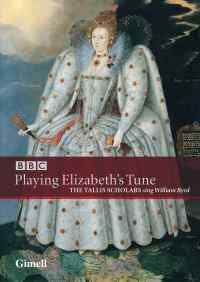
| |  | Playing Elizabeth's TuneSacred Music by William Byrd
Filmed in Merton College Chapel, Oxford and by candlelight in Tewkesbury Abbey “In 2002 The Tallis Scholars recorded an audio-visual Byrd-fest in three parts: a concert- format sequence of some of his sacred music in the atmospheric setting of Tewkesbury Abbey; a documentary of his life and his relationship to his powerful patroness, Queen Elizabeth I; and, as an 'audio bonus', another outing for the Scholars' outstanding version of the three Byrd Masses, recorded in Merton College Chapel. Charles Hazlewood fronts the documentary; xasually attired and casually unshaven, he has a degree of ease, if not exactly charm, in front of the camera. He traces adeptly and fluently the different phases of Byrd's career, with stunning visuals of Lincoln Cathedral, the Chapel Royal and Ingatestone Hall as impressive backdrops. The whole is lent authority through the erudite but accessible contributions of experts on Reformation England (Christopher Haigh) and Byrd's music (David Skinner). Hazlewood sums up by talking about the hidden depths of passion in Byrd's music, and its range, though given that the documentary is slanted towards his development as a composer of church music, we get only background snippets of his keyboard and consort music. Nevertheless, the tale is well told, not least with added visual elements such as shots of 16th-century documentation, the original printed editions of Byrd's music and his own beautifully penned autograph. As to the performances, it's interesting to hear Peter Phillips emphasize the passionate nature of Byrd's sacred music, when this aspect is fairly understated in The Tallis Scholars' performances. This isn't to say that they don't have a high degree of intensity at times: on the whole: they capture the ebb and flow of the music well, but there's a sense of distance. Phillips talks of getting right inside, of 'ticking along with the music', and that's what he does above all. This may not be the only way to perform Byrd's music but it's still very impressive in the ethereal clarity of the overall sound, and in the total commitment and rare understanding resulting from these musicians' years of experience.” Gramophone Classical Music Guide, 2010 | | | Usually despatched in 2 - 3 working days. |
|
|
| |  | Playing Elizabeth's TuneThe Tallis Scholars sing William Byrd
recorded while filming for the BBC in Tewkesbury Abbey | | | Usually despatched in 2 - 3 working days. |
|
|
| |  | Playing Elizabeth's TuneThe Tallis Scholars sing William Byrd
recorded while filming for the BBC in Tewkesbury Abbey | | | Usually despatched in 2 - 3 working days. |
|
|
| |  | William Byrd - Anthems, Motets and Services
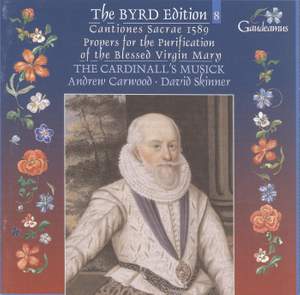
"distinguished by its vitality of style and opulence of sound" Gramophone “…a rare feeling for the balancing of parts, for rhythm and for the vitality of words.” Gramophone Magazine, May 2006 | | | Usually despatched in 8 - 10 working days. |
|
|
| |  | Meditation
Meditation celebrates the completion of David Hill's first year at St John's, and is a highly personal choice of music for Advent, Lent and Passiontide. It is an extraordinarily diverse sequence of pieces, which show the emotional and musical range of the Choir. Allegri's Miserere and Lotti's Crucifixus are deeply loved masterpieces and there are works by composers ranging from Arvo Part to Thomas Tallis as well as Jonathan Harvey's fine new work, which was commissioned for the Choir in 2004. | | | Usually despatched in 8 - 10 working days. |
|
|
| |  | Playing Elizabeth's TuneSacred Music by William Byrd
Filmed in Merton College Chapel, Oxford and by candlelight in Tewkesbury Abbey “In 2002 The Tallis Scholars recorded an audio-visual Byrd-fest in three parts: a concert- format sequence of some of his sacred music in the atmospheric setting of Tewkesbury Abbey; a documentary of his life and his relationship to his powerful patroness, Queen Elizabeth I; and, as an 'audio bonus', another outing for the Scholars' outstanding version of the three Byrd Masses, recorded in Merton College Chapel. Charles Hazlewood fronts the documentary; xasually attired and casually unshaven, he has a degree of ease, if not exactly charm, in front of the camera. He traces adeptly and fluently the different phases of Byrd's career, with stunning visuals of Lincoln Cathedral, the Chapel Royal and Ingatestone Hall as impressive backdrops. The whole is lent authority through the erudite but accessible contributions of experts on Reformation England (Christopher Haigh) and Byrd's music (David Skinner). Hazlewood sums up by talking about the hidden depths of passion in Byrd's music, and its range, though given that the documentary is slanted towards his development as a composer of church music, we get only background snippets of his keyboard and consort music. Nevertheless, the tale is well told, not least with added visual elements such as shots of 16th-century documentation, the original printed editions of Byrd's music and his own beautifully penned autograph. As to the performances, it's interesting to hear Peter Phillips emphasize the passionate nature of Byrd's sacred music, when this aspect is fairly understated in The Tallis Scholars' performances. This isn't to say that they don't have a high degree of intensity at times: on the whole: they capture the ebb and flow of the music well, but there's a sense of distance. Phillips talks of getting right inside, of 'ticking along with the music', and that's what he does above all. This may not be the only way to perform Byrd's music but it's still very impressive in the ethereal clarity of the overall sound, and in the total commitment and rare understanding resulting from these musicians' years of experience.” Gramophone Classical Music Guide, 2010 | | | Usually despatched in 2 - 3 working days. |
|
|
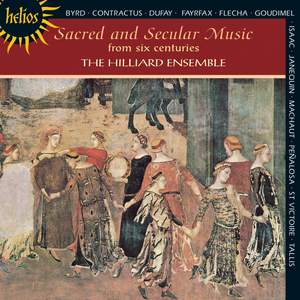
| |  | Sacred and Secular Music from Six Centuries
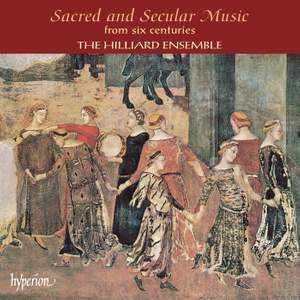
“Music making of the highest order. Everything shows them at their superb best” Gramophone Magazine | | | Usually despatched in 2 - 3 working days. |
|
|
| |
|