Prices shown exclude VAT. (UK tax is not payable for deliveries to United States.) See Terms & Conditions for p&p rates. | |  | The Very Best of Nicolai Gedda
Adam: | Mes amis, écoutez l'histoire (from Le Postillon de Lonjumeau) | Beethoven: | Adelaide, Op. 46 | Bellini: | Prendi l'anel ti dono (from La Sonnambula) | Berlioz: | La gloire etait ma seule idole (from Benvenuto Cellini) | Bizet: | Au fond du temple saint (from Les Pêcheurs de Perles) La fleur que tu m'avais jetée (from Carmen) | Donizetti: | Quanto è bella, quanto è cara! (from L'Elisir d'amore) Una furtiva lagrima (from L'elisir d'amore) Fra poco a me ricovero...Tu che a Dio spiegasti l'ali (from Lucia di Lammermoor) | Flotow: | Ach, so fromm (from Martha) | Glinka: | Souvenir | Goldmark: | Magische Töne, berauschender Duft (from Die Königin von Saba) | Gounod: | L'amour, l'amour... Ah, lève-toi soleil (from Roméo et Juliette) | Lehár: | Gern hab' ich die Frau'n geküßt (from Paganini) Dein ist mein ganzes Herz (from Das Land des Lächelns) | Massenet: | Pourquoi me reveiller (from Werther) Instant charmant … En fermant les yeux (from Manon) | Mozart: | Il mio tesoro intanto (from Don Giovanni) Dies Bildnis ist bezaubernd schön (from Die Zauberflöte) | Mussorgsky: | Boris Godunov: Dmitry! Tsarevich | Offenbach: | Va pour Kleinzach...Il était une fois à la cour (from Les Contes d'Hoffmann) | Puccini: | Donna non vidi mai (from Manon Lescaut) | Rachmaninov: | Sing not, O lovely one (Ne poi, krasavitsa, pri mne), Op. 4 No. 4 How fair this spot, Op. 21 No. 7 | Rossini: | Asile héréditaire (from Guillaume Tell) | Strauss, J, II: | Ja, das alles auf Ehr' (from Der Zigeunerbaron) | Strauss, R: | Heimliche Aufforderung, Op. 27 No. 3 Ständchen, Op. 17 No. 2 | Tchaikovsky: | Kuda, Kuda 'Lensky's Aria' (from Eugene Onegin) In this moonlight, Op.73, No.3 Sred' shumnogo bala (Amid the din of the ball), Op. 38 No. 3 Serenada Don-Zhuana (Don Juan's Serenade), Op. 38 No. 1 | Thomas, Ambroise: | Elle ne croyait pas, dans sa candeur naïve (from Mignon) | Verdi: | Di' tu se fedele (from Un ballo in maschera) La donna è mobile (from Rigoletto) | Wagner: | In fernem Land (from Lohengrin) |
Nicolai Gedda, the most recorded tenor in history, is an exceptionally versatile artist who has excelled in a wide variety of operatic roles as well as in the art song. With a magnificent lyric tenor voice and extraordinary range, Gedda makes the notorious top D at the end of ‘Mes amis, écoutez l’histoire’ sound positively effortless. This collection offers a wealth of repertoire that has helped to cement Gedda’s reputation as one of the greatest tenors of his generation. | 
| | | In stock - usually despatched within 1 working day. |
|
|
| |  | Joseph Calleja: The Maltese Tenor
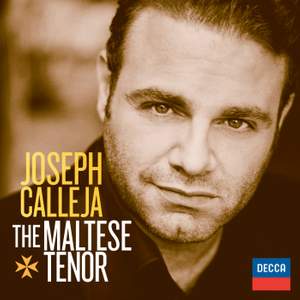
The career of Maltese tenor Joseph Calleja seems to have no limits, with performances at the world's greatest opera houses and acclaim for the lyrical warmth of his singing from the press and public alike. In Summer 2010 he triumphed in London performances of Verdi’s Simon Boccanegra alongside Plácido Domingo, after which The Independent observed that Calleja “almost steals the show”. Joseph Calleja is an enthusiastic ambassador for Malta, where he still lives - an island with a proud operatic tradition. In addition to his international appearances, Joseph Calleja has established an annual open-air event in Malta's historic capital Valetta, which has become a focus for the musical life of the island. Joseph Calleja's opera and concert successes are now crowned by a new recording. His third Decca album captures the development of his art and presents him in some of the roles he is currently performing to ecstatic critical responses: “All the ardor and beauty of tone one could wish for...one of the finest lyric tenors before the public today” (Houston Chronicle on recent performances of Puccini's Madama Butterfly) “Calleja can still get down to a pianissimo in a way that few can, such as in the Luisa Miller scene, which is one of the best items thanks to the way he gives the vocal line a flattering lilt. After his Covent Garden success in Simon Boccanegra, the inclusion of the Act 2 scena "O inferno" - another high-point - will be a welcome souvenir.” Gramophone Magazine, August 2011 “his is a bright, warm, unmistakably Mediterranean timbre, with a distinctive quick vibrato that recalls great tenors of the wind-up-gramophone era. Yet he is a thoroughly modern musician...His Che gelida manina is surely the most glamorous and thrilling on disc since Pavarotti’s famous complete recording, but it is no carbon copy...In short, a golden-age voice in its prime.” Sunday Times, 17th July 2011 **** “He's an artist who has developed in leaps and bounds over the last few years, and who sings with freedom, passion and elegance. His narrow, fast vibrato has a pleasantly old-fashioned sepia-tinted feel about it, and links him to an earlier generation of tenors...It's a recital which shows off Calleja's rich, rounded and ringing sound at its best.” Classic FM Magazine, August 2011 **** “The two Mefistofele arias receive near-ideal performances, the Pearl Fishers romance (one of two items in which soprano duties are nicely undertaken by Aleksandra Kurzak) is enchanting, and the cavatina from Gounod's Faust is appealingly shaped and crowned with a refined top C...Calleja continues to persuade with a good sense of style.” BBC Music Magazine, August 2011 **** “[in the French roles] he shows no cramping of his natural bel canto style by the French line, finding plenty of room to manoeuvre. And when he and the soprano Aleksandra Kurzak begin their dalliance, the chemistry is sublime. Elsewhere, the various Puccini arias from Tosca and Manon Lescaut present Calleja at his best: robust and resonant.” The Independent, 28th July 2011 **** “Calleja despatches [the programme] with bags of elegance, passion and charm...it's the French arias here that leave you wanting more: his is a beautifully characterised Légende de Kleinzach from Offenbach's The Tales of Hoffmann, and a sexy Ah! Fuyez, Douce Image” The Guardian, 11th August 2011 **** “Calleja commands resinous, vibrant tone with a rich top register and generous, open-hearted style. This is technically sturdy singing with guts and heart.” The Telegraph, 18th August 2011 “The solidity of his technique is evident in this calorific recital: it takes muscle to support such delicate messa di voce. There's a rare, old-fashioned sweetness of timbre” The Independent on Sunday, 21st August 2011 “Calleja's timbre, brilliant, caressing, keenly focused, is entirely individual...All in all, this is a fine calling-card for a tenor, still only in his early thirties, on the threshold of greatness, during a transition phase of his career. The portents are exciting indeed.” International Record Review, October 2011 | | | In stock - usually despatched within 1 working day. |
|
|
| |  | The Very Best of Placido Domingo
Boito: | Dai campi, dai prati (Mefistofele) Vergini muse ... Quando al soave anelito (from Nerone) | Gounod: | Quel trouble inconnu me pénètre… Salut! Demeure chaste et pure (from Faust) | Handel: | Svegliatevi nel core (from Giulio Cesare) | Lehár: | Gern hab' ich die Frau'n geküßt (from Paganini) Da geh' ich zu Maxim (from Die Lustige Witwe) Dein ist mein ganzes Herz (from Das Land des Lächelns) | Massenet: | Ah! Tout est bien fini... O souverain (from Le Cid) | Meyerbeer: | Pays merveilleux... Ô paradis (from L'Africaine) | Mozart: | Il mio tesoro intanto (from Don Giovanni) Un'aura amorosa del nostro tesoro (from Così fan tutte) Dies Bildnis ist bezaubernd schön (from Die Zauberflöte) La ci darem la mano (from Don Giovanni) Susan Graham (Zerlina) | Puccini: | Donna non vidi mai (from Manon Lescaut) Ah, Manon mi tradisce (from Manon Lescaut) Recondita armonia (from Tosca) E lucevan le stelle (from Tosca) Ch'ella mi creda libero e lontano (from La Fanciulla del West) | Rodrigo: | En Aranjuez con tu amor | Strauss, J, II: | Ach, wie so herrlich zu schau'n (from Die Fledermaus) | Tchaikovsky: | None but the lonely heart, Op. 6 No. 6 Kuda, Kuda 'Lensky's Aria' (from Eugene Onegin) | Verdi: | Se quel guerrier io fossi!…Celeste Aida (from Aida) Di' tu se fedele (from Un ballo in maschera) Ma se m'è forza perderti (from Un ballo in maschera) O tu che in seno agli angeli (from La Forza del Destino) Io la vidi e al suo sorriso (from Don Carlo) Niun mi tema (from Otello) | Wagner: | O sink hernieder, Nacht der Liebe (from Tristan und Isolde) Violeta Urmana (Isolde) Hoho! Hoho! Hohei! Schmiede, mein Hammer, ein hartes Schwert! (from Siegfried) David Cangelosi (Mime) | Zeller: | Schenkt man sich Rosen in Tirol (from Der Vogelhändler) |
and zarzuela arias from Los Gavilanes, La Rosa Del Azafrán, La Tabernera del Puerto, Coplas De Ronda, Copillas de Belen, Coplas del Pasto, Jealousy Tango, La Golondrina
“Mozart to zarzuela, Handel to Wagner - this generous collection confirms that our greatest tenor is also our most versatile and musically rewarding whatever style.” BBC Music Magazine, November 2011 ***** | | | In stock - usually despatched within 1 working day. |
|
|
| |  | The Italian TenorJewel-case version
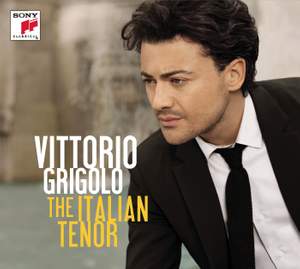
Sony Classical proudly announces the release of the debut recording on the label by the highly-acclaimed young tenor Vittorio Grigolo. Acknowledged by critics and public alike as the finest exponent of the Italian tenor tradition in a generation, this album is one of the most eagerly-awaited releases of 2010. Vittorio Grigolo says that his first operatic recital disc, "The Italian Tenor", has been a project of great importance for him. He has purposely waited until he felt the conditions were perfect and he had something unique to communicate in this repertoire. He has chosen a programme of arias representing "the culture I come from. It's like giving my card to someone who doesn't know me the voice of the Italian tenor, with a communication that comes in a natural way, like opening a window on a sunny day!" Vittorio Grigolo was born in Arezzo, Tuscany and grew up in Rome. A soloist in the celebrated Sistine Chapel Choir as a child, he appeared at the Rome Opera as the Pastorello in "Tosca" opposite the great Luciano Pavarotti when only 13 years old. He has since gone on to conquer the world's major opera houses and festivals, collaborating with outstanding singers and today's greatest conductors including Riccardo Muti, Zubin Mehta, Antonio Pappano, Riccardo Chailly, Lorin Maazel and Daniel Oren. His natural charisma and outstanding dramatic abilities complement a voice that possesses all the unique attributes of the Italian tenor: beautiful tone, effortless production and stylish phrasing, qualities which are fully displayed on this album. “Now and then there are hints of another great Italian-style tenor, the stylish Alfredo Kraus. It's there in the hushed tone Grigolo adopts for the 'Favorita del re!...Spirto gentil' from La Favorita and Manrico's elegant swagger in the cabaletta 'Di quella pira'.” BBC Music Magazine, November 2010 *** “Handsome, prolific and blessed with uncommon interpretive skills, Vittorio Grigolo is the most exciting young male talent in opera today...It's a marvellous collection, with Grigolo's dramatic abilities abundantly evident in the fruity relish with which he rolls each syllable round his mouth” The Independent on Sunday, 30th September 2010 ***** “His bright, incisive tones modulate, soften and sweeten, yet the voice has a non-departmentalised consistency, a supple and expressive instrument in grief and gaiety, tenderness and anger...for a comparison, the young Bergonzi might come to mind, but Grigolo's expressiveness and imagination are quite his own” Gramophone Magazine, Awards Issue 2010 “Grigolo’s voice is agile, unstrained, with colours stretching from dulcet cream to piercing red; and strikingly subtle volume control...when the voice needs to “ping”, it does so securely, with lively expression. It’s a good, steady album, and a worthy calling card” The Times, 8th October 2010 “He's notably good at scamps, such as Rinuccio in Gianni Schicchi, or tragic wits such as Riccardo in Un Ballo in Maschera, where you get a real sense of the laughter behind the passion. There are moments of wonderfully rapt introspection, too, in arias from Donizetti's La Favorita and Puccini's Le Villi.” The Guardian, 7th October 2010 **** “He can get overexcited, but shows musical sensibility in arias from La favorita, Rigoletto and Manon Lescaut, and his clear diction and firmly produced tone suggest solid technical foundations.” The Telegraph, 15th October 2010 *** “He lends suitable swagger to "Possente amor mi chiama" from Rigoletto and brings real tenderness to "Spirto gentil"...Grigolo is the real thing: a shining, stylish romantic hero in the great tradition of the Italian tenor, but with a warmer, more appealing persona for 21st-century audiences.” The Observer, 31st October 2010 “he's clearly in love with his native language and his little rolled 'r's will make those who care about such things purr with pleasure” International Record Review, November 2010 “This is quite a test for the tenor who's had an outstanding year on stage, but one he passes with ease...Grigolo has developed from light to lyric tenor, and you feel there's more to come from this young voice already rich with plenty of colour and drama.” Classic FM Magazine, January 2011 **** | | | In stock - usually despatched within 1 working day. |
|
|
| |  | Puccini-Arien
| | | In stock - usually despatched within 1 working day. |
|
|
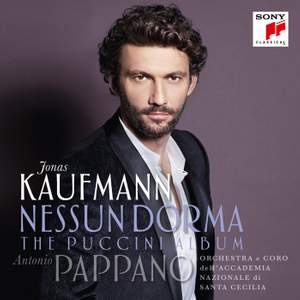
| |  | Nessun Dorma: Puccini's Greatest Arias
| | | (Sorry, download not available in your country) | In stock - usually despatched within 1 working day. |
|
|
| |  | Viva Villazón! (STANDARD)The Best of Rolando Villazón
Berlioz: | Dieu tout puissant, Dieu de l’aurore Thomas Gounet d’après Thomas Moore Chœur « Les Eléments » & Orchestre du Capitole de Toulouse, Michel Plasson | Bizet: | La fleur que tu m'avais jetée (from Carmen) Münchner Rundfunkorchester, Michel Plasson A cette voix quel trouble… Je crois entendre encore (from Les Pêcheurs de Perles) Münchner Rundfunkorchester, Michel Plasson | Cilea: | È la solita storia 'Lamento di Federico' (from L'Arlesiana) | Donizetti: | Una furtiva lagrima (from L'elisir d'amore) Tombe degl'avi miei … Fra poco a me ricovero...Tu che a Dio spiegasti l'ali (from Lucia di Lammermoor) Münchner Rundfunkorchester, Marcello Viotti | Gounod: | Quel trouble inconnu me pénètre… Salut! Demeure chaste et pure (from Faust) Orchestre Philharmonique de Radio France, Evelino Pido Polyeucte: Source délicieuse L'amour, l'amour... Ah, lève-toi soleil (from Roméo et Juliette) | Gruber, F: | Stille Nacht arr.Philippe Rombi Orchestre Symphonique Bel Arte, Philippe Rombi | Mascagni: | Mamma, quel vino (from Cavalleria Rusticana) with Teresa Blank (mezzo-soprano) Münchner Rundfunkorchester, Michel Plasson | Massenet: | Ah ! Parais, astre de mon ciel Zarastra from Le Mage Chœur et Orchestre Philharmonique de Radio France, Evelino Pido Roma - Je vais la voir! Je suis seul, seul enfin... Ah fuyez douce image (from Manon) Traduire ! Ah ! Bien souvent mon rêve s’envole… Pourquoi me réveiller (Werther) Ah! Tout est bien fini... O souverain (from Le Cid) Orchestre Philharmonique de Radio France, Evelino Pído | Monteverdi: | Libro Nono di Magrigali e Canzonette: Si dolce è'l tormento Le Concert d’Astrée, Emmanuelle Haim Eri già tutta mia Le Concert d’Astrée, Emmanuelle Haim | Offenbach: | Il était une fois à la cour d'Eisenach (from Les contes d'Hoffmann) With Florian Laconi (ténor) Münchner Rundfunkorchester, Michel Plasson | Puccini: | Che gelida manina (from La Bohème) Donna non vidi mai (from Manon Lescaut) (previously unreleased) Münchner Rundfunkorchester, Marcello Viotti Recondita armonia (from Tosca) | Sorozábal: | La Taberna del Puerto – ‘No puede ser’ Orquesta de la Communidad de Madrid, Placido Domingo | Tchaikovsky: | Kuda, Kuda 'Lensky's Aria' (from Eugene Onegin) | Verdi: | La donna è mobile (from Rigoletto) Münchner Rundfunkorchester, Marcello Viotti Lunge da lei…De’ miei bollenti spiriti (from La Traviata) Io l'ho perduta (from Don Carlos) Ma se m'è forza perderti (from Un ballo in maschera) Chor des Bayerischen Rundfunks & Münchner Rundfunkorchester, Michel Plasson | Vives: | Por el humo se sabe donde esta el fuego Fernando from Dona Frasquita Orquesta de la Communidad de Madrid, Placido Domingo | Wade: | O come, all ye faithful arr.Philippe Rombi |
Standard Version ““Villazón's singing offers a combination of intelligence and glamour not seen since the ascendancy of Domingo” The New Yorker | | | In stock - usually despatched within 1 working day. |
|
|
| | Aria
Grover Washington Jr. (saxophone) All tracks arranged for saxophone | | | In stock - usually despatched within 1 working day. |
|
|
| |  | The Essential PucciniFamous arias & duets
Puccini: | Che gelida manina (from La Bohème) Carlo Bergonzi (tenor) Si, mi chiamano Mimi (from La Bohème) Carlo Bergonzi (tenor), Cesare Siepi (bass), Ettore Bastianini (baritone), Renata Tebaldi (soprano), Renato Cesari (bass) O soave fanciulla (from La Bohème) Carlo Bergonzi (tenor), Ettore Bastianini (baritone) Quando me'n vo (from La Bohème) Ettore Bastianini (baritone), Fernando Corena (bass), Gianna d' Angelo (soprano), Renata Tebaldi (soprano) In un Coupe?...O Mimi, tu piu non torni (from La Bohème) Carlo Bergonzi (tenor), Ettore Bastianini (baritone) O mio babbino caro (from Gianni Schicchi) Renata Tebaldi (soprano) Ch'ella mi creda libero e lontano (from La Fanciulla del West) Jussi Björling (tenor) Senza mamma, o bimbo (from Suor Angelica) Maria Chiara (soprano) Viene la sera (from Madama Butterfly) Carlo Bergonzi (tenor), Renata Tebaldi (soprano), Fiorenza Cossotto (mezzo) Un bel di vedremo (from Madama Butterfly) Renata Tebaldi (soprano) Una nave da guerra...Scuoti quelle fronda (from Madama Butterfly) Renata Tebaldi (soprano), Fiorenza Cossotto (mezzo) Humming Chorus (from Madama Butterfly) Con onor muore (from Madama Butterfly) Carlo Bergonzi (tenor), Renata Tebaldi (soprano) Preludio Sinfonico Donna non vidi mai (from Manon Lescaut) José Carreras (tenor) In quelle trine morbide (from Manon Lescaut) Kiri Te Kanawa (soprano) Oh, sarò la più bella...Tu, tu, amore? (from Manon Lescaut) Kiri Te Kanawa (soprano), José Carreras (tenor) Mario! Mario! Mario! ...Son qui! ... Mia gelosa! (from Tosca) Luciano Pavarotti (tenor), Mirella Freni (soprano) Tre sbirri...Una carozza...Presto 'Te Deum' (from Tosca) Michel Sénéchal (tenor), Sherrill Milnes (baritone) Vissi d'arte (from Tosca) Mirella Freni (soprano) E lucevan le stelle (from Tosca) Luciano Pavarotti (tenor) Chi il bel sogno di Doretta (from La Rondine) Renata Tebaldi (soprano) Signore, ascolta! (from Turandot) Montserrat Caballé (soprano) Non piangere, Liù! (from Turandot) Luciano Pavarotti (tenor), Montserrat Caballé (soprano) Ah! Per l'ultima volta (from Turandot) Luciano Pavarotti (tenor), Montserrat Caballé (soprano) In questa reggia (from Turandot) Joan Sutherland (soprano), Luciano Pavarotti (tenor) Nessun dorma (from Turandot) Luciano Pavarotti (tenor) Tosca: Santa ampolle Recondita armonia (from Tosca) |
| | | (Sorry, download not available in your country) | In stock - usually despatched within 1 working day. |
|
|
| |  | Forever Domingo
| | Ay, ay, ay London Symphony Orchestra, Karl-Heinz Loges | Bizet: | La fleur que tu m'avais jetée (from Carmen) London Symphony Orchestra, Claudio Abbado | Brodszky: | Be My Love London Symphony Orchestra, Karl-Heinz Loges | Cardillo: | Core 'ngrato London Symphony Orchestra, Marcel Peeters | Curtis, E: | Non ti scordar di me London Symphony Orchestra, Karl-Heinz Loges Non ti scordar di me London Symphony Orchestra, Karl-Heinz Loges | Donizetti: | Una furtiva lagrima (from L'elisir d'amore) Los Angeles Philharmonic, Carlo Maria Giulini | Grever: | Muñequita Linda London Symphony Orchestra, Karl-Heinz Loges | Hardelot: | Because London Symphony Orchestra, Karl-Heinz Loges | LaCalle: | Amapola London Symphony Orchestra, Karl-Heinz Loges | Lara, Augustin: | Granada London Symphony Orchestra, Marcel Peeters | Lecuona: | Siboney London Symphony Orchestra, Karl-Heinz Loges | Lehár: | Dein ist mein ganzes Herz (from Das Land des Lächelns) London Symphony Orchestra, Karl-Heinz Loges | Leoncavallo: | Mattinata - 'L'aurora di bianco vestita' London Symphony Orchestra, Marcel Peeters | Puccini: | Nessun dorma (from Turandot) Wiener Philharmoniker, Wiener Sangerknaben, Herbert von Karajan Recondita armonia (from Tosca) Philharmonia Orchestra, Giuseppe Sinopoli E lucevan le stelle (from Tosca) Philharmonia Orchestra, Giuseppe Sinopoli Ch'ella mi creda libero e lontano (from La Fanciulla del West) Orchestra and Chorus of the Royal Opera House, Covent Garden, Zubin Mehta Donna non vidi mai (from Manon Lescaut) Philharmonia Orchestra, Giuseppe Sinopoli | Rossini: | Largo al factotum (from Il barbiere di Siviglia) Chamber Orchestra of Europe, Claudio Abbado | Verdi: | Se quel guerrier io fossi!…Celeste Aida (from Aida) Orchestra del Teatro alla Scala, Claudio Abbado La donna è mobile (from Rigoletto) Nicolai Ghiaurov (bass), Piero Cappuccilli (baritone) Wiener Philharmoniker, Carlo Maria Giulini Di quella pira (from Il trovatore) Rosalind Plowright (soprano) Orchestra e Coro dell'Accademia Nazionale di Santa Cecilia, Carlo Maria Giulini |
forever DOMINGO offers a tantalising and generous selection of Plácido Domingo’s greatest hits. It combines acclaimed recordings of popular tracks such as Be My Love and Granada with the greatest tenor opera arias from Puccini, Verdi, Donizetti, Bizet and Rossini. Includes Nessun Dorma, La donna è mobile, Largo al factotum and Una furtiva lagrima. The album is rounded off by one of the best-known pieces in the Viennese operetta repertoire Dein ist mein ganzes Herz. PLÁCIDO DOMINGO - Whatever he does, he does it from his heart. The son of singers who ran their own zarzuela company, Domingo grew up surrounded by music and the theatre. Today it is safe to say that in every corner of the world, everyone who has even the most passing interest in opera is familiar with the name of Plácido Domingo. He truly is a living legend. “Domingo shows his lighter side in souped-up arrangements of popular songs and a clutch of standard arias” BBC Music Magazine, May 2013 **** | | | (Sorry, download not available in your country) | Usually despatched in 2 - 3 working days. |
|
|
| |
|