All recordingsPrices shown exclude VAT. (UK tax is not payable for deliveries to United States.) See Terms & Conditions for p&p rates. | |  | Nobel Prize Concert 2009Recorded at the Stockholm Concert Hall, 8 December 2009
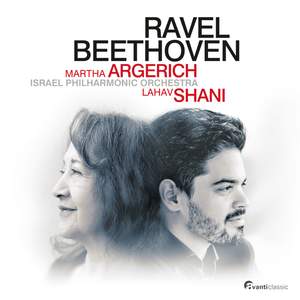
Royal Stockholm Philharmonic Orchestra, Yuri Temirkanov As part of the official Nobel Week, the world’s most renowned artists are gathering each year to pay tribute to the Nobel Laureates. An event of world class stature and performances of highest international standard. Members of the Swedish Royal Family as well as guests of the Nobel Foundation are attending the highly acclaimed event, which gathers internationally renowned artists and conductors each year. Very special highlight was this year’s soloist Martha Argerich, one of the very charismatic and brilliant pianists, performing Ravel’s Piano Concerto in G Major under Yuri Temirkanov leading the Royal Stockholm Philharmonic Orchestra. The program also includes Prokofiev’s Suite from Romeo and Juliet. Born in Buenos Aires in 1941, Martha Argerich had her performing debut at the age of eight. Her breakthrough came in 1965, when she won the prestigious Chopin Competitionin Warsaw. Working with most of the world’s leading conductors Argerich is passionate about supporting young talents. In 1999 the first International Martha Argerich Piano Contest was held in Buenos Aires, a competition that she founded and of which she is now the chief judge. Picture format DVD: NTSC 16:9 Sounds formats DVD: PCM Stereo, DD 5.1, DTS 5.1 Region code: 0 Booklet notes: English, German, French Running time: 79 mins FSK: 0 “Argerich plays with a remarkable combination of freedom and control...[Temirkanov] draws an impressive sound from the Royal Stockholm Philharmonic Orchestra.” BBC Music Magazine, September 2010 *** | 
| | | In stock - usually despatched within 1 working day. |
|
|
| |  | Bartók & Ravel - Piano Concertos
Klára Würtz (piano) Janacek Philharmonic Orchestra, Theodore Kuchar Recording made in 2008. Booklet notes. Klára Würtz studied with Zoltan Kocsis and Gyorgy Kurtag, and received a scholarship from András Schiff for his masterclasses at Prussia Cove, Cornwall, UK. She has since performed widely in the North America and Europe When Bartók started work on his Third and last piano concerto in 1944, he was already ill, and in exile in the United States. The following year he died, leaving the concerto almost complete. His pupil Tibor Serly completed the final bars using Bartók’s instructions. The concerto was premiered in 1946 and was an immediate success. Unlike much of his earlier work, the Third concerto like the Concerto for Orchestra shows a more approachable and less modernistic character. The public had balked at Bartók’s spiky and percussive music, and the comparatively warm, almost wistful romanticism of the Third concerto provides an ideal introduction to the composer. The work is the summation of his close relationship with the concertos of the classical and romantic period composers he admired – Mozart, Beethoven, Liszt and Richard Strauss. Ravel was determined to write just one work in each genre, and if he ever deviated from his rule, the resulting work in the same genre contrasted greatly with its companion. His two piano concertos were composed around 1930. The Concerto for the Left Hand is a very challenging work for the performer, and the mood is predominantly dark and brooding. In contrast the Concerto in G was described by Ravel as a divertissement, and he said that Mozart and Saint-Saëns provided the inspiration. Allied to these influences is Ravel’s love of jazz which can be detected in the first movement and the finale which frame a serene and beautiful slow movement. | | | In stock - usually despatched within 1 working day. |
|
|
| |  | Ravel - Boléro & Piano concerto
Ravel: | Boléro Recorded: 5-7 January 1977, Philharmonie, Berlin Berliner Philharmoniker, Herbert von Karajan Piano Concerto in G major Recorded: 7-8 & 10 March 1957, No.1 Studio, Abbey Road Studios, London Arturo Benedetti Michelangeli (piano) Philharmonia Orchestra, Ettore Gracis Pavane pour une infante défunte Recorded: 12, 15 July & 4 November 1974, Salle Wagram, Paris Orchestre de Paris, Jean Martinon Daphnis et Chloé - Suite No. 2 Recorded: 21, 23, 24, 26, 28 September & 3 October 1968, Salle, Wagram, Paris Orchestre de Paris, Charles Münch Alborada del gracioso (Miroirs No. 4) Recorded: 28-29 June 1971, Salle Wagram, Paris Orchestre de Paris, Herbert von Karajan Ma Mère l'Oye Recorded: 16-18 July 1986, Halle-aux-grains, Toulouse Orchestre du Capitole de Toulouse, Michel Plasson Introduction & Allegro for Harp, Flute, Clarinet and String Quartet Recorded: February 1967, No.1 Studio, Abbey Road, London Melos Ensemble Gaspard de la Nuit Recorded: July 1977, Abbey Road Studios, London André Gavrilov (piano) Shéhérazade Recorded: 27-28 December 1967, Kingsway Hall, London Janet Baker New Philharmonia Orchestra, Sir John Barbirolli La Valse Recorded: 16-18 July 1986, Halle-aux-grains, Toulouse |
| | | In stock - usually despatched within 1 working day. |
|
|
| |  | Samson François
| | | In stock - usually despatched within 1 working day. |
|
|
| |  |
Andrew Litton (piano) Bournemouth Symphony Orchestra, Libor Pesek | | | In stock - usually despatched within 1 working day. |
|
|
| |  | Ravel - Piano Concertos
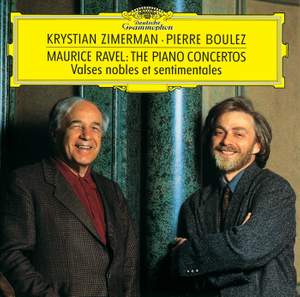
Krystian Zimerman (piano) Cleveland Orchestra, London Symphony Orchestra, Pierre Boulez “Zimerman's pianism is self-recommending. His trills in the first movement of the G major Concerto are to die for, his passagework in the finale crystalclear, never hectic, always stylish. For their part Boulez and the Clevelanders are immaculate and responsive; they relish Ravel's neon-lit artificiality and moments of deliberate gaudiness. That goes equally for the Valses nobles, which have just about every nuance you'd want, and none you wouldn't. The recording is generous with ambience, to the point where some orchestral entries after big climaxes are blurred. Otherwise detail is razor-sharp and one of the biggest selling-points of the disc. Zimerman's humming may be a slight distraction for some listeners, especially in the Left-Hand Concerto, where you may not be always convinced that the LSO knew quite what it was supposed to do with the long notes of the main theme, and where there's a slight lack of tension in exchanges between piano and orchestra. There again, had the G major Concerto not been so wonderful those points might not have registered at all, for this is playing of no mean distinction. In the Left- Hand Concerto, Zimerman's phenomenal pianism sets its own agenda and brings its own rich rewards.” Gramophone Classical Music Guide, 2010 | | | In stock - usually despatched within 1 working day. |
|
|
| |  |
Arturo Benedetti Michelangeli Philharmonia Orchestra, Ettore Gracis Diapason d'Or, FFFF. de Télérama & Penguin Guide Awards “In crude and subjective terms Michelangeli makes the spine tingle in a way no others can approach. How does he do it? This is the secret every pianist would love to know, and which no writer can ever pin down. But it's possible to give some general indications. It isn't a question of technique, at least not directly, because Ashkenazy, for example (on Decca) can match their most virtuoso feats; indirectly, yes, it's relevant, in that there are dimensions in Michelangeli's pianism which allow musical conceptions to materialise which might not dawn on others. Nor is it a question of structure, in the narrow sense of the awareness of overall proportions, judicious shaping of paragraphs, continuity of thought; but the way structure is projected and the way it's transmuted into emotional drama; these things are critical. In one way or another most of the recordings in this section respond vividly to the excitement of Rachmaninov's dramatic climaxes; but with Michelangeli these climaxes seem to burst through the music of their own volition, as though an irresistible force of nature has been released. It's this crowning of a structure by release, rather than by extra pressure, which gives the performance a sense of exaltation and which more than anything else sets it on a different level. It enables him to be freer in many details, yet seem more inevitable as a whole. The impact of all this would be negligible without a sympathetically attuned conductor and orchestra. Fortunately that's exactly what Michelangeli has. Michelangeli's Ravel is open to criticism, partly because many listeners feel uncomfortable with his persistent left-beforeright mannerism in the slow movement and with his unwarranted textual tinkerings (like changing the last note). But he's as finely attuned to this aloof idiom as to its temperamental opposite in the Rachmaninov. And although the recording can't entirely belie its vintage, it does justice to one of the finest concerto records ever made.” Gramophone Classical Music Guide, 2010 | | | In stock - usually despatched within 1 working day. |
|
|
| |  |
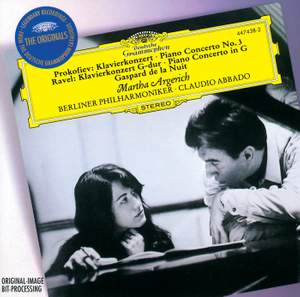
Martha Argerich (piano) Berlin Philharmonic, Claudio Abbado “Argerich at her most charismatically brilliant.” BBC Music Magazine, November 2007 “For those who prefer studio recordings, Argerich's highly regarded 1974 taping has been added to her famous pairing of the Ravel G major and Prokofiev Third Piano Concertos. This one has both raw passion and wonderfully controlled gradations of touch and tone.” Gramophone Classical Music Guide, 2010 | | | In stock - usually despatched within 1 working day. |
|
|
| |  |
Samson François (piano) Orchestre de la Société des Concerts du Conservatoire, André Cluytens Prix de l'Académie du disque français Award | | | In stock - usually despatched within 1 working day. |
|
|
| |  |
Jean-Philippe Collard (piano) Orchestre National de France, Lorin Maazel | | | In stock - usually despatched within 1 working day. |
|
|
| |
|