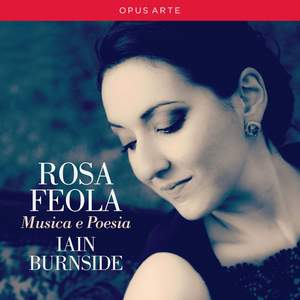
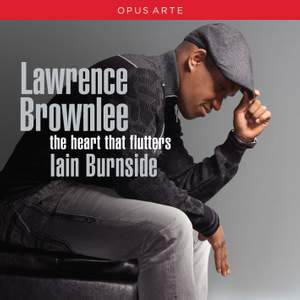
All recordingsPrices shown exclude VAT. (UK tax is not payable for deliveries to United States.) See Terms & Conditions for p&p rates. | |  | Lawrence Brownlee: The Heart That Flutters
| | Deep River (Negro spiritual) Recorded live at St John’s Smith Square, May 2010 Sometimes I feel like a motherless child arr Burleigh | Donizetti: | Ah! mes amis, quel jour de fête! (from La Fille du Régiment) Recorded live at St John’s Smith Square, May 2010 | Duparc: | Chanson triste Recorded live at St John’s Smith Square, May 2010 Le Manoir de Rosemonde Recorded live at St John’s Smith Square, May 2010 Extase Recorded live at St John’s Smith Square, May 2010 Phidylé Recorded live at St John’s Smith Square, May 2010 | Ginastera: | Cinco canciones populares argentinas Op. 10 | Liszt: | Sonetti di Petrarca (3) for voice & piano, S270 Recorded live at St John’s Smith Square, May 2010 | Moore, B: | I would in that sweet bosom be Recorded live at Wigmore Hall, September 2012 The Cloak, the Boat and the Shoes Recorded live at Wigmore Hall, September 2012 This Heart that Flutters Recorded live at Wigmore Hall, September 2012 The Lake Isle of Innisfree Recorded live at Wigmore Hall, September 2012 | Rossini: | Tu seconda il mio disegno (from Il Turco in Italia) Recorded live at Wigmore Hall, September 2012 |
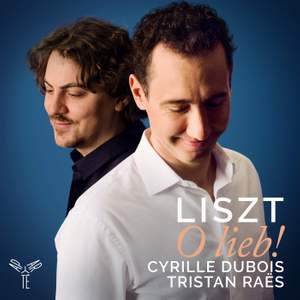
With a Negro spiritual, spectacular bel canto, romantic song and comic opera, Lawrence Brownlee unveils the breadth of his repertoire and the lyric tenor voice that has won acclaim at the New York's Metropolitan Opera (for his 'agility, elegance and Rossinian style) and farther afield. One of the most sought-after bel canto tenors on the international scene. Includes songs by Duparc, Donizetti, Liszt (3 Petrach Sonnets), Rossini, Ginastera and American contemporary composer Ben Moore. “Brownlee has a prodigious technique in florid music...One does not have to listen beyond the first two lines of Duparc's Chanson triste to realize that Brownlee commands a laudable legato...This is a recital of many delights, with both Brownlee and Burnside on top form.” International Record Review, May 2013 | 
| | | (also available to download from $6.00) | In stock - usually despatched within 1 working day. |
|
|
| |  | Liszt: 3 Petrarch Sonnets & Lieder
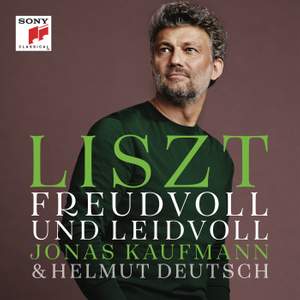
Liszt: | Sonetti di Petrarca (3) for voice & piano, S270 Mignons Lied (Kennst du das Land), S275 Hohe Liebe Gestorben war ich, S540a O lieb, so lang du lieben kannst Die stille Wasserrose, S321 Wie singt die Lerche schon. S. 312 Kling Leise, mein Lied, S301 Es muss ein Wunderbares sein, S. 314 Die Lorelei Über allen Gipfeln ist Ruh (Wandrers Nachtlied II), S.306 Freudvoll und leidvoll, S.280 La tombe et la rose, S285 |
“a magnificent tribute to the art of Margaret Price, with incomparable performances of the Petrarch Sonnets and Die Loreley.” BBC Music Magazine, April 2012 ***** | | | In stock - usually despatched within 1 working day. |
|
|
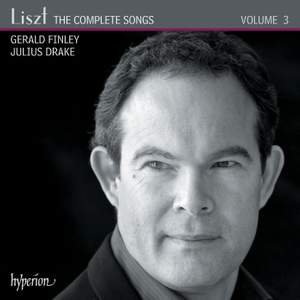
| |  | Liszt: The Complete Songs Volume 1
Liszt: | Kling Leise, mein Lied, S301 first version In Liebeslust, S318 Wie singt die Lerche schon. S. 312 second version Die stille Wasserrose, S321 Drei Lieder aus Schillers Wilhelm Tell, S292 first version Der Glückliche, S.334 Angiolin dal biondo crin, S269 third version Sonetti di Petrarca (3) for voice & piano, S270 first version Bist du!, S277 second version Es rauschen die Winde, S294 first version Schwebe, schwebe, blaues Auge, S. 305 second version Im Rhein, im schönen Strome, S272 first version ossia |
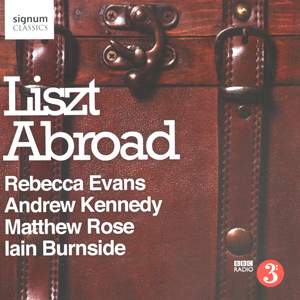
The start of another Hyperion Lieder series is always cause for celebration. In advance of his bicentenary in 2011, we turn to a composer whose songs, against the vast bulk of his compositions in larger genres, were considered insignificant for well over a century. A collaborator with some of Europe’s best singers, such as the great French tenor Adolphe Nourrit and the husband–wife duo of Feodor and Rosa von Milde (the first Elsa and Telramund in Wagner’s Lohengrin), Liszt used song as a compositional laboratory in which to experiment with ‘Zukunftsmusik’, or ‘music of the future’, including some of his most finely wrought works. A cosmopolitan artist who traveled prodigiously during his years as a virtuoso performer from 1838 to 1847, he chose song texts written both by denizens of Mount Olympus (Goethe, Schiller, Heine, Hugo, Tennyson, Tolstoy, Petrarch) and amateurs, the latter often aristocrats from Liszt’s glittering social circles. From their words he created songs that changed the very definition of the genre, that are a bridge to such later masters as Hugo Wolf, Sergei Rachmaninov and Richard Strauss. This first volume in the series features the American tenor Matthew Polenzani who has been astounding Met opera audiences in recent years with his expressive and ardent performances. He is accompanied by the curator of the series and Hyperion regular, Julius Drake. “The challenges are more than met here, with Polenzani doing things in songs such as Der Fischerknabe or Pace Non Trovo that you never thought were possible for a human voice, while Drake's intensity is total and unswerving.” The Guardian, 11th November 2010 ***** “Polenzani is evidently a tenor of the finest quality: a lyric voice, sweet and ingratiating, with the capacity to ring out excitingly, gloriously easy on high but with a perfectly adequate body to the tone in its middle and lower registers...He sings with warmth, intelligence and conviction...And the songs themselves give amazingly consistent satisfaction.” Gramophone Magazine, January 2011 “The start of a major cycle of Liszt's "orphaned" songs – the composer's own description of a neglected but substantial part of his output, full of characteristic rhapsody and poetry.” The Observer, 19th December 2010 | | | In stock - usually despatched within 1 working day. |
|
|
| |  | Liszt Lied Edition Volume 1 - Kling Leise Mein Leid
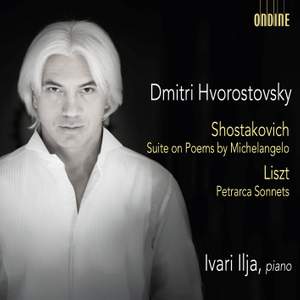
Liszt: | Kling Leise, mein Lied, S301 S'il est un charmant gazon, S284 Enfant, si j'étais roi (Hugo), S283 Comment, disaient-ils (Hugo), S276 Anfangs wollt ich fast verzagen, S311 Morgens steh ich auf und frage, S290 Im Rhein, im schönen Strome, S272 Ein Fichtenbaum steht einsam, S309 Sonetti di Petrarca (3) for voice & piano, S270 Drei Lieder aus Schillers Wilhelm Tell, S292 Angiolin dal biondo crin, S269 |
Adrian Eröd (baritone) & Charles Spencer (piano) The intention of the Liszt Lied Edition is to give these songs their due place in the repertoire of Liszt and to make previously unpublished works available, as well as to present recording premiers. Liszt’s Lieder contain the essence of his entire oeuvre. Adrian Eröd made his debut at the Vienna State Opera in 2001 and in 2003 at the Teatro Fenice in Venice. He has performed with Harnoncourt, Rilling and Rattle. | | | (also available to download from $10.50) | In stock - usually despatched within 1 working day. |
|
|
| |  | Brahms & Liszt - Lieder
“The great bass-baritone in his prime with Brahmasian solemnity and operatic Liszt that suit him perfectly, partnered by one of the most supportive and handsome-surrounding Lieder pianists.” BBC Music Magazine, September 2008 ***** “A notable solo debut for the Yellow Label from a young master of Lieder and a programme that impresses for its imaginative selection of Brahms and Liszt” Gramophone Magazine | | | In stock - usually despatched within 1 working day. |
|
|
| |  | Wagner & Liszt - Lieder
Liszt: | Im Rhein, im schönen Strome, S272 Die Lorelei Ich möchte hingehn, S.296 Vergiftet sind meine Lieder, S.289 Schwebe, schwebe, blaues Auge, S. 305 Blume und Duft Der du von dem Himmel bist (Goethe), S279 Es rauschen die Winde, S294 O quand je dors (Hugo), S282 Sonetti di Petrarca (3) for voice & piano, S270 | Wagner: | Wesendonck-Lieder (5) |
Konrad Jarnot (baritone) & Alexander Schmalcz (piano) | | | (also available to download from $10.50) | In stock - usually despatched within 1 working day. |
|
|
| |  | Of ladies and love ...
Beethoven: | Adelaide, Op. 46 Wonne der Wehmut, Op. 83 No. 1 Der Kuss, Op. 128 | Fauré: | Nell, Op. 18 No. 1 Adieu, Op. 21 No. 3, from Poème d'un jour Sylvie, Op. 6 No. 3 Lydia, Op. 4 No. 2 Fleur jetée, Op. 39 No. 2 | Liszt: | Sonetti di Petrarca (3) for voice & piano, S270 | Ravel: | Cinq mélodies populaires grecques | Schubert: | Trost: An Elisa, D97 Laura am Klavier, D388 An Sylvia, D891 Der Jüngling an der Quelle, D300 (Salis-Seewis) | Strauss, R: | Cäcilie, Op. 27 No. 2 Zueignung, Op. 10 No. 1 Nichts, Op. 10 No. 2 Morgen, Op. 27 No. 4 |
| | | In stock - usually despatched within 1 working day. |
|
|
| |  | José Carreras Live in Vienna
Legendary tenor José Carreras performed the evening of music recorded here at the Vienna State Opera in September 1988 as a musical “thank you” to all the Austrians who had supported him in his fight over the previous year against the potentially lethal condition of leukaemia. The pianist is at this very special concert was Vincenzo Scalera, and the repertoire encompasses Fauré, Massenet, Turina, Liszt, Puccini, Tosti and more. Jose Carreras was diagnosed with leukaemia in 1987, and was only given a 10% chance of survival. However, as a result of an iron will, a positive outlook and good fortune, he gradually regained his health, and went on to produce the best selling series of “Three Tenors” recordings alongside Placido Domingo and Luciano Pavarotti. During 1988 he appeared in a series of comeback concerts including this one that took place on 16 September in Vienna. | 
| | | (also available to download from $10.50) | Usually despatched in 4 - 5 working days. (Available now to download.) |
|
|
| |  | WeltgeheimnisLieder by Liszt, Mahler, Pizzetti & Rihm
Christoph Pohl (baritone) & Tobias Krampen (piano) | |
|
| |  | Liszt: Songs and Sonnets
Liszt: | Sonetti di Petrarca (3) for voice & piano, S270 Kling Leise, mein Lied, S301 Im Rhein, im schönen Strome, S272 Schwebe, schwebe, blaues Auge, S. 305 Hohe Liebe Morgens steh ich auf und frage, S290 Die Macht der Musik, S.302 |
Marcello Nardis (tenor) & Michele Campanella (piano) Liszt’s songs are among his least performed works. With the bicentenary of his birth upon us, much of his output will be performed and recorded, and no doubt re-assessed. The composer himself was aware that he was difficult to categorise, and that the public face he had was as a flashy virtuoso pianist composer – a reputation that survives to this day, as the Rick Wakeman’s 1975s rock-opera ‘Lisztomania’ (filmed by Ken Russell, and starring The Who’s Roger Daltry as Liszt) testifies. ‘Everyone is against me: the Catholics because they find my music profane, the protestants because my music is Catholic, the Masons because they find my music too clerical. For the conservatives I am a revolutionary, for the futurists I am a phony Jacobin. For the Italians, in spite of Sgambati (his pupil and fellow composer), if they are Garibaldini they hate me because the think me a bigot, if they are on the Vatican’s side, they accuse me of turning the Tempio di Venere into a church. For Bayreuth I am an advertising agent rather than a composer. The Germans hate my music because they think it French, the French hate it because they think it German. For the Austrians I make Gypsy music, for the Hungarians I make foreign music. And the Jews hate me and my music without any reason.’ Interesting words, from a deeply frustrated Liszt. So how do we or should we find a definition for his music? The songs provide a fascinating clue. The writing for voice is clearly of Latin origin, skillfully woven into German Lied. Liszt manages to adapt the ‘feel’ of the music depending on the language he was setting – so a French text and the music ‘sounds’ of French origin and so on. Such stylistic flexibility can also be found in his orchestral, choral and solo piano works making this great composer a difficult customer in an age where we like to ‘pigeon-hole things. The songs require great skill from both singer and accompanist to reveal their many treasures. | | | Usually despatched in 4 - 5 working days. |
|
|
| |
|