Debussy: La plus que lente

This page lists all recordings of La plus que lente, by Claude Achille Debussy (1862-1918) on CD, SACD, DVD & download (MP3 & FLAC). Generally, more recent releases are listed first, but with priority given to those that are in stock.

Recommendations

Disc of the Month
May 2009
Editor's Choice
March 2003
4 star4 star

All recordings

Prices shown exclude VAT. (UK tax is not payable for deliveries to United States.)
See Terms & Conditions for p&p rates.

Sergei Nakariakov: Widmung

Sergei Nakariakov: Widmung


Arban:

Fantaisie brillante

Bartók:

Romanian Dances

Böhme:

Tarantella (La Napolitaine)

Bruch:

Kol Nidrei, Op. 47

Sergei Nakariakov (flugelhorn)

Debussy:

La plus que lente

Elgar:

Salut d'amour, Op. 12

Sergei Nakariakov (flugelhorn)

Gluck:

Orfeo ed Euridice: Mélodie

Kreisler:

Schön Rosmarin

Liebesleid

Liebesfreud

Paganini:

Caprice for solo violin, Op. 1 No. 24 in A minor

Poulenc:

Les chemins de l'amour

Sergei Nakariakov (flugelhorn)

Métamorphoses: C'est ainsi que tu es

Sergei Nakariakov (flugelhorn)

Eiffel Tower Polka


Sergei Nakariakov (trumpet) & Maria Meerovitch (piano)

This new album by Sergei Nakariakov, recorded in the Jesus-Christus-Kirche in Dahlem, south-west Berlin, in August 2010 by the same team that made most of his Teldec recordings, is dedicated to his late mentor, the great Russian trumpeter, Timofei Dokshizer.

Spectacular virtuoso trumpet works are featured alongside smoother works on the flugel horn.

Teldec - 2564659589

(CD)

$17.75

In stock - usually despatched within 1 working day.

Debussy: Orchestral Works Volume 3

Debussy: Orchestral Works Volume 3


Debussy:

Images for orchestra

Pour le piano: Sarabande

orch. Maurice Ravel

Danse - Tarantelle styrienne

orch. Maurice Ravel

Marche Écossaise

La plus que lente


The music of three nations – Britain, Spain and France – inspired Debussy’s Images for orchestra, which occupied him from 1905 to 1912.

Originally conceived for two pianos (Images I and II for solo piano are on 8.550253), this third set draws on several folk songs in its outer movements, the tripartite middle movement evoking in musical terms Spanish sights, sounds and fragrances.

Vivid orchestrations by both Debussy and Ravel of short piano pieces likewise embrace contrasting moods and national characters.

Volumes 1 (8570759) and 2 (8570993) in this series have been highly praised.

“Jun Märkl persuades his orchestra to extremes of vulgarity and tenderness, which is as it should be in the extraordinary Images. They also catch the ambivalence of mood that marks these pieces...there is much here to enjoy.” BBC Music Magazine, June 2010 ****

“In Jun Märkl’s expert hands one can immediately sense Debussy…[Märkl] magically evokes iridescent textures from which points of sound emerge like piquant sources of light on a canvas. A captivating performance enhanced by four bonus orchestrations.” Classic FM Magazine

20% off Naxos

Naxos Jun Märkl Debussy Orchestral Works - 8572296

(CD)

Normally: $8.25

Special: $6.60

(also available to download from $6.00)

In stock - usually despatched within 1 working day.

Jean-Bernard Pommier plays Debussy

Jean-Bernard Pommier plays Debussy


Debussy:

Pour le piano

Children's Corner

Estampes (3) (Complete)

La plus que lente

Arabesque No. 1

Arabesque No. 2

Pièce pour l'oeuvre du ‘Vêtement du blessé'

L'isle joyeuse


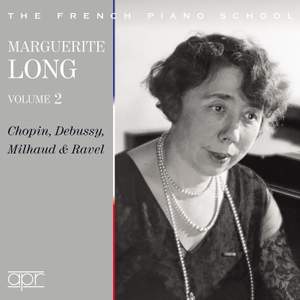
Claude Debussy was an excellent pianist, and Marguerite Long, who worked with him, admired “the suppleness, caress and depth of his touch”, as well as his “full, intense sonority, free of any harshness in the attack, like Chopin”. After the elegant, delicate Arabesques of 1888, in 1901 Debussy published his first important piano work, Pour le piano, in the tradition of the great baroque keyboard masters whom he so admired; it was to his dear daughter Chouchou, born in 1905, that he dedicated the six simple miniatures of Children’s Corner, a blend of emotion, playfulness and humour. “When one can’t afford to travel, one must make do with the imagination,” he said, commenting on the Estampes, whose heady sonorities and magical evocations refer to the Orient, Spain, and the spirit of France; Debussy was also capable of irony, as in La Plus que lente, composed in 1910 as “café music”. Less well-known, the Pièce pour le Vêtement du blessé was composed for a charity during the First World War devoted to dressing the wounds of soldiers. Marguerite Long described L’Isle joyeuse (1904) as an exuberant, “joyful gust of wind” and “a celebration of rhythm”; it is also a superb exploration of tone-colour and nuance.

“Pommier's Debussy selection displays many facets of both the composer and performer. Children's Corner is spirited and the Estampes particularly engaging. The highlight is a wonderfully droll La plus que lente.” BBC Music Magazine, December 2009

Virgin Virgo - 6994712

(CD)

$7.25

In stock - usually despatched within 1 working day.

Debussy & Poulenc - Cello Sonatas

Debussy & Poulenc - Cello Sonatas


Debussy:

Cello Sonata

La plus que lente

Scherzo for Cello and Piano in C

Intermezzo for cello & piano, L. 27

Poulenc:

Cello Sonata, Op. 143

Bagatelle in D minor

Serenade

Suite française (d'après Claude Gervaise), FP80


Debussy and Poulenc made a lasting impact on the musical identity of their country through both their references to the past and their innovations.This programme illustrates their vision of a certain esprit français: moving constantly between irony and emotion, extremely refined, yet at the same time offering an amplified echo of 'light' music - in short, the 'exquisite bad music' the creator of Les Mamelles de Tirésias prided himself on writing. Jean-Guihen Queyras and Alexandre Tharaud, upcoming interpreters of the young generation in France, have already made several recordings together and frequently programme these works in concert.Their recording of Schubert's Arpeggione Sonata was a Gramophone Editor's Choice.

"I got to know the Poulenc sonata, thanks to Alexandre, who I believe (although I haven't yet managed to make him admit it) must have learnt to play this music before he started walking; it just seems to flow from his fingers as if it were second nature." J-G Queyras

Long a soloist with the Ensemble Intercontemporain, Jean-Guihen Queyras was profoundly influenced by working with Pierre Boulez. His discography, distinguished by a musical eclecticism, includes works by Haydn (on period instruments) as well as Dvorák and 20th-century composers. He has premiered concertos by Ivan Fedele, Gilbert Amy, Bruno Mantovani and Philippe Schoeller (Wind's Eyes), some of which will be recorded for harmonia mundi in late 2008. Alexandre Tharaud devotes a large part of his activity to chamber music. His recording of Schubert's Arpeggione Sonata with Jean-Guihen received unanimous critical acclaim. An enthusiastic advocate of contemporary music, he premiered Thierry Pécou's cycle Outre-Mémoire, as well as his concerto L'Oiseau innumérable (HMC901974, July 2008). His recital programmes 'Hommages' intersperse harpsichord pieces by Rameau and Couperin played on the piano with tributes by living composers.

“Vividly captured in a warm acoustic, Queyras and Tharaud's is an intimate approach which exactly suits the two short sonatas of Debussy and Poulenc, the former with its abrupt changes of direction and unpredictable mood swings, the latter brimful of Poulencian wit and, not surprisingly as it was sketched in 1940 (completed in 1948), replete with some self-plagiarising from Babar.
These are fine accounts, the programme made even more attractive by the inclusion of the seven short movements of Poulenc's Suite française (1935) based on 16th-century dances by Claude Gervaise. It's a charmer. Apart from this, there are five other short works by the two composers making a truly delightful whole.”
Gramophone Classical Music Guide, 2010

Harmonia Mundi - HMC902012

(CD)

$17.50

In stock - usually despatched within 1 working day.

Hungarian Dances

Hungarian Dances


Bartók:

Romanian Folk Dances, Sz.56 (arr. Székely for violin & piano)

44 Duos for Two Violins, BB 104, Sz. 98 (extracts)

Teasing Song, Sorrow, Song from Máramaros, Ruthenian Kolomeika, Arabian Song & Pizzicato

Tom Eisner (violin II)

Brahms:

Hungarian Dance No. 2 in D minor

arr. Joachim

Hungarian Dance No. 6 in D flat major

arr. Joachim

Hungarian Dance No. 7

arr. Joachim

Hymne zur Verherrlichung des grossen Joachim (Hymn in honour of the Great Joachim)

Hungarian Dance No. 9 in E minor

arr. Joachim

Debussy:

La plus que lente

arr. Leon Rocques

Dohnányi:

Andante Rubato alla Zingaresca

Hartmann, A:

L’amour, valse bluette

Hubay:

Scène de la csárda No. 4 'Hejre Kati', Op. 32

Kreisler:

Marche miniature viennoise

Liszt:

Romance oubliée, for viola/cello/violin & piano, S. 132

Mephisto Waltz No. 1

arr. Milstein

Monti, V:

Csárdás

Scarlatescu:

Bagatelle

Vecsey, F:

Valse triste


Philippe Graffin (violin) & Claire Désert (piano/piano luthéal)

Philippe Graffin is the latest violinist to join ONYX, after several outstanding discs of rare French and English repertoire for labels such as Hyperion and Avie. This new recital brings together the mesmerising intensity of Gypsy violin playing with classical composers’ response to it.

Released to coincide with a notable novel called Hungarian Dances by writer and journalist Jessica Duchen. She explains: “When I asked Philippe Graffin, a treasured friend and colleague, to check the manuscript of Hungarian Dances for violinistic errors, I little dreamed he’d respond by making this recording: a CD inspired by the novel. Yet the novel was partly inspired by a CD – Philippe and Claire’s beautiful recital ‘In the Shade of Forests’, [Avie Records, rave reviews worldwide] evoking the spirit of the archetypal wandering Gypsy violinist”.

Philippe’s recital is loosely based around the book but is also designed to work as a programme in its own right with several pieces chosen only for the recording including rarities by such composers as Von Vecsey, Hubay, Scarlatescu and Arthur Hartmann.

Claire Désert is well-known in France for several solo CDs for FNAC and other labels and here plays both piano and piano luthéal, the ‘prepared piano’ that Ravel had made for Tzigane in 1919 and which imitates the sound of a Hungarian cimbalom to striking effect in many of these pieces.

“A delightful programme of violin sweetmeats with a gypsyesque flavour… Throughout, Graffin blends the music's various flavours with mouth-watering panache. Bravo!” BBC Music Magazine, May 2009 *****

“Very ably abetted by Claire Désert, Graffin does his utmost to conjure up the style and effect of Hungarian gypsy fiddling. His account of Monti's Csárdás is embellished with improvised ornaments and fancy tricks - a magnificently evocative impersonation... an enthralling, exceptional recital, to be thoroughly recommended.” Gramophone Magazine, February 2009

Onyx - up to 50% off

Onyx - ONYX4039

(CD)

Normally: $16.75

Special: $11.72

In stock - usually despatched within 1 working day.

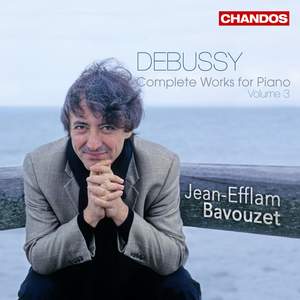
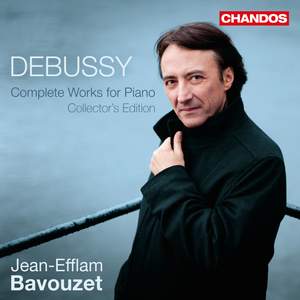
Debussy - Complete Works for Solo Piano Volume 3

Debussy - Complete Works for Solo Piano Volume 3


Debussy:

Children's Corner

Suite Bergamasque

Danse bohemienne

Nocturne

La plus que lente

Mazurka

Rêverie

Arabesque No. 1

Arabesque No. 2

Morceau de concours

Le petit nègre

Hommage à Haydn

Berceuse héroïque

Page d'album

Élégie, L138


Jean-Efflam Bavouzet here offers the third volume in his series devoted to the complete works for piano by Debussy. The music now moves to a more playful strand in Debussy’s compositional career, with generally shorter pieces of the salon genre, including the two famous collections Children’s Corner and Suite bergamasque.

In addition to these well-known works are several that are more rarely heard. Two such are La plus que lente, which seems to look ahead to the Études of 1915, and Élégie. Roger Nichols describes the former as ‘one of his most delightful pieces… the harmonic turns are particularly sophisticated and enchanting’. The Élégie was written in 1915 following the composer’s move to the coast. The outbreak of the First World War had initially depressed Debussy into a state of creative sterility but the move was to prove most productive. The Élégie was written for a charity and, dedicated to Queen Alexandra, honours the role of women in wartime. It is now rarely performed but Roger Nichols writes, ‘it is one of the composer’s most extraordinary works… and we are left wondering what on earth Debussy would have written in the 1920s and beyond’.

Bavouzet’s previous two volumes have been very well received both critically and commercially. In a recent review of volume two the LA Times wrote, ‘In what may turn out to be the greatest complete recorded survey of the composer’s piano music yet, Jean-Efflam Bavouzet… plays with such bracing clarity that hearing the early Romantic pieces, one feels like jumping into an icy pond after an hour in the sauna’. Of the same volume International Record Review has noted, ‘I had the highest praise for Jean-Efflam Bavouzet’s first volume of Debussy, and the present disc is fully the equal of that one in terms of colour, refinement of touch, spontaneity and technical finish… Bavouzet has written that his Debussy playing has been influenced by that of Gieseking, Michelangeli and Richter. You may hear something of each of these pianists in his playing but more than that you will hear his own distinctive and special voice’.

This series is a deeply personal project for Bavouzet who has been involved in all aspects of the recording process.

“This third volume confirms Jean-Efflam Bavouzet's winning affinity for Debussy's music. Such familiar pieces as the Suite bergamasque, Deux Arabesques or Children's Corner come across with their colours luminous, their ideas voiced fluently and the moods atmospherically fixed.” The Telegraph, 31st May 2008

“Fiercely energised yet superfine, his performances are not for those with comfortable drawing-room notions of Debussy.” Gramophone Magazine, July 2008

“…this delightful disc places Debussy's two most modest cycles (Children's Corner and Suite bergamasque) within a broadly chronological sequence of pieces spanning the composer's career.” BBC Music Magazine, June 2008 *****

“Volume 3 of Jean-Efflam Bavouzet's superb Debussy cycle links mostly early miniatures with the Suite bergamasque and Children's Corner.
Once more he turns conventional notions of 'impressionism' topsy-turvy, cleansing Debussy of years of dust and accretion and recreating him in every bar in a sparkling and pristine light.
Fiercely energised yet superfine, his performances are not for those with comfortable drawing- room notions of Debussy, and rarely in my experience has a pianist so faultlessly or precisely achieved his aims.
All sentimentality is erased from the Nocturne's enchanting evanescence and just when he momentarily has you wishing that his formidable directness would melt into something more heart-easing, he makes you gasp at his flawless balance of sense and sensibility. He makes something audaciously epic out of Hommage à Haydn and the startling hesitancy in the opening of 'The Snow is Dancing' is convincing rather than idiosyncratic.
His recital ends on a desolating note with the Berceuse héroïque's phantom battle-cries and bugle-calls memorably evoked. The superbly recorded disc includes his own remarkable essay.
This could well be the finest and most challenging of all Debussy piano cycles.
A greater study in contrast in 'composer and interpreter' would be hard to imagine then between Bavouzet and Pascal Rogéacute;. Where Bavouzet breaks out into blazing Mediterranean sunlight, Rogéacute; (radically enriching his earlier Decca Debussy discs) is happy to withdraw into shadow-land. Time and again his playing suggests emotion recollected in tranquillity rather than turmoil; and in, say, 'Hommage à Rameau' or the Sarabande from Pour le piano he discovers the mysterious, still centre of Debussy's art.
'Poissons d'or' is a marvellous distillation of indolence and flashing disruption, and 'Mouvement' is a perky and vivacious rejoinder to all former introspection. And so too is the Toccata, played with unerring ease and grace, and with many ear-catching details.
To summarise, the ever-elusive truth lies somewhere between Rogéacute; the dreamer, Bavouzet the sinewy but always musical athlete, Thibaudet, the teasing wit and sophisticate and, of course, the legendary Gieseking. You pays your money and you takes your choice…”
Gramophone Classical Music Guide, 2010

“Debussy playing does not come any better than this” Penguin Guide, 2011 edition

BBC Music Magazine Awards 2009

Instrumental Award Winner

Chandos Bavouzet Debussy Series - CHAN10467

(CD)

$16.75

(also available to download from $10.50)

In stock - usually despatched within 1 working day.

Debussy - Complete Piano Works Volume 2

Debussy - Complete Piano Works Volume 2


Debussy:

Estampes (3) (Complete)

Children's Corner

Arabesque No. 1

Arabesque No. 2

Suite Bergamasque

La plus que lente

Ballade

Mazurka

Le petit nègre


Pascal Rogé (piano)

“Everything is beautifully phrased, and Pascal Rogé has a fabulous touch, difficult passagework often pouring out of him like a stream of glittering gemstones.” BBC Music Magazine, May 2007 ***

“A model of piano recording” Daily Telegraph

Onyx - up to 50% off

Onyx Debussy Piano Works - ONYX4018

(CD)

Normally: $16.75

Special: $11.72

In stock - usually despatched within 1 working day.

Debussy - Orchestral Works 2

Debussy - Orchestral Works 2


Debussy:

Children's Corner

Petite Suite

Danses sacrée et profane

La Boite A Joujoux

Fantasie for piano and orchestra

La plus que lente

Rhapsody for clarinet & piano (or orchestra), L. 116 'Première rapsodie'

Rhapsody for alto saxophone & piano (or orchestra), L. 98

Khamma


Aldo Ciccolini (piano)

Orchestre National de l‘O.R.T.F., Jean Martinon

“A great rarity here is Khamma. This and the two Rhapsodies are underrated and, although there are alternative versions of all these pieces, none is more economically priced. The performances are sympathetic and authoritative” Penguin Guide, 2011 edition

EMI Gemini - 3652402

(CD - 2 discs)

$11.25

In stock - usually despatched within 1 working day.

Itzhak Perlman - Violin Encores

Itzhak Perlman - Violin Encores


Achron, J:

Hebrew Melody, Op. 33

Albéniz:

Sevilla (from Suite Española, Op. 47)

Arensky:

Serenade for Violin & Piano, Op. 30 No. 2

Bazzini:

La Ronde des lutins, Op. 25

Castelnuovo-Tedesco:

Tango

Debussy:

La plus que lente

Petite Suite: Menuet

Golliwog's Cakewalk (from Children's Corner)

Petite Suite: En bateau

Drigo:

Valse Bluette for Viola & Piano

Elgar:

Salut d'amour, Op. 12

Fauré:

Berceuse, Op. 16

Foster, S:

I Dream of Jeanie with the Light Brown Hair

Gershwin:

It Ain't Necessarily So (from Porgy and Bess)

Preludes (3)

Godowsky:

Triakontameron No. 11 'Alt Wien'

Grasse, E:

Wellenspiel (Waves at Play)

Halffter, E:

Danza de la gitana

Mendelssohn:

Song without Words, Op. 19b No. 1 in E major 'Sweet Remembrance'

Paganini:

Sonata for violin & guitar in E minor, Op. 3 No. 6

Rachmaninov:

Prelude Op. 23 No. 5 in G minor

Melody, Op. 21 No. 9

How fair this spot, Op. 21 No. 7

Vocalise, Op. 34 No. 14

Rameau:

Rigaudon

Ravel:

Valses nobles et sentimentales No. 6 in C major

Valses nobles et sentimentales No. 7 in A minor

Rimsky Korsakov:

Flight of the Bumble Bee

Sarasate:

Danza Española No. 4: Jota Navarra, Op. 22, No. 2

Danza Española No. 2: Habanera, Op. 21, No. 2

Danza Española No. 5: Playera Op. 23 No. 1

Schumann:

The Prophet Bird Op. 82 No. 7

Stravinsky:

Chanson Russe

Suk:

Four Pieces for Violin and Piano, Op. 17: Nos. 3 & 4

Taeye:

Humoresque

Tchaikovsky:

Souvenir d'un lieu cher, Op. 42: Mélodie in E flat major

trad.:

Deep River

Vale, F:

Prelude No. 15 'Ao pé da fogueira'

Wieniawski:

Polonaise brilliante No. 2 in A major, Op. 21

Mazurka in G major, Op. 19 No. 1 'Obertas'

Polonaise brilliante No. 1 in D major, Op. 4

Scherzo-Tarantelle in G minor, Op. 16


Itzhak Perlman & Sam Sanders

EMI Gemini - 4769572

(CD - 2 discs)

$11.25

In stock - usually despatched within 1 working day.

Debussy: Piano Music Volume 2

Debussy: Piano Music Volume 2


Debussy:

Préludes - Book 1 (12, complete)

D'un cahier d'esquisses

Pièce pour piano (Morceau de concours)

Hommage à Haydn

Le petit nègre

Children's Corner

La plus que lente


Noriko Ogawa (piano)

“Captivating playing” of “exceeding beauty and refinement” have earned the previous volumes of Noriko Ogawa's Debussy cycle the highest recommendations, including no less than two Editor's Choice in Gramophone.

“Every bar of these performances confirms Ogawa as a most elegant, scrupulously sensitive interpreter of 'music like a dream from which one draws away the veil' (Debussy). She achieves a magical transparency throughout Book 1 of the Préludes with her refined pedalling and cool command of texture and colour. In 'Voiles' she makes you readily recall Cortot's heady description of 'the flight of the white wing on the crooning sea toward the horizon bright with the setting sun' while maintaining her own individuality. Her hushed start before the start of the whirling tarantella in 'Les collines d'Anacapri' is one of many haunting touches; and her playing of 'Des pas sur la neige', the Arctic centre of Book 1 of the Préludes, suggests some ultimate desolation. In Children's Corner she never turns 'Doctor Gradus', marked modérémentanimé, into a glittering presto and finds time to convey its mix of guile and sophistication. You could hardly find a more skilful or sympathetic artist from a younger generation. BIS's demonstration sound quality crowns this superb issue.” Gramophone Classical Music Guide, 2010

GGramophone Magazine

Editor's Choice - March 2003

BIS Noriko Ogawa Debussy Complete Piano Music - BISCD1205

(CD)

$16.75

(also available to download from $10.50)

In stock - usually despatched within 1 working day.

Page: 

 1   2   3   4   5   6   7   8   9 

 Next >>

Copyright © 2002-13 Presto Classical Limited, all rights reserved.