All recordingsPrices shown exclude VAT. (UK tax is not payable for deliveries to United States.) See Terms & Conditions for p&p rates. | |  | Heitor Villa-Lobos
| | | In stock - usually despatched within 1 working day. |
|
|
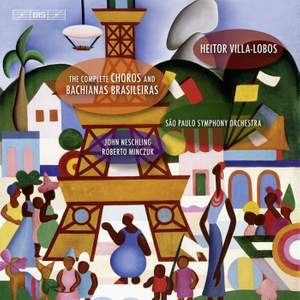
| |  | Villa-Lobos - Bachianas Brasileiras Volume 1
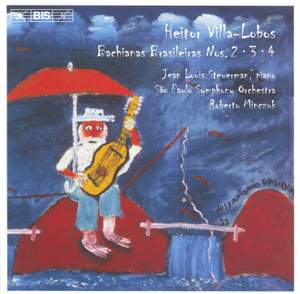
“These performances of Bachianas Brasileiras Nos. 2 and 4 easily are the finest available. The São Paulo Symphony Orchestra certainly ought to know how to play this music, and do they ever!” Classics Today | | | (also available to download from $10.50) | In stock - usually despatched within 1 working day. |
|
|
| |  | Villa-Lobos: Piano Works
| | | In stock - usually despatched within 1 working day. |
|
|
| |  | Jorge Luis Prats Live in Zaragoza
| | | (Sorry, download not available in your country) | Usually despatched in 2 - 3 working days. |
|
|
| |  | 20 Jahre: Arpeggione Live
Arpeggione Kammerorchester This release celebrates 20 years of the outstanding Arpeggione Kammerorchester, which is based in Hohenems, Austria. The orchestra has performed all over the world with some of the greatest conductors and soloists. This collection includes Respighi’s Ancient Dances, Bach’s Violin Concerto in E and Bartók’s Divertimento for Strings. | | | Usually despatched in 2 - 3 working days. |
|
|
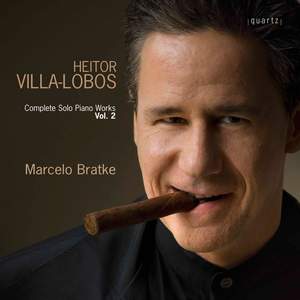
| |  | Villa-Lobos: Complete Solo Piano Works Volume 2
The long awaited second release in Marcelo Bratke’s complete piano music of Villa-Lobos. All the works on this CD have a direct reference to Brazil and come from two different periods of Villa-Lobo’s artistic output. | | | Usually despatched in 4 - 5 working days. |
|
|
| |  | Elgar: Enigma Variationsarrangements by M Patterson for wind ensemble
University of Houston Wind Ensemble, Eddie Green | |
|
| |  | Glorious JohnAnniversary Set
Bach, J S: | Sheep May Safely Graze, from Cantata BWV208 (arr: Barbirolli). 1969 Hallé Orchestra | Balfe: | The Bohemian Girl overture 1933 Symphony Orchestra | Biene: | The Broken Melody 1911 John Barbirolli (cello) | Collins, A: | Sir Andrew and Sir Toby - Overture 22 March 1942, ‘live’ in Carnegie Hall, New York | Delius: | The Walk to the Paradise Garden 20 August 1947 ‘live’ in the Festspielhaus, Salzburg Vienna Philharmonic Orchestra | Falla: | Seguidilla murciana (No. 2 from Siete canciones populares españolas) (arr: Halffter). 1957 Marina de Gabarain | Grieg: | Lyric Pieces Op. 57: No. 4 - Secret (arr: Barbirolli). 1953 Hallé Orchestra | Lehár: | Gold und Silber Walzer, Op. 79 1966 Hallé Orchestra | Mascagni: | Santuzza’s Aria from Cavalleria Rusticana 1927 Lilian Stiles-Allen | Mozart: | String Quartet No. 16 in E flat, K428 1925 Cassation K63 1950 Hallé Orchestra Divertimento No. 11 in D major, K251 1952 Hallé Orchestra | Puccini: | Tre sbirri...Una carozza...Presto 'Te Deum' (from Tosca) 1929 Giovanni Inghilleri | Saint-Saëns: | Wedding Cake - Valse-Caprice for piano & strings, Op. 76 1932 Yvonne Arnaud | Strauss, J, II: | Die Fledermaus: Bruderlein und Schwesterlein 1930 | Stravinsky: | Concerto in D for string orchestra 'Basler' 1948 Hallé Orchestra | Verdi: | Niun mi tema (from Otello) 1928 Renato Zanelli | Villa-Lobos: | Bachianas Brasileiras No. 4 for piano or orchestra 1955 Hallé Orchestra | Weber: | Euryanthe Overture | Weinberger: | Christmas 24 December 1939, ‘live’ in Carnegie Hall, New York New York Philharmonic Orchestra |
plus: REHEARSAL SEQUENCE BERLIOZ The Damnation of Faust, op.24 • Hallé Orchestra 1957 INTERVIEW Sir John Barbirolli and R. Kinloch Anderson The complete interview, recorded by EMI – 1964
This 2-CD set marks the 40th anniversary of the death of Sir John Barbirolli (1899-1970) and features recordings ranging from boy cellist in 1911 to international conductor 1969 – in both ‘live’ and studio recordings. John Barbirolli was born in Southampton Row, Bloomsbury, on 2 December 1899, a Cockney as he proudly boasted. Or, to be accurate, Giovanni Battista Barbirolli was born, son of an Italian émigré violinist and his French wife. English-born with Italo-French parentage – a wonderful pedigree for a musician. And so it proved, for he conducted Elgar, Verdi and Debussy, Vaughan Williams, Puccini and Ravel, with equal sensitivity and perception and intuition. This album of recordings forms a kind of musical biography; and Michael Kennedy’s notes (with many rare photos) trace that life alongside the recordings. A special bonus is the 1947 Austrian Radio recording of two works, Weber’s Euryanthe overture and Delius’s Walk to the Paradise Garden, from the Salzburg Festival concert on 20 August at which he conducted the Vienna Philharmonic. Was this, Michael Kenneday asks, the first time this orchestra had played the Delius? Two rare mementos of the New York period are included in this album. Anthony Collins had long been a friend of Barbirolli (they played in the LSO together) and worked in the USA from 1936 to 1945 and his Sir Toby and Sir Andrew, based on the two comic characters in Twelfth Night, is an example of his overlooked talent. Another composer almost forgotten today is the Czech-born Jaromir Weinberger whose opera Schwanda the Bagpiper enjoyed inter-war popularity. His Christmas for organ and orchestra was composed in 1929. In 1939 he dedicated his Variations and Fugue on an old English tune, ‘Under the Spreading Chestnut Tree’ to Barbirolli and the New York Philharmonic. | | | Usually despatched in 4 - 5 working days. |
|
|
| |  | Villa-Lobos - Piano Music Volume 2
Joanna Brzezinska (piano) This month sees the eagerly awaited volume 2 of Villa-Lobos piano music from Joanna Brzezinska. Simple, sweetly naïve melodies and energetic, unrelenting rhythms carried by boundless surging vitality. Such is the sound of Brazil which Villa-Lobos succeeded in conveying in all his works, particularly those featured on this CD. Joanna Brzezinska has a particular affinity for this unique Brazilian composer, her playing wonderfully conveys the sensuality, sweetness and brazen impetuosity of his music. | | | Usually despatched in 4 - 5 working days. |
|
|
| |  |
Jesus Lopez-Cobos and the Cincinnati Symphony Orchestra perform Villa Lobos’s Bachianas Brasileiras Nos. 2, 4, 5 & 8, which combine the melodic and rhythmic characteristics of Brazilian music with the contrapuntal texture and expansive forms of Johann Sebastian Bach, arranged for orchestra. “If any parallels existed between Bach and Brazilian idioms, they were largely in Villa-Lobos's mind – even the Fugue in No 8 of these BachianasBrasileiras is totally un-Bach-like; so anyone coming fresh to these exotically coloured, rather sprawling works should not be misled by false expectations. But they're fascinating, indeed haunting, in a highly individual way. In view of the composer's sublime indifference to instrumental practicalities (as, for instance, the feasible length of a trombone glissando), his carelessness over detail in his scores, his Micawber-like trust that problems of balance he had created would be sorted out in performance, the chaotic state of the printed scores and orchestral parts of his music (littered as they are with wrong notes), and numerous misreadings in past performances, the only half-way reliable yardstick for conductors or critics is the composer's own recordings, made in the 1950s. Compared to them, the present issue shows a number of differences. Chief of these is the warmer, more generalised sound, with less emphasis on clarity of detail. This works reasonably well in the Preludio of No 8, where concentration on the melodic line and the adoption of a slower tempo aid the movement's lyricism (likewise the more sentimental approach to the Aria of No 2). The Aria of No 8 is unquestionably more poetic and the Dansa of No 4 lighter; but in the most famous movement, the hilarious and ingenious 'Little train of the Caipira' of No 2, the rasps near the start and the clatter of wheels on the track (evoked by the fiendishly difficult piano part) are far too subdued in favour of the 'big tune'. López-Cobos deals persuasively with knotty questions of balance, such as in the middle section of No 3's Toccata, and brings to the fore the bell-like araponga bird's cry in No 4's Coral, but makes less of that movement's jungle screeches. He makes clear the thematic link between the sections of No 4's Aria, and seeks to overcome the repetitious pattern of its Preludio by taking a faster speed rather than by the wealth of tonal nuance the composer imself introduced. Perhaps such detailed comparisons are superfluous: enjoy, enjoy!” Gramophone Classical Music Guide, 2010 | | | Usually despatched in 4 - 5 working days. |
|
|
| |
|