All recordingsPrices shown exclude VAT. (UK tax is not payable for deliveries to United States.) See Terms & Conditions for p&p rates. | |  | Forever Vienna
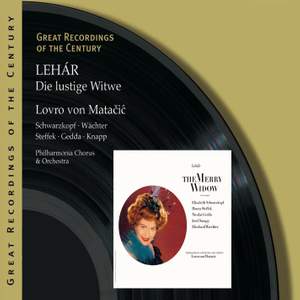
Lehár: | Dein ist mein ganzes Herz (from Das Land des Lächelns) Viljalied (from Die lustige Witwe) | Ravel: | Boléro | Shostakovich: | Jazz Suite No. 2 - Waltz No. 2 | Strauss, J, I: | Radetsky March, Op. 228 | Strauss, J, II: | An der schönen, blauen Donau, Op. 314 Frühlingsstimmen Walzer Op. 410 Wiener Blut Waltz, Op. 354 Perpetuum Mobile, Op. 257 Wein, Weib und Gesang, Op. 333 Unter Donner und Blitz, Op. 324 Der Zigeunerbaron Overture | Strauss, Josef: | Auf Ferienreisen - Polka schnell, Op. 133 |
Andre Rieu & His Johann Strauss Orchestra | 
| | | In stock - usually despatched within 1 working day. |
|
|
| |  | listen: | | Watch video trailer |  |
| Kate Royal – Midsummer Night
Kate Royal (soprano) Orchestra of the English National Opera & Crouch End Festival Chorus, Edward Gardner Kate Royal’s second recording for EMI Classics is Midsummer Night, an atmospheric recital collection focusing on female characters in 20th century opera and operetta, reflecting their pain and ecstasy in love. The programme ranges from well known turn-of-the-century works by Dvorák (Song to the Moon from Rusalka) and Lehár (Vilja from The Merry Widow) to Midsummer Night, from the English composer William Alwyn’s opera Miss Julie. Edward Gardner conducts the English National Opera Orchestra with guest appearances by Thomas Allen, Andrew Staples and the Crouch End Festival Chorus. "[My] Inspiration for this album began with Benjamin Britten's The Turn of the Screw and the Governess - my first major role in a 20th century opera,” said Kate Royal. “The music got under my skin in a way I had not experienced before. Britten's vocal writing is immediate and naturally dramatic. His harmonic world seeps into the subconscious underpinning the character as a fully formed human being rather than a romantic stereotype. So, with the Governess’s Tower Scene as a starting point, I went in search of other arias that shared this combination of intensity and abandon. These are worlds in which the heroines are laid bare, vulnerable in their journey towards emotional fulfilment … women lost in love [or] trapped in a deeper trance-like state as they wrestle with their unsated desires. … Alongside some of the century's seminal works I [was] also delighted to discover what I believe to be some hidden gems for the soprano voice." Stephen Johns, Vice President of A&R, EMI Classics, has also commented on the choice of repertoire, "The selection of songs for this recital is illuminated by their composers’ reactions to the changing musical scenes of the 20th century. All the arias were written after 1900, but each composer has found a different and unique way of coping with the transition into the century. Some are still firmly rooted in the lush harmonies of the 19th century like Dvorák and Korngold; some even clinging onto the innocence of the past world, such as Léhar. Others are experimenting with newer harmonies - the exoticism of early Stravinsky, and the aching beauty of Walton and Alwyn's music. Still others find new life in the old harmonic structures - Britten and Floyd. What binds them together, in a programme that coincidentally emphasises the nocturnal, the close of the day, is a desire to allow the soprano voice fully to express beauty in melody ….” Among the lesser known arias on Kate Royal’s CD are those from operas by the English composer William Alwyn and American composers Bernard Herrmann and Carlisle Floyd: William Alwyn (1905-1985) based his only major opera, Miss Julie, on August Strindberg’s tense and intimate drama of class and sexual relations from 1888. Composed between 1973 and 1976, Miss Julie was premiered on BBC Radio in 1977, but has had only one semi-professional stage production, in Copenhagen in 1991; Bernard Herrmann’s many film scores, notably his collaborations with Orson Welles (Citizen Kane), Alfred Hitchcock (Psycho) and Martin Scorsese (Taxi Driver), have diverted attention from his other musical achievements. He was particularly proud of Wuthering Heights, his major opera to a libretto by Lucille Fletcher (his first wife), based on Emily Brontë’s novel. Herrmann (1911-1975) composed it between 1943 and 1951, but the opera was not staged until 1982, seven years after his death; The American composer Carlisle Floyd (b 1926), whose own version of Wuthering Heights was premiered in 1958, has produced a steady stream of operas over a period of fifty years, a couple of which have become staples of the American repertoire. His greatest success has been Susannah, based on the story in the Apocrypha of Susannah and the Elders translated to a contemporary Bible-belt setting. First staged at Florida University in 1955, the opera has been performed predominantly by American companies, notably the Metropolitan Opera in 1999. "She is a natural communicator, has all the ingredients for an important career – musicality, a lyric soprano of rare loveliness, a poised and dignified manner and looks gorgeous too" The Sunday Times “…Kate Royal's lustrous soprano has invited comparisons with that of Elisabeth Schwarzkopf, and so it does in this imaginative programme, conducted by fellow wunderkind Edward Gardner.” BBC Music Magazine, June 2009 **** “All the extracts from English and American works go extremely well; the aria that gives the disc its title, "Midsummer Night" from William Alwyn's Miss Julie, is a rarity. The Tower scene from the Turn of the Screw, with its spooky woodwind and harp accompaniment, is as good as the Grimes scene - Royal comes into her own in the Britten roles.” Gramophone Magazine, July 2009 “Solos from Britten’s Paul Bunyan, Peter Grimes and The Turn of the Screw are dotted among extracts from Alwyn’s Miss Julie, Carlisle Floyd’s Susannah, Walton’s Troilus and Bernard Herrmann’s Wuthering Heights. If Royal’s voice sounds squeezed at the top of her range, she revels in this lush music.” Sunday Times, 24th May 2009 *** “Much of the music is pensive, decorated with birdlike flutes and piccolos or the plink of a refined harp — details brightly supplied by the Orchestra of English National Opera and their conductor Edward Gardner. But Royal’s voice is the best instrument of all: a voice of strong, liquid beauty, unfaltering in any register, never more thrilling than when pealing or gliding in long breaths.” The Times, 1st May 2009 **** | | | In stock - usually despatched within 1 working day. |
|
|
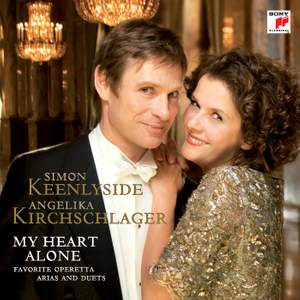
| |  | My Heart AloneFavorite Operetta Arias and Duets
Angelika Kirchschlager & Simon Keenlyside Austrian Tonkünstler Orchestra, Alfred Eschwé My Heart Alone is the new recording from Austrian mezzo-soprano Angelika Kirchschlager and British baritone Simon Keenlyside, and proves that Operetta is still alive. Both singers are highly respected in the fields of opera and Lieder recital, and have appeared several times as a partnership, notably in the title roles in Pelléas et Mélisande at the Salzburg Easter Festival and at Covent Garden, where they have been feted as the dream couple of the opera world.
This is the duo’s first Operetta recording, following in the great tradition of famous opera singers like Elisabeth Schwarzkopf, Fritz Wunderlich and Hermann Prey, whose careers blossomed beyond the opera stage. The choice of repertoire for this programme ranges widely from the golden age to the silver age, and includes gems from Die Fledermaus and Die Tänzerin Fanny Elssler by the father of Viennese operetta and waltz king Johann Strauss, as well as titles from popular works such as Franz von Suppé's masterwork Boccaccio and Franz Léhar's Merry Widow. The duet Nur die Liebe macht uns jung from Franz Léhar's Zigeunerliebe however, is an absolute rarity. “Keenlyside sings operetta like a student, learning the ropes, too quick to pitch volume and intensity at a level fit for Verdi, but not the sweetmeats of Vienna...Best to concentrate on Kirchschlager, who is frequently marvellous. As an Austrian, the operetta lilt lives in Kirchschlager’s blood; she’s a natural at pausing and easing the speeds, and she sings with that indefinable glow.” The Times, 4th July 2008 *** “Kirchschlager tries too hard as the dissolute Orlofsky ( Die Fledermaus ) but makes amends with a tenderly phrased "Vilja" and a sinuous, seductive "Meine Lippen, die küssen so heiss" from Lehár's Giuditta. Simon Keenlyside, in glorious voice, is by turns dulcet and virile, even if he doesn't quite muster the insouciant charm of a Nicolai Gedda for Danilo's "Da geh' ich zu Maxim". Drawbacks include some distinctly schmaltzy accompaniments and a booklet long on pretentious waffle but criminally short on texts and translations.” The Telegraph, 2nd August 2008 “What impresses is not only the natural brilliance of the singers' vocal production but also the way in which pure display is subordinated to expression of true feeling.” Gramophone Magazine, September 2008 | | | In stock - usually despatched within 1 working day. |
|
|
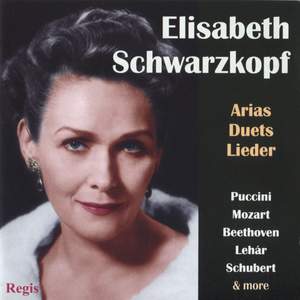
| |  | Elisabeth Schwarzkopf - Operetta Arias & Duets
Elisabeth Schwarzkopf (soprano) Philharmonia Orchestra, Otto Ackermann & Herbert Von Karajan “The whole collection heightens admiration for the delights of the music and the quality of Schwarzkopf's soprano.” Gramophone Magazine, July 2008 | | | In stock - usually despatched within 1 working day. |
|
|
| |  | Treasures of Operetta
Eysler: | It's not a sin to kiss from Bruder Straubinger | Fraser-Simson: | A Paradise for two from The Maid of the Mountains | Ganne: | It is love from Les saltimbanques | German: | The Yeomen of England from Merrie England | Herbert, V: | Tramp! Tramp! Tramp! from Naughty Marietta Romany Life from The Fortune Teller | Jacobi, V: | The Colonel of the Crimson Hussars from Sybil | Jones, Sidney: | Star of my soul from The Geisha | Kalman: | Let me dance and let me sing from Die Csárdásfürstin | Lehár: | Love unspoken from The Merry Widow I'm off to Chez Maxim from The Merry Widow On my lips every kiss is like wine from Giudetta Viljalied (from Die lustige Witwe) Girls were made to love and kiss from Paganini Dance while you may from The Land of Smiles Why did you kiss my heart awake from Friederike | Messager: | Trot here and there from Véronique Lightly, lightly, from Monsieur Beaucaire Philomel from Monsieur Beaucaire | Millöcker: | The Doleful Prima Donna from Der arme Jonathan | Monckton: | Charming Weather from The Arcadian A Bad Boy and a Good Girl from The Quaker Girl | Posford: | At the Balalaika from Balalaika | Stolz, R: | My Song of Love from White Horse Inn | Straus, O: | My Hero from The Chocolate Soldier Waltz of my dreams from A Waltz Dream | Strauss, J, II: | O Queen of my delight' from Casanova Nun's Chorus & Laura's Song from Casanova | Stuart: | Tell me, pretty maiden from Floradora | Tauber: | My Heart and I from Old Chelsea You are the world to me from Der singende Traum | Zeller: | Don't be cross from Der Obersteiger | Ziehrer: | Do re me fa sol la si (The Scale Song) from Der Schätzmeister O let me hold your tiny little hand from Der Schätzmeister Military Life! from Der Fremdenführer Thin, thin is my dear Gwendolin from Die drei Wünsche |
Marilyn Hill Smith (soprano) & Peter Morrison (baritone) Ambrosian Singers, Chandos Singers, Chandos Concert Orchestra, Barry Knight | | | In stock - usually despatched within 1 working day. |
|
|
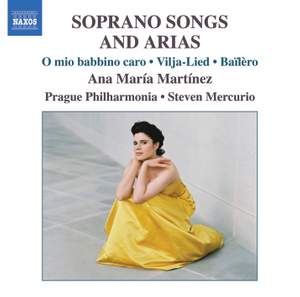
| |  | Soprano Songs and Arias
Ana María Martínez (soprano) Prague Philharmonia, Steven Mercurio | | | Usually despatched in 2 - 3 working days. |
|
|
| |  | The Best of Lesley GarrettThe Best of Lesley Garrett on 2 CDs - amazingly her first ever ‘best of’ - captures the breadth of material from the artist with songs from operetta, opera, musicals and the folk and contemporary repertoires.
| | | Usually despatched in 4 - 5 working days. |
|
|
| |  | Great Operatic Arias 12 - Yvonne Kenny Volume 2
Yvonne Kenny (soprano), Rebecca Evans (soprano), Bruce Ford (tenor), Roderick Williams (baritone) Geoffrey Mitchell Choir, London Symphony Orchestra, Richard Hickox Sung in English | | | Usually despatched in 2 - 3 working days. |
|
|
| |  | Romantic Piano Favourites, Vol. 5
Beethoven: | Für Elise (Bagatelle in A minor, WoO59) | Boccherini: | Minuet in A major | Chopin: | Nocturne No. 2 in E flat major, Op. 9 No. 2 | Debussy: | Arabesque No. 2 | Gossec: | Gavotte in D | Grieg: | Wedding Day at Troldhaugen, Op. 65 No. 6 | Jessel: | Parade of the Tin Soldiers | Lange: | Der kleine Postillon | Lehár: | Viljalied (from Die lustige Witwe) | Mendelssohn: | Song without Words, Op. 30 No. 6 in F sharp minor 'Venezianisches Gondellied No. 2' | Ravel: | Pavane pour une infante défunte | Scarlatti, D: | Keyboard Sonata K162 in E major | Schubert: | Marche Militaire, D733 No. 1 | Schumann: | Album for the Young, Op. 68 - excerpts | Strauss, J, II: | Pizzicato Polka | Strauss, R: | Ständchen, Op. 17 No. 2 | Tchaikovsky: | Romance in F minor, Op. 5 |
| | | Usually despatched in 2 - 3 working days. |
|
|
| |  | listen: | | Watch video trailer |  |
| Elisabeth Schwarzkopf - A Viennese Evening
Elisabeth Schwarzkopf (soprano) Orchestre de Radio-Canada, Willi Boskovsky For many vocal connoisseurs, Dame Elisabeth Schwarzkopf (1915-2006) represents the pinnacle of imagination, intelligence, and musicianship. This rare 1963 Radio-Canada telecast of an all-Viennese concert she performed with her colleague and friend Willi Boskovsky (1909-1991) provides visible and audible proof of that claim. Booklet includes a reminiscence of Dame Elisabeth by Charles Scribner III. Includes optional subtitles in English, French, German, and Italian. | | | Usually despatched in 4 - 5 working days. |
|
|
| |
|