All recordingsPrices shown exclude VAT. (UK tax is not payable for deliveries to United States.) See Terms & Conditions for p&p rates. | |  | Puer natus estTudor Music for Advent & Christmas
Stile Antico’s newest programme centres on Tallis’s magnificent 7-part ‘Christmas’ Mass, based on the festive plainchant Puer natus est, in a new edition prepared by Sally Dunkley. The mass is interspersed with seasonal Tudor music, including Byrd’s exquisite Propers for the fourth Sunday of Advent, responsories by Taverner and Sheppard, Robert White’s exuberant setting of the Magnificat, and Tallis’s own sublime Videte miraculum. Matthew O’Donovan’s booklet note cannot be bettered in terms of historical context, analysis and relevance. Stile Antico is much in demand in concert, performing regularly throughout Europe and North America in repertoire ranging from English Tudor composers to the Flemish and Spanish schools and early Baroque. Their recordings on the harmonia mundi label have enjoyed huge success, and their release Song of Songs won the 2009 Gramophone Award for Early Music. “Conductorless Stile Antico may be, but they could never be accused of lacking direction or clear-sighted commitment to the works on this generously-filled album...The approach encourages long-range thinking about the music, inviting the ear to contemplate soaring architecture rather than surface detail.” Classic FM Magazine, January 2011 ***** “Stile Antico brings delicious balance and otherworldly beauty to this recording of music by Tallis, Taverner, Byrd, White and Sheppard. Listening will restore meaning to the holidays amid the retail onslaught.” New York Times, 26th November 2010 “Here is a disc full not of the joys but the mysteries of Christmas, the perfect corrective for the frenetic materialistic scramble it now is...The pure-sounding voices are exquisitely blended, and their broad pacing enables consistently shapely phrasing and clarity of line.” Sunday Times, 19th December 2010 *** “Surely the pick of the new CDs for Christmas this year, this exquisitely performed and beautifully planned disc is another winner for Stile Antico...what a sound: perfectly blended, carefully balanced, its sonorities reaching back effortlessly to conjure up a vanished age of devotion.” The Observer, 17th October 2010 | | | In stock - usually despatched within 1 working day. |
|
|
| |  | Tallis & Byrd: Cantiones Sacrae 1575
Byrd: | Emendemus in melius Libera me, Domine, et pone Peccantem me quotidie Aspice, Domine quia facta est Attollite portas O Lux beata Trinitas Laudate, pueri, Dominum Memento homo Siderum rector SCTBarB Libera me Domine de morte Tribue, Domine Te deprecor Gloria patri qui creavit Miserere mihi, Domini Diliges Dominum Domine secundum actum meum Da mihi auxilium | Tallis: | Salvator mundi, salva nos 1 & 2 Absterge Domine In manus tuas Mihi autem nimis O nata lux de lumine 5vv O sacrum convivium Derelinquat impius Dum transisset sabbatum Honor, Virtus et Potestas Sermone blando angelus Te lucis ante terminum Miserere nostri, motet for 7 voices, P. 207 Suscipe quaeso Domine Si enim iniquitates In ieiunio et fletu Candidi Facti Sunt Te lucis ante terminum |
In 1575 'Thomas 'Tallis then an 'aged man', and his pupil and friend William Byrd, who was in his mid to late 30s, paid tribute to Elizabeth 1 by selecting 17 motets each for their Cantiones Sacrae ('Sacred Songs'), the first major printed collection of music to be published in England. Many of these works have since become staple in the repertoire of church and chamber choirs throughout the world. This is the first recording to present the Cantiones in their entirety, by the same group of singers, and in the composers' original order of publication. “Contrasts abound: Byrd’s florid three-section Tribue Domine is almost Marian in its vastness, while Tallis’s hymn setting O nata lux de lumine is brevity itself...The dozen singers perform expressively and blend beautifully throughout, while Skinner, who adopts a commonsense approach to pitch standards, injects passion into every note.” Sunday Times, 30th January 2011 **** “They use solo voices throughout, mixed voices with a fairly open sound that brings with it more vibrato than we are used to hearing in such music nowadays...That results in performances that are refreshingly free of self-indulgence. Some of the big Byrd pieces in particular are very good indeed.” Gramophone Magazine, March 2011 “The prevailing mood is penitential, but the pieces are never dull; there's much delight to be had in listening to the way the individual voice parts weave in and out...Skinner gets his singers to bring [the false relations] out so that they send shivers down your spine...[He] shapes the music extremely well.” Classic FM Magazine, March 2011 **** “Homophonic passages impress with their splendour, enriched here by the chestnut hues of basses William Gaunt and Robert Macdonald. The clarity of line lays bare the ingenuity of counterpoint, no matter how thick the texture becomes - a formidable achievement in Byrd's 'double imitation' motets.” BBC Music Magazine, March 2011 *** “This is the first time the Cantiones Sacrae has been recorded complete and 'in the original order intended by the composers themselves'...An auspicious beginning to a mighty undertaking.” International Record Review, May 2011 | | | (also available to download from $21.25) | Usually despatched in 2 - 3 working days. (Available now to download.) |
|
|
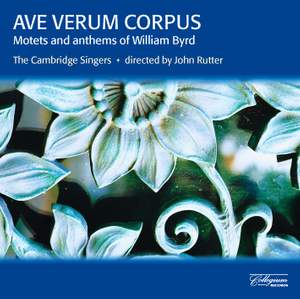
| |  | Ave verum CorpusMotets and anthems of William Byrd
'exceptional performances by this quite wonderful group of singers' Church Music Quarterly | | | Usually despatched in 2 - 3 working days. |
|
|
| |  | The Early ByrdEarly works for voices, viols and virginals
“This disc adopts an imaginative approach to programming Byrd's music by presenting works in different genres grouped together to demonstrate a single stage in his development. It includes Latin motets, keyboard dances and variations on popular songs of the day, and sacred and secular songs (and a dialogue) with viols. There's so much here that wins our admiration: the dazzling contrapuntal elaboration of Attollite portas, the close-knit texture of Da mihiauxilium and the massive Ad Dominum cum tribularer; the exuberant variations on O mistressmine (neatly played by Sophie Yates) and Byrd's melodic gift in the strophic O Lord, how vain. The singers' adoption of period pronunciation – for example, 'rejoice' emerges as 'rejwace' – affects the tuning and the musical sound, it's claimed here, but without rather clearer enunciation the point remains not proven. Probably more upsetting to many will be the Anglicised pronunciation of Latin. The viol consort gives stylish support and is well balanced, the Fagiolini sopranos occasionally 'catch the mike' on high notes (eg in the passionate pleas of Miserere mihi, Domine), and the recorded level of the virginals might have been a little higher without falsifying its tone. But these are minor criticisms of a most rewarding disc.” Gramophone Classical Music Guide, 2010 | | | (also available to download from $10.50) | Usually despatched in 2 - 3 working days. (Available now to download.) |
|
|
| |
|