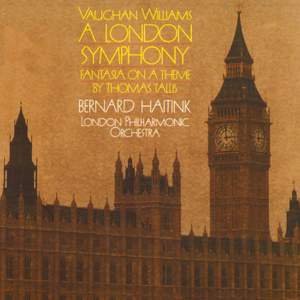
This page lists all recordings of Symphony No. 2 'A London Symphony', by Ralph Vaughan Williams (1872-1958) on CD, SACD & download (MP3 & FLAC). Generally, more recent releases are listed first, but with priority given to those that are in stock. Having made some sketches for a symphonic poem about London, Vaughan Williams was encouraged by George Butterworth to write a full symphony, and adapted these initial sketches into his London Symphony. Vaughan Williams continued to revise the piece for many years, yet for all his changes it remained “the symphony he himself liked best of his nine”, as he told Sir John Barbirolli. Although not strictly programmatic (Vaughan Williams suggested it would have been better titled “Symphony by a Londoner"), the work still depicts various London scenes, including the Westminster chimes, the street cries of flower sellers, and also some of the grimmer aspects of city life. The symphony ends with the rippling of the Thames carrying the audience away from the bustling city. |
All recordingsPrices shown exclude VAT. (UK tax is not payable for deliveries to United States.) See Terms & Conditions for p&p rates. | |  | Vaughan Williams: Symphony No. 2 & Serenade to Music
“As a young conductor I received a great deal of support and encouragement from Sir Adrian Boult, who had been a friend of Vaughan Williams and one of his favourite interpreters. He and his wife regularly listened to my BBC broadcasts and often wrote with comments and suggestions. One of my most treasured possessions is the following letter, written after a broadcast of “A London Symphony,” a work often associated with Boult himself.” CHRISTOPHER SEAMAN To mark the close of an outstanding 13-season tenure as Music Director of the Rochester Philharmonic, Christopher Seaman leads his orchestra in a programme of music which he holds especially dear: Vaughan Williams' ‘London' Symphony and the ‘Serenade to Music', the latter with singers from Mercury Opera Rochester. Henry Wood commissioned Vaughan Williams to compose the Serenade to be premiered at a concert marking Wood’s 50th anniversary on the podium. Vaughan Williams dedicated it to Sir Henry, “in grateful recognition of his services to music.” This recording presents it in its original form – for 16 solo singers and orchestra, as Wood requested. In her biography of Vaughan Williams, his second wife, Ursula, recalled the period of the Serenade’s premiere, when Europe was once again teetering perilously on the brink of war. “But on that evening, in the Serenade,” she wrote, “night in the garden at Belmont laid its balm of starry words and moonlit music on the audience gathered to celebrate the man whose work had meant so much to musicians and public alike during the last 50 years.” “The fruitful partnership here of British conductor Christopher Seaman and his American orchestra (after 13 years as music director Seaman is now Rochester Philharmonic's conductor laureate) offers much gleam, warmth and vitality, if not always the greatest subtlety.” The Observer, 18th March 2012 “[The London Symphony shows] careful attention to detail, rhythmic energy, scrupulous balance and a fine ear for the inner life of the more animated music and real poetry in inward-looking passages...The Serenade to Music is also most sensitively done...the whole performance is conveyed with enormous affection...Serious Vaughan Williams collectors will surely want to hear this admirable new recording” International Record Review, May 2012 | | | In stock - usually despatched within 1 working day. |
|
|
| |  | Vaughan Williams: A London Symphony & Oboe Concerto
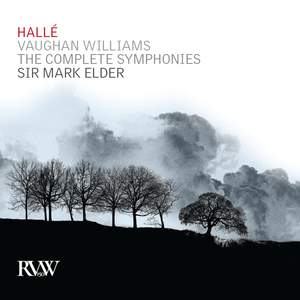
Hallé returns with a disc of Vaughan Williams in works chosen to illustrate the full range of colour and highly accomplished playing of the award winning ensemble under its Musical Director, Sir Mark Elder. Latest release for award winning label in the English repertoire at which it excels. Features Hallé Principal Oboist Stéphane Rancourt as soloist. The London Symphony and Oboe Concerto were both personal favourites of the composer and contain some of his finest writing. Vaughan Williams claimed that the Symphony should “stand or fall as ‘absolute’ music” but, as Michael Kennedy says in the authoritative note which accompanies the disc, in this work direct references to “street cries, the Abbey chimes, the Cockney’s mouth-organ and accordion, are raised to the level of great art. “ The Concerto for Oboe and Strings contains virtuosic writing for the soloist, against exquisite string writing, in a work whose early material derived from sketches the composer had prepared for the Scherzo of his 5th Symphony. “Elder conducts the standard revision of the score, as published in the 1930s...Both the introduction to the first movement and the introspective slow movement are beautifully judged by Elder and the Hallé string, while the deftness with which he touches the detail of the rather discursive scherzo shows masterly tact.” The Guardian, 6th October 2011 **** “[Elder and the Hallé Orchestra ] are especially effective in the mysterious slow movement, though the Cockney high spirits of the scherzo are also vividly captured, and Stéphane Rancourt’s gentle musicianship adds an ethereal touch to the Oboe Concerto.” Financial Times, 22nd October 2011 **** “Sir Mark Elder’s live reading [of the London Symphony] is polished to perfection, affectionate but never indulgent, and with a satisfying warmth to the Hallé’s string sound...[The Oboe Concerto is] finely played by the orchestra’s principal oboe, Stéphane Rancourt, relishing the music’s gentle melancholy.” The Arts Desk, 7th January 2012 “The throw themselves so fully into the texture and colour of the piece it becomes almost visual - captured are not only the hansom cabs, street-sellers' cries, Cockney mouth organs and accordions explicitly dictated by the composer, but also the less tangible moods and tempos of the city...Rancourt copes excellently with the virtuoso challenges of the Oboe Concerto.” Classic FM Magazine, February 2012 **** “The orchestra’s music director stakes his claim as the country’s foremost Vaughan Williamsian...Elder’s tempos are uncannily close to those of his Hallé predecessor Barbirolli — if Elder is less expansive and indulgent in the great lento, their finales come in at exactly the same timings...Rancourt makes the strongest case I have heard for the attractively tuneful Oboe Concerto with his powerful, almost trumpet-like tone.” Sunday Times, 22nd January 2012 | | | In stock - usually despatched within 1 working day. |
|
|
| |  | Vaughan Williams: A London Symphony
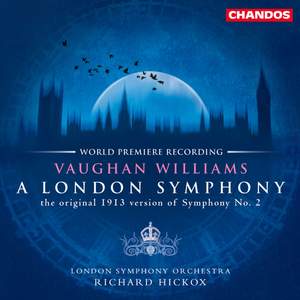
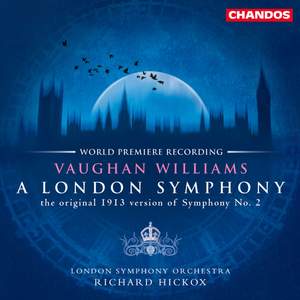
“It was during the summer of 1911 that George Butterworth, whose enchanting 1913 idyll, The Banks of Green Willow, comprises the achingly poignant curtainraiser here, first suggested to Vaughan Williams that he should write a purely orchestral symphony. VW dug out some sketches h'd made for a symphonic poem about London, while at the same time deriving fruitful inspiration from HG Wells's 1908 novel, Tono-Bungay. Geoffrey Toye gave the successful Queen's Hall premiere in March 1914, and VW subsequently dedicated the score to Butterworth's memory. Over the next two decades or so, the work underwent three revisions (including much judicious pruning) and was published twice (in 1920 and 1936). In his compelling 1941 recording with the Cincinnati SO, Eugene Goossens employed the 1920 version, which adds about three minutes of music to that definitive 1936 'revised edition'. Now Richard Hickox at long last gives us the chance to hear VW's original, hour-long canvas – and riveting listening it makes too! Whereas the opening movement is as we know it today, the ensuing, expanded Lento acquires an intriguingly mournful, even worldweary demeanour. Unnervingly, the ecstatic full flowering of that glorious E major Largamente idea, first heard at fig F in the final revision, never materialises, and the skies glower menacingly thereafter. Towards the end of the Scherzo comes a haunting episode that Arnold Bax was particularly sad to see cut ('a mysterious passage of strange and fascinating cacophony' was how he described it). The finale, too, contains a wealth of additional material, most strikingly a liturgical theme of wondrous lyrical beauty, and, in the epilogue, a gripping paragraph that looks back to the work's introduction as well as forward to the first movement of A Pastoral Symphony. Sprawling it may be, but this epic conception evinces a prodigal inventiveness, poetry, mystery and vitality that do not pall with repeated hearings. Hickox and the LSO respond with an unquenchable spirit, generous flexibility and tender affection that suit VW's ambitious inspiration to a T, and Chandos's sound is big and bold to match. An essential purchase for anyone remotely interested in British music.” Gramophone Classical Music Guide, 2010 “Hickox and the London Symphony Orchestra have come up with a recording that you can cheerfully measure against most others in the catalogue, before you consider its unique extra charms!” John Armstrong, bbc.co.uk, 20th November 2002 | | | (also available to download from $10.75) | In stock - usually despatched within 1 working day. |
|
|
| |  | Vaughan Williams - Symphony No. 2
“Bakels draws ravishing sounds from the Bournemouth Symphony Orchestra, notably the strings…A thrilling experience…this is a performance to stimulate the ear.” Penguin Guide | | | (also available to download from $6.00) | In stock - usually despatched within 1 working day. |
|
|
| |  | Vaughan Williams - A London Symphony & Symphony No. 8
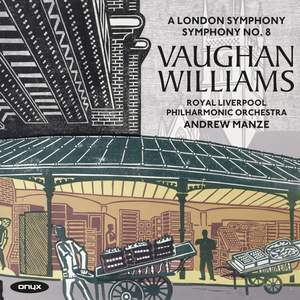
Sir John Barbirolli’s affinity with the music of Ralph Vaughan Williams was formed in his teens when he heard Gervase Elwes sing On Wenlock Edge. But it was from 1943, when he became conductor of the Hallé Orchestra in Manchester, that he developed into one of the composer’s favourite interpreters of the symphonies. Vaughan Williams described him as ‘one of those wizards who can take the dry bones of crotchets and quavers and breathe into them the breath of life’. But closest to his heart, perhaps, was A London Symphony, partly because it is the most warmly and colourfully scored of the nine and also because it enshrines the Edwardian London in which Barbirolli spent his boyhood. No one who was fortunate enough to be present will ever forget the wonderful performance he conducted at the Cheltenham Festival in July 1958, a month before Vaughan Williams died. At the rehearsal that morning I heard RVW say to Barbirolli: ‘Do you know John, I wish I could score now like I scored then. I seemed to get a richer sound—don’t quite know how.’ On 2 May 1956, in Manchester, Barbirolli conducted the first performance of the Eighth Symphony in D minor. The composer dedicated the work to him, and gave him the autograph full score, which he inscribed with the words, ‘For Glorious John, with love and admiration from Ralph’. Barbirolli had been rehearsing the work since the start of the year, and when Vaughan Williams went to Manchester in February to hear a play-through he found that the performance was already prepared. During rehearsals for the première, a friend commented on the effectiveness of the slight pause Barbirolli made after each of the variations in the first movement and suggested that they should be indicated in the score. ‘No,’ Vaughan Williams replied, ‘everyone else will make them too long. John does them just right, and how can I indicate what he does?’ The scoring of the Eighth may not have the Edwardian richness of A London Symphony but it has a kaleidoscopic brilliance remarkable as the work of an octogenarian. Although in some ways the slightest of the nine, the work is too easily underrated. The recording heard here was made a month after the first performance and therefore does not contain the extra cymbal clash which Vaughan Williams added to the first movement at a later date. “Here's the genuine article - Vaughan Williams played idiomatically with flair, atmosphere and passion to spare.” BBC Music Magazine, May 2010 ***** | | | Usually despatched in 4 - 5 working days. |
|
|
| |  | Vaughan Williams - Symphony No. 2
A London Symphony is the second of Vaughan Williams's nine symphonies. Premiered in March 1914 on the eve of the Great War, it enshrines all the glittering brilliance of the pre-war world and, in retrospect, is its epitaph. It was the composer's own favourite of his symphonies and he described it as a "Symphony by a Londoner." Although the Symphony is loosely programmatic, it does not represent the physical body of London, but the spirit of a great city. The spirit and movement of dance is central to much of William Mathias's music. Pieces directly inspired by dance include the Dance Overture (1962), the Invocation and Dance (1961) and the present Celtic Dances, written in 1972 to mark the 50th anniversary of Urdd Gobaith Cymru. Mathias's use of dance is not superficial; on the contrary it reminds us that in earlier times dance was associated with religious fervour. The word ‘Celtic’ had many connotations for Mathias when he came to write this piece. He wrote, "the music is intended to evoke an area of feeling largely associated with the mythological past, even though such an idea is here expressed in terms of our own time. Rite and magic, jewelled colours, the spirit of play, wistfulness, lyrical warmth, and (above all) rhythmic vitality - these are all qualities associated with Celtic arts and tradition, and they were present as part of that area of experience which prompted the composition of this work." The National Youth Orchestra of Wales under Owain Arwel Hughes performed both of these works at the Welsh Proms in August 2008 and also at Birmingham Town Hall. “ superbly paced and beautifully sonorous, it was intensely moving and really quite marvelous" (Birmingham Post) “…William Mathias's Celtic Dances proves a very likeable find - tuneful, compact, glintingly colourful (harp, celesta, tubular bells and glockenspiel have plenty to do), rhythmically invigorating… There are four dances, the last of which satisfyingly recycles material heard in the glistening introductory bars, and all are engagingly delivered here by the National Youth Orchestra of Wales under Owain Arwel Hughes.” Gramophone Magazine, March 2009 | | | (also available to download from $10.75) | Usually despatched in 4 - 5 working days. (Available now to download.) |
|
|
| |  | Vaughan Williams - Symphonies Nos. 2 & 5
| | | Usually despatched in 4 - 5 working days. |
|
|
| |  | Vaughan Williams1908 Centenary Issue 2008
Vaughan Williams: | Symphony No. 2 'A London Symphony' First Recordings, 1923 & 1925 From The 1920 Version |
| | | (also available to download from $10.75) | Usually despatched in 4 - 5 working days. (Available now to download.) |
|
|
| |  | An introduction to Ralph Vaughan Williams
"The performances are excellent." American Record Guide | | | (also available to download from $10.75) | This item is currently out of stock at the UK distributor. You may order it now but please be aware that it may be six weeks or more before it can be despatched. (Available now to download.) |
|
|
| |  |
| | | Usually despatched in 2 - 3 working days. |
|
|
| |
|