This page lists all recordings of Tonadillas: No. 3, La maja dolorosa, by Enrique Granados (1867-1916) on CD, DVD & download (MP3 & FLAC). Generally, more recent releases are listed first, but with priority given to those that are in stock. |
Prices shown exclude VAT. (UK tax is not payable for deliveries to United States.) See Terms & Conditions for p&p rates. | |  | Så Tag Mit Hjerte
Ahlfors: | Har du visor min vän | Alfvén: | Saa tag mit Hjerte (Text: Tove Ditlevsen) | Estvad: | Det er igen den fine lyse nat | Granados: | Tonadillas: No. 6, El majo timido Tonadillas: No. 11, El tra la la y el punteado Tonadillas: No. 3, La maja dolorosa | Lange-Müller: | Åkande, opus 4, no. 2 Skin ud, du klare solskin, Op. 18 No. 4 | Mortensen, C: | Sov, mit Barn, sov længe | Nielsen: | Æbleblomst, Op. 10/1 Sommersang. Fyldt med blomster from Sange Op. 10 Studie efter naturen | Nystroem, G: | Själ och Landskap (Soul and Landscape) | Rangström: | Pan Vingar i natten | Schubert: | Lachen und Weinen, D777 Frühlingsglaube, D686 Frühlingsglaube, D686 Lachen und Weinen, D777 | Strauss, R: | Zueignung, Op. 10 No. 1 Morgen, Op. 27 No. 4 Allerseelen, Op. 10 No. 8 | trad.: | I skovens dybe stille og ro Uti vår hage | Weyse: | Barcarole (Natten er saa stille) |
Tina Kiberg (soprano), Tove Lonskov (piano) | | | (also available to download from $10.50) | Usually despatched in 4 - 5 working days. (Available now to download.) |
|
|
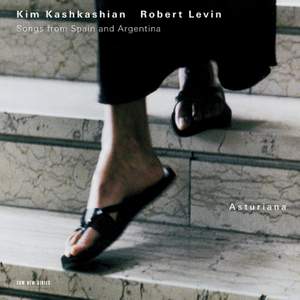
| |  | AsturianaHighly melodic and atmospheric ‘songs without words’ by Spanish and Argentinean composers De Falla, Granados, Ginastera, Guastavino, Montsalvatge and Buchardo, transcribed by Kashkashian and Levin
“It looks like a standard song recital, yet it's played on the viola. …the opening excerpt from Falla's Seven Popular Songs… turns up later in its usual context to hypnotic effect: slower than would be singable, and so contemplative that it sounds like Arvo Pärt. The sense of concentration, with minute inflections of line and timbre in which the pianist is caught up too, continues into the ensuing Granados set.” BBC Music Magazine, December 2007 ***** “The performances deceive the ear into thinking these idiomatic arrangements are instrumental originals.” Gramophone Magazine, November 2007 | | | Usually despatched in 4 - 5 working days. |
|
|
| |  | ¡Pasión!
“…extrovert in manner, DiDonato relishes the richness of her voice and spins some gorgeous, purely vocal moments in Falla's Seven Popular Spanish Songs. She is aided by deliciously playful accompaniment from Julius Drake.” Gramophone Magazine, October 2007 “Is there anything that Joyce DiDonato can't do?” The Times | | | Usually despatched in 3 - 4 working days. |
|
|
| |  | A Spanish Song Recital
Granados: | Tonadillas: No. 1, Amor y odio Tonadillas: No. 2, Callejeo Tonadillas: No. 3, La maja dolorosa Tonadillas: No. 4, El majo discreto Tonadillas: No. 6, El majo timido Tonadillas: No. 7, La maja de Goya Tonadillas: No. 8, El mirar de la maja Tonadillas: No. 11, El tra la la y el punteado Tonadillas: No. 12, Elegia Eterna | Guridi Bidaola: | Llámale con el pañuelo - ¡Como quieres que adivine! | Montsalvatge: | Canciones negras (5) | Obradors: | La mi sola, Laureola - ¿Corazón por qué pasáis...? - Con amores, la mi madre - Del cabello más sutil - El Vito | Rodrigo: | Pastorcito santo - ¿Con qué la lavaré? - Vos me matasteis | Turina: | Farruca (from Triptico, Op. 45) Saeta en forme de Salve a la Virgen de la Esperanza, Op. 60 |
| | | Usually despatched in 2 - 3 working days. |
|
|
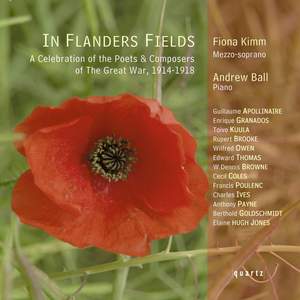
| |  | In Flanders FieldsA celebration of the poets & composers of the Great War 1914-1918
Fiona Kimm (mezzo-soprano), Andrew Ball (piano) | | | Usually despatched in 4 - 5 working days. |
|
|
| |  | Nelly Miricioiu: Live at Wigmore Hall
| | | Usually despatched in 2 - 3 working days. |
|
|
| |  | Mosaic d'EspañaSpanish and Sephardic songs for soprano and guitar
| | Five Sephardic songs arranged by David Sutton-Anderson & Avril Anderson | Gerhard: | Cantares (Seven Spanish songs for high voice and guitar) | Granados: | Tonadillas: No. 6, El majo timido Tonadillas: No. 7, La maja de Goya Tonadillas: No. 3, La maja dolorosa Tonadillas: No. 11, El tra la la y el punteado Tonadillas: No. 8, El mirar de la maja Tonadillas: No. 4, El majo discreto | Moretti, F: | La Reflexión, Op. 24 No. 2 La Explicación, Op. 24 No. 4 La Irresolución, Op. 24 No. 1 La Curiosidad, Op. 24 No. 5 El Consejo, Op. 24 No. 11 | Sor: | Cesa de Atormentarme De Amor en las Prisiones Cómo ha de resolverse Si dices que mis ojos El Que Quisiera Amando Muchacha, y la vergüenza |
| | | Usually despatched in 8 - 10 working days. |
|
|
| |  | Victoria de los Angeles: The Early Recordings 1942-1953
Brahms: | Von ewiger Liebe, Op. 43 No. 1 | Falla: | El pano moruna (No. 1 from Siete canciones populares españolas) Seguidilla murciana (No. 2 from Siete canciones populares españolas) Jota (No. 4 from Siete canciones populares españolas) | Fuste: | Háblame de amores | Granados: | Tonadillas: No. 3, La maja dolorosa Tonadillas: No. 4, El majo discreto Tonadillas: No. 8, El mirar de la maja | Guridi Bidaola: | Jota (from Six canciones castellanas) No quiero tus avellanas (from Six canciones castellanas) | Handel: | Joshua: Oh! had I Jubal's lyre | Nin: | El paño murciano (from Cantos populares españoles) El Vito (from Cantos populares españoles) | Respighi: | Stornellatrice E se un giorno tornasse, P. 96 | Schumann: | Widmung, Op. 25 No. 1 Der Nussbaum, Op. 25 No. 3 Ich grolle nicht (No. 7 from Dichterliebe, Op. 48) | Toldrá: | Madre, unos ojuelos ví | trad.: | Hungarian folksongs & Csárdás | Turina: | Farruca (from Triptico, Op. 45) Saeta en forme de Salve a la Virgen de la Esperanza, Op. 60 Poema en forma de canciones, Op. 19: No. 3, 'Cantares' | Valverde: | Clavelitos | Vives: | El retrato de Isabela El amor y los ojos |
“The two Respighi songs are magical performances – Stornellatrice, with the golden voice at its richest and E se un giorno tornasse, a study in subtle shading of tone, a dialogue between a mother and her dying, jilted daughter. For those two brief items alone, superbly transferred, this collection is an essential for all admirers of this singer, but there's much more. Handel's 'O had I Jubal's lyre' in German rather than English may be odd, but the performance sparkles and among the Lieder it's good to have not just 'Der Nussbaum' – the Schumann song which was always special to her – but two previously unpublished, 'Widmung' from the Myrthe songs and 'Ich grolle nicht' from Dichterliebe. Through the whole collection the superb transfers capture the full–throated glory of los Angeles's voice at the beginning of her career. The 1942 recordings of two Hungarian folk– songs, previously unpublished, may be rough and limited – made when the singer was only 18 – but they amply demonstrate that already the voice was fully developed in its beauty. No fewer than 18 of the 27 items are of Spanish songs, and though in one or two instances los Angeles was destined to make even more idiomatic readings later with a Spanish accompanist, these ones with Gerald Moore as her partner have a freshness and brilliance that has rarely been matched in this repertory. In particular it's good to have her first recording of the encore number which she made her own, Clavelitos.” Gramophone Classical Music Guide, 2010 | | | Usually despatched in 4 - 5 working days. |
|
|
| |  | Marilyn Horne in Recital: Milan, 1981
Alvarez, F M: | La Partida | Beethoven: | In questa tomba oscura, WoO.133 Zärtliche Liebe 'Ich liebe dich', WoO 123 Busslied (No. 5 from 6 Lieder von Gellert, Op. 48) | Copland: | Ching-a-ring Chaw Simple Gifts (from Old American Songs, Set I) Long Time Ago At the River | Donizetti: | Il segreto per esser felici (from Lucrezia Borgia) | Duparc: | L'Invitation au voyage Extase Le Manoir de Rosemonde | Foster, S: | Beautiful Dreamer I Dream of Jeanie with the Light Brown Hair | Granados: | Tonadillas: No. 3, La maja dolorosa | Handel: | Semele: Hence, Iris, hence away | Montsalvatge: | Canción negra No. 4, Cancion de cuna para dormir a un negrito | Obradors: | El Vito (from Canciones clásicas españolas) | Rossini: | Eccomi alfine in Babilonia (from Semiramide) Se il vuol, la molinara |
Though Marilyn Horne is known mostly for her virtuosic operatic roles, she is a superb recitalist who can scale her powerful voice down to the more intimate requirements of the recital stage. In 1981, she appeared at Milan’s La Scala opera house in a recital consisting of music by Italian, German, Spanish, French and American composers. Horne was in particularly superb form that evening, partnered brilliantly by Martin Katz at the piano. 93 minutes, color, mono. Live performance: 2nd June, 1981 | | | Usually despatched in 4 - 5 working days. |
|
|
| |
|