Prices shown exclude VAT. (UK tax is not payable for deliveries to United States.) See Terms & Conditions for p&p rates. | |  | Schubert: Licht und LiebeLieder & Vocal Quartets
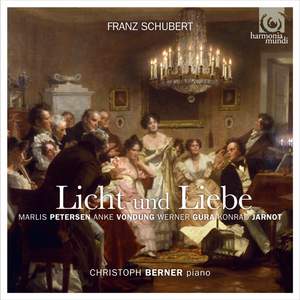
Marlis Petersen (soprano), Anke Vondung (mezzo-soprano), Werner Güra (tenor), Konrad Jarnot (bass) & Christoph Berner (fortepiano) Sometimes written in dialogue or in unison, sometimes close to opera, to a Singspiel scene or to choral music, Schubert's vocal duets, trios and quartets show the full variety of his creative impulses. These brief vocal ensembles composed for gatherings of friends, the famous ‘Schubertiads', display a skill and a taste for freedom that hold an immediate appeal for today's listener – for here one sings purely for pleasure. “This is a high-quality disc for collectors of Schubert's less famous vocal pieces.” International Record Review, May 2013 “There are treasures here...Marlis Petersen’s bright soprano in Delphine; Werner Güra, a peerless Schubertian tenor, in the cantata-like Der Sänger. The less well-known Anke Vondung (mezzo) and Konrad Jarnot (bass) are no less compelling in their solos, while Berner’s period fortepiano contributes perkily to the domestic ambience of the recital.” Sunday Times, 14th April 2013 | 
| | | In stock - usually despatched within 1 working day. |
|
|
| |  | Schubert: Partsongs, Auf dem Strom & Der Hirt auf dem Felsen
Schubert: | Gebet (Du Urquell aller güte) D815 (Fouqué) Viola Tunnard (piano) Elizabethan Singers, Louis Halsey Nachthelle, D892 (Seidl) Viola Tunnard (piano) Elizabethan Singers, Louis Halsey Gott in der Natur D757 (Kleist) Viola Tunnard (piano) Elizabethan Singers, Louis Halsey Jünglingswonne, D983 Viola Tunnard (piano) Elizabethan Singers, Louis Halsey Ständchen 'Zögernd leise', D920/921 Viola Tunnard (piano) Elizabethan Singers, Louis Halsey Der Gondelfahrer, D809 Viola Tunnard (piano) Elizabethan Singers, Louis Halsey Psalm 23 'Gott ist mein Hirt', D706 Viola Tunnard (piano) Elizabethan Singers, Louis Halsey Gott im Ungewitter, D985 Viola Tunnard (piano) Elizabethan Singers, Louis Halsey Chor der Engel, D440 Viola Tunnard (piano) Elizabethan Singers, Louis Halsey Auf dem Strom, D943, Op. post. 119 Robert Tear (tenor), Neill Sanders (horn) & Lamar Crowson (piano) Der Hirt auf dem Felsen, D965 (Von Chezy / Muller) Suzanne Danco (soprano), Gervase de Peyer (clarinet) & Guido Agosti (piano) Die Forelle, D550 Suzanne Danco (soprano), Gervase de Peyer (clarinet) & Guido Agosti (piano) Gretchen am Spinnrade, D118 Suzanne Danco (soprano), Gervase de Peyer (clarinet) & Guido Agosti (piano) Der Musensohn, D764 (Goethe) Suzanne Danco (soprano), Gervase de Peyer (clarinet) & Guido Agosti (piano) Du bist die Ruh D776 (Rückert) Suzanne Danco (soprano), Gervase de Peyer (clarinet) & Guido Agosti (piano) |
Two distinguished soloists – soprano Suzanne Danco and tenor Robert Tear – contribute to this disc of Schubert songs. Both of the composer’s ‘obbligato’ songs (Der Hirt auf dem Felsen and Auf dem Strom) are included, as are five of Schubert’s most popular Lieder in recordings by Danco previously unreleased on CD. But at the centre of this recital is a selection of Schubert’s Partsongs. Their origins lie in the vital demand for this kind of music in the context of the social life of Vienna during the composer’s lifetime. The male-voice quartet was a staple feature in the city’s concert halls, but even more so in the homes of the cultured middle-classes. Much of Schubert’s writing for this medium is in an ‘unbuttoned’ mood, providing material for friendly gatherings. Even so, we find among these partsongs for men’s or mixed voices, many which carry the unmistakable stamp of his genius – the gorgeous Ständchen, or the tranquil, other-worldly Nachthelle. “Schubert's secular choruses are among his least-known works, so a warm welcome for these charismatic performances of music beautiful enough to make you cry.” BBC Music Magazine, November 2012 ***** “This disc most delightfully extends the small number of Schubert's part-songs that has been recorded and these beautifully sung performances, very well recorded, capture the intimate spirit of music written primarily for friendly gatherings […] Robert Tear sings his part with lovely tone […] A contralto solo part woven into Ständchen is beautifully sung by Helen Watts […] this lovely disc gave me intense pleasure” Gramophone Magazine (Partsongs) “Der Hirt auf dem Felsen is marvellously clean and instrumental in execution” Gramophone Magazine (Danco) | | | (Sorry, download not available in your country) | In stock - usually despatched within 1 working day. |
|
|
| |  | The Hyperion Schubert Edition - Complete Songs Volume 32An 1816 Schubertiad
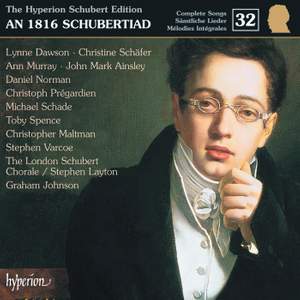
Lynne Dawson, Christine Schäfer (sopranos), Ann Murray (mezzo soprano), John Mark Ainsley, Daniel Norman, Christoph Prégardien, Michael Schade, Toby Spence (tenors), Christopher Maltman, Stephen Varcoe (baritones), Patricia Rozario Soprano, Catherine Wyn-Rogers Mezzo (soprano), Paul Agnew, Jamie Macdougall, Philip Langridge (tenors), Simon Keenlyside, Maarten Koningsberger, Stephan Loges (baritones), Neal Davies, Michael George (basses) The London Schubert Chorale, Stephen Layton 'As ever, illuminating words complement revelatory music-making' (BBC Music Magazine) “Like the previous Schubertiads in the Edition, this disc mixes solo songs and partsongs, famil- iar and unfamiliar. The only really famous work here is Der Wanderer, that archetypal expression of romantic alienation whose popularity in Schubert's lifetime was eclipsed only by that of Erlkönig. Some of the partsongs – Zum Punsche, Naturgenuss and Schlachtgesang – cultivate a vein of Biedermeier heartiness that wears a bit thin today. Nor will Schubert's consciously archaic tribute to his teacher Salieri have you itching for the repeat button – though, like several other numbers, it shows the 19-year-old composer rivalling Mozart in his gift for musical mimicry. To compensate, though, there are partsongs like the sensual Der Entfernten, with its delicious languid chromaticisms, and the colourful setting of Gott im Ungewitter. The slight but charming setting of Das war ich is appealingly done by the light-voiced Daniel Norman, and Ann Murray brings her usual charisma and dramatic conviction to the pathetic Italian scena Didone Abbandonata. Christine Schäfer is equally charismatic in the unjustly neglected Die verfehlte Stunde (recorded here for the first time), catching perfectly the song's mingled yearning and ecstasy and negotiating the mercilessly high tessitura with ease. Other happy discoveries include Schubert's virtually unknown third setting of Des Mädchens Klage, with its soaring lines, a melancholy tale of courtly love, sung by Christoph Prégardien with as much drama and variety as the music allows, and the surging Entzückung ('music for an infant Lohengrin,' as Graham Johnson puts it), for which Toby Spence has both the flexibility and the necessary touch of metal in the tone. Doubts were fleetingly raised by Lynne Dawson's slight tremulousness in Des Mädchens Klage, and by Christopher Maltman's prominent vibrato at forte and above in an otherwise involving performance of Der Wanderer. But, these cavils apart, no complaints about the singing or the vivid accompaniments.” Gramophone Classical Music Guide, 2010 | | | In stock - usually despatched within 1 working day. |
|
|
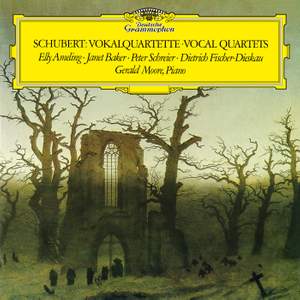
| |  | Schubert: Duette, Terzette, Quartette
Schubert: | Punschlied D277 (Schiller) Cantate zum Geburtstag des Sängers Michael Vogl D666 (Stadler) Gütigster, Bester, Weisester, D441 Verschwunden sind die Schmerzen, D88 Trinklied D148 (Castelli) Der Tanz D826 (Meerau?) Schicksalslenker, blicke nieder, D763 Hymne an den Unendichen D232 (Schiller) An die Sonne D439 (Uz) Nun laßt uns den Leib begraben (Begräbnis-Lied), D168 Gott im Ungewitter, D985 Gott der Weltschöpfer D986 (Uz) Die Geselligkeit (Lebenslust) D609 (Unger) Gebet (Du Urquell aller güte) D815 (Fouqué) Hermann und Thusnelda D322 (Klopstock) Antigone und Oedip D542 (Mayrhofer) Cronnan D282 ('Ossian') Sing-Übungen D619 (Wordless) Sekna und Selmar D286b (Klopstock) Licht und Liebe D352 (Collin) Hektors Abscheid, D312 Nur wer die Sehnsucht kennt, D877/4 Szene aus Faust D126 (Goethe) Die Befreier Europas in Paris, D104 (Mikan) Die Advokaten, D37 |
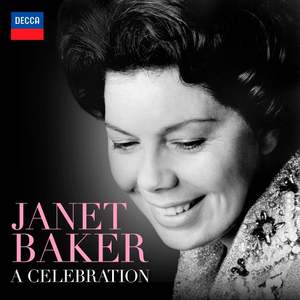
Schubert's reputation as a composer of solo lieder has tended to overshadow the works for two of more voices that he composed from the age of 14 to his last years. Some of these works includes four voices and choir, and they fall in to the category of domestic music making. The earliest date from his years as a pupil of Antonio Salieri, and may well have been intended as study works, others, such as the scena 'Antigone und Oedipe' D542 of 1817 was probably composed for friends, and is quite demanding of the performers. The singers on these CDs represent some of the very best Schubert interpreters of the period -- and the recordings date from 1973. The accompanist is the incomparable Gerald Moore. “They are expert duettists [Baker and Fischer-Dieskau], having sung together on other occasions and in other media; the result, with the ever-faithful, ever-skilful Gerald Moore, is all that one might expect” Gramophone Magazine, 1973 “it really is pretty well impossible to imagine finer performances...these are charming domestic pieces here performed by four of the greatest Lieder singers of the time: luxury casting indeed.” International Record Review, May 2011 | | | Usually despatched in 4 - 5 working days. |
|
|
| |  | Volume 32 - Part-Songs Volume 1
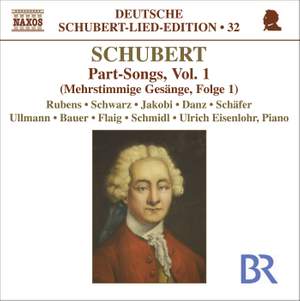
Sibylla Rubens (soprano), Silke Schwarz (soprano), Regina Jakobi (alto), Ingeborg Danz (alto), Markus Schäfer (tenor), Marcus Ullmann (tenor), Thomas E. Bauer (bass), Markus Flaig (bass), Marcus Schmidl (bass) & Ulrich Eisenlohr (piano) Schubert set the poetry of over 115 writers to music. The Deutsche Schubert-Lied-Edition presents all Schubert’s Lieder, over 700 songs, grouped according to the poets who inspired him. Thanks to Bärenreiter’s Neue Schubert-Ausgabe (New Schubert Edition), Tübingen, which uses primary sources, the performers have been able to benefit from the most recent research of the editorial team. | | | (also available to download from $6.00) | Usually despatched in 2 - 3 working days. (Available now to download.) |
|
|
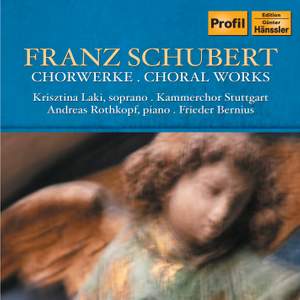
| |  | Schubert: Choral Works
Krisztina Laki (soprano) & Andreas Rothkopf (piano) Kammerchor Stuttgart, Frieder Bernius When we think of Schubert's vocal music, his six hundred lieder for a solo voice and piano are naturally what first come to mind. Conversely, his other vocal works are among the last things with which we associate him, despite the fact that this part of his oeuvre is by no means small! It embraces, for example, nineteen operas (including the singspiels) all of which are sadly more or less forgotten today. There are also some thirty sacred works, of which all the six masses are still frequently performed. The full significance of Schubert's contribution to choral music was not recognized until generations later. The degree of musical excellence he imparted to the choral song in such a short space of time was seldom attained by his successors. Schubert's choral writing is extremely demanding for both performers and listeners. This recording features wonderful performances by artists such as Krisztina Laki and Andreas Rothkopf. | | | (also available to download from $10.50) | Usually despatched in 2 - 3 working days. (Available now to download.) |
|
|
| |  |
| | | (also available to download from $10.50) | Usually despatched in 2 - 3 working days. (Available now to download.) |
|
|
| |
|