Prices shown exclude VAT. (UK tax is not payable for deliveries to United States.) See Terms & Conditions for p&p rates. | |  | Kapsberger - Lute Works
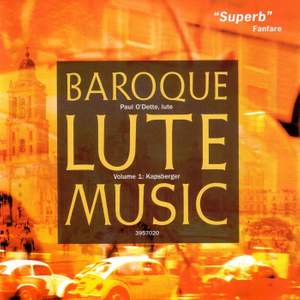
Kapsberger: | Toccata Seconda Arpeggiata Gagliarda 1a, 4a. 10a, 11a, 12a Toccata 1 (1611), 1a (1640), 2a, III, 5 (1611), 5a, VI Aria di Fiorenza (1604) Corrente 1a, 2a (Modena MS), 7a, 11a, 12a Ciachone Bergamasca Kapsberger Colascione Canario |
“This is superb music, melodious, […] wonderfully apt for the instrument. O’Dette, for my money the world’s finest lutenist, does the music full justice, and the sound is first-rate. You’ll want this one.” Fanfare | | | In stock - usually despatched within 1 working day. |
|
|
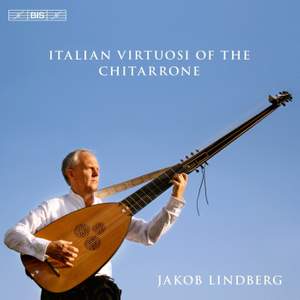
| |  | Italian Virtuosi of the Chitarrone
The chitarrone is one of the more spectacular instruments of the early baroque. The name probably means ‘large kithara’, after the instrument played by the Classical Greek poets, and it was first developed as a bass lute to accompany singing and recitative Between 1604 and 1640, Giovanni Girolamo Kapsperger (also known as Johann Hieronymus Kapsberger), Alessandro Piccinini and Bellerofonte Castaldi published a number of collections of chitarrone music, from which Jakob Lindberg has chosen some favourite dances, arias, toccatas and passacaglias. Combined into seven suites, they provide rich opportunity to enjoy the particular timbre and the special playing techniques of this instrument. Jakob Lindberg has a long-standing interest in the many varieties of lutes and has now dedicated himself to researching their relative – research which informs both the performances and Lindberg’s own liner notes. | | | (also available to download from $10.50) | Usually despatched in 2 - 3 working days. (Available now to download.) |
|
|
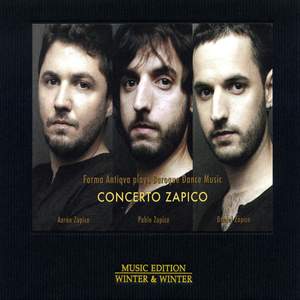
| |  | Concerto ZapicoForma Antiqva plays Baroque Dance Music
Forma Antiqva: Aarón Zapico (harpsichord, organ), Pablo Zapico (baroque guitar) & Daniel Zapico (theorbo) The three brothers Aarón Zapico, Daniel Zapico and Pablo Zapico play Baroque dances as their private music at home. Modelled after the Concerto delle Donne of famous Italian composer Francesca Caccini, the three Zapicos name this programme Concerto Zapico (keyboard and plucked instruments). Their main interest is it to revive 17th and 18th century (not only Spanish) dance repertoire. Their programme combines rarities with well known pieces and presents a range of spirited Fandangos, Pavans, Caponas (the Spanish Chacony) and Españoletas by Domenico Scarlatti, Diego Ortiz, José de Nebra, Santiago de Murcia, Giovanni Girolamo Kapsberger. Recorded at Sala de Cambra, Fundació Auditori Palau de Congressos, Girona, Spain, June 2010 | | | Usually despatched in 3 - 4 working days. |
|
|
| |
|