Prices shown exclude VAT. (UK tax is not payable for deliveries to United States.) See Terms & Conditions for p&p rates. | |  | Moeran: Sketches for Symphony No. 2Recorded at Glasgow Royal Concert Hall, 21-22 June & 2 August 2011
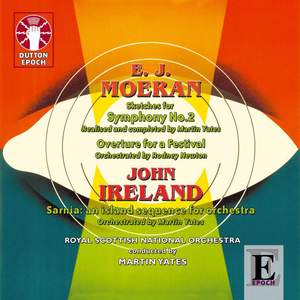
World Premiere Recordings This is a remarkable coupling of tuneful music. E. J. Moeran, who died in 1950, has a considerable following for his fine Symphony in G minor, and concertos for violin and cello. It has long been known that he left sketches for an unfinished Second Symphony, which have rivalled those of Elgar’s Third Symphony as a tantalising musical ‘might-have-been’ among British symphonic scores. Now in a remarkable parallel with Anthony Payne’s performing edition of the sketches of Elgar’s Third Symphony, conductor Martin Yates has realised and completed the sketches of Moeran’s Second Symphony to reveal a glorious work given wing by this idiomatic performing edition, brilliantly played by the Royal Scottish National Orchestra under Yates’s baton. This is an exciting discovery, which all lovers of British music, especially of the period of Bax and Vaughan Williams, will want to hear. The themes and orchestration are Moeran at his most persuasive, and thanks to Martin Yates’s efforts we now have a completed symphonic work of art to lay beside Moeran’s G minor Symphony. It is accompanied on this CD by Moeran’s Overture for a Festival, which survives only as an undated piano score. In a work thematically linked to the G minor Symphony, this idiomatic orchestration was made by Rodney Newton for its first performance at the 1994 Norfolk and Norwich Festival, and here receives its premiere recording. To mark the fiftieth anniversary of the death of John Ireland, The John Ireland Trust have commissioned Martin Yates to orchestrate the piano suite Sarnia: an island sequence (1940-41), which provides a charming companion to the Moeran works. In these three movements – Le Catioroc, In a May Morning and Song of the Springtides – we have, if not quite an English La Mer, certainly a distinctive and colourful score. “Ireland surely had the orchestra in mind when writing this evocative music,” remarked Martin Yates during the recording. In the finale those sparkling climaxes – at the brilliant cadenza-like culmination of the opening section and the thrilling closing bars – acquire a new dimension in their orchestral dress. “If this is not quite a resurrection like Anthony Payne's of Elgar's Third Symphony, it was still worth doing, and adds to our knowledge of the struggle against adversity that's enshrined in much of Moeran's output...Yates directs performances of brio and enthusiasm, and the Royal Scottish National Orchestra sound as it they're revelling in every bar. The recorded sound is excellent, too.” BBC Music Magazine, May 2012 “It certainly makes for a fascinating and rewarding voyage of discovery, the inspiration often touchingly heartfelt (nowhere more so than in the third-movement Adagietto) and gripping in its scope of ambition. Moreover, connoisseurs will have a high old time pinning down the wealth of references to other pieces in Moeran's output.” Gramophone Magazine, March 2012 | | | Usually despatched in 2 - 3 working days. |
|
|
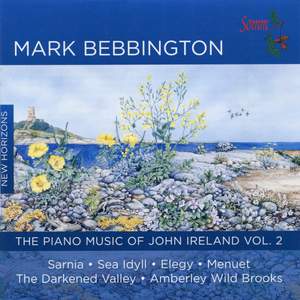
| |  | Ireland - Piano Music Volume 2
“The core of this recital… are sets of lyric pieces both early and late, of which the three Channel Island landscapes of Sarnia… remain one of Ireland's finest imaginative achievements. Bebbington's interpretation is especially sensitive in the way he brings out the half-lights and subtle harmonic shadings of 'Le Catiroc', and makes light of the rhythmic complexities of 'Song of the Springtides'.” BBC Music Magazine, November 2009 ***** “Mark Bebbington proves an outstanding interpreter, adopting an apt degree of rubato to bring out the beauty of Ireland's writing. All told, a most successful disc of music that deserves to be far better known.” Gramophone Magazine, November 2009 | | | Usually despatched in 2 - 3 working days. |
|
|
| |  | Ireland - Piano Works Volume 1
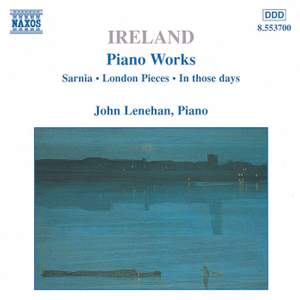
“The pleasures here are many. John Lenehan is a very accomplished performer: not only is his technical address impeccable, but he also has a strikingly wide dynamic range and sophisticated variety of tone colour, both of which he uses to poetic effect throughout. That Lenehan has a real affinity for Ireland's muse is immediately evident from his raptly intimate delivery of the gentle opening diptych, In Those Days. Similarly, in the extraordinarily imaginative, harmonically questing Ballade of 1929 he rises superbly to the elemental fury of the remarkable central portion, with its brooding echoes of the 'Northern' Bax from the same period. Elsewhere, Columbine is a treat, as is the ravishing Month'sMind and the haunting Prelude in E flat. Lenehan's supremely affectionate and articulate advocacy will surely win Ireland many friends. On Volume 2 there's a strong feeling of how purely local influences (Pangbourne and the Thames Valley in The towing-path, Le Fauvic beach, Jersey in 'The Island Spell', to take two examples) are transcended to become statements of wider poetic import. The large-scale Rhapsody, with its powerful Fauréan overtones, is relished by Lenehan, a strong, sympathetic interpreter, and time and again he makes you wonder at works aptly described as 'some of the most appealing English piano music written this century, too long neglected.'” Gramophone Classical Music Guide, 2010 | | | (also available to download from $5.75) | Usually despatched in 2 - 3 working days. (Available now to download.) |
|
|
| |  | John Ireland Piano Music
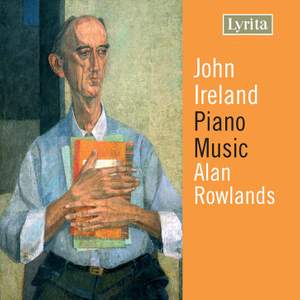
“Captured in perfectly acceptable mono sound, Rowland's memorably intimate performances betoken a very special empathy for this repertoire.” Gramophone Magazine, October 2008 | | | Usually despatched in 4 - 5 working days. |
|
|
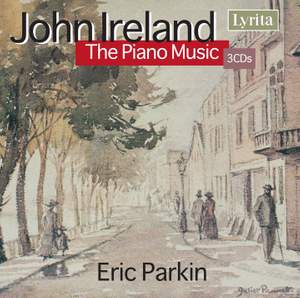
| |  | John Ireland - The Piano Music
"How can the critics begin to understand my music if they have never read Machen?" This was a question heard to fall on more than one occasion from John Ireland’s lips. Ireland came of a literary family, and literature and literary people played a natural part in the formation of his personality. Most influential of all were the works of Arthur Machen the Welsh writer, who was to Ireland almost what Yeats was to Bax. Ireland had dreamt in fire - after his first encounter with Machen it was only a matter of time before he worked in fire also. In the wake of The House of Souls and The Hill of Dreams a smouldering coal flared gloriously into flame. For Machen loved all memoried things and places, things with a past behind them - and the more remote the past the greater he felt able to partake of them. He hailed from a forgotten country in the West, a land of dark and ancient woods and streams and deep sunken lanes, the ancient Welsh kingdom of Gwent … “Eric Parkin's… is completely inside Ireland's idiom, well understanding the darker emotional complexities and yearnings that may underlie a seemingly casual phrase or carefree melodic line.” BBC Music Magazine, October 2008 ***** | | | Usually despatched in 4 - 5 working days. |
|
|
| |
|