All recordingsPrices shown exclude VAT. (UK tax is not payable for deliveries to United States.) See Terms & Conditions for p&p rates. | |  | Scarlatti: Piano Sonatas Volume II16 Keyboard Sonatas
Domenico Scarlatti's 500 plus keyboard sonatas show a composer experimenting with form: way ahead of his Baroque contemporaries, the Italian wrote highly virtuoso mood pieces, some of them bearing the mark of the local folk music in Spain, where he worked at the royal court. In Mikhail Pletnev's hands, this 2nd selection of Scarlatti sonatas displays all the nuances of these miniature masterpieces. “Purists allergic to Scarlatti on the piano needn't hesitate. Mikhail Pletnev seems to relish the Steinway but his range of tone is ravishing and his playfulness is captivating, and both outweigh any Romantic indulgences.” BBC Music Magazine, June 2013 **** | 
| | | In stock - usually despatched within 1 working day. |
|
|
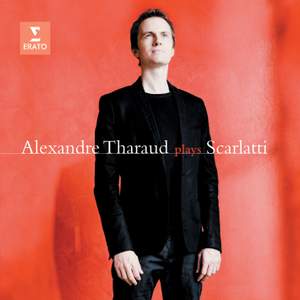
| |  | Alexandre Tharaud plays Scarlatti
“I love the extravagance, the sunny glow, the light touch of Scarlatti,” says French pianist Alexandre Tharaud, whose second Virgin Classics release is a collection of the composer’s captivating and adventurous keyboard sonatas. His first release, the Chopin recital Journal intime was described by The Guardian as “altogether breathtakingly beautiful”. “Listening to Mr. Tharaud's crisply articulated and vividly etched playing, a listener might guess that he is a Baroque specialist who, for some reason, prefers the modern piano to the harpsichord. But … Baroque music is only one of his interests,” wrote the New York Times in 2005. In typically imaginative fashion, Tharaud combined early Romanticism with the Baroque over the 2009-10 season when he toured a recital programme of works by Chopin – the subject of Virgin Classics release, Journal intime – and selections from Domenico Scarlatti’s canon of 555 keyboard sonatas. “I love the extravagance, the sunny glow, the light touch of Scarlatti, who shares with Chopin a precise sense for ornamentation, a culture of beauty in sound and an intimate rapport with the audience,” he says. Tharaud’s previous exploration of the Baroque repertoire has focused on composers such as Couperin and Rameau, whose music is rarely heard on the modern piano. The tradition of Scarlatti on the piano is much more firmly established – Vladimir Horowitz, for instance, would often include his music in recitals – but Tharaud draws inspiration from developments in historically informed performance over the past 30 years. As he told the French magazine Télérama: “I am not sure that authenticity is conferred by a specific instrument, but rather in the way new life is imbued into this music … Baroque musicians have taught us to approach tempi and ornamentation with a sense of freedom, even audacity.” Scarlatti, born in Naples, spent more than 30 years of his life serving the royal families of Portugal and Spain and died in Madrid. His sonatas are concise, captivating one-movement works in binary form, often adventurous in their use of harmony and modulation, and frequently inhabited by the exotic spirit of Iberian folk music. “Whether on a broad canvas or on a miniature one, Tharaud’s feel for tonal colouring and his eloquence of expression are a perfect match for this inspiring, kaleidoscopic music.” That praise from the Daily Telegraph could almost apply to works by Scarlatti, but in fact came from a review of Tharaud’s Chopin album, Journal intime. More specific in its frame of reference was The Guardian’s comment on the Chopin disc: “Alexandre Tharaud explores a huge emotional range in his Journal intime, including the most thrilling and propulsive first ballade since Michelangeli's version, with a deeply intense C sharp minor nocturne at the heart. Tharaud lifts the music across the bar-lines with deft rubato, his sound clear, shining and sensuous; altogether breathtakingly beautiful.” “Tharaud's attention to musical detail is, as ever, combined with total spontaneity. The recorded sound adds warmth and this is a wonderfully original reimagining of repertory and instrument.” The Observer, 30th January 2011 “The biggest surprise on this wonderfully exuberant and exhilarating disc comes with the very first notes: the piano tone is rich and full...There's never a dull moment, and Tharaud's range of touch and colour, and his sheer enthusiasm, shine through every jewel-like piece.” The Guardian, 3rd February 2011 ***** “The fact that Scarlatti used the same two-part structural template for all his sonatas is camouflaged by his vast imaginative range, a fertile mind that Tharaud taps and illuminates absorbingly in this recital...The diversity is captivating and Tharaud is a consummate master of it.” The Telegraph, 11th February 2011 ***** “if Tharaud is evidently aware of the stylistic insights afforded by the scholarly diggings of the past few decades, he's unrepentantly pianistic in his approach...Tharaud's is playing with personality, revelling in Scarlatti's playful inventiveness and pungent harmonic daring.” BBC Music Magazine, March 2011 ***** “The range is extraordinary, from the almost casual, plaintive charm of the K132, with its elegant trills and thoughtful progressions, to the dashing Iberian brilliance of the K420, and the more virtuosic manner of the K72 - three wildly differing explorations of the key of C major, handled with a deft, easy grace and an appropriate dash of wit.” The Independent, 18th February 2011 **** “Tharaud’s choices make for an exhilarating rollercoaster ride between dizzying feats of heady bravura and more gentle moments where introspection and quasi-operatic cantabile playing are required...The playing and musicianship of this young Frenchman are dazzling throughout.” Sunday Times, 27th February 2011 ***** “Tharaud commands an impressive range of timbres and articulations with a crisp technique which enables him to express melodic tenderness as tellingly as hard-edged brilliance and clarity.” Gramophone Magazine, April 2011 “The tipsy downward flourishes which interrupt the singing line of K132 suggest Tharaud improvising dreamily in a tapas bar. Best of all is the tiny two-minute aria which forms K32, a gorgeous moment of calm which hints at what Bach’s keyboard music might have sounded like had he lived in warmer climes. The close-up recording adds to the fun.” Graham Rickson, The Arts Desk, 7th May 2011 BBC Music Magazine
Instrumental Choice - March 2011 |
| | | In stock - usually despatched within 1 working day. |
|
|
| |  | Scarlatti: Keyboard Sonatas
| | | In stock - usually despatched within 1 working day. |
|
|
| |  | Scarlatti - Keyboard Sonatas
“Every so often a major pianist reclaims Scarlatti for the piano with an outstanding recording. As Ralph Kirkpatrick put it, Scarlatti's harpsichord, while supremely itself, is continually menacing a transformation into something else. True, the relation of the music to harpsichord sound could hardly be closer, and it wouldn't have been composed the way it is for a different instrument. Scarlatti is marvellous at suggesting imaginary orchestrations and stimulating the imagination. He makes us aware of different vantage points as the music passes before us, of the different tones of voice and rhetorical inflexions – as various in these sonatas as the events in them are unpredictable. There are dances, fiestas and processions here, serenades, laments, and evocations of everything from the rudest folk music to courtly entertainments and churchly polyphony; and as the kaleidoscope turns you marvel at the composer who could embrace such diversity, shape it and put it all on to the keyboard. Pletnev's playing is strongly individual, and his free-ranging poetic licence may not be to your taste. Not that his spectacular virtuosity is likely to be controversial: this really is hors decatégorie and enormously enjoyable. And the evocations of the harpsichord are often very witty, but he doesn't shrink from using the full resources of the piano, sustaining pedal included, and if you baulk at the prospect, he may not be for you. The sustaining pedal is certainly dangerous in music that's almost wholly to do with lines, not washes of colour; it can make us see Scarlatti as if through Mendelssohn's eyes. Yet moments of such falsification are rare. Characterisation is everything, and though he can be coy in the reflective sonatas, he generally goes straight to the heart of the matter. The vigorous, full tone in the quick numbers is a joy, and most admirable is the way he makes sound immediately command character. Superb recorded sound.” Gramophone Classical Music Guide, 2010 “Pletnev establishes a firm pianistic approach...The performances throughout are in the very front rank.” Penguin Guide, 2011 edition | | | In stock - usually despatched within 1 working day. |
|
|
| |  | Hommage a Zuzana Růžičkova
plus: Capricho (a Antonio Cabezon, 1510–1566) 1:02 Vive le neveu (a Francois Couperin, 1631-1698) 1:46
Zuzana Růžičkova, an exceptional personality upon whom the critics conferred the title “First Lady of the Harpsichord”, continued the pioneering efforts Wanda Landowska had made to get the harpsichord recognised as an independent concert instrument. The path she took was co-determined by her lifelong relationship to Bach, whose complete works for harpsichord she has recorded, and along it she was also accompanied by a number of friends she regularly met: Karel Ančerl, Gideon Klein, Sviatoslav Richter, Josef Suk. She hasn’t, however, remained merely a Bach specialist: in addition to early music, she has recorded all the classic modern harpsichord works, including Poulenc’s Concert champetre and her beloved Bohuslav Martinů’s Concerto for Harpsichord, awareness of which she helped to raise all over the world. A number of pieces have been written directly for Zuzana Růžičkova, among them compositions by Jan Rychlik and the remarkable Sei invenzioni canonici per cembalo by Viktor Kalabis, whom the harpsichordist was married to for over half a century. This representative selection from Zuzana Růžičkova’s highly acclaimed discography is Supraphon’s way of marking her 80th birthday. The overwhelming majority of these recordings are appearing on CD for the very first time. The perfect way to mark Zuzana Růžičkova’s 80th birthday – a harpsichord feast ranging from Bach to the 20th century. | | | Usually despatched in 4 - 5 working days. |
|
|
| |  | D. Scarlatti: Sonatas
Domenico Scarlatti was born in 1685, the same year as J S Bach and Handel. Early life was spent in Naples and Rome where his father Alessandro held important posts. From 1719 he resided in Portugal, teaching keyboard to Maria Bárbara, daughter of King John V, whose marriage ten years later initiated a move to the Spanish court where he remained based until his death in 1757. Few details are known of Scarlatti’s life and a considerable amount of his music has been lost. He nevertheless left 555 single movement sonatas contained in two collections known as the Venice and Parma manuscripts. His brilliance at the keyboard is reflected in these sonatas which require very considerable dexterity. For this recording Carole Cerasi, whose previous discs for Metronome have attracted important awards and critical acclaim, has chosen fifteen contrasting sonatas which brilliantly illustrate Scarlatti’s staggering virtuosity, unexpected eccentricities and a strong awareness of Iberian influences. “Domenico Scarlatti's fusion of Italian and Iberian styles dazzles in this artfully programmed recital...It's a playful performance, as impressive in its moments of introspection as it is in those of extrovert brilliance.” The Independent on Sunday, 3rd June 2012 ***** “Cerasi's recording builds a sense of a deeper Scarlatti, a composer filled with delightful musical quirks and oddities, at turns wheeling, ruminative and bumptious. It is a well-plotted disc, capturing the full range of the composer's moods...With Cerasi, there are no false steps...In short, Cerasi's disc is [a] delight and will please longtime Scarlatti collectors as much as it entices newcomers to explore further.” Gramophone Magazine, July 2012 | | | Usually despatched in 4 - 5 working days. |
|
|
| |  | D. Scarlatti: Sonatas
Armenian pianist Sergei Babayan studied in Moscow with Mikhael Pletnev, before settling in the States in 1989. He was a prizewinner in several important competitions: the Hamamatsu in Japan (where he won first prize), and the Queen Elisabeth and Busoni competitions. He regularly plays with Valery Gergiev, Yuri Temirkanov and Neeme Järvi. A wonderful interpreter of the great Romantics, Rachmaninoff and Liszt, he is equally at home with Bach (a superb Goldberg Variations!) and...Scarlatti, a generous selection of whose sonatas is recorded on this CD, formerly issued on the Pro Piano label: a stunning display of clarity, elegance, virtuosity and heartfelt emotion. | | | Usually despatched in 2 - 3 working days. |
|
|
| |  | D. Scarlatti: Sonatas
“It was with Wanda Landowska on the harpsichord, on an old black record, that I first heard the sonatas of Domenico Scarlatti. My favourites were those that showed some Spanish influence: that rugged pride, those implacable rhythms, that mad vitality, what splendour! I have chosen mostly sonatas that are joyful or humorous in character, though among them I have slipped two little masterpieces of miraculous simplicity (K32, K40) as well as a few compelling meditations (K8, K69, K144). Wandering from nostalgia to sorrow, as though improvised, these last, void of any pathos, are yet bathed in the radiant beauty of the sunny climes of Italy and Spain.” Alice Ader | | | (also available to download from $10.50) | Usually despatched in 4 - 5 working days. (Available now to download.) |
|
|
| |  | Scarlatti - DuendeHarpsichord Sonatas
“…this is a disc fired with an all-embracing Mediterranean volatility, a smouldering sense of danger, and dusted with the pungent Hispanic kick of smoked paprika. If you buy just one Scarlatti disc this anniversary year, make it this one.” BBC Music Magazine, August 2007 ***** | | | Usually despatched in 3 - 4 working days. |
|
|
| |  | Domenico Scarlatti - Sonatas Volume 3
“Pierre Hantaï… beings… with one of the composer's most intimate pieces, the D minor Sonata, K213… Hantaï discovers its poetry in unhurried and reflective playing of great beauty. In striking contrast… is the D major Sonata, K511. Hantaï gives a dazzling account of it, exuding an irrepressible joie de vivre while preserving clarity of texture and demonstrating a cogency of thought.” BBC Music Magazine, March 2006 ***** “Pierre Hantai's third volume of Scarlatti is, once again, both beautifully programmed and recorded in an ideal acoustic” International Record Review BBC Music Magazine
Instrumental Choice - March 2006 |
| | | This item is currently out of stock at the UK distributor. You may order it now but please be aware that it may be six weeks or more before it can be despatched. |
|
|
| |
|