Prices shown exclude VAT. (UK tax is not payable for deliveries to United States.) See Terms & Conditions for p&p rates. | |  | Baritone Arias Vol. 3Complete versions and orchestral backing tracks
| | | Usually despatched in 2 - 3 working days. |
|
|
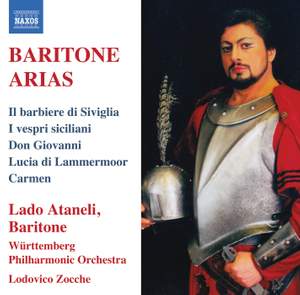
| |  | Baritone Arias
Lado Ataneli (baritone) Württemberg Philharmonic Orchestra, Lodovico Zocche For his Naxos début recording, the internationally acclaimed Georgian baritone Lado Ataneli has selected operatic arias by Bizet, Donizetti, Leoncavallo, Verdi, Massenet, Mozart and Rossini, which showcase what the Los Angeles Times hailed as “one of the healthiest, roundest, most mellifluous voices on the planet”. A sought-after interpreter of verismo rôles, Lado Ataneli has worked with conductors including Riccardo Muti, James Conlon and James Levine, sharing the stage with Plácido Domingo and other leading singers. He closes his recital with an aria by Dimitri Arakishvili, one of the founders of modern Georgian music. “The breath control is impressive: he can elide the phrases of 'Vision fugitive' in Hérodiade with the breadth of past masters and the long-sustained final note is evidently a trademark.” Gramophone Magazine, June 2010 | | | (also available to download from $6.00) | Usually despatched in 2 - 3 working days. (Available now to download.) |
|
|
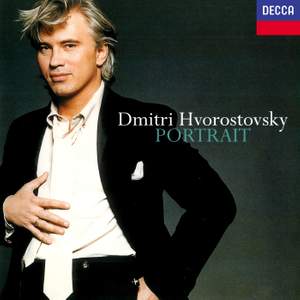
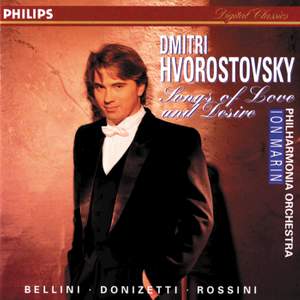
| |  | Dmitry Hvorostovsky - Portrait
| | Korobyeiniki: Oy, polna, polna karobushka Folk Songs Osipov Russian Folk Orchestra, Nikolai Kalinin Elegia: Kodga, dusha Folk Songs Osipov Russian Folk Orchestra, Nikolai Kalinin Kalinka Folk Song St Petersburg Chamber Choir, Nikolai Korniev | Bellini: | Or dove fuggo … Ah! Per sempre io ti perdei (from Il Pirata) | Caldara: | Selve amiche La constanza in amor vince l’inganno Academy of St Martin in the Fields, Sir Neville Marriner | Donizetti: | Come Paride vezzoso (from L'elisir d'amore) L’elisir d’amore Cruda, funesta smania (from Lucia di Lammermoor) Lucia di Lammermoor Bella siccome un angelo (from Don Pasquale) Don Pasquale Philharmonia Orchestra, Ion Marin | Gluck: | Che faro' senza Euridice? (from Orfeo ed Euridice) Orfeo ed Euridice | Handel: | Frondi tenere e belle ... Ombra mai fù (from Serse) Serse | Mussorgsky: | Songs and Dances of Death (orch. Shostakovich) Kirov Orchestra, Mariinsky Theatre, St Petersburg, Valery Gergiev | Rachmaninov: | Sing not, O lovely one (Ne poi, krasavitsa, pri mne), Op. 4 No. 4 V molchanii nochi taynoy, Op. 4 No. 3 | Rimsky Korsakov: | Gorod kamennyi Sadko S uma neidyot krasavitsa! The Tsar’s Bride with Olga Borodina Kirov Orchestra, Mariinsky Theatre, St Petersburg, Valery Gergiev Zachem ty? The Tsar’s Bride with Olga Borodina Kirov Orchestra, Mariinsky Theatre, St Petersburg, Valery Gergiev | Rossini: | Largo al factotum (from Il barbiere di Siviglia) Il barbiere di Siviglia | Rubinstein: | Na vozdushnom okeane The Demon | Syrewicz: | Tears Russia’s War — Blood Upon The Snow Cantus Dei Choir of Moscow, Red Army Choir & State Symphonic Orchestra of Cinematography, Sergei Skripka | Tchaikovsky: | Vy mne pisali…Kogda by zhizn domashnim krugom (from Eugene Onegin) Eugene Onegin Uzhel ta samaya Tatyana (from Eugene Onegin) Eugene Onegin Vy tak pechalny, dorogaya (from The Queen of Spades) The Queen of Spades Rotterdam Philharmonic Orchestra, Valery Gergiev Kto mozhet sravnitsa s Matildoyu moyei (Robert's aria from Iolanta) Iolante None but the lonely heart, Op. 6 No. 6 Oleg Boshnyakovich (piano) O, yesli b ty mogla (O, if only you could), Op. 38 No. 4 Mikhail Arkadiev (piano) Solitude ('Again, as before, alone'), Op. 73 No. 6 Oleg Boshnyakovich (piano) | Verdi: | Di provenza il mar (from La Traviata) Il balen del suo sorriso (from Il Trovatore) Il trovatore Per me giunto è il di (from Don Carlo) Don Carlo Rotterdam Philharmonic Orchestra, Valery Gergiev | Vivaldi: | Se il cor guerriero (from Tito Manlio) Tito Manlio |
“A well-rounded portrait of Hvorostovsky's extensive repertoire” BBC Music Magazine, August 2010 | | | Usually despatched in 2 - 3 working days. |
|
|
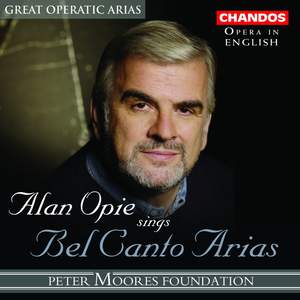
| |  | Great Operatic Arias - Alan Opie sing Bel Canto
and ensembles from Ernani and Guillaume Tell
| | | (also available to download from $10.50) | Usually despatched in 2 - 3 working days. (Available now to download.) |
|
|
| |  | Tito Gobbi: The Complete Solo Recordings
Anzi: | O mia bella Madonnina Mattinata fiorentina | Berlioz: | Une puce gentille 'Flea Song' (from La damnation de Faust) | Brogi: | Visione Veneziana | Capua: | O sole mio | Carissimi: | Vittoria, mio core! | Cavalli: | Beato chi può (from Xerse) | Cilea: | Come due tizzi accesi (from L'Arlesiana) Ecco il monologo (from Adriana Lecouvreur) (two recordings) | Cottrau: | Santa Lucia (two recordings) | Denza: | Occhi di fata Occhi di fata | Donizetti: | Come Paride vezzoso (from L'elisir d'amore) Cruda, funesta smania (from Lucia di Lammermoor) La pietade in suo favore (from Lucia di Lammermoor) Che fia?...Se tradirmi tu potrai (from Lucia di Lammermoor) La donna è originale...Venti scudi (from L'elisir d'amore) | Durante: | Vergin, tutto amor preghiera | Falvo: | Dicitencello vuie | Gastaldon: | Musica proibita | Giordani, G: | Caro mio ben | Giordano, U: | Nemico della patria (from Andrea Chénier) La donna russa (from Fedora) (two recordings) | Lama, G: | Silenzio cantatore | Leoncavallo: | Buona Zazà del mio buon tempo from Zazà Zazà, piccolo zingara from Zazà Si può? (from I Pagliacci) (two recordings) | Mascagni: | Serenata | Mayer: | Biondina in gondoletta | Monteverdi: | Air d'Orphee Rosa del ciel | Mozart: | Deh! vieni alla finestra (from Don Giovanni) Non piu andrai, farfallone amoroso (from Le Nozze di Figaro) Aprite un po'quegli occhi (from Le Nozze di Figaro) | Olivieri: | Nenia d’amore | Paisiello: | Nel cor più non mi sento | Pigarelli: | La montanara (from the film The Glass Mountain) (two recordings) | Puccini: | Minnie, della mia casa son partito (from La Fanciulla del West) (two recordings) Tosca: Act Two (excerpt) Maria Callas (Tosca), Luigi Alva (Cavaradossi) Ladro!...Via! via!...Lauretta mia...Ditemi voi, signori (from Gianni Schicchi) Victoria de los Angeles (Lauretta), Carlo del Monte (Rinuccio) | Respighi: | Nebbie | Rossini: | Largo al factotum (from Il barbiere di Siviglia) Guglielmo, sol per te...La valanga (from Guglielmo Tell) Resta immobile (from Guglielmo Tell) (two recordings) | Ruccione: | Famme sunn’a cu’tte | Sadero: | Amuri, amuri (two recordings) Gondoliera veneziana (two recordings) | Scarlatti, A: | O cessate di piagarmi (from Il Pompeo) | Tagliaferri: | Piscatore 'e pusilleco | Tosti: | A vucchella Marechiare Malià Donna, vorrei morir Ideale A vucchella | trad.: | Fenesta che lucive (two recordings) Tre giorni son che Nina (two recordings) Se gli alberi | Valente, N: | Torna! | Verdi: | Per me giunto è il di (from Don Carlo) O Carlo, ascolta (from Don Carlo) Era la notte (from Otello) Urna fatale (from La Forza del Destino) Vanne, la tua meta gia vedo…Credo in un Dio crudel (from Otello) Di provenza il mar (from La Traviata) Pari siamo! (from Rigoletto) Perfidi!…Pietà, rispetto, amore (from Macbeth) Alzati…Eri tu che macchiavi quell'anima (from Un Ballo in Maschera) Vanne, la tua meta gia vedo…Credo in un Dio crudel (from Otello) (two recordings) Ah, prigioniero io sono...Dio di Giuda! (from Nabucco) Quando ero paggio (from Falstaff) (two recordings) Plebe! Patrizi! Popolo! (from Simon Boccanegra) Rigoletto (excerpts) Maria Callas (Gilda), Giuseppe di Stefano (Il Duca) Dinne...alcun lá non vedesti? (from Simon Boccanegra) Victoria de los Angeles (Amelia) Ciel, mio padre! (from Aida) Maria Callas (Aida) Don Carlo (excerpts) Mario Filippeschi (Carlo), Plinio Clabassi (Filippo) L'onore! Ladri! (from Falstaff) | Vivaldi: | Cantata RV675 'Piango, gemo, sospiro' | Wolf-Ferrari: | Aprile o bella - Serenata (from I gioielli della Madonna) Commiato |
This 5 CD set, devoted to the outstanding Italian baritone Tito Gobbi, is a further release in the EMI Classics ICON series. The bulk of this set is devoted to all the solo recordings that Gobbi made during his entire career, brought together for the first time. The first CD begins with seven operatic arias (by Cilea, Leoncavallo, Mozart, Verdi and Puccini), and two songs (‘Musica proibita’ by Gastaldon and ‘Famme sunn’a cu’tte’ by Ruccione) that Gobbi made for the Italian branch of EMI in 1942. The songs were released only in Italy on a 78rpm record that had extremely limited circulation because of the Second World War, and are re-issued here by EMI for the first time. The programme continues on CD 1 with further recordings that Gobbi made for EMI from 1948 onwards of operatic arias and songs, including two songs (‘La montanara’ and ‘Take the Sun’) that were featured in the 1949 film The Glass Mountain that brought the baritone to a wide cinema audience. He eventually appeared in more than 20 films. CD 2 contains the rest of the songs and arias made up to the end of the 78rpm era, and finishes with the song ‘Nenia d’amore’ recorded in Italy in 1953 for the film Canzoni a due voci. In 1955, Gobbi made his first LP recital album (with the forces of the Rome Opera), but it was not released at the time due to concerns about the technical quality of the recording. With the advance of technology the problems were subsequently able to be corrected and Gobbi later gave permission for material from the album to be released in various LP collections. The whole album is now heard here complete for the first time. In 1964, EMI made a two-LP set called The Art of Tito Gobbi in which each of the four LP sides was devoted to a different genre, namely Operatic Arias, Classical Songs and Arias, Italian and Neapolitan Popular Songs, and Romantic Songs. The programme repeated some of the repertoire on the as yet unpublished 1955 album but ranged much more widely, especially in the field of song. The operatic arias were made with the Philharmonia Orchestra under Alberto Erede; the classical songs with a small chamber ensemble consisting of harpsichord, cello and guitar; the popular songs with members of the Orchestra of the Rome Opera, and the romantic songs with the distinguished pianist Gerald Moore. This project marked the end of Gobbi’s recording career in solo repertoire. The rest of the set covers extracts from some of the acclaimed complete opera recordings that Gobbi made for EMI, including Lucia di Lammermoor, Tosca, Aida and Rigoletto with the legendary soprano Maria Callas. Other operas featured are L’elisir d’amore, Simon Boccanegra, Don Carlo, Aida, Il tabarro, Il barbiere di Siviglia, Pagliacci and Gianni Schicchi. The programme ends with a memorable reminder of one of Gobbi’s finest assumptions, the title role in Verdi’s sublime Falstaff. | | | In stock - usually despatched within 1 working day. |
|
|
| |  | Dietrich Fischer-Dieskau: Seine Größten Erfolge
Beethoven: | Ha! Welch ein Augenblick! (from Fidelio) Adelaide, Op. 46 Andenken, WoO 136 Der Zufriedene, Op. 75 No. 6 Lied aus der Ferne, WoO 137 Sehnsucht (Die stille Nacht undunkelt), WoO 146 Der Wachtelschlag, WoO 129 An die Hoffnung, Op. 94 Der Kuss, Op. 128 Die Liebe, Op. 52 No. 6 Das Liedchen von der Ruhe, Op. 52 No. 3 Abendlied unter'm gestirten Himmel, WoO 150 Resignation, WoO 149 Zärtliche Liebe 'Ich liebe dich', WoO 123 In questa tomba oscura, WoO.133 Maigesang, Op. 52 No. 4 Marmotte, Op. 52 No. 7 Lieder (6), Op. 75: excerpts Songs (3) , Op. 83 Lieder von Gellert (6), Op. 48 | Bizet: | Au fond du temple saint (from Les Pêcheurs de Perles) sung in German as 'Im tempel Brahmas kniet' | Brahms: | Wie bist du, meine Königin Op. 32 No. 9 Nicht mehr zu dir zu gehen, Op. 32 No. 2 Der Strom, der neben mir verrauschte, Op. 32 No. 4 Du sprichst, daß ich mich täuschte, Op. 32 No. 6 Wehe, so willst du mich wieder, Op. 32 No. 5 Nachtwandler, Op. 86 No. 3 In Waldeseinsamkeit, Op. 85 No. 6 Die schöne Magelone, Op. 33 Denn wir haben hie keine bleibende Statt (from Ein Deutsches Requiem, Op. 45) Vier ernste Gesänge, Op. 121 | Donizetti: | Cruda, funesta smania (from Lucia di Lammermoor) sung in German as 'Wut, heissen Durst nach Rache' | Gluck: | O du, die ich so innig liebe (from Iphigenie in Aulis) | Humperdinck: | Wohin bist du gegangen? (from Königskinder) Verdorben! Gestorben! (from Königskinder) | Lortzing: | Einst spielt' ich mit Zepter, mit Krone und Stern (from Zar und Zimmermann) Nun ist's vollbracht!...Schwanensang, Schwanenklang (from Undine) Wie freundlich strahlt...Heiterkeit und Fröhlichkeit (from Der Wildschütz) | Mahler: | Lieder eines fahrenden Gesellen (4 songs, complete) Kindertotenlieder | Mozart: | Der Vogelfänger bin ich, ja (from Die Zauberflöte) Bei Männern, welche Liebe fühlen (from Die Zauberflöte) Fin ch'han dal vino (from Don Giovanni) sung in German as 'Auf, zu dem Feste' La ci darem la mano (from Don Giovanni) sung in German as 'Reich mir die Hand, mein Leben' Deh! vieni alla finestra (from Don Giovanni) sung in German as 'Feinsliebchen, komm ans Fenster' Hai gia vinta la causa! (from Le nozze di Figaro) sung in German as 'Der Prozess schon gewonnen' | Nicolai, C O: | In einem Waschkorb? (from Die lustigen Weiber von Windsor) | Pfitzner: | Den heil'gen Geist, der die Konzilien leitet (from Palestrina) | Puccini: | O Mimi, tu piu non torni (from La Bohème) sung in German as 'Ach Geliebte, nie kehrst du wieder' Addio dolce svegliare (from La Bohème) sung in German as 'Lebt wohl, ihr süssen Stunden' Addio, fiorito asil (from Madama Butterfly) sung in German as 'Leb wohl, mein Blütenreich' Rudolf Schock (tenor) | Schubert: | An die Musik D547 An Mignon D161 Wandrers Nachtlied II 'Über allen Gipfeln ist Ruh', D768 An den Frühling, D338 Nacht und Träume, D827 Erlkönig, D328 Rastlose Liebe, D138 Der Zwerg, D771 (Collin) Der Kreuzzug D932 (Leitner) Schwanengesang, D957 Die schöne Müllerin, D795 Winterreise D911 | Schumann: | Wanderlied (No. 3 from 12 Gedichte, Op. 35) Erstes Grün, Op. 35 No. 4 Sehnsucht nach der Waldgegend, Op. 35 No. 5 'Wär' ich nie aus euch gegangen' Auf das Trinkglas eines verstorbenen Freundes Stille Liebe, Op. 35 No. 8 Lust der Sturmnacht, Op. 35 No. 1 Wanderung, Op. 35 No. 7 'Wohlauf und frisch gewandert ins unbekannte Land!' Liederkreis, Op. 39 Dichterliebe, Op. 48 Myrthen, Op. 25 | Strauss, R: | Sie woll'n mich heiraten, sagt mein Vater (from Arabella) Wozu noch, Mädchen Op. 19 No. 1 O wärst du mein Op. 26 No. 2 Befreit, Op. 39 No. 4 Herr Lenz Op. 37 No. 5 Die Nacht, Op. 10 No. 3 Ach weh mir unglückhaftem Mann, Op. 21 No. 4 Schlichte Weisen, Op. 21 | Verdi: | Alla vita che t'arride (from Un ballo in maschera) sung in German as 'Für dein Glück und für dein Leben' Alzati…Eri tu che macchiavi quell'anima (from Un Ballo in Maschera) sung in German as 'Erhebe dich!...Ja, nur du hast dies Herz mir entwendet' In braccio alle dovizie (from I Vespri Siciliani) sung in German as 'In Glanz und Pracht regier' ich hier' Dio, che nell'alma infondere (from Don Carlo) sung in German as 'Gott, der entflammte der Liebe heisse Glut' Signora! Per vostra maestà (from Don Carlo) sung in German as 'Vernehmt, ich komme' Son io, mio Carlo... Io morro (from Don Carlo) sung in German as 'Ich bin's, mein Carlos' | Wagner: | O du, mein holder Abendstern (from Tannhäuser) Als du in kuhnem Sange uns bestrittest (from Tannhäuser) Blick ich umher in diesem edlen Kreise (from Tannhäuser) | Wolf, H: | Harfenspieler I (No. 1 from Goethe-Lieder) Harfenspieler II (No. 2 from Goethe-Lieder) Harfenspieler III (No. 3 from Goethe-Lieder) Phänomen (No. 32 from Goethe-Lieder) Ob de Koran von Ewigkeit sei? (No. 34 from Goethe-Lieder) Erschaffen und Beleben (No. 33 from Goethe-Lieder) Lebe wohl (No. 36 from Mörike-Lieder) In der Frühe (No. 24 from Mörike-Lieder) Verschwiegene Liebe (No. 3 from Eichendorff-Lieder) |
The death has recently been announced of one of the greatest singers of the 20th century, the German baritone Dieterich Fisher-Dieskau. Over a career spanning almost half a century Fisher-Dieskau performed all over the world with most of the major conductors, orchestras, and opera companies. He was particularly renowned for his interpretations of the lieder repertoire, especially the songs of Schubert. This 10CD set which was originally released in July 2011 covers a wide range of his performances in all areas of the vocal art. | | | Usually despatched in 4 - 5 working days. |
|
|
| |
|