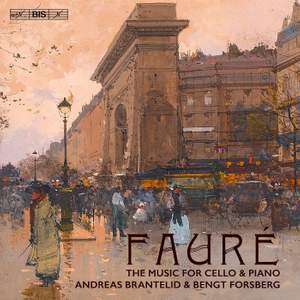
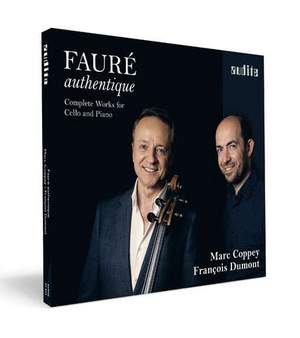
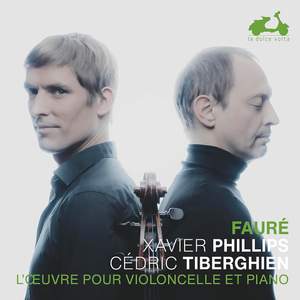
All recordingsPrices shown exclude VAT. (UK tax is not payable for deliveries to United States.) See Terms & Conditions for p&p rates. | |  | Fauré - Music for Cello and Piano
Fauré: | Sicilienne, Op. 78 Cello Sonata No. 2 in G minor, Op. 117 Après un rêve, Op. 7 No. 1 (arr. Pablo Casals) Élégie in C minor, Op. 24 Romance in A major for cello & piano, Op. 69 Berceuse, Op. 16 (arr. for cello and piano) Papillon, Op. 77 Sérénade, Op. 98 Cello Sonata No. 1 in D minor, Op. 109 Pavane, Op. 50 (arr. H. Busser) |
Ina-Esther Joost Ben-Sasson (cello) & Allan Sternfield (piano) Fauré’s musical language bridged a gap between 19th-century Romanticism and the music that appeared with the new century, developing and evolving, but retaining its own fundamental characteristics. His gift for melody, subtle harmonic idiom, judicious and highly personal use of contemporary innovations make for enriching listening, whether in the popular Sicilienne, Pavane and other short pieces or in his two tuneful and impeccably crafted Cello Sonatas. Since receiving top prizes, including the Diploma of the Tchaikovsky Competition, Moscow, and First Prize of the International Cello Competition Belgrade, Ina-Esther Joost Ben-Sasson has been in high demand as a soloist all over the world. | | | (also available to download from $6.00) | In stock - usually despatched within 1 working day. |
|
|
| |  | Smörgasbord
Berkeley, L: | Andantino for Cello and Piano, Op. 21, No. 2a | Fauré: | Papillon, Op. 77 | Godowsky: | Larghetto Lamentoso (from Twelve Impressions) | Grainger: | The Sussex Mummers' Christmas Carol | Hägg, J A: | Andante Albumblatt | Halffter, E: | Habanera (arr Maurice Gendron) | Jongen: | Valse, Op. 35 Habanera, Op. 86 | Korngold: | Mummenschantz (Hornpipe) (from Much Ado About Nothing, Op. 11) Romance Impromptu in E flat major, Op. post. | Kreisler: | Liebesleid (arr Rachmaninov/Lidström) | Lidström: | The Sea of Flowers is Rising Higher (Elegy for solo cello) | Martinu: | Arabesque No. 1 (from Sept Arabesques) | Moeran: | Prelude | Montsalvatge: | Canción negra No. 5, Canto negro (arr Mats Lidström) | Rameau: | Air vif: ‘Torture d'Alphise' (from Les Boréades, Act 4) (arr Mats Lidström) | Scriabin: | Poème in F sharp major, Op. 32 No. 1 (arr Mats Lidström) Romance in A minor | Sibelius: | Rondino (from Five Pieces, Op. 81) Berceuse (No 6 of Six Pieces, Op. 79) | Stenhammar: | Adagio, Op. 20 No. 5 (arr Mats Lidström) | Tille: | Courante (from Le Tombeau de Rameau) | Tortelier: | Pishnetto (Recital Etude No. 5) |
| | | In stock - usually despatched within 1 working day. |
|
|
| |  | Fauré: Musique de Chambre, Vol. 1
Fauré: | Violin Sonata No. 1 in A major, Op. 13 Violin Sonata No. 2 in E minor, Op. 108 Berceuse, Op. 16 Romance in B flat major for violin & piano, Op. 28 Andante in B flat for Violin and Piano Op. 75 Morceau de lecture Sicilienne, Op. 78 Élégie in C minor, Op. 24 Romance in A major for cello & piano, Op. 69 Papillon, Op. 77 Sérénade, Op. 98 Cello Sonata No. 1 in D minor, Op. 109 Cello Sonata No. 2 in G minor, Op. 117 Fantaisie for flute & orchestra (or flute & piano), Op. 79 Morceau de concours Piano Trio in D minor, Op. 120 |
| | | In stock - usually despatched within 1 working day. |
|
|
| |  | Debussy, Fauré, Bridge, Britten
Philip Higham (cello) & Simon Lane (piano) Philip Higham is rapidly emerging as one of the most prominent young cellists from the UK. In 2010 he won 2nd prize in the Grand Prix Emanuel Feuermann Competition in Berlin, making him the first British cellist in generations to have won top prizes at three major international competitions, including 1st Prize in the 2008 Bach Leipzig and 2009 Lutoslawski Competitions. Philip has given recitals at major festivals and venues throughout Europe including Lake Maggiore (Italy), the Bachwoche in Ansbach, Leipzig BachFest, the Gioventù Musicale d'Italia, Victoria Arts Festival in Malta, Manchester International Cello Festival, City Halls Glasgow, the Spitalfields, Brighton and Lake District Summer Music Festivals. He has appeared as soloist with the Warsaw Philharmonic Orchestra, Orchestra Camera Di Caserta in the Autunno Musicale Festival in Naples, the Kammerakademie Potsdam and Mendelssohn Kammerorchester in Leipzig, and performed Finzi’s Concerto to critical acclaim at St. John’s Smith Square (London). “What is most striking about this perofrmance [of the Britten] is that, thanks to the brilliance of Simon Lane at the piano, the virtuosity of the piano-writing is thrillingly brought out...The three Frank Bridge pieces are well contrasted between easy lyricism and dazzling virtuosity in dashing triplets, while the duo are just as understanding in the French pieces” Gramophone Magazine, December 2012 | | | Usually despatched in 4 - 5 working days. |
|
|
| |  | Connections
Winona Zelenka (cello) & Connie Shih (piano) On ‘Connections’, released by the Canadian label Marquis, two outstanding young Canadian musicians, cellist Winona Zelenka and pianist Connie Shih, present a selection of some of the most evocative music in the French repertoire. Their programme includes César Franck’s Sonata in A major, Gabriel Fauré’s Papillon, Claude Debussy’s Sonata for Cello and Piano, and Ernest Chausson’s Pièce. All four composers featured on this CD lived largely in Paris during the second half of the 19th century and all of them had connections with the Paris Conservatoire, either as students and/or teachers. And on a personal level, ‘connections’ also abound. The Debussy Sonata is short, with abrupt and daring changes in mood and colour. Chausson’s Piéce is an extremely beautiful and wistful late work, whilst Fauré’s Papillon is a lightning-fast piece where images seem to briefly appear and disappear. Cesar Franck’s Sonata in A major, originally written for violin and piano, is one of the most popular works in the chamber music repertoire. Winona Zelenka received international acclaim in 2010 when her first solo recording – the CD set of Bach Suites for Solo Cello – was released on Marquis Classics (MARQUIS81509). Connie Shih regularly appears with cellist Steven Isserlis and she will accompany him and others in several UK recitals this year. | | | Usually despatched in 4 - 5 working days. |
|
|
| |  | Fauré: Cello Sonatas Nos. 1 & 2
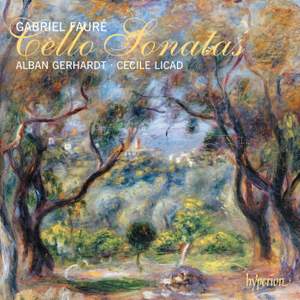
Following their triumphant Casals Encores disc, Alban Gerhardt and Cecile Licad are reunited for Fauré’s music for cello and piano. The two cello sonatas are among the masterpieces of the cello repertoire, looking back to the nineteenth century but also with an edginess that may well reflect the time in which they were written—during and immediately after the First World War. Remarkably, Fauré was in his seventies by the time he wrote them. There’s some debate as to how fast the last movement of the first sonata should go—so Alban Gerhardt has recorded two alternative versions, to be programmed to the listener’s taste. Alongside the sonatas are some of Fauré’s most seductive bon-bons, including the famous Sicilienne and Élégie, and the so-called Papillon (so-named at his publisher’s insistence and much to Fauré’s annoyance—he hated fluffy titles). Alban Gerhardt is of course a Hyperion regular and this is his ninth album for the label. “They make a particularly fine duo here, working emotionally in unison, sensing the music’s contours with like mind, breathing as one...their feeling for moments of drama and repose is held in ideal equilibrium, and their pointing up of Fauré’s individual harmonic shading is judged instinctively.” The Telegraph, 13th January 2012 ***** “Alban Gerhardt's account of Fauré's two cello sonatas, both late works, repay careful listening. Like the works themselves, his playing and that of the pianist Cecile Licad is full of subtleties, the half-tones and inflections that make the chamber music of Fauré's final decade so elusive and fragile. Nothing here is forced or made to conform” The Guardian, 19th January 2012 **** “From every standpoint, Gerhardt's accounts of the sonatas seem exceptional, with their assured technical mastery and uncanny depth of insight...none of [the] rival accounts will readily eclipse these sonorously authoritative new performances...Magnificent cello playing from Gerhardt, empathetically supportive accompaniments from Licad and a wonderfully natural and atmospheric recording to boot.” International Record Review, January 2012 “One has a powerful sense of Cecile Licad and Alban Gerhardt's compelling grasp of architecture...[in the Andante of No. 1] Licad's melting lines are wonderfully voiced, and we have a choice of finales - one at Faure's own controversially slow tempo, and one at the performer's preferred, faster tempo. In the Second Sonata, Gerhardt captures the first movement's exalted energy.” BBC Music Magazine, March 2012 **** “[Gerhardt] has the command of a very fine virtuoso...[Gerhardt and Licad] sound free as air, intellectually confident, full of verve, with niceties of balance and intensities never an issue; a convincing frame of colour, movement and sound in place for every movement...obviously the one to get. May it win friends for some excellent and still undervalued music.” Gramophone Magazine, April 2012 | | | Usually despatched in 2 - 3 working days. |
|
|
| |  | French Cello Sonatas
Julian Steckel (cello) & Paul Rivinius (piano) Following his excellent release of Cello Concertos by Korngold, Goldschmidt and Bloch (8553223), Julian Steckel performs French Cello Sonatas, as well as Fauré’s Sicilienne, Après un Rêve and Trois Pièces by Boulanger. “Steckel understands the work (Goldschmidt) better than any soloist I have heard.” Norman Lebrecht “the freshness and energy they bring make up for their occasional brashness and weightier approach. Their Poulenc has an impressive freedom and sensuality, particularly in the plangent chordal introduction to the Finale, here played with an organ-like richness of resonance. In Debussy's masterfully spare Sonata, Streckel proves himself brilliantly in control of touch and timbre...Rivinius matches him in sensitivity and range of colour.” BBC Music Magazine, March 2012 ***** | | | Usually despatched in 2 - 3 working days. |
|
|
| |  | Fauré: Piano Trio & Works for Cello & Piano
François Salque (cello), Eric Le Sage (piano) & Paul Meyer (clarinet) Following the successful edition of Schumann’s complete works, Eric Le Sage and Alpha have decided to produce a new series of 5 CDs dedicated to Gabriel Fauré’s complete works for chamber music with piano. This series in general and its first volume in particular, constitute a milestone in Alpha’s development as they are the first of a line devoted to music from the post-Mozart period. Each volume will be placed in the literary context of the time in which it was created through fragments taken from novels, poems or the correspondence of artists. Eric Le Sage will work on this series together with François Salque with whom he shares a great musical affinity. Sound engineer Jean-Marc Laisné (who recorded the integral works of Schumann) will record the pieces in the auditorium of Grenoble, a hall famous for its acoustics. Through the combination of their talents, these men will breathe new life into these well known pieces. There is no doubt this series, just like the recordings of Schumann’s complete works, will become a reference on the classical music scene. “Meyer's soft-grained playing is unconvincing; Salque is eloquent; Le Sage's articulation crisp.” BBC Music Magazine, April 2012 *** “[Salque] projects a range of sound and character that makes one listen. He has as well a 'speaking' quality to his tone, from time to time, more intimate in manner, that I particularly like.” Gramophone Magazine, April 2012 “With Paul Meyer as a gloriously responsive partner for Salque and Le Sage, this performance is another that goes straight to the top of any list of recommendations...this is a disc that can be recommended with all possible enthusiasm: it includes some of the most perceptive Faure playing that I've ever heard...I would urge anyone who loves Faure's music to hear this exceptional recording.” International Record Review, June 2012 | | | (also available to download from $10.75) | Usually despatched in 4 - 5 working days. (Available now to download.) |
|
|
| |  | Fauré - Cello Sonatas Nos. 1 & 2
Fauré’s two cello sonatas are compact, beautifully written works whose musical language, with its many subtle changes of tonality and gift for melody, has been described as conveying ‘the power of tranquil thought’. Written in the summer of 1917, during the First World War, the neglected First Sonata begins with a troubled Allegro, followed by an eloquent Andante and a sparkling Finale. The C minor Andante of the Second Sonata has its origin in a Chant funèbre commissioned for the celebration in May 1921 of the centenary of the death of Napoleon. This recital also includes an arrangement of the ever-popular song Après un rêve, as well as the virtuosic Papillon. “Nina Tichman uses Fauré's powerful left-hand lines correctly as counterweight to the cello's soaring tunes. Impassioned playing from her Kliegel gives us not only the two sonatas, but also the Elégie and even the Romance as the fine, strong works they are.” BBC Music Magazine, July 2008 *** “In both sonatas and in the shorter pieces Kliegel plays with an impressively wide dynamic range down to a mete whisper of pianissimo, perfectly articulated.” Gramophone Magazine, Awards Issue 2008 “Maria Kliegel has made some formidable recordings for Naxos. Here she offers a collection of Fauré's cello music, centring on the two cello sonatas, both late works. To these she adds a varied collection of pieces not all originally written for the cello, such as the song Après un rêve. The sonatas are nicely contrasted but Kliegel's performances with her regular accompanist Nina Tichman (her partner in the Xyrion Trio) cannot help bringing out the fact that though both works are satisfyingly compact, the musical material of No 2 is far more compelling, where the lyricism in No 1 rarely adds up to a recognisable tune. No 2 brings a crisply compact sonata-form first movement, a warmly lyrical slow movement building up to a powerful climax and a dashing finale with a spiky second subject. In both sonatas and in the shorter pieces Kliegel plays with an impressively wide dynamic range down to a mere whisper of pianissimo, perfectly articulated. The Elégie, Fauré's most famous cello piece, comes in a moving performance, and the fluttering Papillon, written some years later, is a brilliant companion piece. The most famous of the other pieces on the disc is the haunting Sicilienne. The Berceuse, originally for violin, has been transcribed for a number of other instruments and Après un rêve comes in a clever cello transcription. Kliegel is on top form throughout; long may her recordings for Naxos continue.” Gramophone Classical Music Guide, 2010 | | | (also available to download from $6.00) | Usually despatched in 2 - 3 working days. (Available now to download.) |
|
|
| |  | Fauré - Works for Cello & Piano
Born in 1845, the French composer and organist Gabriel Fauré is now acknowledged as one of the most important writers of chamber music of his period. The delicate and elegant style of his music, redolent of the salons of Parisian high-society, is underpinned by a core of emotional depth and an often adventurous approach to harmony. Although he did not compose a great deal of music for the solo cello, he seems to have had a special affinity for the instrument and its lyrical qualities. It is therefore no surprise that these works have become favourites with both audiences and performers. This recording contains all the pieces originally written by Fauré for cello and piano, including one of his most beautiful and enduring short compositions, the “Elégie”, opus 24, and the two sonatas, opus 109 and 119. | | | (also available to download from $10.75) | Usually despatched in 3 - 4 working days. (Available now to download.) |
|
|
| |
|