This page lists all recordings of Batti, batti, o bel Masetto (from Don Giovanni), by Wolfgang Amadeus Mozart (1756-91) on CD, SACD & download (MP3 & FLAC). Generally, more recent releases are listed first, but with priority given to those that are in stock. |
Prices shown exclude VAT. (UK tax is not payable for deliveries to United States.) See Terms & Conditions for p&p rates. | |  | Essential Opera Divas
Beethoven: | Abscheulicher! Wo eilst du hin? (from Fidelio) | Bellini: | Casta Diva (from Norma) | Donizetti: | Spargi d'amaro pianto (from Lucia di Lammermoor) | Dvorak: | Mesícku na nebi hlubokém 'Song to the Moon' (from Rusalka) | Gluck: | Dieux puissants que j'atteste… Jupiter, lance la foudre (from Iphigénie en Aulide) | Gounod: | Ah! Je ris de me voir (from Faust) Ah! Je veux vivre dans ce rêve (from Roméo et Juliette) | Handel: | Ma quando tornerai (from Alcina) | Korngold: | Glück, das mir verbleib 'Marietta's Lied' (from Die Tote Stadt) | Meyerbeer: | Ombra leggiera (Dinorah) | Mozart: | Dove sono i bei momenti (from Le nozze di Figaro) Or sai chi l'onore (from Don Giovanni) Batti, batti, o bel Masetto (from Don Giovanni) In quali eccessi ... Mi tradì quell'alma ingrate (from Don Giovanni) Non mi dir (from Don Giovanni) Der Hölle Rache kocht in meinem Herzen (from Die Zauberflöte) Ach, ich fühl's (from Die Zauberflöte, K620) Ruhe sanft, mein holdes Leben (from Zaïde) | Puccini: | Vissi d'arte (from Tosca) Si, mi chiamano Mimi (from La Bohème) Un bel di vedremo (from Madama Butterfly) Chi il bel sogno di Doretta (from La Rondine) O mio babbino caro (from Gianni Schicchi) In questa reggia (from Turandot) | Rossini: | Una voce poco fa (from Il barbiere di Siviglia) | Verdi: | D'amor sull'ali rosee (from Il Trovatore) Pace, pace mio Dio! (from La forza del destino) Ô ma chère compagne (from Don Carlos) Ave Maria (from Otello) | Vivaldi: | Il Bajazet (Il Tamerlano) : Anch'il mar par che sommerga | Wagner: | Dich, teure Halle (from Tannhauser) Euch Lüften, die mein Klagen (from Lohengrin) |
| 
| | | In stock - usually despatched within 1 working day. |
|
|
| |  | Mozart: Opera & Concert Arias
| | | In stock - usually despatched within 1 working day. |
|
|
| |  | Vesselina Kasarova: A Portrait & French Opera Arias
Bellini: | Ascolta! Se Romeo t'uccise un figlio...La tremenda ultrice spada (from I Capuleti) | Berlioz: | Ah! Je vais mourir (from Les Troyens) | Donizetti: | Fia dunque vero…O mio Fernando (from La Favorita) Sposa a Percy...Per questa fiamma indomita (from Anna Bolena) | Gluck: | Che faro' senza Euridice? (from Orfeo ed Euridice) | Gounod: | Ô ma lyre immortelle (from Sapho) Depuis hier je cherche en vain mon maître...Que fais-tu, blanche tourterelle (from Roméo et Juliette) Nuit resplendissante (from Cinq-Mars) | Handel: | Or la tromba (Rinaldo) | Lalo: | De tous côtes j'apercois...Lorsque je t'ai vu soudain (from Le Roi d'Ys) | Massenet: | De cet affreux combat…Pleurez, mes yeux ! (from Le Cid) | Meyerbeer: | Non, non, non, vous n'avais jamais, je gage (from Les Huguenots) Donnez, donnez (from Le Prophète) | Mozart: | Voi che sapete (from Le nozze di Figaro) Batti, batti, o bel Masetto (from Don Giovanni) | Rossini: | Nacqui all'affanno, al pianto...Non più mesta (from La Cenerentola) Pensa alla patria (from L'Italiana in Algeri) Una voce poco fa (from Il barbiere di Siviglia) | Saint-Saëns: | Amour, viens aider ma faiblesse (Samson et Dalila) | Thomas, Ambroise: | Connais-tu le pays (from Mignon) |
“[Portrait] is the stuff of legends: I can't recall the last time I heard a debut opera recital that has given me so much pleasure. The vibrant richness of Kasarova's tone allied to her totally uninhibited manner before the microphone allow her to bring to astonishing life each of the characters portrayed within.” Gramophone Magazine, February 2007 | | | In stock - usually despatched within 1 working day. |
|
|
| |  | Mozart: Arias & DuetsHighlights from Le Nozze di Figaro, Cosi fan tutte, Don Giovanni & Die Zauberflöte
Mozart: | Non piu andrai, farfallone amoroso (from Le Nozze di Figaro) John Pringle (baritone) Crudel! perché finora farmi languir così? (from Le nozze di Figaro) Isobel Buchanan (soprano) Hai gia vinta la causa! (from Le nozze di Figaro) John Pringle (baritone) E Susanna non vien! … Dove sono i bei momenti (from Le nozze di Figaro) Isobel Buchanan (soprano) Come scoglio (from Così fan tutte) Isobel Buchanan (soprano) Donne mie la fate a tanti (from Così fan tutte) John Pringle (baritone) La ci darem la mano (from Don Giovanni) Isobel Buchanan (soprano), John Pringle (baritone) Batti, batti, o bel Masetto (from Don Giovanni) Isobel Buchanan (soprano) Vedrai, carino (from Don Giovanni) Isobel Buchanan (soprano) Bei Männern, welche Liebe fühlen (from Die Zauberflöte) Isobel Buchanan (soprano), John Pringle (baritone) Ach, ich fühl's (from Die Zauberflöte, K620) Isobel Buchanan (soprano) Pa-pa-pa-pa-Papagena (from Die Zauberflöte) Isobel Buchanan (soprano), John Pringle (baritone) |
| | | Usually despatched in 2 - 3 working days. |
|
|
| |  | Soprano Arias Vol. 4Complete versions and orchestral backing tracks
| | | Usually despatched in 2 - 3 working days. |
|
|
| |  | Mostly Mozart
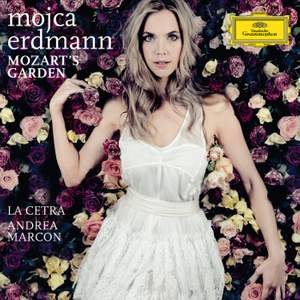
Bach, J C: | À qui pourrai-je avoir recours? (from Amadis de Gaule) | Holzbauer: | Es ist geschrieben (from Günther von Schwarzburg) Ihr Rosenstunden (from Günther von Schwarzburg) Die Klüfte sausen! (from Günther von Schwarzburg) | Mozart: | Tiger! Wetze nur die Klauen! (from Zaïde) Quando avran fine omai ... Padre, germani, addio! (from Idomeneo) Ruhe sanft, mein holdes Leben (from Zaïde) Batti, batti, o bel Masetto (from Don Giovanni) (with preceding recitative, from 'Ma se colpa io non...') Giunse alfin il momento... Deh, vieni, non tardar… (from Le nozze di Figaro) Vedrai, carino (from Don Giovanni) Ach, ich fühl's (from Die Zauberflöte, K620) Se il padre perdei (from Idomeneo) | Paisiello: | Il mio ben quando verrà (from Nina, o sia La pazza per amore) | Salieri: | Par les larmes dont votre fille (from Les Danaïdes) Père barbare, arrache-moi la vie! (from Les Danaïdes) |
Mojca Erdmann’s Deutsche Grammophon recording debut combines a variety of Mozart’s best beloved arias and works by his contemporaries such as J.C. Bach, Holzbauer, and Paisiello. The album also features Andrea Marcon and the outstanding period instrumentalists of La Cetra Baroque Orchestra, Basle. Plans in 2011 include her debut at New York’s Metropolitan Opera as Zerlina in a new Don Giovanni. “Agile, clean, bright: Mojca Erdmann’s soprano voice was made for Mozart...it’s easy to enjoy her natural ease and golden glow, backed by high-class playing from Andrea Marcon and the Basel period orchestra, La Cetra. The booklet has plenty of starstruck pictures.” The Times, 30th April 2011 **** “The two arias from Zaide show off Erdmann's strengths: the outer sections of 'Tiger!' are full of fire, and 'Ruhe sanft' is delicate without being merely pretty...Erdmann's spirited, impeccably tuned soprano is a delight to hear, and this unhackneyed recital is richly enjoyable.” Gramophone Magazine, July 2011 “Erdmann clearly has a lot going for her in terms of sheer musicianship. A notably well-schooled artist, she shapes phrases (in 'Ruhe sanft', to name one example) with a precision that is almost clinical...Marcon and La Cetra, his brilliant period-instrument orchestra, support the soprano with considerable sensitivity.” International Record Review, July 2011 “Erdmann is certainly an interpreter of major gifts, most obvious in the more regular Mozart assignments, which all possess dramatic individuality as well as musical and vocal distinction...But contributing just as much to the disc's success is the orchestral playing under Andrea Marcon. The Basel-based period-instrument ensemble maximises the characterful elements of the writing throughout.” BBC Music Magazine, July 2011 **** | | | Usually despatched in 2 - 3 working days. |
|
|
| |  | Lola Artôt de Padilla
Bizet: | Parle-moi de ma mère (from Carmen) | Humperdinck: | Ach, ich bin allein (Königskinder) Bin ein lustiger Jägersmann (from Königskinder) Sieh her, ob mir Hunger die Glinder entziert (Königskinder) | Leoncavallo: | Stridono lassù (from I Pagliacci) | Mozart: | Non so più cosa son, cosa faccio (from Le nozze di Figaro) Sung in German Voi che sapete (from Le nozze di Figaro) Sung in German Batti, batti, o bel Masetto (from Don Giovanni) Sung in German Vedrai, carino (from Don Giovanni) Sung in German Crudel! perché finora farmi languir così? (from Le nozze di Figaro) Sung in German Ach, ich fühl's (from Die Zauberflöte, K620) | Puccini: | Tu? Tu? Piccolo iddio (from Madama Butterfly) Sung in German Che tua madre dovrà prenderti in braccio (from Madama Butterfly) Sung in German Un bel di vedremo (from Madama Butterfly) Sung in German O soave fanciulla (from La Bohème) | Thomas, Ambroise: | Mignon - Excerpts Sung in German | Verdi: | O patria mia (from Aida) Sung in German D'amor sull'ali rosee (from Il Trovatore) Sung in German Surta è la notte...Ernani! Ernani, involami (from Ernani) Sung in German Un dì felice, eterea (from La traviata) Parigi, o cara (from La Traviata) |
Lola Artôt de Padilla (soprano) with Bella Alten & Luise Perard-Petzl Although she was born near Paris in 1876, her career had closer ties to Germany than to France. Her debut was in Wiesbaden as Mignon in 1902 and she moved to Berlin in 1905. She sang many roles at the Staatsoper including Carmen, Violetta and Mignon and retired from the stage in 1927. She later made guest appearances in Holland, Scandinavia and several German opera houses. | | | Usually despatched in 2 - 3 working days. |
|
|
| |  | Selma Kurz Volume 2
Arditi: | Il Bacio L'Estasi | Auber: | Air et variations (from Les diamants de la couronne) | Bellini: | Ah! non giunge uman pensiero (from La Sonnambula) O rendetemi la speme...Qui la voce sua soave...Vien, diletto (from I Puritani) | Bizet: | Deh, vieni del zeffiro a vol (from La Jolie Fille de Perth) | Delibes: | Où va la jeune Indoue? 'Bell Song' (from Lakmé) Sung in German | Donizetti: | So anch'io la virtu magica (from Don Pasquale) | Gounod: | Ah! Je veux vivre dans ce rêve (from Roméo et Juliette) | Meyerbeer: | Nobles seigneurs, salut! (from Les Huguenots) Sung in German C’est bien lui … La, la, la, air chéri (from L'etoile du nord) Sung in German | Mozart: | Ach ich liebte, war so glücklich (from Die Entführung aus dem Serail) Batti, batti, o bel Masetto (from Don Giovanni) Deh vieni, non tardar (from Le nozze di Figaro) | Strauss, J, II: | Frühlingsstimmen Walzer Op. 410 | Verdi: | Surta è la notte...Ernani! Ernani, involami (from Ernani) D'amor sull'ali rosee (from Il Trovatore) Saper vorreste (from Un Ballo in Maschera) Mercè, dilette amiche 'Bolero' (from I Vespri Siciliani) Tu che la vanità (from Don Carlo) |
Selma Kurz (1874-1933) ranks amongst the leading coloratura-voices of this century. The stupendous brilliance and the incredible ease with which she mastered the most difficult and breakneck coloratura-passages were and are truly impressive. Recordings made by the Gramophone label 1911-13 | | | Usually despatched in 2 - 3 working days. |
|
|
| |  | Licia Albanese
“One of the most delicate, sighing, judiciously used women’s voices one might ever hear.” That was the verdict of the tenor Giacomo Lauri-Volpi, writing in his fascinating study of the leading singers of his time, Voci parallele (Bologna ed. 1977). “Licia Albanese,” he says, “would move on stage purposefully, with precision, painting her tones with careful control of her means and a clear perception of their end”. Audiences were captivated by an effect of modesty, simplicity and tenderness but behind that effect was a solid mastery of her art. He, the senior artist, is full of admiration. But he has a warning: we should not suppose that these fixed, fossilised, mummified objects we call records can convey the individuality, the true character of such singers. So: caveat emptor. Lauri-Volpi had his own way of putting things (that adjective ‘sighing’ surprises us, not so much in itself as in its placing, second among the primary characteristics of the singer he is describing, and one may well object that records, however ‘fixed’, can at least sing to us, which is more than fossils and mummies can do). There is still something in what he says. He is thinking of Albanese’s particular kind of art: that delicate, ‘sighing’ quality which he hears inwardly, summoned up in a memory that is visual as well as aural and which is scarcely to be ‘fixed’, held still. Its essence lies in the moving, breathing individual. He speaks of her strong intuitive faculties. She knew what she was going to do next, vocally and dramatically – but what the audience experienced was the sense of an assured spontaneity. In the theatre you felt that her singing and her movements might take any number of forms: in a recording it will always take one. The living being is caught, pinned-down, captured; and that’s not the way she was. Extract from the booklet note John Steane, 2008 “The Italian born, American soprano enjoyed a mammoth Met career and the endorsement of Toscanini. Both are understandable on the evidence of this attractive collection.” BBC Music Magazine, August 2008 **** | | | Usually despatched in 4 - 5 working days. |
|
|
| |  | Bellini, Mozart & Gluck Opera ExcerptsSung in German
| | | Usually despatched in 4 - 5 working days. |
|
|
| |
|