All recordingsPrices shown exclude VAT. (UK tax is not payable for deliveries to United States.) See Terms & Conditions for p&p rates. | |  | Ohne Worte
Mendelssohn: | Song without Words, Op. 38 No. 6 in A flat major 'Duetto' Im Grünen (wds. Voss) Suleika (Goethe/von Willemer) Op. 34 No. 4 Schilflied, Op. 71 No. 4 Andres Maienlied (‘Hexenlied') Op. 8/8 | Schubert: | Sonata in A minor 'Arpeggione', D821 Herbst, D945 Der Jüngling an der Quelle, D300 (Salis-Seewis) Ständchen 'Leise flehen meine Lieder', D957 No. 4 Auf dem Wasser zu singen, D774 Du bist die Ruh D776 (Rückert) | Schumann: | Du bist wie eine Blume, Op. 25 No. 24 Ich will meine Seele tauchen (No. 5 from Dichterliebe, Op. 48) Widmung, Op. 25 No. 1 Mein Schöner Stern! Op. 101 No. 4 Venetianische Lied, Op. 25 No. 18 Mondnacht (No. 5 from Liederkreis, Op. 39) |
Nils Mönkemeyer (viola), Nicholas Rimmer (piano) | | | In stock - usually despatched within 1 working day. |
|
|
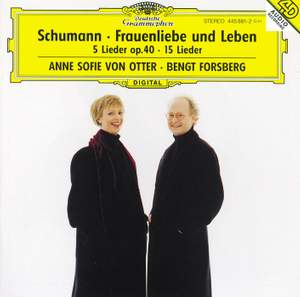
| |  | Schumann - Frauenliebe und Leben
Schumann: | Frauenliebe und -leben, Op. 42 Lieder (5), Op. 40 Lust der Sturmnacht, Op. 35 No. 1 Dein Angesicht, Op. 127 No. 2 Die Löwenbraut, Op. 31 No. 1 Die Kartenlegerin, Op. 31 No. 2 Abendlied, Op. 107 No. 6 Die Meerfee Op. 125 No. 1 Stille Liebe, Op. 35 No. 8 Des Sennen Abschied, Op. 79 No. 22 Der Schatzgräber, Op. 45 No. 1 Die Soldatenbraut Op. 64 No. 1 Mein Schöner Stern! Op. 101 No. 4 Schneeglöckchen, Op. 79 No. 26 Volksliedchen, Op. 51 No. 2 Vom Schlaraffenland Op. 79/5 Rose, Meer und Sonne , Op. 37 No. 9 |
| | | In stock - usually despatched within 1 working day. |
|
|
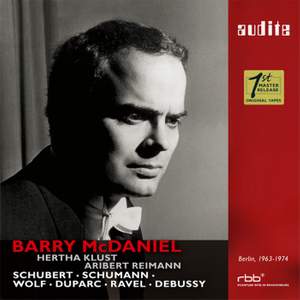
| |  | Barry McDaniel sings Schubert, Schumann, Wolf, Duparc, Ravel & Debussy
Debussy: | Le promenoir des deux amants | Duparc: | Chanson triste Lamento Le Manoir de Rosemonde Extase Soupir Phidylé | Ravel: | Trois chansons madécasses Eberhard Finke (cello) & Karlheinz Zoeller (flute) | Schubert: | Der Winterabend (Es ist so still), D938 Herbst, D945 Dass sie hier gewesen! D775 (Rückert) Der Einsame, D800 Fahrt zum Hades, D526 (Mayrhofer) Der Jungling und der Tod, D545 (Spaun) Sprache der Liebe D410 (A W von Schlegel) Fischerweise, D881 (Schlechta) Über Wildemann D884 (Ernst Schulze) Auflösung, D807 | Schumann: | Gedichte (6) und Requiem, Op. 90 Nachtlied, Op. 96 No. 1 Der Spielmann, Op. 40, No. 4 Zigeunerliedchen I & II Verratene Liebe, Op. 40, No. 5 Provencalisches Lied, Op. 139 No. 4 Mein Schöner Stern! Op. 101 No. 4 Aus den hebräischen Gesängen, Op. 25 No. 15 Ihre Stimme Op. 96 No. 3 (August von Platen) | Wolf, H: | An eine Æolsharfe (No. 11 from Mörike-Lieder) Heimweh (No. 37 from Mörike-Lieder) Lebe wohl (No. 36 from Mörike-Lieder) Nimmersatte Liebe (No. 9 from Mörike-Lieder) Der Tambour (No. 5 from Mörike-Lieder) Abschied (No. 53 from Mörike-Lieder) |
Barry McDaniel (baritone), Hertha Klust (piano) & Aribert Reimann (piano) The American baritone Barry McDaniel was one of the outstanding singers of the post-war era. As a successful opera singer and Lieder interpreter, he enjoyed a long and eventful career, both in Germany and abroad. Despite numerous performances and many recordings for radio and television, he nonetheless remained largely unnoticed by the media, partly because his name almost vanished in the shadow of Dietrich Fischer-Dieskau, who was five years his senior. Unjustly so, since the two singers were equals as artists, albeit with different characters. Today, Barry McDaniel is hardly mentioned in specialist literature and one searches in vain for CDs since, until now, recordings from radio archives have not been phonographically processed. However, Audite now presents a première double CD of Lieder sung by Barry McDaniel. These studio recordings from the archives of Radio Berlin-Brandenburg (formally Sender Freies Berlin) were made between 1963 and 1974 with Hertha Klust and Aribert Reimann as accompanists. This selection of songs by Schubert, Schumann, Wolf, Duparc, Ravel and Debussy reveals diverse facets of McDaniel’s artistic personality. His interpretations are characterised by an interleaving of knowledge and naivety, feeling and craftsmanship, expression and impeccable singing. Apart from his immaculate technique, his accent-free German is particularly remarkable. Barry McDaniel moved from the USA to Germany in 1953 in order to further his studies. He then gave his first song recitals, together with Hermann Reutter, and later began a career as an opera singer. In 1961 he was engaged at the newly re-opened Deutsche Oper Berlin, where he remained for thirty-seven years. At the same time, he gave guest performances at the Vienna Staatsoper, the Metropolitan Opera New York, the Frankfurt Opera and the Munich Opera Festival, as well as broadcasting for radio and television. In addition, Barry McDaniel gave numerous song recitals, for example in Stuttgart, Karlsruhe, Hanover, Brunswick and Berlin, including, in the latter city, the first ever song recital at the newly built Philharmonie in 1963. Today, the 81-year-old baritone declares: “Whatever I sing, I have to believe in it.” That is exactly how these recordings sound. “The American Barry McDaniel inevitably sang in the shadow of Fischer-Dieskau; but this double CD reveals his deeply thoughtful baritone, in superbly accompanied Lieder and melodie.” BBC Music Magazine, June 2012 **** | | | (also available to download from $21.00) | Usually despatched in 3 - 4 working days. (Available now to download.) |
|
|
| |  | Schumann: Dichterliebeand selected songs
Schumann: | Dichterliebe, Op. 48 Belsazar, Op. 57 Mein Schöner Stern! Op. 101 No. 4 Ihre Stimme Op. 96 No. 3 (August von Platen) Die Sennin, Op. 90 No. 4 Liebesbotschaft, Op. 36 No. 6 Der Spielmann, Op. 40, No. 4 Alte Laute, Op. 35, No. 12 Du bist wie eine Blume, Op. 25 No. 24 Meine Rose, Op. 90 No. 2 Drei Gedichte von Emanuel Geibel, Op. 30 |
Daniel Johannsen (tenor) & Elena Larina (piano) The most prolific period of Schumann’s vocal composition began in 1840, in which he composed more than 140 songs, with the culmination being Dichterliebe. Award-winning tenor Daniel Johannsen and his duo partner, Elena Larina, consistently emphasize the compositional subtleties of these fine songs. “By nature, the Austrian tenor's voice is clear in definition and tone...It sounds like the expression of a sharp mind with a good deal of cunning about it - this is Dichterliebe sung by Wagner's Loge...Larina (we must suppose) sees the role of the pianist in this score not as part of the poet's introspective, lyrical mind but as an external, dramatic commentary.” Gramophone Magazine, December 2010 | | | (also available to download from $10.50) | Usually despatched in 4 - 5 working days. (Available now to download.) |
|
|
| |  | Ohne Worte (Without Words)
Mendelssohn: | Song without Words, Op. 38 No. 6 in A flat major 'Duetto' Minnelied im Mai 'Holder klingt der Vogelsang', Op. 8 No. 1 Suleika (Goethe/von Willemer) Op. 34 No. 4 Schilflied, Op. 71 No. 4 Andres Maienlied (‘Hexenlied') Op. 8/8 Venetianisches Gondellied No. 2, Op. 25, No. 18 Mondnacht, Op. 39, No. 5 | Schubert: | Sonata in A minor 'Arpeggione', D821 Ständchen 'Leise flehen meine Lieder', D957 No. 4 Herbst, D945 Der Jüngling an der Quelle, D300 (Salis-Seewis) Auf dem Wasser zu singen, D774 Du bist die Ruh D776 (Rückert) | Schumann: | Du bist wie eine Blume, Op. 25 No. 24 Verratene Liebe, Op. 40, No. 5 Widmung, Op. 25 No. 1 Mein Schöner Stern! Op. 101 No. 4 |
Nils Mönkemeyer & Nicholas Rimmer Mentors like Gerhard Schulz (Alban Berg Quartet) and Yuri Bashmet have already predicted that a great career lies ahead of the 30-year-old violist Nils Mönkemeyer. He is already one of his generation's leading viola players, with many competition wins to his name, including the UK’s Parkhouse Award in 2009, and the International Yuri Bashmet Competition in 2006. For his Sony Classical début Ohne Worte (Without Words), the young musician from Bremen and his English piano partner Nicholas Rimmer have put together a recital programme that highlights the viola's 'voice-like' qualities. To this end, lieder by Schubert, Mendelssohn and Schumann have been arranged as songs without words for the viola. The recital is completed by Schubert's Arpeggione sonata in the version for viola and piano. In selecting the songs to arrange, Mönkemeyer chose songs such as Schubert’s Ständchen, where the emphasis is first and foremost on the vocal line rather than the lyrics. The same applies to the songs by Schumann, which include lieder from well-known song cycles Liederkreis and Dichterliebe. By way of contrast, the remaining works heard here by Mendelssohn and Schubert are arrangements of original instrumental pieces. Mendelssohn composed his Songs Without Words for the piano, while Franz Schubert originally wrote his Arpeggione sonata of 1823 for the six-stringed instrument of the same name. "There are fewer acrobatics involved on the viola", says Mönkemeyer; "the melodies flow more naturally and major leaps are avoided. That makes it all the more clear that the underlying idea that inspired this sonata is that of a song." | | | Usually despatched in 3 - 4 working days. |
|
|
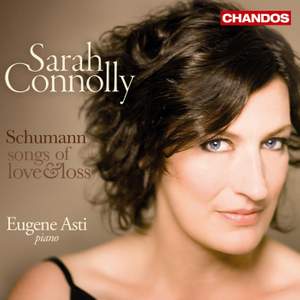
| |  | Schumann - Songs of Love and Loss
The British mezzo-soprano Sarah Connolly, twice nominated for a Grammy, here performs a collection of songs by Robert Schumann, which combines two song cycles from the extremely prolific song year 1840 with several songs from the composer’s last years. She is accompanied by Eugene Asti. Sarah Connolly fell in love with Schumann’s songs in her youth. She has sung them since her early days as a performer and in the booklet she and Eugene Asti write, ‘at the heart of Schumann’s music on this recording lie a profound melancholy and a personal and completely honest, open-hearted empathy for the poetry, which is totally disarming. All the stories and situations depicted in these songs were so much a part of the composer’s own life experience that we just cannot help but be touched and moved by them. Perhaps it is for these reasons that our love for Schumann is especially great, and we feel privileged to be able to share this extraordinary music with you’. It is often claimed that Schumann’s late songs, which include the first seven on this CD, show a composer in decline – a charge that is refuted by such wonderful Lieder as the Wilhelm Meister settings and ‘Nachtlied’ (Goethe), ‘Der Einsiedler’ (Eichendorff), ‘Aufträge’ (L’Egru), ‘Mein schöner Stern!’ (Rückert), ‘Requiem’ (Dreves), the Lenau settings of Op. 90 and the Gedichte der Königin Maria Stuart, all of which are as fine as anything Schumann wrote in 1840, his great ‘song’ year. The album’s key work is the rarely recorded Gedichte der Königin Maria Stuart, songs on five poems attributed to Mary, Queen of Scots. They were his last Lieder and the most austere that Schumann ever wrote. He composed the set in 1852 during a period of deep depression and offered the work as a Christmas present to his wife, Clara. It is also matched here by ‘Requiem’, setting a translation by Leberecht Blücher Dreves of an old sacred Latin text. This requiem, from Op. 90, was one of four that Schumann composed in the last years of his creative life, and it seems likely that the proliferation of such settings around 1850 had symbolic import – ‘requiems, after all, are written for oneself’, as Schumann once confided to a friend. “By placing the poignant invocation of 'Mein schöner Stern', emblem-like, at the top of this artfully programmed Schumann recital, Sarah Connolly reveals much of the composer's fervent inwardness - something she and her accompanist, Eugene Asti, capture so well throughout.” BBC Music Magazine, November 2008 **** “Sarah Connolly's beautifully sung Frauenliebe und-leben often called to mind Janet Baker's early recording with Martin Isepp… Connolly, like Baker, gives the cycle a more melancholy, introspective cast than most. Connolly is magnificently desolate and accusatory in the final song of bereavement, with a graphic sense of withdrawal from the world before the healing keyboard postlude.” Gramophone Magazine, November 2008 “the intimate restraint of Connolly's singing frequently suggests the sad analysis of emotion from a retrospective or nostalgic viewpoint...[Liederkreis] is superbly done - an unnerving voyage through a soured Romantic landscape, awash with intimations of the horrors that lurk unsuspected in the corners of the psyche.” The Guardian, 14th November 2008 **** | | | (also available to download from $10.50) | Usually despatched in 2 - 3 working days. (Available now to download.) |
|
|
| |  | Schumann - Lieder
Schumann: | Widmung, Op. 25 No. 1 Mein Schöner Stern! Op. 101 No. 4 Zwei Lieder der Braut Die Soldatenbraut Op. 64 No. 1 Das verlassene Mägdlein, Op. 64 No. 2 Er ist's! Op. 79 No. 23 (Eduard Mörike) Mignon (Kennst du das Land?) Op. 98a No. 1 (Johann Wolfgang von Goethe) Nur wer die Sehnsucht kennt Op. 98a No. 3 (Johann Wolfgang von Goethe) Heiss' mich nicht reden Op. 98a No. 5 (Johann Wolfgang von Goethe) Singet nicht In Trauertönen Op. 98a No. 7 (Johann Wolfgang von Goethe) So lasst mich scheinen Op. 98a No. 9 (Johann Wolfgang von Goethe) Du bist wie eine Blume, Op. 25 No. 24 Der arme Peter, Op. 53 No. 3 Die Lotosblume, Op. 25 No. 7 Was will die einsame Träne, Op. 25 No. 21 Erstes Grün, Op. 35 No. 4 Frauenliebe und -leben, Op. 42 Mondnacht (No. 5 from Liederkreis, Op. 39) Der Nussbaum, Op. 25 No. 3 |
"Hendricks' slender, sweet-toned soprano, with its distinctive quick vibrato, is still in fine shape." Gramophone | | | Usually despatched in 3 - 4 working days. |
|
|
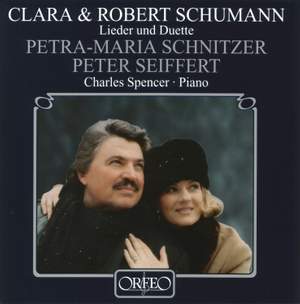
| |  | Clara & Robert Schumann - Lieder und Duette
Petra-Maria Schnitzer (soprano), Peter Seiffert (tenor), Charles Spencer (piano) | | | Usually despatched in 3 - 4 working days. |
|
|
| |  | Gérard Souzay - Schumann Lieder Recital
Recorded 1975 & 1971 | | | Usually despatched in 4 - 5 working days. |
|
|
| |  | Schumann - Lieder
Schumann: | Widmung, Op. 25 No. 1 Freisinn, Op. 25 No. 2 Talismane, Op. 25 No. 8 Hochländers Abschied, Op. 25 No. 13 Rätsel, Op. 25 No. 16 Hauptmanns Weib, Op. 25 No. 19 Niemand, Op. 25 No. 22 Aus den östlichen Rosen, Op. 25 No. 25 Lieder und Gesänge I, Op. 27 Drei Gedichte von Emanuel Geibel, Op. 30 Die Löwenbraut, Op. 31 No. 1 Sechs Gedichte aus dem Liederbuch eines Malers, Op. 36 Zwölf Gedichte aus Liebesfrühling Op. 37 Liederkreis, Op. 39 Märzveilchen, Op. 40, No. 1 Der Soldat, Op. 40, No. 3 Der Spielmann, Op. 40, No. 4 Verratene Liebe, Op. 40, No. 5 Der Schatzgräber, Op. 45 No. 1 Liederkreis, Op. 24 Gedichte (12) von Justinus Kerner Op. 35 Dichterliebe, Op. 48 Lieder und Gesänge Op. 51 Romanzen und Balladen III, Op. 53 Tragödie Op. 64 No. 3 Spanisches Liederspiel, Op. 74 Liederalbum für die Jugend, Op. 79 Drei Gesänge, Op. 83 Sechs Gesänge, Op. 89 An den Mond, Op. 95 Nachtlied, Op. 96 No. 1 Schneeglöckchen Op. 96 No. 2 (anonymous) Ihre Stimme Op. 96 No. 3 (August von Platen) Ballade des Harfners, Op. 98a No. 2 Wer nie sein Brot mit Tränen ass, Op. 98a No. 4 Wer sich der Einsamkeit ergibt, Op. 98a No. 6 An die Türen will ich schleichen, Op. 98a No. 8 Mein Schöner Stern! Op. 101 No. 4 Der Gärtner, Op. 107 No. 3 Der Gärtner, Op. 107 No. 3 Vier Husarenlieder Op. 117 Warnung Op. 119 No. 2 (Gustav Pfarrius) Die Meerfee Op. 125 No. 1 Jung Volkers Lied, Op. 125 No. 3 Husarenabzug, Op. 125 No. 2 Dein Angesicht, Op. 127 No. 2 Spanische Liebeslieder Op. 138 (selection) Nos. 2, 3, 5 & 7 Provencalisches Lied, Op. 139 No. 4 Trost im Gesang, Op. 142 No. 1 Lehn deine Wang' Op. 142 No. 2 Mein Wagen rollet langsam, Op. 142 No. 4 Schön Hedwig Op. 106 Vom Heideknaben Op. 122 Nos. 1 & 2 Sechs frühe Lieder, Op. post. (WoO 21) |
“most impressive when considered in detail against other versions of these much-recorded works. Eschenbach's accompaniments are superb, consistently imaginative.” Penguin Guide, 2010 edition *** | | | Usually despatched in 2 - 3 working days. |
|
|
| |
|