All recordingsPrices shown exclude VAT. (UK tax is not payable for deliveries to United States.) See Terms & Conditions for p&p rates. | |  | Schubert - Lieder
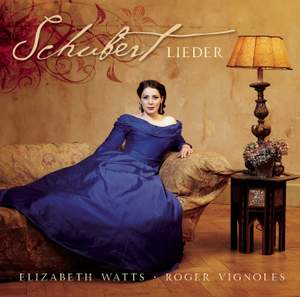
Schubert: | An den Mond, D193 Suleika I, D720 Im Abendrot, D799 Sei mir gegrüsst! D741 (Rückert) Die Forelle, D550 Heimliches Lieben D922 (Klenke) Der Sänger am Felsen, D482 Thekla, D595 (Schiller) An die Sonne D270 Aus 'Diego Manzanares', Ilmerine D458 Nacht und Träume, D827 Frühlingsglaube, D686 Die Blumensprache D519 (Platner) Nähe des Geliebten, D162 An die Nachtigall, D497 Liane, D298 (Mayrhofer) Das Madchens Klage, D191 (Schiller) Nachtviolen D752 (Mayrhofer) Marie D658 (Novalis) Lambertine, D301 (Stoll) Die Männer sind méchant, D866 No. 3 |
SONY BMG Masterworks is delighted to present the debut solo album by soprano Elizabeth Watts. Born in 1979, Elizabeth has already garnered an impressive list of accolades, including reaching the final and winning the prestigious Rosenblatt Recital Song Prize at the 2007 Cardiff Singer of the World Competition, winning the Kathleen Ferrier Prize in 2006, the MIDEM Classique Award for Outstanding Young Artist Award in 2007, and has also been selected for BBC Radio 3’s New Generation Artists Scheme. “…Watt's youthful, radiant delivery, with no flaws in technique that I can hear, fits many of the Lieder like a glove.” BBC Music Magazine, January 2009 **** “A voice in its first, radiant freshness is always to be cherished in Schubert. Watts is a thoughtful interpreter, too, alive to mood and atmosphere… Crucially, she also brings a measure of innocence and simplicity - not quite the same thing as artlessness - to many of these songs, allied to a technical mastery that allows her to spin a rapt, unblemished line in "Nacht und Träume".” Gramophone Magazine, February 2009 “Hailed as a singer to watch after winning the 2006 Kathleen Ferrier Award and the 2007 Cardiff Song Prize, Elizabeth Watts makes her CD debut with this refreshingly unhackneyed Schubert programme. Perennial soprano favourites – DieForelle, Nacht und Träume, Frühlingsglaube, Suleika – are not shunned. But Watts has alighted on some rarely aired gems. How often in recital do we hear the agitated scena-in-miniature AusDiego Manzanares; or the playfully charming paean to spring Die Blumensprache; or the Novalis setting Marie, where sacred and profane blur in a song of exquisite, rarefied grace? A voice in its first, radiant freshness is always to be cherished in Schubert. Watts is a thoughtful interpreter, too, alive to mood and atmosphere, colouring her tone in response to a darkening of the harmony in, say, Sei mir gegrüsst. Crucially, she also brings a measure of innocence and simplicity – not quite the same thing as artlessness – to many of these songs, allied to a technical mastery that allows her to spin a rapt, unblemished line in Nacht und Träume. Encouraged by Vignoles's buoyant accompaniment, she makes an engaging story-teller in Die Forelle, with an unexaggerated touch of indignation at the angler's treachery; and she sings the mildly salacious refrain song Die Männer sind méchant with just the right wide-eyed mock-pathos. Quibbles? Well, in one or two songs, including the opening An den Mond, Watts struck me as overly languid. She treats Nähe des Geliebten as an elegiac litany, where, say, Janet Baker, choosing a more mobile tempo and finding greater variety from verse to verse, sings it as a passionate avowal of love. Watts also emphasises melancholy over excited anticipation in Frühlingsglaube and Suleika. Here and elsewhere, Watts under-exploits the expressive potential of German consonants. That said, highlights are lovely performances of Nachtviolen – the high tessitura effortlessly negotiated – or the Mozartian barcarolle Liane: just two songs among many where the vernal purity of Watts's tone and the grace of her phrasing are priceless assets.” Gramophone Classical Music Guide, 2010 | | | In stock - usually despatched within 1 working day. |
|
|
| |  | The Hyperion Schubert Edition - Complete Songs Volume 19Songs about flowers and nature
'Rarely can one find a recording where every single aspect - repertoire, performance and production - is perfect. This is. Highest imaginable recommendation' (In Tune, Japan) | | | In stock - usually despatched within 1 working day. |
|
|
| |  | Humperdinck: Klavierlieder
Humperdinck: | Oft sinn’ ich hin und wieder, EHWV 42 Der Ungenannten, EHWV 41 Das zerbrochene Ringlein, EHWV 43 Die Wasserrose, EHWV 58 Lied der Margaretha, EHWV 78 Winterlied, EHWV 90 Sonntagsruhe, EHWV 95 Liebesorakel, EHWV 104 Lied vom Gluck, EHWV 51 Romanze, EHWV 28 Junge Lieder, EHWV 107: No.5 Flattern Junge Lieder, EHWV 107: No.6 Geheimnis Junge Lieder, EHWV 107: No.7 Entsagung Wiegenlied, EHWV 146 Am Rhein, EHWV 120 Zeitlied I, EHWV 122 Unter der Linden, EHWV 125 Verratene Liebe, EHWV 126 Die Lerche, EHWV 94 Das Licht der Welt, EHWV 132 Weihnachten, EHWV 111 Altdeutsches Weihnachtslied, EHWV 153 Der Stern von Bethlehem, EHWV 114 Christkindleins Wiegenlied, EHWV 137 Weihnachtsfreude, EHWV 139 Bunte Welt, EHWV 142: No.2 Abendlied An die Nachtigall, EHWV 163 Lied fur die Krone in Assmanhusen, EHWV 165 | Schubert: | Die Blumensprache D519 (Platner) |
Engelbert Humperdinck is normally reduced to his greatest success, the opera “Hänsel and Gretel”. Here we can hear that besides that Humperdinck was really a master of the romantic Lied. The CD brings songs from his student days to eventide, sung by Andreas Schmidt and by Susan Anthony, one of the most sought-after sopranos in Europe. | | | Usually despatched in 4 - 5 working days. |
|
|
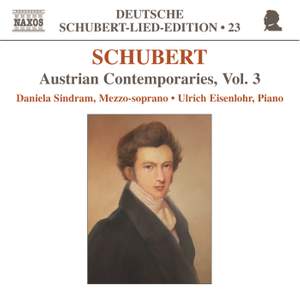
| |  | Volume 23 - Austrian Contemporaries Volume 3
Schubert: | Himmelsfunken, D651 Der Mondabend, D141 Berthas Lied in der Nacht, D653 Cora an die Sonne D263 (Baumberg) Mein Gruss an den Mai, D305 ('Ermin') Die Blumensprache D519 (Platner) Der Blumen Schmerz D731 (Majlath) Das Lied im Grünen, D917 Frühlingslied D919 (Pollak) An die Sonne D270 Lambertine, D301 (Stoll) Blondel zu Marien, D626 Der Morgenkuss, D264 Die Unterscheidung D866/1 (Seidl) Die Männer sind méchant, D866 No. 3 Das Echo D990C, formerly D868 (Castelli) Die Liebe D522 (Leon) Ammenlied D122 (Lubi) Die Macht der Liebe D308 (Kalchberg) Abendbilder, D650 |
Daniela Sindram (mezzo-soprano) & Ulrich Eisenlohr (piano) “Thematic programmes … offer an excellent way to appreciate individual aspects of his diverse output.” The Telegraph | | | (also available to download from $6.25) | Usually despatched in 2 - 3 working days. (Available now to download.) |
|
|
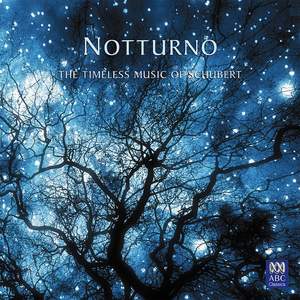
| |  | Notturno - The Timeless Music of Schubert
Schubert: | Impromptu in G flat major, D899 No. 3 Ständchen 'Leise flehen meine Lieder', D957 No. 4 Deutsche Messe, D872: Sanctus Die liebe Farbe (No. 16 from Die schöne Müllerin, D795) Wiegenlied, D498 Ave Maria, D839 Notturno in E flat major for piano trio, D897 (Op. post.148) Du bist die Ruh D776 (Rückert) Gretchen am Spinnrade, D118 Der Leiermann (No. 24 from Winterreise, D911) Die Forelle, D550 Die Blumensprache D519 (Platner) Rosamunde, D797: Romance 'Der Vollmond Strahlt auf Bergeshöh'n' An die Musik D547 Impromptu in A flat major, D899 No. 4 |
| | | Usually despatched in 2 - 3 working days. |
|
|
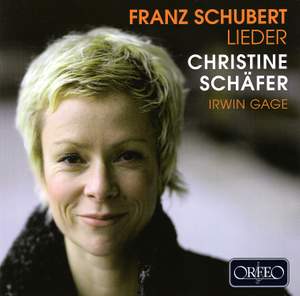
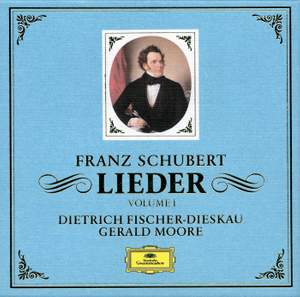
| |  | Schubert: Lieder
Schubert: | Im Frühling, D882 Die Blumensprache D519 (Platner) Die gefangenen Sänger D712 (Schlegel) Der Schmetterling D633 An den Mond, D259 (Goethe) An den Mond, D296 Die Gebüsche, D646 Der Fluss, D693 Der Knabe, D692 Nacht und Träume, D827 Im Abendrot, D799 Glaube, Hoffnung und Liebe, D955 Vom Mitleiden Maria D632 (Schlegel) Beim Winde D669 (Mayrhofer) Des Mädchens Klage I, D6 Blanka, D631 (Schlegel) Das Mädchen D652 (Schlegel) Die Rose, D745 Die junge Nonne, D828 Nähe des Geliebten, D162 |
| | | Usually despatched in 3 - 4 working days. |
|
|
| |
|