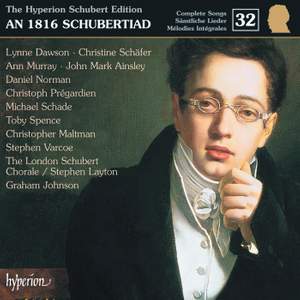
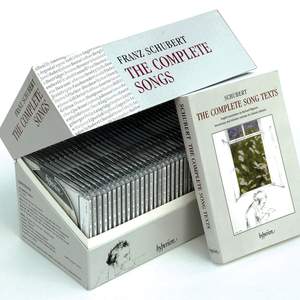
Prices shown exclude VAT. (UK tax is not payable for deliveries to United States.) See Terms & Conditions for p&p rates. | |  | The Hyperion Schubert Edition - Complete Songs Volume 32An 1816 Schubertiad
Lynne Dawson, Christine Schäfer (sopranos), Ann Murray (mezzo soprano), John Mark Ainsley, Daniel Norman, Christoph Prégardien, Michael Schade, Toby Spence (tenors), Christopher Maltman, Stephen Varcoe (baritones), Patricia Rozario Soprano, Catherine Wyn-Rogers Mezzo (soprano), Paul Agnew, Jamie Macdougall, Philip Langridge (tenors), Simon Keenlyside, Maarten Koningsberger, Stephan Loges (baritones), Neal Davies, Michael George (basses) The London Schubert Chorale, Stephen Layton 'As ever, illuminating words complement revelatory music-making' (BBC Music Magazine) “Like the previous Schubertiads in the Edition, this disc mixes solo songs and partsongs, famil- iar and unfamiliar. The only really famous work here is Der Wanderer, that archetypal expression of romantic alienation whose popularity in Schubert's lifetime was eclipsed only by that of Erlkönig. Some of the partsongs – Zum Punsche, Naturgenuss and Schlachtgesang – cultivate a vein of Biedermeier heartiness that wears a bit thin today. Nor will Schubert's consciously archaic tribute to his teacher Salieri have you itching for the repeat button – though, like several other numbers, it shows the 19-year-old composer rivalling Mozart in his gift for musical mimicry. To compensate, though, there are partsongs like the sensual Der Entfernten, with its delicious languid chromaticisms, and the colourful setting of Gott im Ungewitter. The slight but charming setting of Das war ich is appealingly done by the light-voiced Daniel Norman, and Ann Murray brings her usual charisma and dramatic conviction to the pathetic Italian scena Didone Abbandonata. Christine Schäfer is equally charismatic in the unjustly neglected Die verfehlte Stunde (recorded here for the first time), catching perfectly the song's mingled yearning and ecstasy and negotiating the mercilessly high tessitura with ease. Other happy discoveries include Schubert's virtually unknown third setting of Des Mädchens Klage, with its soaring lines, a melancholy tale of courtly love, sung by Christoph Prégardien with as much drama and variety as the music allows, and the surging Entzückung ('music for an infant Lohengrin,' as Graham Johnson puts it), for which Toby Spence has both the flexibility and the necessary touch of metal in the tone. Doubts were fleetingly raised by Lynne Dawson's slight tremulousness in Des Mädchens Klage, and by Christopher Maltman's prominent vibrato at forte and above in an otherwise involving performance of Der Wanderer. But, these cavils apart, no complaints about the singing or the vivid accompaniments.” Gramophone Classical Music Guide, 2010 | | | In stock - usually despatched within 1 working day. |
|
|
| |  | Schubert: Nachtmusik
Schubert: | Vorüber die stöhnende Klage, D53 Ein jügendlicher Maienschwung, D61 Geist der Liebe D747 (Matthisson) German Dance D365 No. 19 German Dance D365 No. 2 'Trauerwalzer' German Dance D365 No. 29 Der Gondelfahrer, D809 Der Entfernten D331 (Salis-Seewis) German Dance D783 No. 10 Deutsche Tanze D969 No. 9 Ruhe, schönstes Glück der Erde D657 Minuet in A major, D334 Wein und Liebe D901 Nachthelle, D892 (Seidl) German Dance D365 No. 36 German Dance D365 No. 34 German Dance D365 No. 35 Räuberlied, D435 No. 13 Die Nacht, D983c Piano Sonata No. 13 in A major, D664: Andante Grab und Mond, D893 Ländler D790 No. 5 Ländler D790 No. 6 German Dance D783 No. 15 Der Geistertanz D494 (Matthisson) Das Grab D330 (Salis-Seewis) Waltz D844 |
This CD features Schubert's choral songs. He used emotionally charged texts dealing with romantic topics and the themes of the songs are often highly melancholic or even despondent. Schubert is able to express the atmosphere and contents of a poem in a concise way which is well illustrated by these performances. | | | Usually despatched in 2 - 3 working days. |
|
|
| |  | Sehnsucht - The Gents
Röntgen: | Hoffnung ('Letzte Lust und letzte Blüten') Fiesole ('Alles Tosen ist zerstoben') | Schubert: | Sehnsucht (Nur wer die Sehnsucht kennt), D656 Die Nacht, D983c Ständchen 'Zögernd leise', D920/921 Grab und Mond, D893 Der Entfernten D331 (Salis-Seewis) Nachtviolen D752 (Mayrhofer) Nachtstück, D672 (Mayrhofer) Abendstern, D806 An Sylvia, D891 | Schumann: | Die Lotosblume, Op. 33 No. 3 Die Rose stand im Tau, Op. 65 No. 1 Der träumende See Op. 33 Nr. 1 | Strauss, R: | Vor den Türen, Op. 123 No. 1 Traumlicht, No. 2 of Drei Männerchöre AV123 | Wolf, H: | Sechs Geistliche Lieder |
The nineteenth century was a golden age for choral singing in Germany and Austria. Beginning in 1810, singing clubs, and later on, choral societies, shot up all over this part of the world like mushrooms. You could join a Liedertafel, Liederkranz, or Männersangverein. Carl Friedrich Zelter, Mendelssohn’s teacher and the leader of the Berliner Singverein, was the first person to use the term “Liedertafel” in 1808. The term was used to indicate an informal meeting of poets, composers, and singers who came together to sing German partsongs. In a letter addressed to Goethe, Zelter explained that the 25 members of his Liedertafel were accustomed to sit down at a well-furnished table for a sumptuous dinner followed by an evening of singing. Zelter’s group preferred original works, so freshly composed that the ink was still wet. The goal was stimulation and promotion of German poetry and music. The Gents is unique All-male Dutch vocal ensemble that obtained in a very short period a prominent place within the international music world. The group of young singers is praised because of their special sound, the large degree of flexibility and the unequalled interpretation of the very divergent vocal repertoire. Whether it concerns religious music from the Renaissance, romantic English music, arrangements of contemporary jazz and pop songs or especially composed works for the ensemble, the concerts of The Gents are always an extraordinary experience. The concerts can count therefore on enthusiastic public and positive criticisms in the press. “Hypnotically homogenous of timbre, hushed and soft-focused, The Gents clearly relish Schubert's songs of night and of yearning” BBC Music Magazine “The 18-strong Dutch ensemble bring to their enterprising programme the essential technical finesse: a rounded, unforced sonority, refined chording and balance (un-hooty male altos blend euphoniously with the high tenors on the top lines), and near-perfect intonation...They are always alive to the sound and sense of the words” Gramophone Magazine, August 2010 | | | Usually despatched in 4 - 5 working days. |
|
|
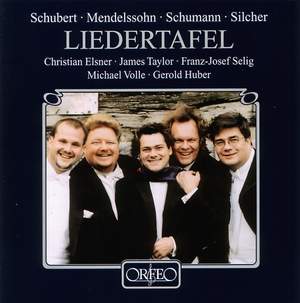
| |  | Liedertafel
Mendelssohn: | Wasserfahrt, Op. 50 No. 4 Sommerlied 'Wie Feld und Au' so blinkend im Thau', Op. 50 No. 3 Abendständchen Op. 75 Nr. 2 | Schubert: | Die Nachtigall, D724 Der Entfernten D331 (Salis-Seewis) Widerspruch D865 (Seidl) Trinklied D148 (Castelli) Trinklied aus dem 16. Jahrhundert D847 Op. post. 155 Trinklied, D75 Im Gegenwärtigen Vergangenes, D710 Grab und Mond, D893 Der Gondelfahrer, D809 Die Nacht, D983c Abendfrieden La Pastorella, D513 Zur guten Nacht, Op. 81 No. 3 D903 | Schumann: | Der träumende See Op. 33 Nr. 1 Die Minnesänger, Op. 33 Nr. 2 Die Lotosblume, Op. 33 No. 3 | Silcher: | Loreley Frisch gesungen Entschuldigung Der lustigen Doktoren Leibliedlein Untreue ('In einem kühlen Grunde') |
| | | Usually despatched in 3 - 4 working days. |
|
|
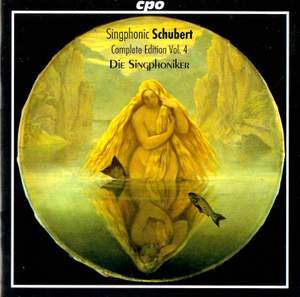
| |  | Schubert: Complete Part Songs for Male Voices, Vol. 4
Schubert: | Gold'ner Schein, D357 Andenken, D423 Erinnerung, D424 Widerhall, D428 Der Geistertanz D494 (Matthisson) Totengräberlied, D38 Mailied, D129 Willkommen, lieber schöner Mai, D244 Liebe säuseln die Blätter, D988 Trinklied im Winter, D242 Frühlingslied (Die Luft ist blau) D243 Trinklied im Mai, D427 Klage um Ali Bey D140 (Claudius) Der Entfernten D331 (Salis-Seewis) Die Einsiedelei (G minor), D337 (Text: J. G. von Salis-Seewis) Fischerlied, D364 Lied im Freien, D572 Zum Rundetanz, D983b Schlachtlied, D912 |
Anton Rosner (tenor) Die Singphoniker | |
|
| |  | O Magnum Mysterium
| | | Usually despatched in 4 - 5 working days. |
|
|
| |
|