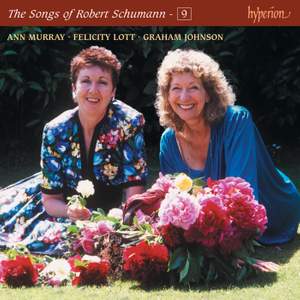
All recordingsPrices shown exclude VAT. (UK tax is not payable for deliveries to United States.) See Terms & Conditions for p&p rates. | |  | The Songs of Robert Schumann - Volume 9
“In the piano pieces and songs alike, Johnson plays with luminous tone and a natural feeling for Schumannesque rubato. And as ever, his sleeve notes alone are worth the price of the disc” The Telegraph | | | In stock - usually despatched within 1 working day. |
|
|
| |  | Lucia Popp sings Schumann
Schumann: | Frauenliebe und -leben, Op. 42 Er ist's! Op. 79 No. 23 (Eduard Mörike) Frühlingslust, Op. 125 No. 5 Schneeglöckchen, Op. 79 No. 26 Frühlingsgruss Op. 79/4 Erstes Grün, Op. 35 No. 4 Mein Garten Op. 77 No. 2 Röselein, Röselein! Op. 89 No. 6 ('Wielfried von der Neun') Mit Myrten und Rosen (No. 9 from Liederkreis, Op. 24) Mignon ('Kennst du das Land, wo die Zitronen blühn'), Op. 79 No. 29 Reich mir die Hand, O Wolke, Op. 104 No. 5 |
| | | In stock - usually despatched within 1 working day. |
|
|
| |  | Diana Damrau: Recital at Baden Baden & Documentary 'Diva Divina'From the Festspielhaus Baden-Baden
Debussy: | Nuit d'étoiles Le Lilas Fleur des blés (André Girod) Claire de lune (song) Mandoline (Verlaine) Beau Soir Apparition - song (1884) Arabesque No. 1 | Fauré: | Impromptu No. 6 in D flat major for harp, Op. 86 Après un rêve, Op. 7 No. 1 Clair de Lune, Op. 46 No. 2 Sérénade toscane Op. 3 No. 2 Les berceaux, Op. 23 No. 1 Adieu, Op. 21 No. 3, from Poème d'un jour Notre amour Op. 23 No. 2 | Gounod: | Ave Maria | Schumann: | Lied der Suleika, Op. 25 No. 9 Der Nussbaum, Op. 25 No. 3 Die Lotosblume, Op. 25 No. 7 Er ist's! Op. 79 No. 23 (Eduard Mörike) Widmung, Op. 25 No. 1 | Strauss, R: | Nichts, Op. 10 No. 2 Freundliche Vision, Op. 48 No. 1 All mein Gedanken ... Op. 21 No. 1 Wiegenlied, Op. 41 No. 1 Die Nacht, Op. 10 No. 3 Morgen, Op. 27 No. 4 Kling! Op. 48 No. 3 Ständchen, Op. 17 No. 2 |
This DVD, centered on the dazzling German soprano Diana Damrau, complements a ravishing recital with a fascinating documentary. In March 2013, Damrau achieved “a daring victory” (in the words of the New York Times) when the Metropolitan Opera witnessed her first-ever performances of Verdi’s La traviata. In recent years she has made the transition from glittering, stratospheric roles such as Mozart’s Queen of the Night and Strauss’ Zerbinetta to lyrical heroines of greater emotional complexity, such as Gilda in Rigoletto, Adina in L’elisir d’amore and Lucia di Lammermoor. A series of triumphs at the Met have made her a favourite singer in New York – as she is in other leading opera houses around the world. In the documentary, Diana Damrau – Diva Divina, the soprano explains that, when she was just 12 years old, it was La traviata (in Franco Zeffirelli’s lavish 1982 cinematic version) that inspired her to make a career in opera. The documentary, directed by Beatrix Conrad, follows Damrau over the course of nine months, covering operatic performances and rehearsals in Geneva, New York, Paris and Munich, recitals, recordings and the arrival of her first child, Alexander. The recital, filmed at the impressive Festspielhaus in Baden-Baden, pairs Damrau with the French harpist Xavier de Maistre in an exquisite selection of songs by Schumann, Fauré, Debussy and Strauss. Among the best-loved items in the programme are: Schumann’s ‘Widmung’; both Fauré’s and Debussy’s settings of Verlaine’s poem ‘Clair de lune’; Fauré’s ‘Après un rêve’; a harp arrangement of Debussy’s piano Arabesque No 1; Strauss’ ‘Morgen‘ and ‘Ständchen’ and, among the encores, the famed Bach-Gounod ‘Ave Maria’. In the course of 2013, Damrau and de Maistre will also perform together in concert seasons in Washington D.C., Paris, Geneva, Lyon, Reykjavik, Hamburg, Munich and London and at festivals in Menton, Gstaad, Schwarzenberg and Grafenegg. Reviewing the performance in Baden-Baden – for which the audience joined Damrau and de Maistre on the stage, rather than being distanced from them in the expansive auditorium – the Badische Neueste Nachrichten wrote of Damrau as a recitalist “whose vocal material and abilities as a storyteller approach perfection”, while the Badisches Tagblatt said:” Damrau’s diction is a pleasure, her vocal flexibility amazing. She sings phrases with ample breath, while her nuanced shadings create subtle changes of mood from song to song.” Die Rheinpfalz described the “gentle, sometimes ethereal tones of the harp” as being in perfect harmony with the “exceptionally subtle and detailed vocal art of the soprano … particularly exceptional are the delicate tracery and colours of Diana Damrau’s singing. Her shaping and accenting of the text is meticulous, her phrasing is of great sensitivity and her dynamics are richly nuanced, yet her song performances are never mannered, rather always full of lyrical feeling.” | 
| | | Scheduled for release on 27 May 2013. Order it now and we will deliver it as soon as it is available. |
|
|
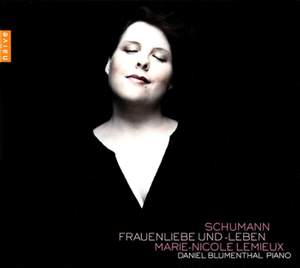
| |  | Schumann - Frauenlieben und Leben & Liederkreis
Critically acclaimed Canadian contralto Marie-Nicole Lemieux, who records exclusively for Naïve, releases her second solo recording for the label featuring a selection of fine lieder and two major song cycles by Schumann. She is accompanied by American pianist, Daniel Blumenthal. Following her critically praised debut solo CD of French mélodies (L’Heure exquise) multi-award winning Canadian contralto, Marie-Nicole Lemieux, returns with her second eagerly anticipated solo album on Naïve. Acknowledged as one of the foremost interpreters of her generation in the Baroque and Romantic repertoires, Lemieux ventures into the wonderfully passionate and poetic world of Schumann lieder. The programme opens with the stunning song cycle, Liederkreis Op.39. Written in May 1840, the cycle comprises of twelve songs based on poems by Joseph Eichendorff. Though the cycle presents no intelligible narrative framework, the result is a cycle that is completely coherent, almost a dream, a masterpiece on a par with Schubert’s Winterreise, consisting of a legendary ballad, mysterious nocturnes, meditations on love, and surges of passion: Romanticism at its best! Two months later, Schumann composed Frauenliebe und Leben Op.42. The songs describe the successive stages in a woman’s life: Her first love, engagement, marriage, motherhood to the continuation of her love for her husband after his death. This very intimate cycle often expresses happiness tinged with sorrow and a feeling of tragedy pervades the work, even amidst the joys of marriage. Marie-Nicole Lemieux’s dramatic qualities suit this cycle perfectly. To complete this programme of pieces by Schumann, Lemieux has chosen some other songs by the composer – Stille Tränen, Die Löwenbraut, Loreley, Er ist’s, Widmung,Der Nussbaum – perfect for her warm contralto voice. “In Frauenliebe und Leben the reticence of both performers pays off. Lemieux's matter-of-fact, deliberately unhistrionic presentation is very touching, so the emotional arc of the cycle clearly emerges without any seeming effort at all.” The Guardian, 3rd July 2009 **** “The strongest performance in this Schumann recital with pianist Daniel Blumenthal is Die Löwenbraut, more scena than song. There are some enticing moments in Liederkreis…” The Independent on Sunday, 19th July 2009 “This is a rare voice of melting loveliness, warm, limpid and rich-toned throughout its range, yet entirely devoid of the stately hootiness traditionally associated with the contralto...Lemieux sings the words clearly, yet without overpointing the text, and finds a different vocal “face” for each song. A revelation!” Sunday Times, 19th July 2009 ***** “Lemieux is clearly a thoughtful musician and she sings with a warm well-focused tone.” The Telegraph, 14th July 2009 *** “Canadian contralto Marie-Nicole Lemieux and pianist Daniel Blumenthal bring vivid perception to Schumann's song-cycle Frauenliebe und-Leben, Op 42. It's tempting to judge this work by the ardent second song, "Er, der Herrlichste von allen". Lemieux passes with flying colours, her timbre dark but gleaming, her adoration for the love object kept in check and never cloying. Vibrato, too, is not overdone” The Observer, 2nd August 2009 “Lemieux brings a highly individual timbre to her Schumann recital...If you respond to her chocolaty tones, then you may want to investigate further...The rarely performed Die Löwenbraut...is a treat, and the highlight of the disc.” Gramophone Magazine, April 2010 | | | (also available to download from $10.50) | Usually despatched in 3 - 4 working days. (Available now to download.) |
|
|
| |  | Vocal Recital: Erna Berger
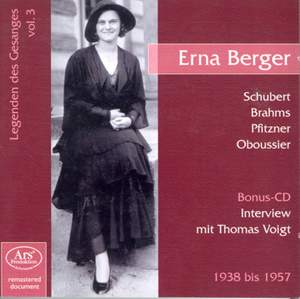
Brahms: | Vorüber, Op. 58 No. 7 Mein wundes Herz verlangt, Op, 59, No. 7 Wiegenlied, Op. 49 No. 4 (Lullaby) Der Tod, das ist die kühle Nacht, Op. 96 No. 1 | Flotow: | Letzte Rose | Pfitzner: | Alte Weisen, Op. 33 | Puccini: | Si, mi chiamano Mimi (from La Bohème) | Schubert: | Gretchen am Spinnrade, D118 Der Hirt auf dem Felsen, D965 (Von Chezy / Muller) Suleika I, D720 | Schumann: | Mondnacht (No. 5 from Liederkreis, Op. 39) Er ist's! Op. 79 No. 23 (Eduard Mörike) Der Nussbaum, Op. 25 No. 3 | Strauss, J, II: | Frühlingsstimmen Walzer Op. 410 | Wolf, H: | An eine Æolsharfe (No. 11 from Mörike-Lieder) Die Spröde (No. 26 from Goethe-Lieder) |
| | | (also available to download from $21.00) | Usually despatched in 4 - 5 working days. (Available now to download.) |
|
|
| |  | Schumann - Lieder
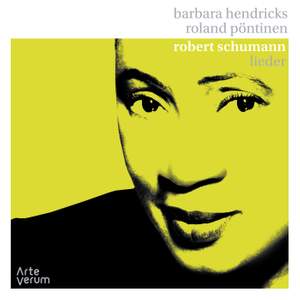
Schumann: | Widmung, Op. 25 No. 1 Mein Schöner Stern! Op. 101 No. 4 Zwei Lieder der Braut Die Soldatenbraut Op. 64 No. 1 Das verlassene Mägdlein, Op. 64 No. 2 Er ist's! Op. 79 No. 23 (Eduard Mörike) Mignon (Kennst du das Land?) Op. 98a No. 1 (Johann Wolfgang von Goethe) Nur wer die Sehnsucht kennt Op. 98a No. 3 (Johann Wolfgang von Goethe) Heiss' mich nicht reden Op. 98a No. 5 (Johann Wolfgang von Goethe) Singet nicht In Trauertönen Op. 98a No. 7 (Johann Wolfgang von Goethe) So lasst mich scheinen Op. 98a No. 9 (Johann Wolfgang von Goethe) Du bist wie eine Blume, Op. 25 No. 24 Der arme Peter, Op. 53 No. 3 Die Lotosblume, Op. 25 No. 7 Was will die einsame Träne, Op. 25 No. 21 Erstes Grün, Op. 35 No. 4 Frauenliebe und -leben, Op. 42 Mondnacht (No. 5 from Liederkreis, Op. 39) Der Nussbaum, Op. 25 No. 3 |
"Hendricks' slender, sweet-toned soprano, with its distinctive quick vibrato, is still in fine shape." Gramophone | | | Usually despatched in 3 - 4 working days. |
|
|
| |  | Arleen Augér
Hoiby: | The Serpent | Schoenberg: | Erwartung, Op. 17 Schenk mir deinen goldenen Kamm Op. 2 No. 2 Erhebung Op. 2 No. 3 Waldsonne Op. 2 No. 4 | Schubert: | Frühlingsglaube, D686 Der Schmetterling D633 Nacht und Träume, D827 Liebe schwarmt auf allen Wegen, D239 No. 6 (Goethe) Erster Verlust, D226 (Goethe) Gretchen am Spinnrade, D118 Heidenröslein, D257 | Schumann: | Widmung, Op. 25 No. 1 Röselein, Röselein! Op. 89 No. 6 ('Wielfried von der Neun') Er ist's! Op. 79 No. 23 (Eduard Mörike) Des Sennen Abschied, Op. 79 No. 22 Mignon ('Kennst du das Land, wo die Zitronen blühn'), Op. 79 No. 29 Singet nicht In Trauertönen Op. 98a No. 7 (Johann Wolfgang von Goethe) | Strauss, R: | Das Rosenband, Op. 36 No. 1 Mädchenblumen (4 songs), Op. 22 Die Zeitlose, Op. 10 No. 7 Efeu, Op. 22 No. 3 Freundliche Vision, Op. 48 No. 1 Herr Lenz Op. 37 No. 5 |
Recorded: BBC Studios, Pebble Mill, Birmingham, 2 January 1987 “This BBC recital from Birmingham (1987) extends Augér's run of Lieder on disc, and reminds us what a treasurable artist we lost when, six years after making this recording, she died aged 53.” BBC Music Magazine, March 2008 ***** | | | (also available to download from $10.50) | Usually despatched in 2 - 3 working days. (Available now to download.) |
|
|
| |  | Schumann - Lieder
Schumann: | Aufträge, Op. 77 No. 5 Der Nussbaum, Op. 25 No. 3 Das verlassene Mägdlein, Op. 64 No. 2 Er ist's! Op. 79 No. 23 (Eduard Mörike) Frauenliebe und -leben, Op. 42 Die Sennin, Op. 90 No. 4 Kommen und Scheiden, Op. 90 No. 3 Der schwere Abend, Op. 90 No. 6 Gedichte der Königin Maria Stuart, Op. 135 Mit Myrten und Rosen (No. 9 from Liederkreis, Op. 24) Mein Wagen rollet langsam, Op. 142 No. 4 Es fiel ein Reif in der Fruhlingsnacht Op. 64/2 Ein Jungling liebt ein Mädchen (No. 11 from Dichterliebe, Op. 48) Aus alten Marchen (No. 15 from Dichterliebe, Op. 48) Zigeunerliedchen I & II Fruhlingsnacht |
Live recording, 1977 “As a Lieder singer, Brigitte Fassbaender was a law unto herself. …her Frauenliebe und-leben from the 1977 Salzburg Festival has a no-holds-barred intensity. No other singer suggests such pain within the cycle's dominant moods of dreamy rapture and happy enthusiasm, as if its ending were implicit at the outset.” BBC Music Magazine, May 2005 **** | | | Usually despatched in 3 - 4 working days. |
|
|
| |  | Fruhlingslieder
Brahms: | Das Mädchen spricht, Op. 107 No. 3 Nachtigall, Op. 97 No. 1 Geheimnis, Op. 71 No. 3 An ein Veilchen, Op. 49 No. 2 (Text: L.C.H. Hölty) An die Nachtigall, Op. 46 No. 4 (Text: L.C.H. Hölty) | Liszt: | Jugendglück, S. 323 Wie singt die Lerche schon. S. 312 Die tote Nachtigal, S. 291 | Mendelssohn: | Das erste Veilchen, Op. 19a No. 2 Gruß, Op. 19a No. 5 | Mendelssohn, Fanny: | Der Maiabend Op. 9 No. 5 (Voss) Maienlied Op. 1 No. 4 (Eichendorff) Frühling Op. 7 No. 3 (Eichendorff) | Schubert: | An die Nachtigall, D497 Gott im Fruhling D448 (Uz) Nachtviolen D752 (Mayrhofer) Frühlingsglaube, D686 Im Frühling, D882 Ständchen 'Horch! Horch! die Lerch!', D889 | Schumann: | Der Nussbaum, Op. 25 No. 3 Erstes Grün, Op. 35 No. 4 Er ist's! Op. 79 No. 23 (Eduard Mörike) Jasminenstrauch Op. 27 No. 4 (Friedrich Rückert) | Wolf, H: | Im Frühling (No. 13 from Mörike-Lieder) Frühling übers Jahr (No. 28 from Goethe-Lieder) Er ist's (No. 6 from Mörike-Lieder) Die Spröde (No. 26 from Goethe-Lieder) |
“Donna Brown is an ideal singer, a feverish and smooth performer, true and poetic” Le Quotidien de Paris | | | (also available to download from $10.50) | Usually despatched in 2 - 3 working days. (Available now to download.) |
|
|
| |
|