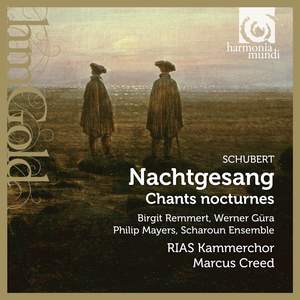
All recordingsPrices shown exclude VAT. (UK tax is not payable for deliveries to United States.) See Terms & Conditions for p&p rates. | |  | French Army's Choir
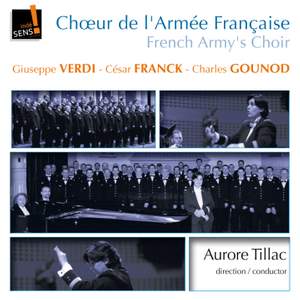
French Army's Choir, Commandante Aurore Tillac, Capitaine Émilie Fleury Unique men’s professional choir in France, and founded in 1982, it numbers 45 singers. Part of the French Republican Guard, it’s the official choir of the republic of France. The choir regularly performs with the large French symphonic orchestras, under conductors such as Yutaka Sado, Christoph Eschenbach, Pierre Boulez, Michel Plasson, Peter Eötvos. | 
| | | In stock - usually despatched within 1 working day. |
|
|
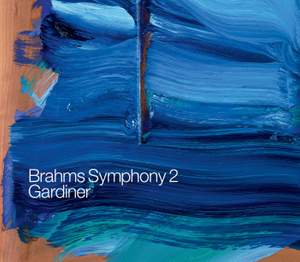
| |  | Brahms: Symphony No. 2
Following on from the phenomenal worldwide success of the first release in the Brahms series, SDG continues the series with Brahms’ Symphony 2 which sees John Eliot Gardiner and his Orchestre Révolutionnaire et Romantique explore the music of Johannes Brahms and of those composers that influenced him. Brahms’ dark, deeply personal and moving Alto Rhapsody for alto solo, male chorus and orchestra is included here alongside three choral works by Franz Schubert. In Schubert’s Gesang der Geister über den Wassern D714 (1821) comparisons between the two composers could not be more clear. Brahms draws on the effective example of his beloved Schubert firstly by composing the rhapsody for male chorus and secondly, basing the work upon a poem by Goethe. The lyrical beauty of Brahms' Second symphony makes it perhaps the most popular of the four works he composed in this form. The contrast between this symphony and the heroic First is complete, and it is strikingly analogous to the differences between Beethoven's Fifth and Sixth symphonies. “John Eliot Gardiner and the ORR continue their Brahms symphonies series with this live recording of No 2, with the heartfelt Alto Rhapsody (soloist Nathalie Stutzmann) and three Schubert choruses as a bonus. Energy and meticulous phrasing truly ignite this score. Strings use limited vibrato, with judicious portamento and expressively varied bowing.” The Observer, 8th February 2009 “John Eliot Gardiner's Brahms cycle, performed across two seasons in several venues, was at pains to place the four symphonies, the German Requiem and the Alto Rhapsody in the context of music that Brahms is known to have admired, and which influenced his own works. For the disc of the Rhapsody and the Second Symphony, recorded in the Salle Pleyel, Paris, in November 2007, that context is provided by three of Schubert's male-voice choruses. Two of them are sung by the Monteverdi Choir in Brahms's own arrangements, while the most substantial, the Gesang der Geister über den Wassern, seems a direct antecedent of the writing for male voices in the Alto Rhapsody, which Natalie Stutzmann sings with gravity. The account of the symphony is impressive too - the Orchestre Révolutionnaire et Romantique sounds on more secure form than it was for the London leg of this tour - and Gardiner's swift reading is always dramatically sure footed.” The Guardian, 6th February 2009 “Gardiner's speeds are so relaxed that the music almost falls over. Still, they emphasise the melancholic strain in a work easily pigeonholed as a lyrical effusion. You can also enjoy the wide colour palette of the period instruments of the Orchestre Révolutionnaire et Romantique. Nathalie Stutzmann's expressive way with the Alto Rhapsody is a delight; and the Schubert items for male chorus make interesting companions.” The Times, 14th February 2009 *** “[The 1st movement's opening horn theme is] played on natural horn, already outmoded by Brahms’s time...the phrase is lightly broken, in the baroque fashion. Such well-defined colours and detailed attention to articulation collide with the idea of this work as predominantly warm, relaxed and lyrical, and Gardiner sometimes scrubs perhaps a little too vigorously on the patina of inherited performance traditions. Still, he certainly provokes fresh thinking.” Sunday Times, 1st March 2009 *** “In the Second Symphony the period strings' lighter articulation gives Brahms's rhythms a sprightlier feel than in many modern sessions. …in Gesand der Geister Gardiner avoids any awkward episodic feeling by making the music tell the story of Goethe's poem fluently and with character.” BBC Music Magazine, April 2009 **** “Gardiner quotes Walter Frisch's report that Brahms "disliked metronomic rigidity and lack of inflection on the one hand, fussy over- determined expressivity on the other". In the first movement, he and his period instrumentalists strike exactly that balance. This is characterful music-making, complex and subtle.” Gramophone Magazine, May 2009 “Orchestre Romantique et Révolutionnaire's sound is vivid and clear. Nathalie Stutzmann's "Alto Rhapsody" is tenderly shaped, depthless, elegant…this is an arresting and impressive performance.” The Independent on Sunday “Last year I made the CD of the First Symphony one of my Recordings of the Year. This latest instalment will be on the shortlist for 2009, I feel sure – unless SDG trump this particular ace by releasing Symphony 3 before the year end. One can live in hope.” MusicWeb International | | | (also available to download from $10.50) | In stock - usually despatched within 1 working day. |
|
|
| |  | The Very Best of Schubert
Schubert: | Symphony No. 8 in B minor, D759 'Unfinished' Ständchen 'Leise flehen meine Lieder', D957 No. 4 Auf dem Wasser zu singen, D774 Piano Trio No. 2 in E flat major, D929 - 2nd movement Gute Nacht (No. 1 from Winterreise, D911) Impromptu in E flat major, D899 No. 2 Klavierstück in E flat minor, D946 No. 1 Moments Musicaux, D780: No. 3 in F minor Fantasie in F minor for piano duet, D940: 1st movement Mass No. 6 in E Flat Major, D950 - II Gloria An die Musik D547 Die Forelle, D550 Piano Quintet in A major, D667 'The Trout' - Theme and Variations Ave Maria, D839 Impromptu in A flat major, D935 No. 2 Rosamunde, D797: Ballet Music No. 2 Gretchen am Spinnrade, D118 Andante con moto from String Quartet No. 14 in D minor D810 Der Hirt auf dem Felsen, D965 (Von Chezy / Muller) Gesang der Geister über den Wassern, D714 |
| | | In stock - usually despatched within 1 working day. |
|
|
| |  | Choruses for Male Voices and Orchestra
Lund Student Singers & Malmö Opera Orchestra, Alberto Hold-Garrido Drawing on the romantic spirit in music, Schubert’s moving setting is of a poem by Goethe which compares a rushing waterfall to the soul of man, while Strauss’s gorgeous Mittagsruhe depicts the peace of a summer noontide. Narrative vocal traditions are heard in Sibelius’s nationalist Vapautettu kuningatar, Bruckner’s heroic Helgoland, and Grieg’s Landkjenning, which tells of the 10th century Norwegian king Oleg Tryggvason. Das Liebesmahl der Apostel anticipates the religious ecstasies of Wagner’s Parsifal, while Debussy’s early cantata Invocation resonates with Gallic sparkle. “Seven resonant Romantic rarities...enthusiastically performed by a Swedish student choir.” BBC Music Magazine, December 2012 *** “This ensemble has a history that dates back to 1831...its joy in singing is one of the main reasons this disc is such a success. The other is its one-of-a-kind programme, which contains several unfamiliar or even obscure works, which nevertheless are of very high quality...This is a likeable release, and it would take an entire rugby team to pry it from my hands!” International Record Review, February 2013 | | | (also available to download from $6.00) | Usually despatched in 2 - 3 working days. (Available now to download.) |
|
|
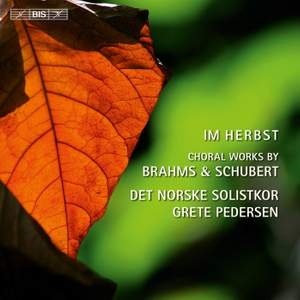
| |  | Im HerbstChoral works by Brahms and Schubert
Grete Pedersen, Ingrid Andsnes (piano), Kåre Nordstoga (organ), Catherine Bullock and Madelene Berg (viola), Øystein Birkeland and Ole Eirik Ree (cello) & Dan Styffe (double bass) Det Norske Solistkor Having focused on music from their home country before, the Norwegian Soloists’ Choir here present a German programme, featuring two of the most influential composers in 19th-century choral music: Johannes Brahms and Franz Schubert. It includes both sacred and secular music, scored for male, female and mixed choir a cappella and accompanied, starting with a selection from Brahms’s deservedly popular Zigeunerlieder for mixed choir and piano. A contrast to these settings of Hungarian folk songs is provided by the autumnal Five Songs for mixed choir a cappella – a collection of poems dealing with the transience of youth, love and life. The motet Warum ist das Licht gegeben dem Mühseligen, shows Bach’s influence on the composer. Schubert is represented with a setting of Psalm 23 for women’s choir and piano and Der Gesang der Geister über den Wassern. “I hadn't come across these singers before: they are quite wonderful...The luscious 'Amen', ravishingly sung, is worth the price of the disc.” Gramophone Magazine, February 2012 | | | (also available to download from $10.50) | Usually despatched in 2 - 3 working days. (Available now to download.) |
|
|
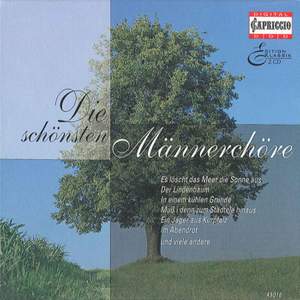
| |  | Die Schönsten Männerchöre
Abt: | Ave Maria ('Nun ist der Laute Tag Verhallt'), Op. 533 No. 3 Hans-Joachim Ribbe (baritone) Leipzig Radio Chorus, male section, Jorg-Peter Weigle | Beethoven: | Hymne an die Nacht Leipzig Radio Chorus, male section, Jorg-Peter Weigle Die Ehre Gottes aus der Natur ('Die Himmel rühmen des Ewigen Ehre'), Op. 48 No. 4 (arr. for male choir) Carl Maria von Weber Men's Choir, Berlin, Andreas Wiedermann | Bortnyansky: | Ich bete an die Macht der Liebe Leipzig Radio Chorus, male section, Jorg-Peter Weigle | Brahms: | In stiller Nacht, WoO 34 No. 8 Carl Maria von Weber Men's Choir, Berlin, Andreas Wiedermann | Grieg: | Landkjenning Op. 31 Hans-Joachim Ribbe (baritone) Leipzig Radio Symphony Orchestra, Jorg-Peter Weigle | Isaac: | Innsbruck, ich muss dich lassen Carl Maria von Weber Men's Choir, Berlin, Andreas Wiedermann | Kreutzer, K: | Märznacht Leipzig Radio Chorus, male section, Jorg-Peter Weigle | Loewe, C: | Das war das Kloster Grabow, Op. 84 No. 3 Leipzig Radio Chorus, male section, Jorg-Peter Weigle | Marschner, H A: | Das Testament Leipzig Radio Chorus, male section, Jorg-Peter Weigle | Mendelssohn: | Der Jäger Abschied: Wer hat dich, du schöner Wald, Op. 50 No. 2 Berlin Radio Chorus, male section, Dietrich Knothe Trinklied 'So lang man nüchtern ist', Op. 75 No. 3 Leipzig Radio Chorus, male section, Jorg-Peter Weigle | Mozart: | Laßt uns mit geschlungen Händen K 623a (arr. E. Kremser) Leipzig Radio Chorus, male section, Jorg-Peter Weigle | Ricciusi: | Die lustigen Musikanten Leipzig Radio Chorus, male section, Jorg-Peter Weigle | Schubert: | Nachtgesang im Walde, D913 Wolfgang Stahl (horn), Dieter Fokel (horn), Gerhard Mayer (horn), Michael Schoppe (horn) Berlin Radio Chorus, male section, Dietrich Knothe Der Lindenbaum (No. 5 from Winterreise, D911) (arr. F. Silcher) Leipzig Radio Chorus, male section, Jorg-Peter Weigle Gesang der Geister über den Wassern, D714 Berlin Radio Chorus, male section, Berlin Radio Symphony Orchestra, members, Dietrich Knothe Deutsche Messe, D872: Sanctus Leipzig Radio Chorus, male section, Jorg-Peter Weigle Die Nacht, D983c Berlin Radio Chorus, male section, Dietrich Knothe Ständchen 'Zögernd leise', D920/921 Bernd Casper (piano), Astrid Pilzecker (alto) Berlin Radio Chorus, male section, Dietrich Knothe Nachthelle, D892 (Seidl) Ekkehard Wagner (tenor), Bernd Casper (piano) Berlin Radio Chorus, male section, Dietrich Knothe Nächtliches Ständchen D635 Carl Maria von Weber Men's Choir, Berlin, Andreas Wiedermann Im Abendrot, D799 (arr. for male choir) Leipzig Radio Chorus, male section, Jorg-Peter Weigle | Schumann: | Die Minnesänger, Op. 33 Nr. 2 Carl Maria von Weber Men's Choir, Berlin, Andreas Wiedermann Die Rose stand im Tau, Op. 65 No. 1 Hans-Joachim Ribbe (baritone) Leipzig Radio Chorus, male section, Jorg-Peter Weigle | Silcher: | Schifferlied Leipzig Radio Chorus, male section, Jorg-Peter Weigle Untreue ('In einem kühlen Grunde') Leipzig Radio Chorus, male section, Jorg-Peter Weigle Hab oft im Kreis der Lieben Leipzig Radio Chorus, male section, Jorg-Peter Weigle So nimm denn meine Hande Leipzig Radio Chorus, male section, Jorg-Peter Weigle Loreley Leipzig Radio Chorus, male section, Jorg-Peter Weigle Wohin mit der Freud? ('Ach du klarblauer Himmel'), Op. 58 No. 2 Carl Maria von Weber Men's Choir, Berlin, Andreas Wiedermann Ännchen von Tharau Carl Maria von Weber Men's Choir, Berlin, Andreas Wiedermann | trad.: | Im Krug zum grünen Kranze (arr. S. Breu) Leipzig Radio Chorus, male section, Jorg-Peter Weigle Muss I denn zum Stadtele hinaus Leipzig Radio Chorus, male section, Jorg-Peter Weigle Ein Jager aus Kurpfalz Berlin Radio Choir, Dietrich Knothe Süß Liebe liebt den Mai Leipzig Radio Chorus, Jorg-Peter Weigle Es ritten drei Reiter Carl Maria von Weber Men's Choir, Berlin, Andreas Wiedermann | Weber: | Lützows wilde Jagd, J168, Op. 42 No. 2 Leipzig Radio Chorus, male section, Jorg-Peter Weigle | Zollner: | Des Mullers Lust und Leid, Op. 6 : Das Wandern ist des Mullers Lust Leipzig Radio Chorus, male section, Jorg-Peter Weigle Rheinweinlied Leipzig Radio Chorus, male section, Jorg-Peter Weigle |
| |
|
| |  |
| | | (also available to download from $10.50) | Usually despatched in 2 - 3 working days. (Available now to download.) |
|
|
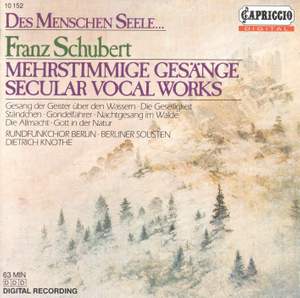
| |  | Schubert Male Choruses
Schubert: | Nachtgesang im Walde (E major), Op. 139 (Text: Johann Gabriel Seidl) Die Nacht (D major), Op. 17 No. 4 (Text?: Friedrich Krummacher) Der Gondelfahrer, D809 Sehnsucht (Nur wer die Sehnsucht kennt), D656 Im Gegenwärtigen Vergangenes, D710 Liebe (D major) (Text: Friedrich von Schiller) Ständchen 'Zögernd leise', D920/921 Grab und Mond, D893 Psalm 23 'Gott ist mein Hirt', D706 Die Einsiedelei (G minor), D337 (Text: J. G. von Salis-Seewis) Nachthelle, D892 (Seidl) Trinklied aus dem 14ten Jahrhundert (Edit Nonna ...) (C major), Op. 155 Dreifach ist der Schritt der Zeit, D43 (Text: Schiller) Geist der Liebe D747 (Matthisson) Gesang der Geister über den Wassern, D714 |
| | | (also available to download from $10.50) | Usually despatched in 2 - 3 working days. (Available now to download.) |
|
|
| |  | Franz Schubert - Part-Songs
Schubert: | Ständchen 'Zögernd leise', D920/921 Die Nacht, D983c Die Nachtigall, D724 Nachthelle, D892 (Seidl) Grab und Mond, D893 Im Gegenwärtigen Vergangenes, D710 La Pastorella, D513 Gesang der Geister über den Wassern, D714 Geist der Liebe D747 (Matthisson) Mondenschein, D875 Der Gondelfahrer, D809 Psalm 23 'Gott ist mein Hirt', D706 Widerhall, D428 Sehnsucht, D636 (Schiller) Nachtgesang im Walde, D913 |
Utrecht Vocal Soloists, Ronald Brautigam (piano) Udo Reinemann - Solo and Direction | | | Usually despatched in 2 - 3 working days. |
|
|
| |  | Famous Conductors of the Past - Clemens Krauss
| | | Usually despatched in 2 - 3 working days. |
|
|
| |
|