Prices shown exclude VAT. (UK tax is not payable for deliveries to United States.) See Terms & Conditions for p&p rates. | |  | Wagner Heroes
2013 sees a series of Wagner reissues on Eloquence from complete operas and highlights to Wagner singer portraits and even an audiobook! This is a 50-year retrospective (1950 – 2000) of great Wagner singing on Decca and Deutsche Grammophon featuring twelve extracts from eight operas (including all four operas of the Ring cycle) with nine great singers. Wagner’s knowledge of heroes derived from two sources: the myths of ancient Greece, and the sagas and poetry of northern Europe. In both traditions, heroes possess god-like attributes which set them apart from non-heroic mortals and reinforce the view that they are superhuman. They often have gods as parents or grandparents. But Wagner humanizes his heroes, most notably Siegmund (sung inimitably by Jon Vickers in the legendary Decca recording of Die Walküre with Erich Leinsdorf), and the naïve Siegfried (with Wolfgang Windgassen singing both the Siegfried and Götterdämmerung Siegfrieds). Other great heldentenors represented on this collection include James King and James McCracken. Celebrated bass-baritones are also represented here: Paul Schöffler (singing Wotan’s Farewell from a rare 1950 recording), Ernst Haefliger (as the Dutchman) and most recently, Matthias Goerne (Wolfram). The insightful notes are provided by Wagner scholar Peter Bassett and a photo gallery of the singers is also included. | 
| | | (Sorry, download not available in your country) | In stock - usually despatched within 1 working day. |
|
|
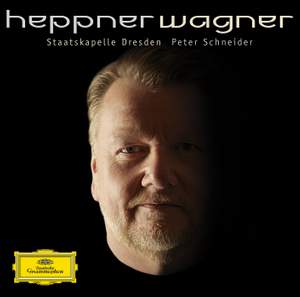
| |  | Ben Heppner sings Wagner
Ben Heppner – recognized and one of the world’s leading Heldentenors - features a selection of the finest excerpts for tenor voice from Wagner’s Der Ring des Nibelungen. Tracing the life of Wagner’s ultimate hero Siegfried from his father Siegmund (Die Walküre) to Siegfried’s youth (Siegfried) and death (Götterdämmerung), the album features famous excerpts including “Winterstürme wichen dem Wonnemond” and “Notung! Notung! Neidliches Schwert”, as well as orchestral excerpts such as Siegfried’s Funeral March. Supported by the excellent Staatskapelle Dresden and accomplished Wagner expert Peter Schneider, a regular guest conductor at the Bayreuth festival since the early 1980s with more than 100 conducted performances, Ben Heppner’s approach to Siegfried’s life is a supreme musical experience for every Wagner lover. “… over the last 15 years, certain Wagner roles have been the "property" of Ben Heppner – of all things, a Wagner tenor who, in addition to the requisite power, has what might be called a "conventionally beautiful" voice which he actually uses with some discretion and imagination… It's a wonderful piece of singing…” Fanfare “Ben Heppner is not scheduled to make his debut as Wagner's dwarf-beating, anvil-busting hero until 2008 (Aix, under Sir Simon Rattle) so the present disc will have to suffice as a rain check. It does so because the Canadian tenor (whom we never seem to see in the UK) is in prime vocal form and… is in constant search of original, unhackneyed line readings” Gramophone Magazine “He seems to have everything – power, stamina, a bright, truly tenorial timbre… and he has grown up vocally, through Walther and Lohengrin into Tristan, at an intelligent pace, while mixing in some Italian roles to keep the voice supple. Now, on this recital, he tackles Siegfried and Siegmund, from what we hear, he's more than ready for them and Wagnerians should be waiting in line… His combination of lyricism and sheer power are unique today: his cries of “Wälse!” are as brilliant as his “Winterstürme” is caressing and tender. He also never resorts to crooning soft moments; what we hear is a true range of dynamics, in real voice. Here and throughout his diction is impeccable and the forward placement of his voice brings real urgency to his exclamation. On to Siegfried. Not enough praise can be lavished on his Forging Song. I, certainly, have never heard it sung as effortlessly, energetically, expressively, fearlessly, and with such true boyish joy before. He attacks the music and text heroically – this Siegfried seems indomitable – and his tone never falters: it's always big and bright… The “Forest Murmurs” shows us an entirely different side of Siegfried, tender and pensive, and Heppner delivers the solo to us with beautiful tone, enraptured… Heppner's amazement is palpable, and he phrases each mood-change and new sensation with great freshness of tone… Overall, the Staatskapelle Dresden plays with lustre and rhythmic thrust. This is a stunning CD, sure to delight and tease Wagnerians. It gets the highest recommendation.” International Record Review “This is work of a resourceful, imaginative artist…” John W. Freeman, Opera News | 
| | | Scheduled for release on 15 July 2013. Order it now and we will deliver it as soon as it is available. |
|
|
| |  | The Bayreuth Festival 1936 Original Recordings, CD 1
recorded in Bayreuth, July-August 1936 | 
| |
|
| |  | Albert Da Costa
Albert Da Costa had a very impressive voice but made very few recordings, so never achieved the level of recognition of his contemporaries. These recordings are from his early career and will be coveted by collectors. | | | Usually despatched in 2 - 3 working days. |
|
|
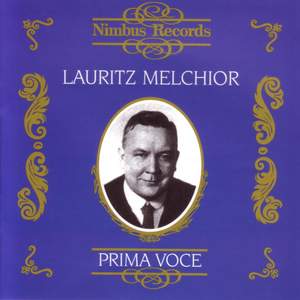
| |  | Lauritz Melchior
Recorded 1924-1939 | | | Usually despatched in 4 - 5 working days. |
|
|
| |  | Gunther Treptow
| | | Usually despatched in 2 - 3 working days. |
|
|
| |  | Prokofiev: Peter and the Wolf
Recorded in Chicago in 1951 | | | Usually despatched in 2 - 3 working days. |
|
|
| |  | Semperoper Edition, Vol. 3 (1948-1956)
Dora Zschille (soprano), Brunnhild Friedland (soprano), Helmut Eyle (bass), Kurt Rehm (baritone), Hans Kramer (bass), Ernst Gruber (tenor), Bernd Aldenhoff (tenor), Margarete Baumer (soprano), Karl Paul (baritone), Hans Hopf (tenor), Emilie Walter-Sachs (soprano), Josef Herrmann (baritone), Christel Goltz (soprano), Kurt Bohme (bass), Arno Schellenberg (baritone), Joachim Sattler (tenor) Dresden Staatskapelle, Leipzig Radio Symphony Orchestra, Leipzig Radio Chorus, Dresden State Opera Chorus, Grosses Rundfunkorchester Dresden, Dresden Philharmonic Orchestra, Joseph Keilberth, Gerhard Pfluger, Rolf Kleinert, Rudolf Kempe, Kurt Striegler, Hans-Hendrik Wehding, Gerhard Wiesenhutter, Walter Stoschek | |
|
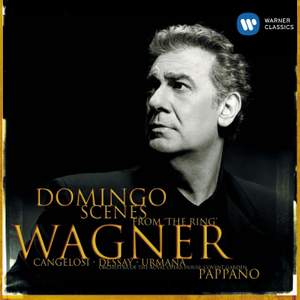
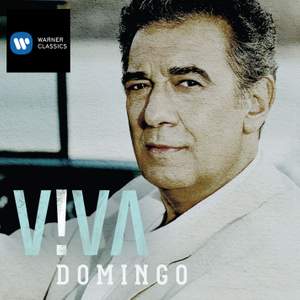
| |  | Viva Domingo!4CD + BOOK
Bellini: | Svanir le voci! (from Norma) | Bizet: | Au fond du temple saint (from Les Pêcheurs de Perles) Thomas Hampson (baritone) | Gounod: | Quel trouble inconnu me pénètre… Salut! Demeure chaste et pure (from Faust) Il se fait tard ! Adieu ! (from Faust) Mirella Freni (soprano) | Handel: | Svegliatevi nel core (from Giulio Cesare) | Lehár: | Gern hab' ich die Frau'n geküßt (from Paganini) Dein ist mein ganzes Herz (from Das Land des Lächelns) | Mascagni: | Suzel, buon di 'Cherry Duet' (from L'amico Fritz) Veronica Villarroel (soprano) | Massenet: | Ah! Tout est bien fini... O souverain (from Le Cid) | Meyerbeer: | Pays merveilleux... Ô paradis (from L'Africaine) | Mozart: | Fuor del mar ho un mar in seno (Idomeneo) Ah, se fosse intorno al trono (from La Clemenza di Tito) Dies Bildnis ist bezaubernd schön (from Die Zauberflöte) Il mio tesoro intanto (from Don Giovanni) Un'aura amorosa del nostro tesoro (from Così fan tutte) La ci darem la mano (from Don Giovanni) Susan Graham (mezzo) | Ponchielli: | Cielo e mar! (from La Gioconda) | Puccini: | Donna non vidi mai (from Manon Lescaut) Recondita armonia (from Tosca) Ch'ella mi creda libero e lontano (from La Fanciulla del West) E lucevan le stelle (from Tosca) Mario! Mario! Mario! ...Son qui! ... Mia gelosa! (from Tosca) Renata Scotto (soprano) Oh, sarò la più bella...Tu, tu, amore? (from Manon Lescaut) Montserrat Caballé (soprano) | Saint-Saëns: | Arrêtez, ô mes Frères (from Samson et Dalila) | Spontini: | Ohime! Che veggo io mai?...Ah! No, s'io vivo ancora (from La Vestale) | Strauss, J, II: | Eine Nacht in Venedig: Komm in die Gondel | Tchaikovsky: | Kuda, Kuda 'Lensky's Aria' (from Eugene Onegin) | Thomas, Ambroise: | Adieu, Mignon! Courage! (Mignon) Elle ne croyait pas, dans sa candeur naïve (from Mignon) | Verdi: | Se quel guerrier io fossi!…Celeste Aida (from Aida) O figli … Ah, la paterna mano (from Macbeth) Il Re!…Sotto una quercia (from Giovanna d'Arco) Niun mi tema (from Otello) Io la vidi e al suo sorriso (from Don Carlo) Ma se m'è forza perderti (from Un ballo in maschera) O tu che in seno agli angeli (from La Forza del Destino) Dio, che nell'alma infondere (from Don Carlo) Sherrill Milnes (baritone) Solenne in quest'ora (from La Forza del Destino) Giorgio Zancanaro (baritone) Giá nella notte densa (from Otello) Cheryl Studer (soprano) | Wagner: | Allmächt'ger Vater, blick herab! (from Rienzi) Nothung! Nothung! Neidliches Schwert! (from Siegfried) O sink hernieder, Nacht der Liebe (from Tristan und Isolde) Deborah Voigt (soprano) |
plus excerpts from zarzuela and a disc of Latin Songs
This 4 CD/luxury set is a portrait of probably the greatest tenor of this or any other age: Plácido Domingo. Born in Spain in 1941, Domingo spent his early life in Mexico where his parents, both singers, ran a company that presented zarzuelas (Spanish light operas) and other musical shows. His career as a tenor has spanned the entire world in a wide range of operas in which he has sung over 120 roles, and in 1990 he made history when, with José Carreras and Luciano Pavarotti, he first appeared in Rome as one of the The Three Tenors, whose subsequent concerts and recordings broke all records for television viewing and record sales. He has subsequently shown great talent as a conductor and has very recently begun to sing baritone roles to wide acclaim, beginning with Verdi’s Simon Boccanegra. Today, he is the General Director of both the Washington National Opera and of the Los Angeles Opera and also runs the highly successful ‘Operalia’ competition to help young artists further their careers. The four CDs are held in trays inside the front and back rigid covers of a long digibook, and the 72 pages include an extensive collection of session photos and portraits relating to the recordings and Domingo’s EMI career as well as an informative note in English, French, German and Spanish. The four CDs are themed as follows: The Heroic Domingo shows Domingo in a wide selection of operatic roles. Each one is a hero, such as the brave Egyptian soldier Radamès in Verdi’s Aida, the Roman Proconsul Pollione in Bellini’s Norma and the Hebrew warrior Samson in Samson et Dalila by Saint-Saëns. All these arias give Domingo the opportunity to show his skills as a vocal actor and to bring to life the different characters he is portraying. The Romantic Domingo reveals a completely different side of Domingo and presents him in a gallery of romantic parts like the painter Cavarodossi in Puccini’s Tosca, the idealistic Spanish Infante Don Carlos in Verdi’s great masterpiece Don Carlo and the ill-fated young poet Lensky in Tchaikovsky’s Eugene Onegin. Again, Domingo uses his glorious voice to conjure up the various romantic moods in the different arias. In The Great Duets, Domingo is joined by some of his illustrious fellow operatic stars for a programme of duets, including the famous love duets from Tristan und Isolde (with Deborah Voigt), Otello (with Cheryl Studer and Manon Lescaut (with Montserrat Caballé), as well as the friendship duets from Don Carlo (with Sherrill Milnes), La forza del destino (with Giorgio Zancanaro) and the so-called ‘Temple Duet’ from Les Pêcheurs de perles (with Thomas Hampson). In complete contrast, Latin Songs gives Domingo the chance to enjoy performing some of the most famous popular songs from Spain, Mexico, Cuba and the rest of Latin America in lively modern arrangements. The programme includes many songs that have been international hits, both in their original form and in local translations, such as ‘Quiéreme mucho’ (known in English as ‘Yours’) ‘Maria Elena’, ‘La Paloma’ and ‘Guantanamera’. The programme concludes with an exciting performance of ‘Granada’ recorded live in front of a huge and wildly enthusiastic audience that fully appreciates the unique talent of this great singer. | | | In stock - usually despatched within 1 working day. |
|
|
| |  | Richard Wagner On Record
Wagner: | Du bist der Lenz (from Die Walküre) Lilli Lehmann Weilten die Sterne (from Die Meistersinger von Nürnberg) Hermann Winkelmann Noch bleibe denn unausgesprochen (from Tannhäuser) Wilhelm Hesch O du, mein holder Abendstern (from Tannhäuser) Leopold Demuth Weiche, Wotan, weiche! (from Das Rheingold) Ernestine Schumann-Heink Wohin nun Tristan scheidet (from Tristan und Isolde) Ernst Kraus Mögst du, mein Kind (from Der fliegende Holländer) Paul Knüpfer Jetzt fand ich's, was euch fehlt (from Das Rheingold) Otto Briesemeister Erstehe, hohe Roma, neu (from Rienzi) Jacques Urlus In fernem Land (from Lohengrin) Erik Schmedes Abendlich strahlt der Sonne Auge (from Das Rheingold) Theodor Bertram Als du in kuhnem Sange uns bestrittest (from Tannhäuser) Fritz Feinhals Fanget an! (Die Meistersinger von Nürnberg) Carl Burrian Entweihte Götter (from Lohengrin) Edyth Walker Hoho! Hoho! Hohei! Schmiede, mein Hammer, ein hartes Schwert! (from Siegfried) Heinrich Knote Mein Herr und Gott (from Lohengrin) Leon Rains Mein Vater, hochgesegneter der Helden (from Parsifal) Clarence Whitehill Dein Werk, o tör'ge Magd (from Tristan und Isolde) Johanna Gadski Des Königs Wort und Will tu ich euch kund (from Lohengrin) Nicola Geisse-Winkel Am stillen Herd (from Die Meistersinger) Leo Slezak Auf Ewigkeit wärst du verdammt mit mir (from Parsifal) Rudolf Berger Tatest du's wirklich? (from Tristan and Isolde) Paul Bender Nur eine Waffe taugt (from Parsifal) Heinrich Hensel O du, mein holder Abendstern (from Tannhäuser) Friedrich Plaschke Wohin nun Tristan scheidet (from Tristan und Isolde) Modest Menzinsky Was duftet doch der Flieder (from Die Meistersinger von Nürnberg) Hermann Weil Mein lieber Schwan (from Lohengrin) Hermann Jadlowker Hoiho! Hoihohoho! (from Götterdämmerung) Allen Hinckley Mögst du, mein Kind (from Der fliegende Holländer) Richard Mayr Der Unglücksel'ge, den gefangen (from Tannhäuser) Emmy Destinn Du Ärmste kannst wohl nie ermessen (from Lohengrin) Berta Morena Athmest du nicht mit mir die sussen Dufte? (from Lohengrin) Robert Hutt Über Stock und Stein (from Das Rheingold) Walther Kirchhoff Zauberfest bezähmt ein Schlaf (from Die Walküre) Fritz Soot Nothung! Nothung! Neidliches Schwert! (from Siegfried) Rudolf Ritter Ewig war ich (from Siegfried) Lucy Weidt An der Weltesche wob ich einst (from Götterdämmerung) Hermine Kittel Ich sah das Kind an seiner Mutter Brust (from Parsifal) Melanie Kurt Euch Lüften, die mein Klagen (from Lohengrin) Eva von der Osten Winterstürme wichen dem Wonnemond (from Die Walküre) Johannes Sembach Johohoe! Traft ihr das Schiff im Meere an 'Senta's Ballad' (from Der fliegende Holländer) Barbara Kemp Der Augen leuchtendes Paar (from Die Walküre) Karl Armster Mild und leise 'Isolde's Liebestod' (from Tristan und Isolde) Helene Wildbrunn Verachtet mir die Meister nicht (from Die Meistersinger von Nürnberg) Emil Schipper Seit Ewigkeiten harre ich deiner (from Parsifal) Lilly Hafgren Hojotoho, hojotoho, heiaha, heiaha! (from Die Walküre) Gertrude Kappel So ist’s denn aus...Deiner ew’gen Gattin (from Die Walküre) Margarete Arndt-Ober Siegmund heiß ich und Siegmund bin ich! (from Die Walküre) Richard Schubert Einsam wachend...Habet acht! (from Tristan und Isolde) Emmi Leisner Mime hiess ein mürrischer Zwerg (from Götterdammerung) Curt Taucher Ein Kind ward hier geboren (from Die Meistersinger von Nürnberg) Wilhelm Rode Du bist der Lenz (from Die Walküre) Maria Jeritza Oh, wunden wundervoller heiliger Speer (from Parsifal) Michael Bohnen Johohoe! Traft ihr das Schiff im Meere an 'Senta's Ballad' (from Der fliegende Holländer) Frida Leider Als du in kuhnem Sange uns bestrittest (from Tannhäuser) Harry De Garmo O Sachs, mein Freund (from Die Meistersinger) Lotte Lehmann Wie aus der Ferne längst (from Der Fliegende Holländer) Friedrich Schorr Weiche, Wotan, weiche! (from Das Rheingold) Sigrid Onegin Was duftet doch der Flieder (from Die Meistersinger von Nürnberg) Josef von Manowarda Gut'n Abend, Meister (from Die Meistersinger von Nürnberg) Emmy Bettendorf Schmerzen (No. 4 from Wesendonck-Lieder) Sabine Kalter Seit er von dir geschieden (from Götterdämmerung) Maria Olszewska Amfortas! Die Wunde! (from Parsifal) Nelly Larsen-Todsen Helle Wehr, heilige Waffe (from Götterdämmerung) Erik Enderlein Dich, teure Halle (from Tannhauser) Maria Müller Höchstes Vertrau´n (Lohengrin) Lauritz Melchior Weiche, Wotan, weiche! (from Das Rheingold) Karin Branzell Mein Herr und Gott (from Lohengrin) Alexander Kipnis Jerum! Jerum! (from Die Meistersinger) Rudolf Bockelmann Einsam in trüben Tagen (from Lohengrin) Elisabeth Rethberg Athmest du nicht mit mir die sussen Dufte? (from Lohengrin) Fritz Wolff Mild und leise 'Isolde's Liebestod' (from Tristan und Isolde) Gertrud Bindernagel O Himmel, lass dich jetzt erflehen (from Tannhäuser) Heinrich Schlusnus Hojotoho, hojotoho, heiaha, heiaha! (from Die Walküre) Kirsten Flagstad Auf wolkigen Hö'n wohnen die Götter (from Siegfried) Hans Hermann Nissen Fort, denn eile (from Die Walküre) Helen Traubel Winterstürme wichen dem Wonnemond (from Die Walküre) Franz Völker Am stillen Herd (from Die Meistersinger) Max Lorenz Fanget an! (Die Meistersinger von Nürnberg) Torsten Ralf Dein Werk, o tör'ge Magd (from Tristan und Isolde) Anny Konetzni Blick ich umher in diesem edlen Kreise (from Tannhäuser) Joel Berglund Euch Lüften, die mein Klagen (from Lohengrin) Maria Reining In fernem Land (from Lohengrin) Set Svanholm Allmächt’ge Jungfrau! (from Tannhäuser) Hilde Konetzni |
| | | Usually despatched in 2 - 3 working days. |
|
|
| |
|