Prices shown exclude VAT. (UK tax is not payable for deliveries to United States.) See Terms & Conditions for p&p rates. | |  | In the South: Brodsky Quartet
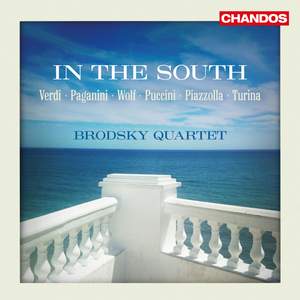
The Brodsky Quartet here turns to the sunshine, bright colours, and deep-set passions of the South, performing Latin-inspired music for string quartet by composers who all possessed a strong connection to the ‘South’, whether it was the Mediterranean or South America. Paganini’s Capricci Nos 6 and 24 need no introduction. They are among the most published and reviewed virtuoso pieces ever composed, and have been frequently arranged over the last two hundred years, with each new reading allowing us to discover Paganini’s art afresh. This version has been arranged by the violinist Paul Cassidy, a long-standing member of the Brodsky Quartet. We have the chance to hear chamber works by two further Italian composers, who would always be known primarily for their massive achievements in opera. In fact, the sad melodies of Puccini’s Crisantemi would later be used in the tragic fourth act of the opera Manon Lescaut. The Quartetto in E minor was the only string quartet Verdi ever wrote, and he himself insisted on presenting it as a mere trifle, stating that it was composed ‘in idle moments’ before the premiere of Aida. This Quartet divided opinion. Whereas some reviewers recognised the technical difficulties of the work, others thought Verdi’s Italian temperament inappropriate to instrumental music. The inspiration to La oración del torero (The Toreador’s Prayer) came to Turina during a Spanish bullfight, during which he watched as a bullfighter received the prayerful Sacrament of Holy Unction, while all around a feverish excitement over the forthcoming fight was overtaking the crowd. The work itself displays elements of French impressionism, combined with strong evocations from the Spanish bullfighting arena. Four, for Tango, written in 1988 for the Kronos Quartet, is a prime example of Piazzolla’s own style of ‘Nuevo Tango’; this new form of tango became popular around the world, and was generated from combining Argentine folklore with so-called ‘art music’. Also on this disc is Hugo Wolf’s ‘Italian’ Serenade, a work equally full of captivating rhythms, harmonic warmth, and dancing themes. “These six works are by composers not associated with string quartets. The mood is Italianate, but not exclusively so...Paul Cassidy, has arranged – winningly – two solo violin Caprices by Paganini for quartet, here in a premiere recording...Verdi's Quartetto has a lyrical if operatic simplicity and energy. All evoke pleasurable heat and light.” The Observer, 24th March 2013 | 
| | | (also available to download from $10.50) | In stock - usually despatched within 1 working day. |
|
|
| |  | Piazzólla: Chamber Music
Born in Argentina in 1921, Ástor Piazzolla grew up in New York before eventually returning to his homeland in 1955. One of the finest composers to have emerged from South America, he is best remembered today for his development of the tango – a product of the working-class suburbs of Buenos Aires, and a dance whose rhythm Piazzolla combined with his classical training as well as American jazz influences to achieve a highly personal style. Piazzolla’s output is dominated by chamber music, and in this fascinating 2CD collection we encounter some of his most famous works within the genre. Effectively tracing the Argentinian’s career, the compilation contains such early gems as Tres Piezas Breves, a late-1940s composition documenting his attempt as a serious composer, as well as the renowned Adiós Nonino of 1959 that was responsible for raising Piazzolla’s reputation both at home and abroad. A range of pieces from the 1970s and 1980s also feature, many of which detail instrumentation the composer hadn’t tackled before – Histoire du Tango, for example, matched the flute and guitar, and its four movements equate to a musical microcosm in tracing the evolution of the tango. By the time Piazzolla came to write Five Tango Sensations (1989), he was attracting the attention of internationally renowned musicians. Composed for the progressive Kronos Quartet, the late work shows just how much his style had advanced through its liberal use of the once-favoured 3+3+2 rhythmic cells, complex harmonies and virtuosic display. Despite this shift, however, Piazzolla never lost sight of the sensual, despairing emotion of the tango – an emotion that is the essence of this wonderful assortment of works, inspiringly performed by the Interensemble Padova. Recorded in 1996 | | | Usually despatched in 2 - 3 working days. |
|
|
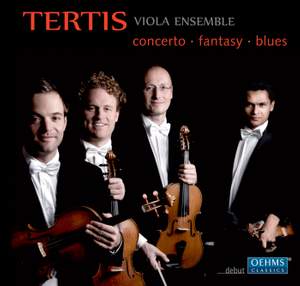
| |  | Concerto, Fantasy, BluesPieces and arrangements for viola quartet
Four members of the Munich Philharmonic have set out on a “viola quartet” adventure. The two original works on this debut CD are Nachtstücke by von Wienzierl and the Fantasie Quartet by York Bowen. Experience the mellow sonority of the viola in a novel way. | | | (also available to download from $10.50) | Usually despatched in 2 - 3 working days. (Available now to download.) |
|
|
| |  | Jan Vogler - Tango!
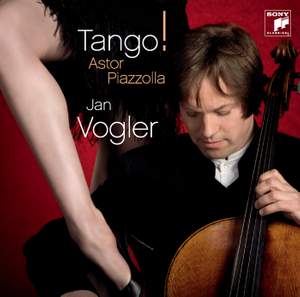
Cellist Jan Vogler returns with a recording of chamber works by Piazzolla, including the famous ‘Oblivion’ and ‘Le Grand Tango’, as well as ‘Libertango’ In addition is a lesser known work by Czech composer Erwin Schulhoff (1894-1942), ‘Alla Tango Milonga’, which evokes a surprisingly similar spirit to that of Piazzolla’s music. “With his creation of "nuevo tango" in the 1950s, Astor Piazzolla revolutionised the Argentinian tango in a manner which not even his self-imposed semi-exile during the Videla dictatorship could quell.
In their interpretations of Piazzolla's most famous works, including "La Muerte Del Angel" and "Libertango", the ensemble led by cellist Jan Vogler recognises both the form's decadent morbidity and the jazz and modern classical influences Piazzolla introduced, most impressively in the 10-minute "Le Grand Tango", where they contribute respectively to its erotic abandonment and refined control. Elsewhere, the mannered "Four For Tango" features whip-like darts of violin.” The Independent, 13th February 2009 *** | | | Usually despatched in 3 - 4 working days. |
|
|
| |  | Astor Piazzollaarrangements for wind quintet
Music Web International “Recording of the Month” | | | Usually despatched in 2 - 3 working days. |
|
|
| |  | Encores
| | | Usually despatched in 2 - 3 working days. |
|
|
| |  | Winter Was Hard
| | | Usually despatched in 4 - 5 working days. |
|
|
| |
|