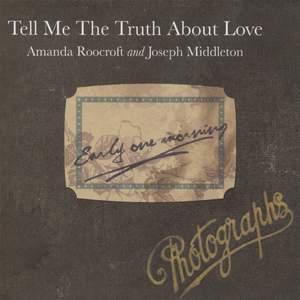
Prices shown exclude VAT. (UK tax is not payable for deliveries to United States.) See Terms & Conditions for p&p rates. | |  | Tell me the truth about love…
Barber, S: | Rain has fallen | Boulanger, L: | Vous m'avez regardé avec toute votre âme | Brahms: | Wir wandelten, wir zwei zusammen Op. 96/2 Am Sonntag Morgen Op. 49 No. 1 Du sprichst, daß ich mich täuschte, Op. 32 No. 6 | Bridge: | Adoration, H 57 | Chausson: | Le Charme, Op. 2 No. 2 (Silvestre) | Copland: | Heart we will forget him | Debussy: | La chevelure | Dunhill: | The Cloths of Heaven, Op. 30/3 | Fauré: | Fleur jetée, Op. 39 No. 2 | Grieg: | Jeg Elsker Deg, Op. 41 No. 3 | Hahn, R: | Infidélité | Ireland: | The Trellis | Loewe, C: | Ich kann's nicht fassen, nicht glauben, Op. 60 No. 3 | Marx: | Und gestern hat er mir Rosen gebracht | Quilter: | Love's Philosophy, Op. 3 No. 1 (Shelley) | Rachmaninov: | Summer nights Op.14 No. 5 | Schoenberg: | Warnung, Op. 3 No. 3 | Schubert: | Du liebst mich nicht D756 (Platen) | Schumann: | Seit ich ihn gesehen (No. 1 from Frauenliebe und Leben, Op. 42) | Strauss, R: | Nachtgang Op. 29 No. 3 | Weill, K: | Je ne t'aime pas (text: Maurice Magre) | Wieniawska: | En sourdine | Wolf, H: | O wär dein Haus durchsichtig wie ein Glas Geh' Geliebter, geh' jetzt (No. 34 from Spanisches Liederbuch: Weltliche Lieder) |
Some say love's a little boy, And some say it's a bird, Some say it makes the world go around, Some say that's absurd… W.H. AUDEN Charting the course of a love affair – in song – through the eyes of a young woman who begins by asking the universal question, Tell me the truth about love presents a programme of 19th and 20th century song. The album takes its title from Benjamin Britten’s 1938 seductive setting of W.H. Auden’s amusing poem and tries to pin down and define the most elusive of human emotions. The story takes us from love at first sight with Schumann’s Seit ich ihn gesehen, breathless with wonder and fervent reverance and Chausson’s Le charme which describes the quiver of excitement and the tender veneration the girl feels when the boy’s smile catches her unawares to Loewe’s Ich kann’s nicht fassen, nicht gluben to describe the lovers first encounter. As the love story unfolds and the couple become closer, it is illustrated with music such as Strauss’s Nachtgang, Rachmaninov’s Midsummer nights and Bridge’s Adoration. However the magic is soon broken and Sunday brings deception and betrayal. The girl finds out that the young man does not love her and she bitterly awakes from her dream. The feeling of love lost is brought to life through Brahm’s Am Sonntag Morgen, Schubert’s Du liebst mich nicht and Kurt Weill’s Je ne t’aime pas. As a postlude, Britten’s arrangement of Early one morning perfectly sums up the story of the young girl and the final message of ‘how could you use a poor maiden so?’ lingers in the ear. Amanda Roocroft has secured an international reputation as one of Britain’s most exciting singers, in opera, concert and recital and Joseph Middleton enjoys a busy and varied career as a chamber musician and song accompanist. “Roocroft is impassioned in outgoing songs such as Bridge's ecstatic 'Adoration', where accompanist Joseph Middleton is really able to let himself go, but she can sound strained elsewhere...The choice of songs, though, is its own strong selling point.” Gramophone Magazine, June 2013 | | | In stock - usually despatched within 1 working day. |
|
|
| |  | Kirsten Flagstad: Songs & Scenes
Legendary soprano Kirsten Flagstad is featured on this super budget re-issue in 10 songs by Grieg, Dido’s lament from Purcell’s most famous opera and Wagnerian scenes from Tannhauser, Tristan und Isolde and Götterdämmerung . | 
| | | Usually despatched in 8 - 10 working days. |
|
|
| |  | Till Solveig...
Debussy: | Trois chansons de Bilitis Apparition - song (1884) Beau Soir | Grieg: | Zur Rosenzeit (No. 5 from Seks Sange, Op. 48) Jeg Elsker Deg, Op. 41 No. 3 Seks Sange, Op. 48 No. 6 'Ein Traum' En svane (No. 2 from Seks Digte af Henrik Ibsen, Op. 25) Hjertets Melodier af H. C.Andersen, Op. 5 No. 1 'To brune Øjne' Peer Gynt: Solveig's Song Haugtussa, Op. 67 No. 6 'Killingdans' Med en vandlije, Op. 25 No. 4 | Rangström: | Pan | Sibelius: | Se'n har jag ej frågat mera, Op. 17 No. 1 (Text: J.L. Runeberg) Marssnön (Wecksell) Men min fågel märks dock icke, Op. 36, No. 2 Svarta rosor, Op. 36 No. 1 (Ernst Josephson) En slända, Op. 17, No. 5 Flickan kom från sin älsklings möte, Op. 37, No. 5 |
Karen Vourc'h (soprano) & Susan Manoff (piano) “In the works by Grieg, we wanted there to be unity in the language. So To brune ojne and Jeg elsker dig, by the Danish poet Andersen, are sung in Norwegian. The songs of Op. 48, settings of various German poems, were translated by the poet Nordahl Rolfsen, who was a close friend of Grieg’s. And I have chosen to sing his translations of the two German poems, by Goethe and von Bodenstedt: En drøm (Ein Traum) and I rosentiden (Zur Rosenzeit). They are usually sung in German. In Grieg there is no tragedy, but instead a gentle Nordic melancholy. In Sibelius, on the other hand, nature is brutal and love is passionate. Never has the personification of nature been as present as it is in these songs. Here, everything evokes the end of winter and the gushing waters of spring (Marssno, Men min fagel), betrayal (Se n har jag, Flickan kom ifran), despair and weariness with life, conveyed by the image of a rose tree growing in the heart (Svarta rosor); I thought it was interesting to include the song En slanda, in which the music, rather than the poem itself, evokes a dragonfly, symbolising the pleasures of life which come to distract the mind of a person who is lost in thought. The idea of completing this recording with Debussy’s very sensual evocations of amorous desire expressed in the three Chansons de Bilitis came quite naturally. Apparition is for me one of Mallarmé’s finest poems, and in his setting Debussy conveys perfectly the ecstatic yet unsettling feelings caused by love at first sight. We chose to end this recording with Beau Soir. This infinitely gentle song invites us to contemplate nature and the natural cycle of water and of human life.” Karen Vourc’h Karen Vourc’h studies with Christa Ludwig. In 2010, she will be Annina in Menotti's Saint of Bleeker Street at the Opéra de Marseille, Musetta at the Opéra de Monaco, Mélisande at the Opéra Comique, conducted by Sir John Eliot Gardiner, and Vincenette (Mireille) at the Chorégies d' Orange. In March she shared the rôle of Emilie in Kaia Saariaho’s new opera, with Karita Mattila, to good reviews. | | | Usually despatched in 3 - 4 working days. |
|
|
| |  | José Carreras - Vienna ComebackA live concert from the Vienna State Opera, September 16, 1988
Directed by Michael Fischer-Ledenice
Recording Date: 1988
Place of recording: Live from the Vienna State Opera
Running Time: 120 min
Picture Format: 4:3
Sound Format: PCM Stereo
Menu Languages NTSC: GB
| | | Usually despatched in 2 - 3 working days. |
|
|
| |  | Off the beaten trackPiano Rarities
Bartók: | Pe loc (No 3 from Romanian Folk Dances) | Cui: | Causerie (Etude), Op. 40 No. 6 | Driver: | Doll's Lullaby (from Seven Blakemore Poems) First recording Sarabande First recording | Fauré: | Après un rêve, Op. 7 No. 1 arr. Grainger | Glière: | Prelude in C minor, Op. 16, No. 1 Aux Champs, Op. 34, No. 7 Prelude in E flat (from 12 Children's Pieces, Op. 31) | Grieg: | Jeg Elsker Deg, Op. 41 No. 3 | Griffes: | The White Peacock | Ireland: | The Almond Trees | Lecuona: | Suite Andalucía: Córdoba | Liadov: | Berceuse, Op. 24, No. 2 Prelude in B flat minor, Op. 31, No. 2 Prelude in B minor, Op. 11, No. 1 | Rachmaninov: | Elegie, Op. 3 No. 1 | Schubert: | Moments Musicaux, D780: No. 3 in F minor arr. Godowsky | Scriabin: | Étude Op. 2 No. 1 in C sharp minor Mazurka in E minor, Op. 3 No. 7 Mazurka in C sharp minor, Op. 3, No. 6 Mazurka in E minor, Op. 25 No. 3 Etrangeté, Op. 63 No. 2 Masque, Op. 63, No. 1 | Shostakovich: | Prelude for piano, Op. 34 No. 17 in A flat major | Strauss, R: | Träumerei (No 4 from Stimmungsbilder, Op. 9) | Tchaikovsky: | Waltz in A flat, Op. 40 No. 8 | Vaughan Williams: | The Lake in the Mountains | Villa-Lobos: | O Polichinelo (from Prole do Bebê, book 1) |
| | | Usually despatched in 4 - 5 working days. |
|
|
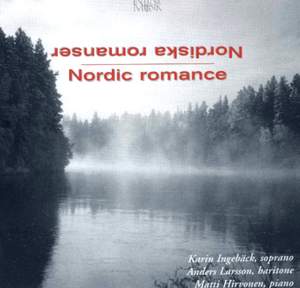
| |  | Nordic Romance
Frumerie: | Det är vackrast när det skymmer (Text: Pär Lagerkvist) | Grieg: | Med en vandlije, Op. 25 No. 4 Peer Gynt: Solveig's Song Jeg Elsker Deg, Op. 41 No. 3 Fem Digte af John Paulsen, Op. 26 No. 1 'Et håb' | Nystroem, G: | Bara hos den (Ebba Lindqvist) Önskan (Ebba Lindqvist) | Peterson-Berger: | Sång efter skördeanden (Erik Axel Karlfeldt) Jungfrun under lind (Ernst von der Recke) Marits visor (Björnstjerne Björnson) Intet är som väntanstider (Erik Axel Karlfeldt) Dina ögon äro eldar (Erik Axel Karlfeldt) Böljeby-vals (Erik Axel Karlfeldt) | Rangström: | Melodi (Bo Bergman) Pan Vingar i natten | Sibelius: | Demanten på marssnön, Op. 36 No. 6 (Wecksell) Säf, säf, susa, Op. 36 No. 4 (Text: Gustav Fröding) Den första kyssen, Op. 37 No. 1 (Text: J.L. Runeberg) | Sjöberg: | Tonerna (text: Erik Gustaf Geijer) | Stenhammar: | Lycklandsresan (text: Gustaf Fröding) Jungfru Blond och jungfru Brunett, Op. 26 No. 5 (Maiden Blond and Maiden Brunette) Flickan knyter i Johannenatten (Midsummer Eve) Flickan kom ifrån sin älsklings möte (The girl comes from meeting her lover) Prins Aladin av lampan (text: Gustaf Fröding) |
Karin Ingebäck (soprano), Anders Larsson (baritone), Matti Hirvonen (piano) | |
|
| |  | Elisabeth Söderström
Grieg: | Med en Primula veris, Op. 26 No. 4 Med en vandlije, Op. 25 No. 4 Jeg Elsker Deg, Op. 41 No. 3 | Liszt: | S'il est un charmant gazon, S284 O quand je dors (Hugo), S282 Enfant, si j'étais roi (Hugo), S283 Comment, disaient-ils (Hugo), S276 Mignons Lied (Kennst du das Land), S275 | Nielsen: | Æbleblomst, Op. 10/1 | Rachmaninov: | Sing not, O lovely one (Ne poi, krasavitsa, pri mne), Op. 4 No. 4 Fragment from A. Musset, Op. 21 No. 6 The Rat-Catcher, Op. 38 No. 4 | Schubert: | Seligkeit D433 (Holty) Gretchen am Spinnrade, D118 Freudvoll und leidvoll Erlkönig, D328 | Sibelius: | Små flickorna (Text: Hjalmar Procopé) | Strauss, R: | Freundliche Vision, Op. 48 No. 1 Ein Obdach gegen Sturm und Regen, Op. 46 No. 1 | Tchaikovsky: | Otchevo? (Why?), Op. 6 No. 5 None but the lonely heart, Op. 6 No. 6 The Cuckoo, Op. 54 No. 8 | Wolf, H: | Mögen alle bösen Zungen (No. 13 from Spanisches Liederbuch: Weltliche Lieder) |
Recorded 1971/84 | | | (also available to download from $10.50) | Usually despatched in 2 - 3 working days. (Available now to download.) |
|
|
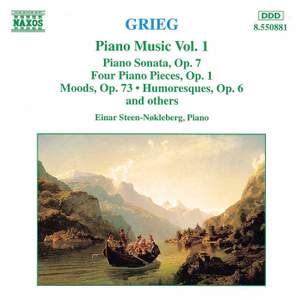
| |  | Grieg: Piano Music Vol. 1
Einar Steen-Nokleberg (piano) “These are the first four volumes of a complete Grieg cycle which stretches to no fewer than 14 discs. Since they are all at super-budget price they make a very competitive alternative to other complete or near-complete surveys. Einar Steen-Nøkleberg came into prominence during the 1970s and won numerous Norwegian and other prizes. He was professor of the piano at the Hanover Musikhochschule for a number of years and is the author of a monograph on Grieg's piano music and its interpretation. 8 550881: The first disc juxtaposes early pieces, the Sonata, Op 7, the Op 6 Humoresques and the Funeral March for Rikard Nordraak, all written in the mid-1890s with his very last piano work, Stimmungen (or 'Moods'), Op 73. He plays these bold and original pieces with great flair and understanding. Whatever its limitations there's much greater range in Grieg's piano music than is commonly realised and Steen-Nøkleberg is attuned to the whole spectrum it covers, whether in the Bartókian 'Mountaineer's Song' from the Op 73 to the charm and innocence of the Allegretto con grazia, the third of the Humoresques, Op 6. 8 550882: The 19Norwegian Folksongs (1896) are remarkable pieces as Grieg himself knew. He wrote to the Dutch composer, Julius Röntgen, of having 'put some hair-raising chromatic chords on paper. The excuse is that they originated not on the piano but in my mind.' Readers will recognise No 14 as the source of the theme for Delius's Onhearing the first cuckoo in spring. Steen-Nøkleberg plays them with great tonal finesse and consummate artistry. 8 550883: The most substantial work on this disc is the Ballade which Grieg wrote on his parents' death. This recording can hold its own with the best in this healthy area of the catalogue – even if there are moments when Steen-Nøkleberg seems too discursive. Yet what an imaginative colour he produces in the Adagio variation when the music suddenly melts pianissimo.8 550884: The Norwegian Peasant Dances are amazing pieces for their period, and though their audacity and dissonance were later overtaken by Bartók, they still retain their capacity to surprise. The playing conveys the extraordinary character and originality of these pieces as do few others. The smaller pieces contained on this disc – as well as on its companions – are full of rewards.” Gramophone Classical Music Guide, 2010 “The playing is full of imagination, character and sensitivity and the recordings... are very natural too. I would recommend them strongly even had they been at full price.” Gramophone Magazine | | | (also available to download from $6.00) | Usually despatched in 2 - 3 working days. (Available now to download.) |
|
|
| |  | Jussi Björling LiveBroadcast Concerts 1937-1960
Adam: | O Holy Night Recorded 20th December 1954 | Alfvén: | Skogen sover, Op. 28 No. 6 Recorded 11th April 1949 Jag längtar dig (Text: Ernest Thiel) Recorded 5th August 1960 | Althen: | Land, du välsignade (Thou Blessed Country) Recorded 12th May 1946 Land, du välsignade (Thou Blessed Country) Recorded 25th May 1952 | Flotow: | M'appari (from Martha) Recorded 19th November 1945 | Foster, S: | I Dream of Jeanie with the Light Brown Hair Recorded 19th November 1945 I Dream of Jeanie with the Light Brown Hair Recorded 7th November 1949 | Geehl: | For You Alone Recorded 21st January 1946 For You Alone Recorded 8th January 1951 | Giordano, U: | Come un bel dì di maggio (from Andrea Chénier) Recorded 23rd October 1950 | Glover: | Rose of Tralee Recorded 12th March 1951 | Godard, B: | Cachès dans cet asile (Jocelyn) Recorded 25th March 1946; sung in English Cachès dans cet asile (Jocelyn) Recorded 11th August 1949; sung in English | Gounod: | Quel trouble inconnu me pénètre… Salut! Demeure chaste et pure (from Faust) Recorded 12th May 1946 Nuit d'hyménée from Roméo et Juliette Recorded 23rd October 1949 Anna-Lisa Björling (soprano) Nuit d'hyménée from Roméo et Juliette Recorded 30th September 1951 Bidú Sayão (soprano) Prison Scene (from Faust) Recorded 5th December 1937; Björling sings in Swedish | Grieg: | Jeg Elsker Deg, Op. 41 No. 3 Recorded 25th March 1946 | Hardelot: | Because Recorded 25th March 1946 | Herbert, V: | Neapolitan Love Song Recorded 25th March 1946 Neapolitan Love Song Recorded 4th April 1949 | Leoncavallo: | Recitar!...Vesti la giubba (from I Pagliacci) Recorded 16th February 1951 Mattinata - 'L'aurora di bianco vestita' Recorded 15th March 1948 Recitar!...Vesti la giubba (from I Pagliacci) Recorded 12th March 1951 | Mascagni: | Addio alla madre (from Cavalleria Rusticana) Recorded 4th April 1949 | Massenet: | Instant charmant … En fermant les yeux (from Manon) Recorded 19th November 1945 Je suis seul, seul enfin... Ah fuyez douce image (from Manon) Recorded 23rd October 1949 Je suis seul, seul enfin... Ah fuyez douce image (from Manon) Recorded 15th March 1948 Instant charmant … En fermant les yeux (from Manon) Recorded 8th January 1951 | Meyerbeer: | Pays merveilleux... Ô paradis (from L'Africaine) Recorded 23rd October 1950 Pays merveilleux... Ô paradis (from L'Africaine) Recorded 5th December 1937 | Millöcker: | Ich hab' kein Geld, bin vogelfrei (from Der Bettelstudent) Recorded 25th May 1952; sung in Swedish | Morgan, O: | Clorinda Recorded 15th March 1948 | Nordqvist: | Till havs (Towards the Sea) Recorded 20th December 1954 | Peterson-Berger: | Jungfrun under lind (Ernst von der Recke) Recorded 12th May 1946 Jungfrun under lind (Ernst von der Recke) Recorded 11th April 1949 Jungfrun under lind (Ernst von der Recke) Recorded 8th January 1951 När jag för mig själv (When I Walk by Myself) Recorded 20th December 1954 | Ponchielli: | Cielo e mar! (from La Gioconda) Recorded 30th September 1951 | Puccini: | O soave fanciulla (from La Bohème) Recorded 25th September 1949 Licia Albanese (soprano) Che gelida manina (from La Bohème) Recorded 23rd October 1949 O soave fanciulla (from La Bohème) Recorded 23rd October 1949 Anna-Lisa Björling (soprano) E lucevan le stelle (from Tosca) Recorded 30th September 1951 Che gelida manina (from La Bohème) Recorded 7th November 1949 Donna non vidi mai (from Manon Lescaut) Recorded 8th January 1951 O sventata, sventata (from La Bohème) Recorded 30th January 1956 Che gelida manina (from La Bohème) Recorded 30th January 1956 Si, mi chiamano Mimi (from La Bohème) Recorded 30th January 1956 O soave fanciulla (from La Bohème) Recorded 30th January 1956 Renata Tebaldi (soprano) Recondita armonia (from Tosca) Recorded 5th December 1937 | Rachmaninov: | Lilacs, Op. 21 No. 5 Recorded 15th March 1948 V molchanii nochi taynoy, Op. 4 No. 3 Recorded 23rd October 1950 | Rangström: | Tristans död Recorded 11th April 1949 | Romberg, S: | Will You Remember (from Maytime) Recorded 21st January 1946 | Schubert: | An Sylvia, D891 sung in English; recorded 19th November 1945 Ständchen 'Leise flehen meine Lieder', D957 No. 4 Recorded 4th April 1949 | Sjögren: | I drömmen du är mig nära Recorded 11th April 1949 | Söderman: | Trollsjön Recorded 11th April 1949 Trollsjön Recorded 25th May 1952 | Strauss, R: | Ständchen, Op. 17 No. 2 Recorded 7th November 1949 Zueignung, Op. 10 No. 1 Recorded 23rd October 1950 | Tchaikovsky: | Kuda, Kuda 'Lensky's Aria' (from Eugene Onegin) Recorded 5th August 1960; sung in Swedish | Tosti: | L'alba separa dalla luce l'ombra Recorded 30th September 1951 L'alba separa dalla luce l'ombra Recorded 11th April 1949 | Verdi: | Quel suon…Ah! Che la morte ognora (from Il Trovatore) Recorded 21st January 1946 Eleanor Steber (soprano) Solenne in quest'ora (from La Forza del Destino) Recorded 5th December 1937 Se quel guerrier io fossi!…Celeste Aida (from Aida) Recorded 12th March 1951 Celeste Aida (from Aida) Recorded 12th March 1951 | Wagner: | In fernem Land (from Lohengrin) Recorded 20th December 1954 In fernem Land (from Lohengrin) Recorded 5th August 1960; sung in Swedish |
This month is an excellent one for Björling fans. This collection is a treasury of rare performances from the US and Sweden and includes previously unreleased material. There is commentary and interviews, as well as Art and popular songs, Arias and duets and there are many guest artists such as Licia Albanese, Anna Lisa Björling and Renata Tebaldi. “Björling recorded [Lensky's aria] many times but never, I think, so poignantly as here. As a prologue to this year's centenary celebrations the album is a worthy offering and this track an especially moving example of the great tenor's art at its best.” Gramophone Magazine, March 2011 | | | Usually despatched in 2 - 3 working days. |
|
|
| |
|