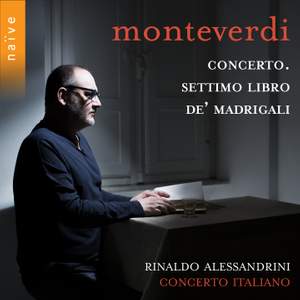
Prices shown exclude VAT. (UK tax is not payable for deliveries to United States.) See Terms & Conditions for p&p rates. | |  | Monteverdi: Il settimo libro de madrigali, 1619 'Concerto'
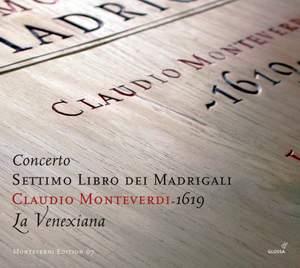
“still has no serious rival as a recording of the collection as a whole.” BBC Music “Book 7 (1619) gathers together works that must have been written many years apart. The common denominator is its consistent use of instruments in conjunction with the voices. Recording the complete book is a considerable undertaking, only previously achieved by the Consort of Musicke (Virgin Veritas, nla). La Venexiana's free approach to rhythm is alive to the spirit of the music. Ohimé, dov'è il mio ben manages to be a set of variations on the Romanesca theme, and something else entirely: they convince you that this double-reading is precisely what Monteverdi intended. Though not everything reflects the multi-faceted Monteverdi aesthetic, the pieces that are recorded less often still shed a useful light on his working process. As the first intégrale by a modern Italian ensemble, this is a significant addition to the catalogue.” Gramophone Classical Music Guide, 2010 | |
|
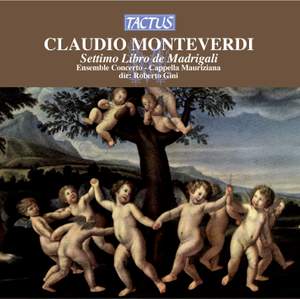
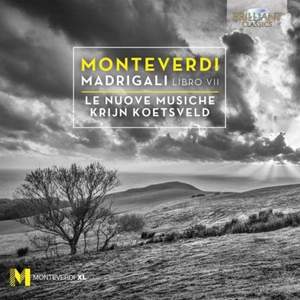
| |  | Monteverdi: Il settimo Libro de Madrigali 'Concerto', 1619
Monteverdi: | Il settimo libro de madrigali, 1619 'Concerto' |
CD 1: Tempro la cetra; A quest’olmo, a quest’ombre; Non è di gentil core; O come se’ gentile; Io son pur vezzosetta; O viva fiamma; Vorrei baciarti, o Filli; Dice la mia bellissima Licori; Ah, che non si conviene; Non vedrò mai le stele; Ecco vicine, o bella tigre, l’ore CD 2: Perchè fuggi tra salci; Tornate, o cari baci; Soave libertate; S’el vostro cor, Madonna; Interrotte speranze; Augellin, che la voce; Vaga su spina ascosa; Eccomi pronta ai baci; Parlo, misero, o taccio?; Tu dormi?; Al lume delle stele; Con che soavità; Romanesca: Ohimè dov’è il mio ben CD 3: Lettera amorosa: Se i languidi miei sguardi; Partenza amorosa: Se pur destina; Chiome d’oro; Amor che deggio far?; Ballo: Tirsi e Clori
The ‘Concerto’ (as Claudio Monteverdi entitled his Seventh Book of Madrigals) was published five years after the Sixth Book had appeared. It represents a clear break with Monteverdi’s earlier publications: here the madrigal is transformed or, perhaps, it would be better to say it has vanished, at least in the form that would have been recognised up to that point. Of 32 compositions there is not a single fivevoice madrigal, only pieces for one to four voices, all with basso continuo, some with violins, along with works that might be called ‘experimental’. It was the heterogeneous nature of this collection that led Monteverdi to use the title ‘Concerto’. Marco Longhini’s new complete critical edition, the first since Malipiero’s 1932 edition, was prepared specifically for this recording. “The countertenor duet in Ohimè dov'è il mio ben is ravishing, and is accompanied by some brilliantly stylish playing n the harpsichord by Carmen Leoni…” BBC Music Magazine, November 2008 **** “Despite the odd blemish, the set as a whole breathes a sense of commitment often lacking from La Venexiana's, and the sound recording has greater presence. The concluding ballo, "Tirsi e Clori", is something of a showstopper: the cast is audibly enjoying itself.” Gramophone Magazine, January 2009 “It's a huge, teemingly inventive and experimental collection that Delitiae Musicae present in Marco Longhini's performing edition. Both the vocal forces and the instrumental commentaries are beautifully varied in his performances...this group's Monteverdi series continues to be one of the highlights of the Naxos catalogue and an outstanding bargain.” The Guardian, 26th September 2008 **** | | | (also available to download from $12.50) | Usually despatched in 2 - 3 working days. (Available now to download.) |
|
|
| |  | Monteverdi: Madrigali
| | | In stock - usually despatched within 1 working day. |
|
|
| |  | Monteverdi: The Innovator
Claudio Monteverdi’s innovations mark the transition from the Renaissance to the Baroque, and he and Heinrich Schütz are considered by many to be the most important composers of the seventeenth century. This major 10-CD set features some of the greatest interpreters of Monteverdi’s music, including the renowned Concerto Italiano and its music director Rinaldo Alessandrini. Claudio Monteverdi published his first collection of sacred works in 1582 at the age of fifteen and composed at least eighteen operas. Another genre he devoted particular attention to was the madrigal, which he viewed as material for experimentation all his life, transferring the monodic principle of opera to the originally five-part madrigal form and adding instruments to provide the harmonic basis in order to make it possible for madrigals to contain solo parts or even consist entirely of a solo part. | | | In stock - usually despatched within 1 working day. |
|
|
| |
|