Prices shown exclude VAT. (UK tax is not payable for deliveries to United States.) See Terms & Conditions for p&p rates. | |  | Wagner Heroes
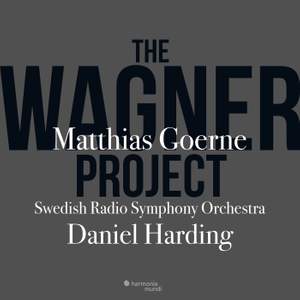
2013 sees a series of Wagner reissues on Eloquence from complete operas and highlights to Wagner singer portraits and even an audiobook! This is a 50-year retrospective (1950 – 2000) of great Wagner singing on Decca and Deutsche Grammophon featuring twelve extracts from eight operas (including all four operas of the Ring cycle) with nine great singers. Wagner’s knowledge of heroes derived from two sources: the myths of ancient Greece, and the sagas and poetry of northern Europe. In both traditions, heroes possess god-like attributes which set them apart from non-heroic mortals and reinforce the view that they are superhuman. They often have gods as parents or grandparents. But Wagner humanizes his heroes, most notably Siegmund (sung inimitably by Jon Vickers in the legendary Decca recording of Die Walküre with Erich Leinsdorf), and the naïve Siegfried (with Wolfgang Windgassen singing both the Siegfried and Götterdämmerung Siegfrieds). Other great heldentenors represented on this collection include James King and James McCracken. Celebrated bass-baritones are also represented here: Paul Schöffler (singing Wotan’s Farewell from a rare 1950 recording), Ernst Haefliger (as the Dutchman) and most recently, Matthias Goerne (Wolfram). The insightful notes are provided by Wagner scholar Peter Bassett and a photo gallery of the singers is also included. | 
| | | (Sorry, download not available in your country) | In stock - usually despatched within 1 working day. |
|
|
| |  | Wagner in SwitzerlandScenes & Orchestral Pieces from The Flying Dutchman and The Ring Of The Nibelung
Celebrating the 200th Anniversary of Wagner in 2013, David Zinman conducts the Tonhalle Orchestra Zurich performing Scenes and Orchestral Pieces from “The Flying Dutchman” and “The Ring of the Nibelung”. David Zinman is one of the world’s finest, most respected conductors, whose passion for music, dedication to furthering careers of young musicians and as an orchestral builder makes ‘music a better world’. This CD features famous international Wagner baritone Egils Silins who can be heard as “Dutchman” and as “Wotan”. Zinman has extended his contract with the Tonhalle Orchestra Zurich until 2014, where, since 1995 as conductor and music director, he has raised the standard of the orchestra to an international level. Zinman’s previous recordings on Sony have been received with superb critical acclaim. In January 2006, David Zinman, received the prestigious Theodore Thomas Award, presented by the Conductors Guild in New York’s Roosevelt Hotel. The award is presented biannually to a conductor, in recognition of outstanding achievement and extraordinary service to one’s colleagues in advancing the art and science of conducting, reflecting honour on the profession. | 
| | | In stock - usually despatched within 1 working day. |
|
|
| |  | Dietrich Fischer-Dieskau sings Opera Arias
Beethoven: | Ha! Welch ein Augenblick! (from Fidelio) Chorus and Orchestra of Bavarian State Opera, Ferenc Fricsay | Mozart: | Der Vogelfänger bin ich, ja (from Die Zauberflöte) RIAS Berlin Symphony Orchestra, Ferenc Fricsa Ein Mädchen oder Weibchen (from Die Zauberflöte) RIAS Berlin Symphony Orchestra, Ferenc Fricsa Fin ch'han dal vino (from Don Giovanni) RIAS Berlin Symphony Orchestra, Ferenc Fricsa Deh! vieni alla finestra (from Don Giovanni) RIAS Berlin Symphony Orchestra, Ferenc Fricsa | Verdi: | In braccio alle dovizie (from I Vespri Siciliani) Berliner Philharmoniker, Alberto Erede Pari siamo! (from Rigoletto) Berliner Philharmoniker, Alberto Erede Cortigiani, vil razza dannata (from Rigoletto) Berliner Philharmoniker, Alberto Erede Il balen del suo sorriso (from Il Trovatore) Berliner Philharmoniker, Alberto Erede Alla vita che t'arride (from Un ballo in maschera) Berliner Philharmoniker, Alberto Erede Alzati…Eri tu che macchiavi quell'anima (from Un Ballo in Maschera) Berliner Philharmoniker, Alberto Erede Per me giunto è il di (from Don Carlo) Berliner Philharmoniker, Alberto Erede Ehi! Paggio! ... L'onore! Ladri! (from Falstaff) Berliner Philharmoniker, Alberto Erede Eh! Taverniere … Mondo ladro (from Falstaff) Berliner Philharmoniker, Alberto Erede | Wagner: | Als du in kuhnem Sange uns bestrittest (from Tannhäuser) Philharmonia Orchestra, Wilhelm Schüchter O du, mein holder Abendstern (from Tannhäuser) Orchestra of the Bayreuth Festival, André Cluytens Die Frist ist um (from Der fliegende Holländer) Orchestra of the Berlin State Opera, Franz Konwitschny |
| | | In stock - usually despatched within 1 working day. |
|
|
| |  | José van Dam: 30 Years at la Monnaie/De Munt
Berlioz: | Une puce gentille 'Flea Song' (from La damnation de Faust) Recorded in 2002 Antonio Pappano | Debussy: | Pelléas part ce soir (from Pelléas et Mélisande) Recorded in 1999 Juanita Lascarro (Mélisande), Donald McIntyre (Arkel) George Benjamin | Mozart: | Deh! vieni alla finestra (from Don Giovanni) Recorded in 1987 Sylvain Cambreling La ci darem la mano (from Don Giovanni) Recorded in 1987 Joana Kozlowska (Zerlina) Sylvain Cambreling | Mussorgsky: | Boris Godunov: Coronation Scene Recorded in 1986 Michael Schønwandt Oy, dušno, dušno! - Prošcay, moy sïn (from Boris Godunov) Recorded in 1986 Bart Ravache (Fiodor) Michael Schønwandt | Offenbach: | Scintille, diamant (from Les Contes d'Hoffmann) Recorded in 1985 Sylvain Cambreling | Rossini: | Il turco in Italia 'Credete alle femmine' Recorded in 1995 Tiziana Fabbricini (Fiorilla) Iván Fischer | Strauss, R: | Wo ist er, dessen Sündenbecher jetzt voll ist? (from Salome) Recorded in 1992 Catherine Malfitano (Salome), Scot Weir (Narraboth) Antonio Pappano | Verdi: | Ella giammai m'amò (from Don Carlo) Recorded in 1981 Sir John Pritchard Il Grande Inquisitor! ... Son io dinanzi al Re? (from Don Carlo) Recorded in 1981 Jules Bastin (Grand Inquisitor), Arnaud Dufrasne (Lerma) Sir John Pritchard Plebe! Patrizi! Popolo! (from Simon Boccanegra) Recorded in 1990 Nancy Gustafson (Amelia), Carlos Krause (Pietro), William Stone (Paolo), Alberto Cupido (Gabriele), David Pittsinger (Fiesco) Sylvain Cambreling L'onore! Ladri! (from Falstaff) Recorded in 1987 Sylvain Cambreling Eh! Taverniere … Mondo ladro (from Falstaff) Recorded in 1987 Sylvain Cambreling | Wagner: | Die Frist ist um (from Der fliegende Holländer) Recorded in 1984 Sylvain Cambreling Nein, Lasst ihn unenthüllt (Parsifal) Recorded in 1989 Sylvain Cambreling Was duftet doch der Flieder (from Die Meistersinger von Nürnberg) Recorded in 1985 Sir John Pritchard Wahn! Wahn! Überall Wahn! (from Die Meistersinger von Nürnberg) Recorded in 1985 Sir John Pritchard |
José van Dam (bass-baritone) La Monnaie/De Munt Symphony Orchestra and Choir This world famous singer was Belgian, yet only appeared at La Monnaie on the 20th anniversary of his career. After returning from exile, he took many roles and has worked with some of the greatest conductors. This CD includes works by Wagner, Strauss, Mussorgsky, Verdi, Mozart, Rossini, Debussy, Berlioz and Offenbach. These CDs contain a fragment of history. | | | In stock - usually despatched within 1 working day. |
|
|
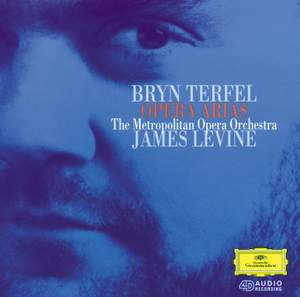
| |  | Bryn Terfel sings Wagner
“The challenge of Wagner plainly suits Bryn Terfel to perfection both musically and dramatically; the impression of fully formed characterizations is irresistable. Abbado and the orchestra are plainly inspired by their soloist to give incandescent performances, full and intense.” Penguin Guide, 2010 edition *** | | | In stock - usually despatched within 1 working day. |
|
|
| |  | Wagner & Strauss: Famous Opera Scenes
| | | In stock - usually despatched within 1 working day. |
|
|
| |  | George London sings Wagner
George London was born in Montreal, Canada; when he was fifteen the family moved to the United States. His original surname was Burnstein (he also used Burnson for a time) and his forebears were from Širvintos in Lithuania. He began his singing studies in Los Angeles, and by the 1940s was touring with a trio that included Frances Yeend and Mario Lanza. His début in a leading role was in Rigoletto for San Francisco Opera in 1946. Three years later, in Vienna, he sang Amonasro in Aida, a role that also launched his Metropolitan Opera career in 1951. It was while London was singing the four villains in The Tales of Hoffmann in Vienna that Hans Knappertsbusch decided to recommend London to Wieland Wagner for the 1951 Bayreuth Festival. Seven years later, Knappertsbusch recorded four great Wagner scenes for Decca with George London. The recording appears here in its entirety, supplemented with one of the great scenes from their 1962 performance of Parsifal (recorded ‘live’ at the Bayreuth Festival it went on to become one of most venerated recordings of this opera) and the closing scene of Rheingold in which London appears on the celebrated Solti recording as Wotan. London’s vocal health began to deteriorate rapidly during the 1963–64 season; eventually the problem was diagnosed as paralysis of the vocal cords. Efforts to restore the voice proved fruitless, and in due course London had to accept that, at 46, his singing career was over. The operatic world had suffered a great loss. He died after a series of heart attacks in March 1985. George London is remembered as an exceptional and intelligent artist who combined a great voice and superb musicianship with a commanding stage presence. “his singing compels admiration: a fine firm line, unfailing exactness of intonation and rhythm (how often can that be said of most Wagnerian singers?), exemplary enunciation, intelligent and expressive treatment of words and a true sense of character – no wonder he is highly regarded by Bayreuth. He is supported here by most beautiful orchestral playing – Knappertsbusch’s masterly hand is everywhere apparent – which sets off Wagner’s instrumentation in a rich glow. […] These are not merely good performances: they have that intense, imaginative re-recreation of the music which lifts them out of that category.” Gramophone Magazine, March 1959 | 
| | | Scheduled for release on 15 July 2013. Order it now and we will deliver it as soon as it is available. |
|
|
| |  | The Art of Bryn Terfel
Berlioz: | Une puce gentille 'Flea Song' (from La damnation de Faust) Voici des roses (Air de Méphistophélès) | Gurney: | Sleep | Gwynn Williams: | My Little Welsh Home | Handel: | Si, tra i ceppi (from Berenice) Te Deum in D major 'Dettingen', HWV283: Vouchsafe, O Lord | Hughes, J: | Guide me, O thou great Redeemer (Cwm Rhondda) | Loewe, F: | Paint Your Wagon: They Call the Wind Maria | Mahler: | In diesem Wetter, in diesem Braus (Kindertotenlieder) | Mendelssohn: | Lord God of Abraham (Elijah) | Mozart: | Non piu andrai, farfallone amoroso (from Le Nozze di Figaro) Il core vi dono (from Così fan tutte) Ein Mädchen oder Weibchen (from Die Zauberflöte) Io ti lascio, oh cara, addio, KAnh. 245 | Puccini: | Tre sbirri...Una carozza...Presto 'Te Deum' (from Tosca) | Quilter: | Go, lovely Rose, Op. 24 No. 3 (Edmund Wailer) | Rutter: | The Lord bless you and keep you | Schubert: | Erlkönig, D328 Du bist die Ruh D776 (Rückert) Der Musensohn, D764 (Goethe) | Schumann: | Du bist wie eine Blume, Op. 25 No. 24 Die beiden Grenadiere, Op. 49 No. 1 Mein Wagen rollet langsam, Op. 142 No. 4 | Sullivan, A: | Hereupon we’re both agreed (The Yeomen of the Guard) | trad.: | Amazing Grace Shenandoah Ar hyd y Nos (All through the night) Suo gan Deep River | Vaughan Williams: | The Vagabond (from Songs of Travel) Silent Noon | Verdi: | Ehi! Paggio! ... L'onore! Ladri! (from Falstaff) | Wagner: | Die Frist ist um (from Der fliegende Holländer) O du, mein holder Abendstern (from Tannhäuser) |
Bryn Terfel is one of Britain’s best-loved singers, as comfortable in popular musical repertoire as he is in the great roles of opera. Ahead of his curated BrynFest appearances at London’s Southbank Centre, and his career-defining role as Wotan in Wagner’s Ring Cycle at the Royal Opera House this autumn, Deutsche Grammophon is proud to release this 2CD career retrospective. | | | (Sorry, download not available in your country) | Usually despatched in 2 - 3 working days. |
|
|
| |  | Wagner: Orchestral Music and Arias
This double-CD set brings together for the first time two of Claudio Abbado’s Wagner recordings, the first of orchestral music, the second a selection of vocal works with Bryn Terfel, the leading Wagner baritone of our day. “Terfel brings a wide palette of tone to peer into the Dutchman's soul and express Wolfram's evening thoughts, where his legato and half-voice are admirable” (Gramophone) | | | (Sorry, download not available in your country) | Usually despatched in 2 - 3 working days. |
|
|
| |  | Wagner: Opera Arias
Simon Estes, the American bass-baritone, had an extraordinary beginning to his career. As a young medical student in Iowa he was fascinated by show tunes and loved singing, but knew nothing about opera, until a voice teacher heard him and lent him some opera recordings. This was the turning point. He auditioned and won a full scholarship to the Juilliard School in New York in 1963, and two years later he began his operatic career singing Ramfis in Aida at the Deutsche Oper, Berlin. Many other major roles followed, including Philip II (Don Carlos), Boris (Boris Godunov), John the Baptist (Salome) Gounod’s Méphistophélès (Faust) and Porgy (Porgy and Bess). He also became renowned for his striking performances in Wagner’s operas. He became the first black male artist to take a major role at Bayreuth when he sang the title in role in Der fliegende Holländer, giving an astonishing performance, and he continued in the role for several seasons. He was also praised for his intelligent, articulate interpretation of Wotan. This CD includes a selection of extended extracts from Der fliegende Holländer (Dutchman), Die Walküre (Wotan) and Parsifal (Amfortas), where Estes is joined by soprano Eva-Maria Bundschuh (Brünnhilde), and bass Heinz Reeh (Titurel). “As Amfortas Estes is once again at his very best, bringing out the anguish and pity in the music, both in his rich, intense tone and his well-considered diction – the cries of “Erbarmen” truly searing; again, this must
rank with the best interpreters of the past. The recording tends to favour the singer, who – make no mistake – is that rarity today, a really heroic bass-baritone.” Gramophone Magazine | | | Usually despatched in 2 - 3 working days. |
|
|
| |
|