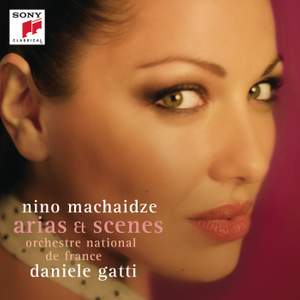
Prices shown exclude VAT. (UK tax is not payable for deliveries to United States.) See Terms & Conditions for p&p rates. | |  | Nino Machaidze: Arias & Scenes
Nino Machaidze’s new recording for Sony Classical, “Arias & Scenes”, looks further ahead to the new roles she will sing in the future. Machaidze is joined by Orchestre national de France and their resident Maestro Daniele Gatti. French repertoire has become a major part of Machaidze’s career and is represented in this recital with arias by Massenet, Bizet and Ambroise Thomas. Machaidze debuted the role of Thaïs last year alongside Plácido Domingo in the lead role of Athanaël in Seville. She will debut at the Vienna State Opera this June in the role of Juliette with Plácido Domingo conducting and Piotr Beczala as Roméo. Since her momentous breakthrough replacing Anna Netrebko as Juliette alongside Rolando Villazon’s Roméo in Salzburg’s 2008 production of Roméo et Juliette (Gounod), Nino’s career has taken off. In an astonishingly short amount of time she debuted at many of the world’s major opera houses, in the lead heroine-roles alongside some of the greatest singers of our time, including Plácido Domingo (Thaïs) , Vittorio Grigolo (Roméo et Juliette at both La Scala and LA Opera) and Juan-Diego Flórez (I Puritani) among others. | 
| | | In stock - usually despatched within 1 working day. |
|
|
| |  | Joan Sutherland “La Stupenda”
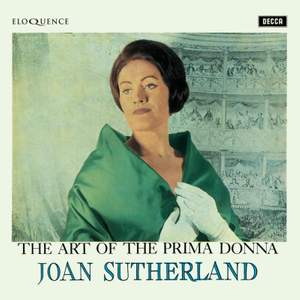
Arditi: | Il Bacio with Instrumental Accompaniment | Donizetti: | Ancor non giunse! ... Regnava nel silenzio…Quando rapito in estasi (from Lucia di Lammermoor) Paris Conservatoire Orchestra, Nello Santi Ardon gli incensi (from Lucia di Lammermoor) Paris Conservatoire Orchestra, Nello Santi Ah! tardai troppo...O luce di quest'anima (from Linda di Chamounix) Paris Conservatoire Orchestra, Nello Santi | Gounod: | Ah! Je veux vivre dans ce rêve (from Roméo et Juliette) rchestra of the Royal Opera House, Covent Garden, Francesco Molinari-Pradelli | Thomas, Ambroise: | A vos jeux, mes amis (from Hamlet) | Verdi: | È strano! è strano!...Ah! fors è lui (from La traviata) Caro nome (from Rigoletto) Mercè, dilette amiche 'Bolero' (from I Vespri Siciliani) Mia madre aveva...Piangea cantando...Ave Maria (from Otello) Orchestra of the Royal Opera House, Covent Garden, Francesco Molinari-Pradelli |
| | | In stock - usually despatched within 1 working day. |
|
|
| |  | COLORaturaS
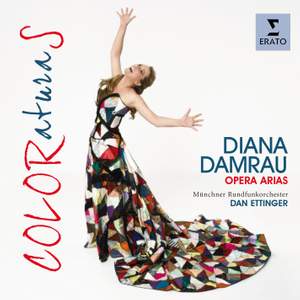
The multi-faceted German coloratura soprano, who has been described as “the Meryl Streep of classical music” shows her vocal and dramatic range with this collection of arias from the 19th and 20th centuries. The repertoire ranges from Rossini and Verdi to Stravinsky and Bernstein, from comedy to tragedy and covers four languages: German, Italian, French and English. It includes Zerbinetta’s marathon coloratura aria from Ariadne auf Naxos, one of the operas which spearheaded Damrau’s international career. “Damrau has … strong opinions on the use of coloratura for dramatic effect,” wrote Opera News in an interview with the soprano. “Unlike some singers of previous generations, who were encouraged to cut back on the vocal garni by conductors who found the flourishes suspect, Damrau employs embellishments to emphasize the impact of language ….What's more, her Italian diction is superb, something that cannot always be said for Central and Eastern European artists. ‘Oh, I'm so glad to hear that,’ she says, ‘because I have a facility for languages, and I work very hard to communicate well.’ Whether Rosina [in Il barbiere di Siviglia] is expressing delight over Almaviva's furtive caress or anger over his imagined betrayal, Damrau deploys her clarity of speech to vivid effect; she points out that in ‘Una voce poco fa’,’ [featured on this recital] the word vipera is key — the girl knows full well she can be a viper. Later on, the bite she puts into the word traditore, for example, cuts to the quick.” When Damrau performed Rosina at the Met, The New York Times wrote that: “the lovely German coloratura Diana Damrau was absolutely dazzling here. Interpolating extra-high roulades into the music, she brought her bright, clear and very sizable voice to the role, singing with impeccable accuracy and delightful impishness. This Rosina was no innocent. You immediately believed her when she explained in the touchstone aria ‘Una voce poca fa’ that though for the most part she is a docile and obedient thing, when crossed in love she becomes a viper.” Donizetti also appears in this recital, with an aria from Linda di Chamounix. Damrau took on the challenge of following Natalie Dessay as Lucia di Lammermoor at the Met. “Ms. Damrau dispatched the passage-work, trills and top notes with aplomb,” wrote the New York Times. “Her sound was warm, plush and clear ... That Ms. Damrau executed the Mad Scene’s spiraling vocal roulades so accurately and held sustained tones with such penetrating steadiness lent a quality of eerie control to Lucia’s madness. And her gleaming top notes filled the house.” “Diana Damrau is the most thrilling high soprano of our day.” The Observer “The point with Damrau ... is that she’s fearless, impressively unpredictable, and about as far as possible from being a ‘production line’ soprano.” Classic FM magazine “Diana Damrau is ice and fire. With a formidable technique allied to effortless artistry, there is it seems nothing that she cannot do, certainly in the vocal fireworks department. …it's her Gilda where everything melds into perfection. The lightly coloured tone in the introductory phrases to 'Caro nome' proclaim her innocence; the vocal slide into the flute solo that introduces the aria sings of her love for the Duke; and by the time you arrive at the tender trill on the aria's penultimate phrase and the final effortlessly sustained note you're just about in love yourself.” BBC Music Magazine, February 2010 ***** | | | In stock - usually despatched within 1 working day. |
|
|
| |  | Natalie Dessay - Mad Scenes
In five spectacular coloratura scenes from the 19th and 20th centuries, Natalie Dessay goes beyond the edge of sanity and touches the limits of vocal virtuosity. “You’d be mad to miss it” proclaimed the striking poster for the opening poduction of the 2007-2008 season at the Metropolitan Opera, New York. The image on the poster was of French soprano Natalie Dessay, waif-like and wild-eyed, in a wedding dress and in character as Donizetti’s Lucia di Lammermoor, opera’s quintessential mad heroine. This collection features Dessay in five scenes of coloratura madness – or near-madness -- by two Italian composers, two French composers, and one (satirising) American. Soprano characters who go insane are quite a feature of 19th-century opera, providing composers with an opportunity to write virtuosic and often adventurous music to express the wanderings of the poor heroine’s mind. Here, Dessay sings the French version of the Bride of Lammermoor’s famous post-nuptial scene. Lucie di Lammermoor was performed in Paris in 1839, four years after the opera’s Italian premiere in Naples. Dessay first sang the Italian version on stage in Chicago in 2004. As Opera News wrote: “The French coloratura … was in superb form, her instantly recognizable timbre focused and delivered with just enough bite to keep things interesting. The voice acquires a distinctive shimmer above the staff, and it coursed through the elaborate filigree with precision and spontaneity, exhibiting liquid trills and a lovely diminuendo. Dramatically, the soprano created a tightly wound, febrile presence at her first entrance, a fragile slip of a girl overwhelmed by the dominating men around her. … The cadenza was quite heartrending … ‘Spargi d’amaro pianto’ was capped with a fully voiced, gleaming interpolation in alt, bringing a highly individual performance to a triumphant conclusion.” Donizetti’s heroine is driven to murder, but Elvira, the bride-to-be at the centre of Bellin’s I puritani, premiered in Paris in 1835, is no particular danger to anyone; her insanity is only temporary and the opera ends happily. Her mad scene, a more conventional operatic construction than Lucia’s, features one of Bellini’s loveliest fine-spun melodies. Nor is madness terminal in Meyerbeer’s Dinorah (1859), set in rural Brittany and notable for featuring a (silent) supporting role for a pet goat. The heroine’s delicious ‘Ombre légère’ is the opera’s greatest hit and here Dessay performs the extraordinary feat of singing a stratospheric A flat above top C. Far more tragic in its implications is the mad scene of Ophélie from Ambroise Thomas’ Hamlet (1868), described by London’s Observer as “a fiendish set-piece which … Natalie Dessay carries off with wondrous aplomb”. Poor Ophelia strays through a number of contrasting sections before a vertiginous suicidal finale. Dessay has performed Ophélie in London, Barcelona (available on an EMI Classics DVD) and Toulouse; she returns to the role in Spring 2010 at the Metropolitan Opera. Fast-forwarding nearly 100 years Dessay takes on Cunégonde in Leonard Bernstein’s Candide, based on Voltaire’s satirical novel and first staged on Broadway in 1956. This is not quite a mad scene: it starts off with Cunégonde bemoaning her descent into vice, but she cheers up at thoughts of her life of luxury, her near-hysterical coloratura reflecting the bubbles in her champagne and the sparkle of her jewels. Recorded live at the EMI centenary concert at Glyndebourne, this performance was welcomed by Gramophone as an “hilarious performance, with Dessay dazzling in the lightest of coloratura”. | | | In stock - usually despatched within 1 working day. |
|
|
| |  | Natalie Dessay - The Miracle of the VoiceGreatest Moments on Stage
Bernstein: | Glitter and be gay (from Candide) London Philharmonic Orchestra, Sir Andrew Davis | Donizetti: | Il dolce suono mi colpì di sua voce! … Spargi d'amaro pianto (from Lucia di Lammermoor) Orchestre & Chœurs de l’Opéra de Lyon, Evelino Pidò | Mozart: | O zittre nicht (from Die Zauberflöte) Les Arts Florissants, William Christie Der Hölle Rache kocht in meinem Herzen (from Die Zauberflöte) Orchestre & Chœurs de l’Opéra National de Paris, Ivan Fischer | Offenbach: | Les oiseaux dans la charmille (from Les Contes d'Hoffmann) Orchester der Wiener Staatsoper, Jan Märkl Duo de la mouche from Orphée aux Enfers | Ravel: | Air du Feu: “Arrière…” from L'enfant et les sortilèges | Strauss, J, II: | Frühlingsstimmen Walzer Op. 410 Orchester der Wiener Staatsoper, Ulf Schirmer | Strauss, R: | Grossmächtige Prinzessin (from Ariadne auf Naxos) Wiener Philharmoniker, Christoph von Dohnanyi | Thomas, Ambroise: | A vos jeux, mes amis (from Hamlet) Symphony Orchestra & Chorus of the Gran Teatre del Liceu, Bertrand de Billy |
“Ms. Dessay treats opera like a form of theatre in which acting and singing are one” The Times, November 2005 | | | In stock - usually despatched within 1 working day. |
|
|
| |  | French Opera Arias
| | | In stock - usually despatched within 1 working day. |
|
|
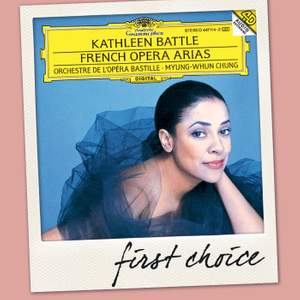
| |  | French Opera Arias
“Battle employs her pinpoint accurate singing with meaning as well as sparkle in a delightful traversal of some 19th-century highlights from French opera.” BBC Music Magazine, May 2013 ***** | 
| | | Usually despatched in 2 - 3 working days. |
|
|
| |  | Maria Callas in Athens
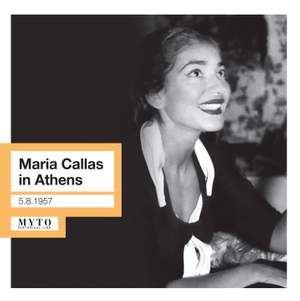
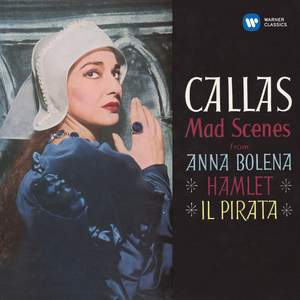
Delibes: | Où va la jeune Indoue? 'Bell Song' (from Lakmé) Sung in Italian as 'Dov'e l'Indiana bruna?' Orchestra Sinfonica di Torino della RAI, Oliviero de Fabritiis | Donizetti: | Regnava nel silenzio...Quando rapito in estasi (from Lucia di Lammermoor) Orchestra of the Athens Festival, Antonino Votto Il dolce suono mi colpì di sua voce! … Spargi d'amaro pianto (from Lucia di Lammermoor) NB Surface-noise remains on this track Orchestra Sinfonica di Torino della RAI, Oliviero de Fabritiis | Thomas, Ambroise: | A vos jeux, mes amis (from Hamlet) Sung in Italian as 'Ai vostri giochi' Orchestra of the Athens Festival, Antonino Votto | Verdi: | Vanne, lasciami (from Il Trovatore) Orchestra of the Athens Festival, Antonino Votto D'amor sull'ali rosee (from Il Trovatore) Orchestra of the Athens Festival, Antonino Votto Pace, pace mio Dio! (from La forza del destino) Orchestra of the Athens Festival, Antonino Votto Vieni! t'affretta!…Or tutti sorgete (from Macbeth) Orchestra Sinfonica di Torino della RAI, Oliviero de Fabritiis Ben io t'invenni … Anch'io dischiuso … Salgo già (from Nabucco) Orchestra Sinfonica di Torino della RAI, Oliviero de Fabritiis | Wagner: | Mild und leise 'Isolde's Liebestod' (from Tristan und Isolde) Sung in Italian as 'Dolce e calmo' Orchestra of the Athens Festival, Antonino Votto |
Recorded on 5th August 1957 (Athens) and 18th February 1952 (Turin) | | | Usually despatched in 2 - 3 working days. |
|
|
| |  | Maria Callas: Los Angeles Concert 1958
This recently released recording is of Maria Callas' 1958 concert in Los Angeles, from her first U.S. tour. Despite the technical limitations of live recordings of the day (and this one is very limited, having been made on a portable recorder from the audience), this one is sure to impress. It is amazing how the sheer power of Callas' voice carries, without amplification, over the orchestra. She never overpowers. Rather, she is always expressive and musical. The beauty of her performance and the depth of her range saves LOS ANGELES CONCERT from being of merely archival interest. She moves with grace from a heady excerpt from Verdi's 'Macbeth' to the lighter fare of Rossini. The unaccompanied passages in "Una voce poco fa," from 'The Barber of Seville' are worth the purchase alone. This CD shows Callas at the height of her ability. The somewhat low-fi recording doesn't detract from this in the least. In fact, it will only make you wish you could have been at the performance. | | | Usually despatched in 4 - 5 working days. |
|
|
| |  | Gala Concert
live from Sydney Opera House
PICTURE FORMAT: 4:3
LENGTH: 126 Mins
SOUND: STEREO
SUBTITLES: EN
“...Sutherland was superb, singing with that breathtaking assurance and jewel-like brilliance that has made her so outstanding in the world of opera today.” Canberra Times “[Pavarotti] proved...that this is truly one of the most phenomenal voices of our era, used with genuine musicality and artistry” The Australian | | | Usually despatched in 2 - 3 working days. |
|
|
| |
|