trad.: A la barcillunisa

This page lists all recordings of A la barcillunisa, by on CD.

Prices shown exclude VAT. (UK tax is not payable for deliveries to United States.)
See Terms & Conditions for p&p rates.

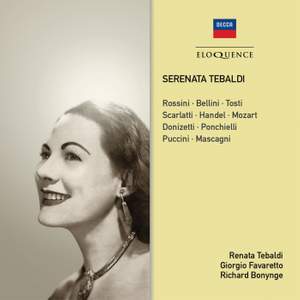
Renata Tebaldi and Franco Corelli in Tokyo (1973)

Renata Tebaldi and Franco Corelli in Tokyo (1973)


Bellini:

Soave sogno

Tadashi Mori

Capua:

O sole mio

Alberto Ventura

Cardillo:

Core 'ngrato

Tadashi Mori

Core 'ngrato

Alberto Ventura

Curtis, E:

Tu ca nun chiagne

Tadashi Mori

Tu ca nun chiagne

Alberto Ventura

Denza:

Occhi di fata

Tadashi Mori

Donizetti:

Me voglio fa'na casa

Tadashi Mori

Giordano, U:

Un dì, all' azzurro spazio (from Andrea Chénier)

Alberto Ventura

Gluck:

O del mio dolce ardor (from Paride ed Elena)

Tadashi Mori

Grieg:

Ich liebe Dich, Op. 5 No. 3

Tadashi Mori

Massenet:

Adieu, notre petite table (from Manon)

Tadashi Mori

Ah! Tout est bien fini... O souverain (from Le Cid)

Tadashi Mori

Ah! Tout est bien fini... O souverain (from Le Cid)

Alberto Ventura

Meyerbeer:

O Paradiso! (from L'Africana)

Alberto Ventura

Monteverdi:

Lamento d'Arianna 'Lasciatemi morire'

Tadashi Mori

Puccini:

Un bel di vedremo (from Madama Butterfly)

Tadashi Mori

O soave fanciulla (from La Bohème)

Tadashi Mori

O mio babbino caro (from Gianni Schicchi)

Tadashi Mori

Che gelida manina (from La Bohème)

Alberto Ventura

Ch'ella mi creda libero e lontano (from La Fanciulla del West)

Alberto Ventura

Rossini:

La regata veneziana

Tadashi Mori

Tosti:

L'ultima canzone

Tadashi Mori

A vucchella

Alberto Ventura

trad.:

A la barcillunisa

Alberto Ventura

Verdi:

La donna è mobile (from Rigoletto)

Tadashi Mori

Giá nella notte densa (from Otello)

Tadashi Mori

In solitaria stanza

Tadashi Mori

Questa o quella (from Rigoletto)

Alberto Ventura


Renata Tebaldi (soprano), Franco Corelli (tenor)

Tokyo Philharmonic Orchestra

Golden Melodram Unforgettable Concerts - GM40077

(CD - 2 discs)

$22.00

This item is currently out of stock at the UK distributor. You may order it now but please be aware that it may be six weeks or more before it can be despatched.

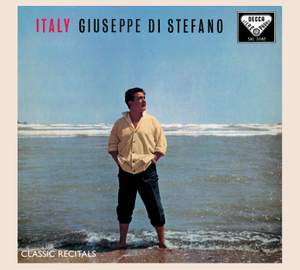
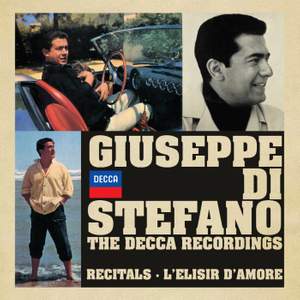
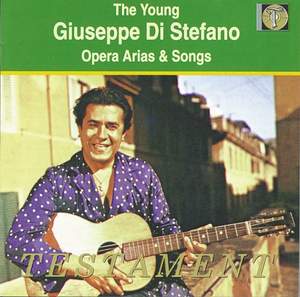
Giuseppe di Stefano: The Opera Singer

Giuseppe di Stefano: The Opera Singer

Recorded: 5–6 June, 1957, Milan


Bellini:

Son gia lontani (from I Puritani)

Nel mirarti un solo istante (from I Puritani)

Vieni, fra queste braccia! (from I Puritani)

Bizet:

Léïla! Léïla! from Les Pêcheurs de perles

Sung in Italian

Je crois entendre encore (from Les Pêcheurs de Perles)

Sung in Italian

Parle-moi de ma mère (from Carmen)

Sung in Italian

Capua:

O sole mio

Cardillo:

Core 'ngrato

Cilea:

È la solita storia 'Lamento di Federico' (from L'Arlesiana)

Curtis, E:

Torna a Surriento

Donizetti:

Tombe degl'avi miei … Fra poco a me ricovero...Tu che a Dio spiegasti l'ali (from Lucia di Lammermoor)

Gounod:

Il se fait tard ! Adieu ! (from Faust)

Sung in Italian

Leoncavallo:

Vesti la giubba (from I Pagliacci)

Mascagni:

Intanto amici…Viva il vino spumeggiante (Brindisi)

Mamma, quel vino (from Cavalleria Rusticana)

Oh, come al tuo sottile corpo (from Iris)

Massenet:

Je suis seul, seul enfin... Ah fuyez douce image (from Manon)

Sung in Italian

Puccini:

Recondita armonia (from Tosca)

E lucevan le stelle (from Tosca)

Dovunque al mondo (from Madama Butterfly)

Addio, fiorito asil (from Madama Butterfly)

Una parola sola! … Or son sei mesi (from La Fanciulla del West)

Ch'ella mi creda libero e lontano (from La Fanciulla del West)

Avete torto! (from Gianni Schicchi)

Firenze è come un albero fiorito (from Gianni Schicchi)

Non piangere, Liù! (from Turandot)

Nessun dorma (from Turandot)

Che gelida manina (from La Bohème)

In un Coupe?...O Mimi, tu piu non torni (from La Bohème)

Donna non vidi mai (from Manon Lescaut)

Oh, sarò la più bella...Tu, tu, amore? (from Manon Lescaut)

Ah! Non v'avvicinate! No, pazzo son (from Manon Lescaut)

Bimba dagli occhi pieni di malia (from Madama Butterfly)

Vogliatemi bene, un bene piccolini (from Madama Butterfly)

Thomas, Ambroise:

Mignon: Ah, non credevi tu; Addio, Mignon, fa core

Tosti:

Marechiare

trad.:

A la barcillunisa

Cantu a Timuni

Verdi:

Lunge da lei…De’ miei bollenti spiriti (from La Traviata)

La vita è inferno … O tu che in seno (from La Forza del Destino)

Questa o quella (from Rigoletto)

Ella mi fu rapita! (from Rigoletto)

Parmi veder le lagrime (from Rigoletto)

La donna è mobile (from Rigoletto)

Ah sì ben mio (from Il trovatore)

Di quella pira (from Il trovatore)

Di' tu se fedele (from Un ballo in maschera)

Teco io sto (from Un ballo in maschera)

Forse la soglia attinse (from Un ballo in maschera)

Giovanna, ho dei rimorsi (from Rigoletto)

È il sol dell'anima (from Rigoletto)

Addio, addio, speranza ed anima (from Rigoletto)

Miserere d'un' alma gia vicina (from Il Trovatore)

Giá nella notte densa (from Otello)


Giuseppe di Stefano (tenor) & Rosanna Carteri

Milan Symphony Orchestra, Antonio Tonino

The Italian tenor Giuseppe di Stefano, who died on 3 March 2008 aged 86, was one of the finest opera singers of his day. He was blessed with a lyric tenor voice of great beauty, as well as a bright, open tone, and possessed the ability to bring vividly to life the characters he played, both on stage and in the recording studio. He began his career in lighter roles like Nemorino in L’elisir d’amore, but later graduated to heavier parts such as Alvaro in La forza del destino and Canio in Pagliacci. He first appeared at La Scala in March 1947 as Des Grieux in Massenet’s Manon, and in February 1948 he made his New York debut at the Metropolitan Opera as the Duke of Mantua in Rigoletto. In the same year he was also heard for the first time in Rio de Janeiro, Mexico City, Los Angeles, San Francisco and Chicago, and he went on throughout the 1950s to enjoy a career of uninterrupted success, centred mainly on La Scala and the Met.

He recorded extensively for EMI for the first decade or so of his career, and after making several recordings of popular songs in 1944 in Lausanne, he consolidated his position as a recording artist in the years that followed with a series of operatic arias and Italian folksongs in London and Milan, as well as some titles for RCA Victor in New York. In 1953, the EMI producer Walter Legge teamed Di Stefano with Maria Callas and Tito Gobbi in a recording of Lucia di Lammermoor in Florence and then went on during the next five years to make a series of unrivalled recordings of Italian operas with the same artists at La Scala. They remain to this day the benchmark against which all subsequent recordings of the same works are judged, and the 1953 Tosca conducted by Victor de Sabata is now generally acknowledged to be one of the finest recordings ever made. Di Stefano also appeared in several of Callas’s greatest stage successes at La Scala, including the 1954 Lucia di Lammermoor under Herbert von Karajan and the 1955 Traviata under Carlo Maria Giulini: live recordings of both are also available on EMI.

In the early 1950s, when the operatic catalogue of EMI was led by three of the greatest sopranos of the time – Maria Callas, Victoria de los Angeles and Elisabeth Schwarzkopf – it was Giuseppe di Stefano who carried the banner for tenors, and he did it with great style. All his recorded performances capture not only his glorious voice, but also his outgoing and exuberant personality, which made him so popular both on stage and off. Like Callas, his glory days were relatively short, but his talent burned brightly and he is remembered with great affection by all lovers of Italian opera.

EMI Icons - 2060752

(CD - 3 discs)

$13.25

In stock - usually despatched within 1 working day.

Copyright © 2002-13 Presto Classical Limited, all rights reserved.