Dufay: Supremum Est Mortalibus

This page lists all recordings of Supremum Est Mortalibus, by Guillaume Dufay (c.1400-74) on CD & download (MP3 & FLAC). Generally, more recent releases are listed first, but with priority given to those that are in stock.

Prices shown exclude VAT. (UK tax is not payable for deliveries to United States.)
See Terms & Conditions for p&p rates.

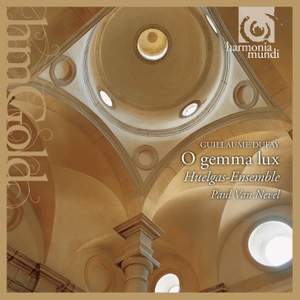
Guillaume Dufay: O gemma, lux

Guillaume Dufay: O gemma, lux

The complete isorhythmic motets


Dufay:

Vasilissa, Ergo Gaude

O sancte Sebastiane

O gemma, lux et speculum

Apostolo glorioso

Rite majorem

Ecclesiae militantis

Balsamus et munda cera

Supremum Est Mortalibus

Nuper rosarum flores

Salve flos Tusce gentis

Magnanime gentis

Fulgens iubar ecclesie dei

Moribus et genere


Harmonia Mundi - HMGold - HMG501700

(CD)

$12.00

In stock - usually despatched within 1 working day.

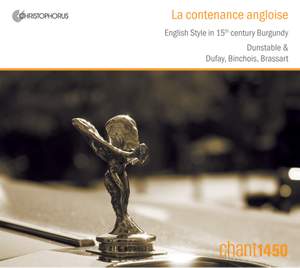
La Contenance Angloise

La Contenance Angloise

English Style in 15th century Burgundy


Anglia, G de:

Che farò io

Anglia, R de:

El mal foco arda

Binchois:

Ave regina cælorum

Te deum

Brassart:

O flos fragrans

Regina coeli

Dufay:

Ave regina celorum

O très piteulx

Missa Sancti Antonii Viennensis: Kyrie

Supremum Est Mortalibus

Alma Redemptoris Mater

Flos Florum

Aurea luce

Dunstaple:

O rosa bella - Quodlibet: O rosa bella

Speciosa facta es

Salve scema sanctitatis

Salve salus servulorum

Puisque m’amour (rondeau)

Gregorian Chant:

Ave regina caelorum

Gaudeamus

Concupivit

Regina caeli laetare

Ave Maria

Salve Regina

Beata viscera

Paumann:

O rosa bella

Annavasanna tertia

Sanssoblier

Fortune, alas

Power, L:

Ave regina cælorum


Elizabeth Rumsey (vielle), Masako Art (harp), Marc Lewon (lute) & Gregor Ehrsam (organ)

Chant 1450

English music caused a sensation for the first time at the Council of Constance (1414-1418), one of the most important turning-points of European cultural exchange. Many musicians, from church and court, were involved. The chronicler of the council, Ulrich von Richenthal, enthusiastically described the music, which was clearly new to him, as "sweet English song". No less indicative of the change of style around 1430 is the first literary and theoretical evidence. The Burgundian court poet Martin le Franc wrote about Dufay and Binchois, the first composers of the new style subject to the English influence:

“Car ilz ont nouvelle pratique / De faire frisque concordance... / Et ont prins de la contenance / Angloise et ensuy Dunstable” (For they have a new method of making fresh harmony ... and have adopted the English countenance and followed Dunstable)

La contenance angloise presents key pieces of the new repertoire from around 1430 by John Dunstaple, Leonel Power, Guillaume Dufay, Gilles Binchois and Johannes Brassart.

chant 1450 is an international vocal ensemble specialising in the sacred and secular repertoire of the 15th and 16th centuries. It was formed in summer 2003 by a group of musicians attached to the Schola Cantorum Basiliensis in Basel. Instead of focusing on individual composers, its concerts and CDs are thematic in conception, which makes for fascinating, varied programming.

Christophorus - CHR77332

(CD)

$18.25

(also available to download from $10.50)

Usually despatched in 3 - 4 working days. (Available now to download.)

Dufay - Supremum est mortalibus bonum

Dufay - Supremum est mortalibus bonum

Motets Volume 2


Dufay:

Supremum Est Mortalibus

Rite majorem

O beate Sebastiane

O sancte Sebastiane

Magnam me gentes lauda paciare

Minerva

Ave regina celorum

Ave virgo

Fulgens iubar ecclesie dei

Mirandas parit hec urbs florentina puellas

O gemma, lux et speculum

O proles Hispaniae / O sidus Hispaniae

Moribus et genere


With this disc, Giuseppe Maletto and Cantica Symphonia complete their 'Dufay trilogy' on Glossa: two volumes of motets and one of chansons.

These singers and instrumentalists, many of them members of the various permutations of La Venexiana, represent the best possible interpreters for communicating this timeless and moving music: motets indelibly linked to the power struggles that, in the first half of the 15th century, convulsed the politics of European powers and of the Roman Catholic Church.

Together with Quadrivium, this new release sees Cantica Symphonia traversing all the currently attributed motets by Dufay: works written to set the seal on historic occasions as well as those with liturgical texts.

The accompanying essay admirably captures the pervasive 15th century currents of Humanism and religious splendour.

“Just how fine are the singers on this recording can be gauged from the last track… Cantica Symphonia's performance of his final setting of Ave regina celorum is extraordinarily moving, the personal supplication to Mary seeming almost to catch the composer's last breath.” Gramophone Magazine, October 2008

Glossa Platinum - GCDP31904

(CD)

$17.75

(also available to download from $10.50)

Usually despatched in 3 - 4 working days. (Available now to download.)

Dufay: Missa L'homme arme, etc.

Dufay:

Missa L'homme arme

Supremum Est Mortalibus


“The singing of the Oxford Camerata is superb.” Classic CD *****

20% off Naxos

Naxos Early Music Collection - 8553087

(CD)

Normally: $8.25

Special: $6.60

(also available to download from $6.00)

This item is currently out of stock at the UK distributor. You may order it now but please be aware that it may be six weeks or more before it can be despatched. (Available now to download.)

Dufay: Voyage en Italie

Dufay: Voyage en Italie


anon.:

Belfiore

Bononia, B:

Morir desio

Brixiensis:

O spirito gentil tu m'ay percosso

Cividale:

O felix flos Florentia/Gaude felix Dominice

Dufay:

Supremum Est Mortalibus

Quel fronte signorille in paradiso

C'est bien raison

Vasilissa, Ergo Gaude

O sancte Sebastiane

Exultet caelum laudibus

Mirandas parit hec urbs florentina puellas

O proles Hispaniae / O sidus Hispaniae

Ferraguti:

Excelsa civitas Vincencia


Arcana - A317

(CD)

$17.25

Usually despatched in 4 - 5 working days.

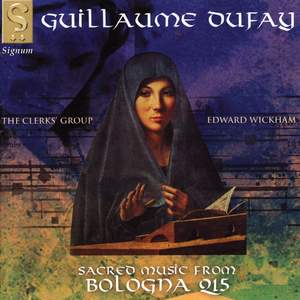
Guillaume Dufay: Sacred music from Bologna Q15

Guillaume Dufay: Sacred music from Bologna Q15


Dufay:

Vasilissa, Ergo Gaude

Kyrie Fons bonitatis

O beate Sebastiane

Gloria

O gemma, lux et speculum

Credo

Supremum Est Mortalibus

Sanctus & Benedictus (Bol. Q15 no. 104)

Inclita stella maris

Agnus Dei (Bol. Q15 no. 105)

Gloria 'Spiritus et alme'

O sancte Sebastiane


The manuscript Bologna, Civico Museo Bibliografico Musicale, MS Q15 is one of the great anthologies of 15th century music, without which our understanding of early Renaissance music would be hopelessly impaired. It is known as Q15 to its friends; and it has many friends, for contained within it are examples of almost every conceivable musical genre of the period — with a special emphasis on sacred polyphony — and works by a vast array of composers. And even if we choose to make a selection of works by a single composer, as we have done here, the variety of forms and styles on offer is bewildering.

“This recording focuses on sacred works by Dufay from a 15th-century manuscript preserved at Bologna and known as Q15. This is a complex source, compiled over a number of years in northern Italy, and containing a wide range of polyphonic repertory, including diverse works by the great Dufay.
This CD isn't in any sense a reconstruction, but a carefully selected anthology of not necessarily very familiar pieces by Dufay. Indeed, this is a really superb recording: vocal lines are well shaped and the sonorities achieved through accuracy of ensemble and pacing result in performances that are decidedly sensual, even dance-like, at times.
Just try the four-voice Gloria or the isorhythmic motet Supremum est mortalibus bonum, in praise of peace. This extraordinary work composed to commemorate the signing of a peace treaty between the Pope and Holy Roman Emperorelect in 1433 combines just about every musical technique and idiom available to a composer in the first half of the 15th century, complete with, in this interpretation by The Clerks' Group, improvised vocal flourishes on the block chords declaiming the names of the signatories.
Vocal agility – notably in the faster-moving upper parts of Inclita stella maris – and a text- centred intensity of projection are hallmarks of this excellent group: only in the three-voice setting of O beate Sebastiane, a plea for delivery from the plague, does the approach seem too cool.
Elsewhere, even in familiar texts such as the Sanctus, there's a real sense of engagement. If you've yet to discover the delights of Dufay, this is an excellent place to start; Dufay fans can't fail to be delighted.”
Gramophone Classical Music Guide, 2010

Signum - SIGCD023

(CD)

$16.75

Usually despatched in 3 - 4 working days.

Copyright © 2002-13 Presto Classical Limited, all rights reserved.