All recordingsPrices shown exclude VAT. (UK tax is not payable for deliveries to United States.) See Terms & Conditions for p&p rates. | |  | Elīna Garanča: Romantique
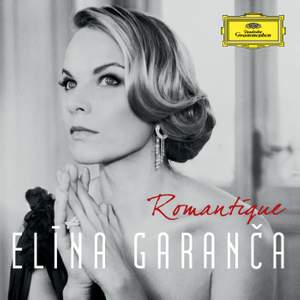
In Romantique, Elīna Garanča makes a smashing return to the studio and puts her imprint upon the big Romantic repertory, brilliantly portraying such different heroines as Tchaikovsky’s Joan of Arc (The Maid of Orléans), Gounod’s Sapho and Saint-Saëns’ Dalila Elīna Garanča’s mezzo-soprano is velvet; she is a stunning figure on stage; her formidable technique encompasses repertoire from Mozart and bel canto to dramatic roles and contemporary music Conductor Yves Abel’s penchant for the voice and skill at leading an orchestra draws beautiful sound and potent drama from the Filarmonica del Teatro Comunale di Bologna. Elīna Garanča’s rapport with this orchestra is deeper than ever. “If we needed more evidence that the Latvian mezzo is shaping up to be one of the 21st century’s greatest voices, this superb album of 19th-century arias supplies it in buckets. From top to bottom her timbre is rich and firm and her intonation virtually infallible...Pure vocal bliss.” The Times, 6th October 2012 ***** “She has an intensely lyrical voice, lithe enough for ornamentation but also honing a dusky quality which is immediately appealing in the repertoire selected for this disc...Overall, this is a splendid operatic recital...[and] should appeal to aficionados of fine singing, especially in French repertoire somewhat 'off the beaten track'.” International Record Review, December 2012 “Marguerite's soliloquy, accompanied by an eloquent cor anglais, is movingly done...[as Dalila] Garanca is sensuous without being vampish - quite an achievement in this part...[She] moves effortlessly from top to bottom without ever sacrificing beauty of tone...Fans - and others - need not hesitate.” Gramophone Magazine, January 2013 “She describes herself as a lyric mezzo, but many roles here suggest considerable power, emphasised by the echoey recording...Her French isn't perfect, but it's very good, and she relishes the lyrical lines of Gounod's little-known Sapho and Queen of Sheba...A fine collection.” BBC Music Magazine, January 2013 **** | | | In stock - usually despatched within 1 working day. |
|
|
| |  | Joyce DiDonato: Diva, Divo
Bellini: | Ascolta! Se Romeo t'uccise un figlio...La tremenda ultrice spada (from I Capuleti) Edgaras Montvidas (tenor), Nabil Suliman (baritone) | Berlioz: | La Damnation de Faust: D'amour l'ardente flamme Roméo et Juliette, Op. 17: Premiers transports que nul n'oublie | Gluck: | Se mai senti spirarti sul volto (from La clemenza di Tito) | Gounod: | Faites- lui mes aveux (from Faust) | Massenet: | Je suis gris! Je suis ivre! (from Chérubin) Allez, laissez-moi seul...Coeur sans amour, printemps sans roses (from Cendrillon) Ô frêle corps.... Chère Cypris (from Ariane) | Mozart: | Giunse alfin il momento... Deh, vieni, non tardar… (from Le nozze di Figaro) Ecco il punto...Non più di fiori vaghe catene (from La clemenza di Tito) Voi che sapete (from Le nozze di Figaro) | Rossini: | Contro un cor (from Il barbiere di Siviglia) Edgaras Montvidas (tenor) Nacqui all'affanno, al pianto...Non più mesta (from La Cenerentola) Elena Semenova (soprano), Pascale Obrecht (mezzo), Edgaras Montvidas (tenor), Nabil Suliman (baritone), Paolo Stupenengo (bass) | Strauss, R: | Sein wir wieder gut (from Ariadne auf Naxos) |
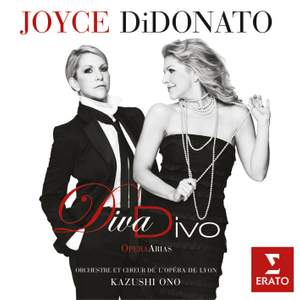
Joyce DiDonato celebrates the rich dramatic variety of the mezzo-soprano voice in this collection of arias for different characters – of both sexes – from a single opera, or from different operatic treatments of the same story. Joyce DiDonato’s capacity for characterisation is as astounding as the range and flexibility of her voice. As her Virgin Classics recitals of Handel and Rossini have proven, she can charm and touch as a good girl, seduce and seethe as a bad girl, and slip believably into the trousers of a hero. As Opera News said of the Rossini disc, ‘Colbran, The Muse’: “With her sure sense of line and colour, DiDonato takes possession of the repertory, mining every musical and vocal gesture to inhabit each character confidently … Her theatrical sense is magnificent. Musically and dramatically, the disc is perfection.” This new collection showcases DiDonato’s multi-faceted art – and the wealth of opportunities open to a mezzo-soprano – by presenting her as different characters, both male and female, from the same opera or from different musical treatments of the same story. As DiDonato explains: “This recital celebrates the vast and fabulous world of the mezzo-soprano. Aside from the obvious Toscas or Cio-Cio Sans, I've never regretted the length of my vocal cords! I have the privilege and unmitigated joy of playing boys and young men, as well as girls and grown women … It’s an exploration of the human palette of emotions. “I wanted to find a way to show this duality on disc, while highlighting some of the composers I'm most passionate about, such as Mozart, Bellini, Berlioz, Rossini, and Massenet. In exploring this idea, the possibility became clear for telling different sides of some of the most familiar tales which have served as inspiration for operatic legends: Cinderella, Faust, Romeo and Juliet … I've always thought of myself as a storyteller, and with this particular disc, I can showcase that side of me as never before. I'm ready to play!” The programme features several roles that DiDonato has sung on stage – such as Rossini’s Cenerentola (it was the character’s gentle, then exuberant ‘Nacqui all’affanno’ that launched her international career at Plácido Domingo’s Operalia competition, and subsequently at La Scala), Bellini’s Romeo and Mozart’s Cherubino. The ‘flip sides’ of those characters are roles that have not featured in her repertoire: the Prince from Massenet’s Cendrillon (a lavish treatment of the Cinderella story more likely to bring DiDonato in the title role – as at Santa Fe in 2006 and, in 2011, at Covent Garden); the Nurse from Berlioz’s Roméo et Juliette, and both Chérubin (from Massenet’s ‘sequel’ to Le nozze di Figaro) and Susanna. The Figaro connection continues with an excerpt from Il barbiere di Siviglia (Rosina, of course, later becomes Countess Almaviva), while other operas on the programme, from the Renaissance to late Romanticism, include La clemenza di Tito (Sesto and Vitellia), Faust, La Damnation de Faust, Mefistofele, Orphée et Eurydice, Orfeo and Orphée aux Enfers. Accompanying Joyce DiDonato in this tour de force is the Orchestre de l'Opéra National de Lyon under the company’s Principal Conductor Kazushi Ono, another artist who successfully embraces an extraordinary diversity of musical idioms. As John von Rhein wrote in Gramophone: “In complete control vocally, Joyce DiDonato is … consumed by the character. She embodies whomever she’s playing and whatever emotional situation she is evoking.” “It's playful, as well as an ideal vehicle for her glorious mezzo voice in which the most fiendish coloratura ornaments and trills sound effortless.” The Observer, 30th January 2011 “I can find nothing but praise...This recording gives enormous pleasure in rare as well as familiar repertoire...the mezzo invariably finding the right colour for each portrayal...Perhaps the best thing about this recital is that everything DiDonato sings sounds spontaneous, as if the character her- or himself were actually experiencing it for the first time.” International Record Review, March 2011 “she is steadily terrific: technically secure, nimble and clean in her flourishes and roulades, always alert to dramatic nuance. Nor do we lack variety. First, a swaggering, tipsy aria for Cherubino from the luxuriously coloured Chérubin (Massenet again). Then we jump to Mozart’s Susanna, intimate and tender in The Marriage of Figaro. So it goes: jolting, fascinating, entertaining.” The Times, 11th February 2011 **** “[This collection] draws together paired arias of male and female roles from the same story...the youthful Siebel's declaration of love for Marguerite, from Gounod's Faust, receives an anachronistic response from Berlioz's La Damnation de Faust. Clever stuff.” The Independent, 11th February 2011 *** “DiDonato’s is a five-star voice, perhaps the finest lyric mezzo before the public today...Ono’s Lyons orchestra and chorus give her voice luxury support, and her growing army of fans won’t be disappointed.” Sunday Times, 20th February 2011 **** “[DiDonato] underlines what has been increasingly obvious from her stage appearances – she is a consummate professional” Financial Times, 11th February 2011 **** “DiDonato's tone and phrasing catch a genuine male authority in the first entry of Bellini's Capuleti Romeo...Cendrillon and the (to Anglophones) rare Ariane are utter, and quite dark, delights. Elsewhere the Mozart is enjoyed and well negotiated - the lower colouring makes Susanna sound mature and knowing.” Gramophone Magazine, April 2011 “Proof of DiDonato's consummate musicianship is everywhere here...For sheer beauty of tone, legato that defies gravity and singing that restores your faith in human nature, listen last of all to what Joyce DiDonato does with Berlioz's 'D'amour l'ardente flamme'. Diva or Divo, this is the real thing.” BBC Music Magazine, April 2011 ***** “Listening to DiDonato depict both [Cherubino and Susanna]...brings home just how deeply this singer can inhabit character...The American mezzo delivers this ambitious, imaginative programme with intelligence, musicality, vocal brilliance and immense charm. There's some lovely playing from the Lyon Opera Orchestra too.” Classic FM Magazine, May 2011 ***** BBC Music Magazine
Opera Choice - April 2011 |
| | | In stock - usually despatched within 1 working day. |
|
|
| |  | New Year's Eve Concert Gala 2010
The 2010 New Year’s Eve concert, from Berlin, frames two of the most prominent stars on DG’s roster, Elina Garanca and Gustavo Dudamel. Recorded live, this gala performance sparkles with a selection of arias and orchestral works that include excerpts from one of Garanca’s most celebrated roles, Bizet’s Carmen, and Marguerite in Berlioz’s Damnation of Faust. As well as providing world class accompaniment, the Berlin Philharmonic makes a stirring contribution to the program with the overture to Berlioz’s thrilling Roman Carnival and excerpts from Manuel de Falla’s ballet, The Three-Cornered Hat. Filmed in HD, the gala will be released in 16:9 widescreen with audio in PCM and DTS surround sound . | | | In stock - usually despatched within 1 working day. |
|
|
| |  | Géori Boué
The French soprano Géori Boué was particularly associated with French repertoire. This collection includes works by Gounod, Massenet, Bizet and Berlioz as well as Italian composers of opera. Many of the recordings date from 1942-1949. | | | Usually despatched in 2 - 3 working days. |
|
|
| |  | Lucienne Delvaux sings Airs, Melodies and Oratorios
The great mezzo-soprano Lucienne Delvaux is featured on this 2 disc set, sourced from the singer's own collection and archive. Although a singer with a great reputation and loyal following throughout Europe during the 50s and 60s, she rarely entered the recording studio and these tracks are taken from some of her numerous radio broadcasts. This is a true mezzo voice. | | | Usually despatched in 2 - 3 working days. |
|
|
| |  | Yvonne Minton - The Essential Recordings
Bach, J S: | Mass in B minor, BWV232: Laudamus Te | Berlioz: | La Damnation de Faust: D'amour l'ardente flamme | Elgar: | Softly and gently, dearly-ransomed soul 'Angel's Farewell' (from The Dream of Gerontius) | Mahler: | Lieder eines fahrenden Gesellen (4 songs, complete) Das Lied von der Erde Das irdische Leben (Des Knaben Wunderhorn) Verlorne Müh' (Des Knaben Wunderhorn) Wo die schönen Trompeten blasen (Des Knaben Wunderhorn) Rheinlegendchen (Des Knaben Wunderhorn) | Mozart: | Parto, parto, ma tu ben mio (from La Clemenza di Tito) Non so più cosa son, cosa faccio (from Le nozze di Figaro) Voi che sapete (from Le nozze di Figaro) | Rossini: | Fac, ut portem Christi mortem from Stabat Mater | Strauss, R: | Da … Herr Kavalier! (from Der Rosenkavalier) Ist ein Traum, kann nicht wirklich sein (from Der Rosenkavalier) |
| | | Usually despatched in 2 - 3 working days. |
|
|
| |  | Hector Berlioz - Early Vocal RecordingsA selection of vocal music from the first fifty years or so of recording
Berlioz: | Absence (from Les nuits d'été, Op. 7) A tous peches pleine indulgence (from Benvenuto Cellini) Roméo et Juliette, Op. 17: Premiers transports que nul n'oublie Une puce gentille 'Flea Song' (from La damnation de Faust) Voici des roses (Air de Méphistophélès) La Damnation de Faust, Op. 24: Merci, doux crépuscule! La Damnation de Faust, Op. 24: Chanson gothique 'Autrefois un roi de Thulé' La Damnation de Faust: Devant la maison La Damnation de Faust, Op. 24: Ange adore sung in Italian La Damnation de Faust, Op. 24: Adieu, donc belle nuit sung in Italian La Damnation de Faust: D'amour l'ardente flamme La Damnation de Faust, Op. 24: Nature immense, impénétrable et fière L'Enfance du Christ, Op. 25: Toujours ce reve L'Enfance du Christ, Op. 25: La fuite en Egypte - Overture L'Enfance du Christ, Op. 25: Le Repos de la Sainte Famille Chers Tyriens (from Les Troyens) Inutiles regrets…En un dernier naufrage (from Les Troyens) Adieu fière cité (from Les Troyens) Vous soupirez, Madame? ... Nuit paisible et sereine (from Béatrice et Bénédict) sung in German |
Edmond Clément, Berthe Auguez de Montalant, Pol Plançon, Maurice Renaud, Giovanni Malipiero, Germaine Martinelli, Emilio de Gogorza, Giorgina Caprile, Giuseppe Krismer, Giovanni Zenatello, Georges Thill, Louis Morturier, Jean Planel, Georgette Frozier-Marrot, Ella Tordek & Luise Höfer | | | (also available to download from $10.50) | Usually despatched in 4 - 5 working days. (Available now to download.) |
|
|
| |  | Chante l'Opera Francais
| | | Usually despatched in 4 - 5 working days. |
|
|
| |  | Great Operatic Arias 2 - Diana Montague Volume 1
| | | (also available to download from $10.50) | Usually despatched in 2 - 3 working days. (Available now to download.) |
|
|
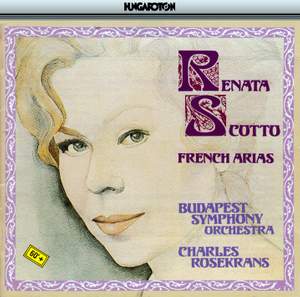
| |  | Renata Scotto: The French Album Vol. 1
| | | Usually despatched in 4 - 5 working days. |
|
|
| |
|