Prices shown exclude VAT. (UK tax is not payable for deliveries to United States.) See Terms & Conditions for p&p rates. | |  | Early Romantic Overtures
Roger Norrington was the first conductor to rediscover the original sound of the Romantic era. His recordings of famous overtures from Schubert to Wagner showed how fresh, indeed revolutionary an orchestra sounded in the early 19th century. Thanks to his careful studies of the instruments and performing practice of the time, Norrington brings out the poetry of the music in an unprecedented way, making his readings into true milestones of interpretation. | 
| | | In stock - usually despatched within 1 working day. |
|
|
| |  | Berlioz: Overtures
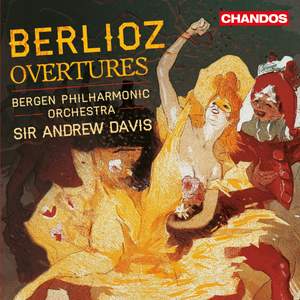
The Bergen Philharmonic Orchestra under Sir Andrew Davis here perform seven dazzling orchestral overtures by Hector Berlioz, a composer who excelled in blending literary and musical elements into highly energetic and personal creations. The overtures are widely varied in mood, as are the operas from which they were drawn. Berlioz wrote his first large-scale instrumental composition, the Overture to Les Francs-juges, in 1826, the year in which he enrolled at the Paris Conservatoire. Even though the opera itself was never performed, Berlioz remained proudly affectionate of the overture, which was played all over Germany and Holland in its early days. His second opera, Benvenuto Cellini, followed in 1838; its music gave rise both to the opera’s overture and to the concert overture Le Carnaval romain which depicts its subject in brilliant colour through breathtakingly vibrant orchestration. The comic opera Béatrice et Bénédict took its inspiration from Shakespeare’s Much Ado about Nothing. The overture draws on an intense solo scene for Béatrice and adds elements of the cheerful banter that make up the story of the title characters’ playful courtship. When Berlioz visited the Hungarian capital Pest in 1846, it was suggested to him that one way of winning the hearts of the audiences there would be to make an arrangement of the beloved Rákóczy March, which up until that point had been known only as a piano piece. Berlioz agreed, and on the very night before he left for Pest, he put together his own orchestral version of the piece. It was a resounding success when performed at his first concert, to the extent that Berlioz promptly included it in the large work on which he was working at the time: La Damnation de Faust. Le Roi Lear, Le Corsaire, and Waverley have one thing in common: all are independent concert pieces that have been given the title overture as in many respects they do resemble opera overtures – but none is in actual fact connected to an opera. The composer here took his inspiration from literary works. Le Roi Lear, for instance, is a remarkable tone portrait of Shakespeare’s deranged king, full of energy and anger, while Le Corsaire may be loosely based on Byron’s The Corsair. Berlioz based Waverley on a novel of the same name by Sir Walter Scott, and the score bears a quotation in English: ‘Dreams of love and Lady’s charms, give place to honour and to arms.’ The contrast expressed so well in this simple quotation is equally evident in the music itself. Here the ‘dreams of love’ unfold in a long cello melody, which is repeated with richer orchestrations, before leading into the vigorous musical depiction of ‘honour and arms’. “Sir Andrew’s account of Le Carnaval romain is excellent. The memorable cor anglais solo near the start is nicely paced...the Bergen reading catches the colourful brilliance of the carnival itself in a dashing display...Benvenuto Cellini is another conspicuous success...the lyrical music is very winningly done in Bergen while there’s all the sweep and brilliance you could wish for later on in the overture” MusicWeb International, March 2013 “the playing here is satisfyingly mellow and vibrant, with warm strings and sturdy woodwind, yet also refreshing and translucent. This is aided by Andrew Davis's tempos fairly spacious and unforced but never slack, and now and then sizzling...there's no shortage of swashbuckle in Le corsaire and Benvenuto Cellini” BBC Music Magazine, April 2013 **** “Until now the collection to have of these remarkable works was by the Staatskapelle Dresden under Colin Davis...these thrilling new performances by Sir Andrew Davis and the excellent Bergen Philharmonic tend to trump the earlier issue, not least for the superb SACD quality.” Gramophone Magazine, May 2013 | 
| | | (also available to download from $10.50) | In stock - usually despatched within 1 working day. |
|
|
| |  | Wagner: Overtures & Preludes
| | | In stock - usually despatched within 1 working day. |
|
|
| |  | Overtures in Hi-Fi
Recording producers: John Culshaw (La Princesse Jaune, Benvenuto Cellini, Si j’étais roi, Zampa, Donna Diana, Pique Dame, Die lustigen Weiber von Windsor, Le Domino noir); Victor Olof (Masaniello, Le cheval de bronze, Fra diavolo, Les diamants de la couronne); James Walker (Le Corsaire, Le roi Lear, Le Carnaval Romain, Les francs-juges) Recording engineers: Kenneth Wilkinson (La Princesse Jaune, Benvenuto Cellini) James Brown (Masaniello, Le cheval de bronze, Fra diavolo, Les diamants de la couronne); Roy Wallace (Le Corsaire, Le roi Lear, Le Carnaval Romain, Les francs-juges); Ken Cress (Si j’étais roi, Zampa, Donna Diana, Pique Dame, Die lustigen Weiber von Windsor, Le Domino noir) Recording location: La Maison de la Mutualité, Paris, France, June 1951 (La Princesse Jaune, Benvenuto Cellini), September 1954 (Masaniello, Le cheval de bronze, Fra diavolo, Les diamants de la couronne), June 1955 (Le Corsaire, Le roi Lear, Le Carnaval Romain, Les francs-juges), November 1957 (Si j’étais roi, Zampa, Donna Diana, Pique Dame, Die lustigen Weiber von Windsor, Le Domino noir) The recorded legacy of Albert Wolff is one of the most sought-after by collectors. Of Dutch parentage, but born in Paris, Wolff was something of a polymath: pianist, organist, conductor, composer, and had a long career in recording studios beginning in 1920. His first recordings for Decca, starting in the summer of 1951, were a complete Carmen (with Suzanne Juyol), a Manon (with Janine Micheau) as well as several French orchestral suites and individual pieces. ‘Overtures in Hi-Fi’ was the title given to a now ‘cult’ LP of Wolff conducting six overtures: Si j’étais roi, Le Domino Noir, Zampa, Donna Diana, Pique Dame and The Merry Wives of Windsor. To these are added a further ten overtures to make up this 2CD anthology. “These recordings from the 1950s readily demonstrate Auber had the knack of writing catchy tunes and he stuffed the best of them into his superbly crafted overtures...Each of these works is hugely enjoyable and we have - again - to thank Australian Decca for making these performances (last seen on an 'Eclipse' LP in 1970) available again.” Penguin Guide, 2011 edition | | | In stock - usually despatched within 1 working day. |
|
|
| |  | Berlioz: Symphonie Fantastique
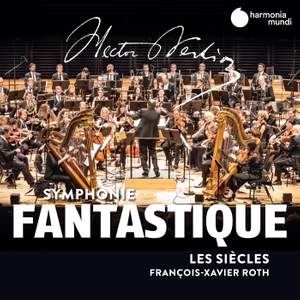
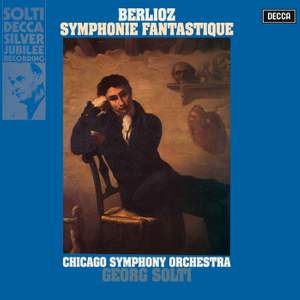
For Théophile Gautier, the flamboyant figures of Berlioz, Hugo and Delacroix formed a “trinity of Romantic art”. The young Berlioz’s first masterpiece, the Symphonie fantastique, is one of the key works in the history of the Romantic movement and was much admired by Schumann. It was completed and first performed in 1830, and according to the composer it was written “with great difficulty in certain parts, with an incredible facility in others”. Berlioz was then in the throes of an “infernal” passion for a young Irish actress, Harriet Smithson, who he was to marry in 1833. He described the programme of this “instrumental drama” as an evocation of the “reveries” of a young artist who idolises a woman who does not return his love. In despair, he attempts suicide, and then dreams of being present at his own execution after having killed his beloved. The beloved is represented by an “idée fixe”, a kind of leitmotif that crops up in all five movements of the symphony, each of which is conceived as a poem in its own right – to the artist himself (“Rêveries-Passions”), to the dance (“Un bal”), to nature (“Scène aux champs”), to love and to death (“Marche au supplice” and “Songe d’une nuit de sabbat”). The last two movements are truly grotesque, dark and violent – qualities that are highlighted by the strikingly original orchestration. The young hero is led to the scaffold to the accompaniment of the theme of the Dies irae. | | | In stock - usually despatched within 1 working day. |
|
|
| |  | Berlioz: Symphonie Fantastique & Concert Overtures
Berlioz: | Symphonie fantastique, Op. 14 Stuttgart Radio Symphony Orchestra, Roger Norrington Waverley Overture Op. 1 South West German Radio Symphony Orchestra Baden-Baden und Freiburg, Sylvain Cambreling Les Francs-juges Overture, Op. 3 South West German Radio Symphony Orchestra Baden-Baden und Freiburg, Sylvain Cambreling King Lear Overture, Op. 4 South West German Radio Symphony Orchestra Baden-Baden und Freiburg, Sylvain Cambreling Rob Roy Overture South West German Radio Symphony Orchestra Baden-Baden und Freiburg, Sylvain Cambreling Le carnaval romain Overture, Op. 9 South West German Radio Symphony Orchestra Baden-Baden und Freiburg, Sylvain Cambreling Le Corsaire Overture, Op. 21 South West German Radio Symphony Orchestra Baden-Baden und Freiburg, Sylvain Cambreling |
| | | (also available to download from $21.25) | Usually despatched in 2 - 3 working days. (Available now to download.) |
|
|
| |  | Berlioz: Concert Overtures
| | | (also available to download from $10.50) | Usually despatched in 2 - 3 working days. (Available now to download.) |
|
|
| |  | Sir Adrian Boult Conducts the BBC SOFavourite Overtures
| | | Usually despatched in 2 - 3 working days. |
|
|
| |  | The Concert Sound of Black Dyke Mills Band
| | | (also available to download from $10.50) | Usually despatched in 2 - 3 working days. (Available now to download.) |
|
|
| |  | Berlioz: | Symphonie funèbre et triomphale, Op. 15 Chorale Populaire de Paris & Musique des Gardiens de la Paix, Désiré Dondeyne La Mort de Cléopâtre - Scène lyrique Nadine Denize Nouvel Orchestre Philharmonique de Radio France, Gilbert Amy Benvenuto Cellini Overture Orchestre Philharmonique de Strasbourg, Alain Lombard Le carnaval romain Overture, Op. 9 Orchestre Philharmonique de Strasbourg, Alain Lombard Les Francs-juges Overture, Op. 3 Orchestre Philharmonique de Strasbourg, Alain Lombard Le Corsaire Overture, Op. 21 Orchestre Philharmonique de Strasbourg, Alain Lombard Chasse royale et Orage (from Les Troyens) Nouvel Orchestre Philharmonique de Radio France, Gilbert Amy Ballet music from Les Troyens Nouvel Orchestre Philharmonique de Radio France, Gilbert Amy Marche troyenne (from Les Troyens) Nouvel Orchestre Philharmonique de Radio France, Gilbert Amy |
| | | Usually despatched in 4 - 5 working days. |
|
|
| |
|