Prices shown exclude VAT. (UK tax is not payable for deliveries to United States.) See Terms & Conditions for p&p rates. | |  | Miah Persson sings Songs by Schubert, Sibelius & Grieg
Grieg: | Seks Sange, Op. 48 Hjertets Melodier af H. C.Andersen, Op. 5 No. 3 'Jeg elsker Dig' encore | Schubert: | Suleika I, D720 Ganymed, D544 (Goethe) Nur wer die Sehnsucht kennt, D877/4 Rastlose Liebe, D138 Du bist die Ruh D776 (Rückert) Auf dem Wasser zu singen, D774 Gretchen am Spinnrade, D118 Der Hirt auf dem Felsen, D965 (Von Chezy / Muller) Richard Hosford (clarinet) | Sibelius: | Våren flyktar hastigt, Op. 13 No. 4 (Text: Runeberg) Den första kyssen, Op. 37 No. 1 (Text: J.L. Runeberg) Var det en dröm? Op. 37 No. 4 (J.J. Wecksell) Säf, säf, susa, Op. 36 No. 4 (Text: Gustav Fröding) Flickan kom från sin älsklings möte, Op. 37, No. 5 |
Famed for her highly intelligent performances and deep engagement with music, Swedish soprano Miah Persson is in great demand throughout the world. She returned to Wigmore Hall last February with internationally renowned accompanist Roger Vignoles to perform a wonderfully emotive and dramatic programme. Opening with some of the most celebrated Schubert Lieder, Persson revealed a refined interpretation of each song, searching deep within the texts to convey emotions from agony to ecstasy. With great passion, Persson then entered the Scandinavian sound world to complete her programme with Grieg’s stormy Six Songs and a beautiful collection of Sibelius’s most evocative settings. “'Gretchen am Spinnrade' is a model of how a middle-weight voice can scale the song's peaks thanks to an inner conviction and trusting how the notes and words can shoulder the dramatic weight...So beautiful is her enunciation in the Swedish-language Sibelius songs that you could take phonetic dictation...The Grieg songs show signs of vocal tiring...In 'Die verschwiegene Nachtigall', though, one can hardly imagine a more alluring nightingale song.” Gramophone Magazine, August 2012 “a lovely, beautifully balanced recital...In an opening Schubert set, Persson, for all the natural brightness of her voice, achieves the right aching heaviness in Lied der Mignon, and a beguiling sense of gentle repose in Du bist die Ruh.” Sunday Times, 15th July 2012 “Persson is beautiful and so is her voice, so she starts with a big advantage. But that is only the start...I did find...that there was a danger of monotony, undercharacterisation and reliance on sheer undeniable vocal beauty. Roger Vignoles is an ideal accompanist, setting the mood with a few notes or chords” BBC Music Magazine, September 2012 *** “Persson clearly relishes the possibility of characterization particular songs...The voice is light and lyric throughout but there's power too when required, so the final lines of Du bist die Ruh are radiant...However - and this is possibly a subjective caveat - what Persson lacks is the kind of rounded warm tone and inner conviction that makes the best Schubert recitals so warmly satisfying...Hosford is the perfect partner up on the rock” International Record Review, September 2012 | | | In stock - usually despatched within 1 working day. |
|
|
| |  | Sibelius - Piano Works Volume 2
Sibelius: | Nocturne from Belshazzar's Feast, Suite, Op. 51 Autrefois (Scène pastorale pour orchestre), Op. 96b Canzonetta, Op. 62a, from the incidental music to Kuolema Svarta rosor, Op. 36 No. 1 (Ernst Josephson) arr. Selim Palmgren Elegie, Op. 27/1 Flickan kom från sin älsklings möte, Op. 37, No. 5 arr. Jean Dubé Säf, säf, susa, Op. 36 No. 4 (Text: Gustav Fröding) arr. Selim Palmgren Sommarnatten (No. 5 from Six Songs, Op. 90) arr. Jean Dubé Valse chevaleresque, Op. 96c Suite champêtre, Op. 98b Joululaulu (Nyt seimelle pienoisen lapsen) Morceau romantique Scène d'amour from Scaramouche, Op. 71 Gavotte, Op. 94 Symphony No. 1 in E minor, Op. 39: Finale arr. Jean Dubé Symphony No. 5 in E flat major, Op. 82: Finale arr. Jean Dubé Eight Piano Pieces, Op. 99: Souvenir Sydämeni laulu (Song of my Heart) (Text: Aleksis Kivi) arr. Erkki Melartin Interlude (Miranda) from The Tempest, Op. 109 The Tempest, Op. 109: The Dogs |
Sibelius acknowledged that he did not have a great affinity for the piano, yet there are some genuine jewels on this repertoire. The CD begins with four arrangements of melodies for voice and piano and includes pieces such as Nocturne & Souvenir. André Peyregne, Director of the National Conservatory of Nice, said of Dubé, “this kind of a prodigy you can find once every ten or twenty years…..” | | | In stock - usually despatched within 1 working day. |
|
|
| |  | The Flagstad Recitals Volume 2Scandinavian Songs
Alnaes: | De hundrede violiner Varlaengsler Nu brister alle de klofter Februarmorgen ved Golfen | Eggen: | Aere det evige forar i livet | Grieg: | Haugtussa, Op. 67 Hjertets Melodier af H. C.Andersen, Op. 5 No. 3 'Jeg elsker Dig' Eros (from 5 Songs Op. 70) Millom Rosor, Op. 39, No. 4 Der gynger en baad paa bflge, Op. 69, No. 1 Hytten, Op. 18, No. 2 Det første møde, Op. 21 No. 1 Jeg giver mit digt våren, Op. 21, No. 3 Med en Primula veris, Op. 26 No. 4 Med en vandlije, Op. 25 No. 4 Seks Sange, Op. 48 No. 6 'Ein Traum' I Liden hojt deroppe, Op. 39 No. 3 Fra Monte Pincio, Op. 39 No. 1 Liden Kirsten (Little Kirsten), Op. 60 No. 1 Den Aergjerridge, Op. 26, No. 3 Efterårsstormen, Op. 18, No. 4 Og jeg vil ha mig hjertenskjaer (And I would like a sweetheart true), Op. 60 No. 5 Arr. Valdar Jeg giver mit digt våren, Op. 21, No. 3 Arr. Valdar Til én, Op. 59, No. 3 Arr. Valdar Til en II, Op. 59 No. 4 Arr. Valdar | Lie, H: | Nykelen Skindvengbrev | Sibelius: | Illalle, Op. 17 No. 6 (Forsman-Koskimies) Orch. Jalas Var det en dröm? Op. 37 No. 4 (J.J. Wecksell) Orch. Jalas Höstkväll, Op. 38:1 (Text: Viktor Rydberg) Orch. Sibelius Demanten på marssnön, Op. 36 No. 6 (Wecksell) Orch. Sibelius Flickan kom från sin älsklings möte, Op. 37, No. 5 Orch. Pingoud Arioso, Op. 3 (Text: J.L. Runeberg) Orch. Sibelius Våren flyktar hastigt, Op. 13 No. 4 (Text: Runeberg) Orch. Sibelius Se'n har jag ej frågat mera, Op. 17 No. 1 (Text: J.L. Runeberg) Orch. Sibelius Men min fågel märks dock icke, Op. 36, No. 2 Orch. Pingoud På verandan på vid havet, Op. 38 No. 2 (Viktor Runeberg) Orch. Sibelius Den första kyssen, Op. 37 No. 1 (Text: J.L. Runeberg) Orch. Fougstedt Svarta rosor, Op. 36 No. 1 (Ernst Josephson) Orch. Fougstedt Säf, säf, susa, Op. 36 No. 4 (Text: Gustav Fröding) Orch. Hellmann Kom nu hit, Död, Op. 60 No. 1 (Bertel Gripenberg after Shakespeare) Orch. Sibelius |
In her autobiography (The Flagstad Manuscript, 1952) Kirsten Flagstad tells of the joy she experienced on finding, when she began to give concerts in the United States, that the Americans so took to the songs of her native country, and particularly of Grieg. She herself had been brought up with them, and even included some in the program of one of her first professional engagements, at an Oslo jail in 1913. She was told that one prisoner due for release had asked to stay on till Easter so that he could hear ‘that girl’ again. The cycle Haugtussa (The Mountain Maid, 1895) was almost entirely unknown to listeners outside Scandinavia till Flagstad issued her first recording of it in 1940. Even then it failed to achieve the popularity its melodies and poignancy should have eared for it, and only since the 150th anniversary of the composer’s birth has it won due recognition. Yet Flagstad had a great love for it and put heart and soul into the songs. This second volume of “The Flagstad Recitals” focuses on Grieg as well as other Scandinavian composers, offering songs with both piano as well as orchestral accompaniment. [Grieg Songs] “Listening to Mme Flagstad's recital makes one regret that she did not record more of her great countryman. The songs are varied and rewarding and her account of From Monte Pincio, one of the finest, is beautifully characterised as indeed are nearly all the songs on this record. I only regret that the quality of the recording was not better. The voice remains undimmed…" Gramophone "…what a marvellously fresh and original work Haugtussa is and how glorious is Flagstad's tone and characterisation! I do urge readers who do not know this song-cycle to invest in this record." Gramophone | | | In stock - usually despatched within 1 working day. |
|
|
| |  | Sibelius & Strauss: Songs
Sibelius: | Flickan kom från sin älsklings möte, Op. 37, No. 5 Hennes budskap, Op. 90 No. 2 (Runeberg) Jägargossen, Op. 13 No. 7 (Text: J.L. Runeberg) Langtan heter min arfvedel, Op. 86 No. 2 (Karlfeldt) På verandan på vid havet, Op. 38 No. 2 (Viktor Runeberg) Romeo, Op. 61 No. 4 (Text: K.A. Tavaststjerna) Marssnön (Wecksell) Kullervon valitus from Op. 7 Höstkväll, Op. 38:1 (Text: Viktor Rydberg) Den första kyssen, Op. 37 No. 1 (Text: J.L. Runeberg) I systrar, I bröder, I alskande par, Op. 86 No. 6 (Lybeck) Våren flyktar hastigt, Op. 13 No. 4 (Text: Runeberg) Necken (The Watersprite, or The Elf-King) Op. 57 No. 8 (Josephson) Långsamt som qvällskyn, Op. 61 No. 1 (Tavaststjerna) Jag är ett träd (I am a tree) Op. 57 No. 5 (Josephson) Norden, Op. 90 No. 1 (Runeberg) Narciss (Narcissus) (B. Gripenberg) Illalle, Op. 17 No. 6 (Forsman-Koskimies) Säf, säf, susa, Op. 36 No. 4 (Text: Gustav Fröding) Kom nu hit, Död, Op. 60 No. 1 (Bertel Gripenberg after Shakespeare) Lastu lainehilla, Op. 17, No. 7 Demanten på marssnön, Op. 36 No. 6 (Wecksell) Vilse, Op. 17 No. 4 (Text: K.A. Tavaststjerna) Svarta rosor, Op. 36 No. 1 (Ernst Josephson) Var det en dröm? Op. 37 No. 4 (J.J. Wecksell) | Strauss, R: | Zueignung, Op. 10 No. 1 Traum durch die Dämmerung, Op. 29 No. 1 Ständchen, Op. 17 No. 2 Breit' über mein Haupt Op. 19 No. 2 Ach weh mir unglückhaftem Mann, Op. 21 No. 4 Heimliche Aufforderung, Op. 27 No. 3 Ruhe, meine Seele!, Op. 27 No. 1 Cäcilie, Op. 27 No. 2 |
| | | In stock - usually despatched within 1 working day. |
|
|
| |  | Jussi Björling in Concert in Finland and USA 1940-1957
Bartlett, J C: | A Dream | Bizet: | La fleur que tu m'avais jetée (from Carmen) | Denza: | Funiculì-Funiculà | Geehl: | For You Alone | Giordano, U: | Amor ti vieta (from Fedora) Come un bel dì di maggio (from Andrea Chénier) | Gounod: | De grâce demeurez… Ange adorable (Roméo et Juliette) | Grieg: | En svane (No. 2 from Seks Digte af Henrik Ibsen, Op. 25) Seks Sange, Op. 48 No. 6 'Ein Traum' Seks Sange, Op. 48 No. 6 'Ein Traum' | Handel: | Frondi tenere e belle ... Ombra mai fù (from Serse) | Hardelot: | Because | Mascagni: | Mamma, quel vino (from Cavalleria Rusticana) | Morgan, O: | Clorinda | Nordqvist: | Till havs (Towards the Sea) | Puccini: | Che gelida manina (from La Bohème) E lucevan le stelle (from Tosca) | Rachmaninov: | Lilacs, Op. 21 No. 5 V molchanii nochi taynoy, Op. 4 No. 3 | Rimsky Korsakov: | Song of the Hindu Guest (from Sadko) | Rossini: | Soirées musicales: La Danza | Schubert: | Frühlingsglaube, D686 Die Forelle, D550 Ständchen 'Leise flehen meine Lieder', D957 No. 4 | Sibelius: | Flickan kom från sin älsklings möte, Op. 37, No. 5 Säf, säf, susa, Op. 36 No. 4 (Text: Gustav Fröding) Var det en dröm? Op. 37 No. 4 (J.J. Wecksell) Demanten på marssnön, Op. 36 No. 6 (Wecksell) Demanten på marssnön, Op. 36 No. 6 (Wecksell) Svarta rosor, Op. 36 No. 1 (Ernst Josephson) | Sjöberg: | Tonerna (text: Erik Gustaf Geijer) Tonerna (text: Erik Gustaf Geijer) | Strauss, R: | Traum durch die Dämmerung, Op. 29 No. 1 Zueignung, Op. 10 No. 1 | Tosti: | L'alba separa dalla luce l'ombra Ideale | Verdi: | La donna è mobile (from Rigoletto) Giovanna, ho dei rimorsi (from Rigoletto) È il sol dell'anima (from Rigoletto) | Wagner: | In fernem Land (from Lohengrin) |
“More inveterate collectors will want this latest issue - which also is
reported to be the last issue from Bluebell, who have done a sterling job
over the years to put on disc innumerable previously unavailable Jussi
titles. The team behind this set and all the previous issues of Jussi
Björling recordings have done sterling service to his memory and their
best reward would be that even more people would invest in all the riches
that this and the previous issues contain. A cultural achievement of the
utmost importance”.” MusicWeb International | 
| | | Usually despatched in 4 - 5 working days. |
|
|
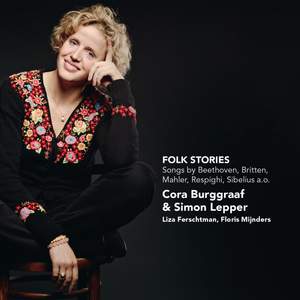
| |  | Folk StoriesSongs by Beethoven, Britten & Mahler
Bartók: | Régi keserves (No. 2 from 20 Hungarian Folksongs) Aszszonyok, aszszonyok (No. 3 from 8 Hungarian Folksongs) Istenem, istenem (No. 2 from 8 Hungarian Folksongs) Ha kimegyek arr' a magos tetöre (No. 5 from 8 Hungarian Folksongs) | Beethoven: | Sad and luckless, WoO 153, No. 6 The Return to Ulster, WoO 152 No. 1 Thou Emblem of Faith, WoO 152 No. 11 Come, draw we round a cheerful ring, WoO 152 No. 8 | Brahms: | Marienwürmchen, Volks-Kinderlieder, No. 13 Da unten im Tale (No. 6 from Deutsche Volkslieder, WoO 33) | Britten: | The Plough Boy O Waly, Waly The Bonny Earl o' Moray Il est quelqu'un sur terre Quand j’étais chez mon père | Mahler: | Wer hat dies' Liedlein Erdacht? (Des Knaben Wunderhorn) Lob des hohen Verstandes (Des Knaben Wunderhorn) | Respighi: | No, non è morto il figlio tuo (No. 1 from Quattro liriche - Antica poesia popolare armena) La mamma è come il pane caldo (No. 2 from Quattro liriche - Antica poesia popolare armena) Io sono il madre (No. 3 from Quattro liriche - Antica poesia popolare armena) | Sibelius: | Den första kyssen, Op. 37 No. 1 (Text: J.L. Runeberg) Säf, säf, susa, Op. 36 No. 4 (Text: Gustav Fröding) Flickan kom från sin älsklings möte, Op. 37, No. 5 | trad.: | A Sprig of Thyme Spoken folk text |
Cora Burggraaf (mezzo-soprano), Simon Lepper (piano), Liza Ferschtman (violin) & Floris Mijnders (cello) On this Hybrid SACD recording ‘Folk Stories’, young multi-award winning mezzo-soprano Cora Burggraaf is joined by the pianist Simon Lepper, cellist Floris Mijnders, and highly-regarded violinist Liza Ferschtman. The disc features folk songs and arrangements by composers ranging from Beethoven, Brahms, and Mahler to some of the most important figures of the 20th century, including Britten, Bartók, and Sibelius. The Dutch mezzo-soprano Cora Burggraaf graduated with distinction from the Royal Conservatoire in The Hague in 2002. She pursued her vocal studies in London at the Royal College of Music and the National Opera Studio. She has been the recipient of many prizes including the 2009/2010 ECHO Rising Star Award, the 2006 Elizabeth Everts Prize, the second prize in the International Vocalist Competition Den Bosch 2004, the 2003 Maggie Teyte Prize and the Miriam Licette Scholarship. Her studies in London were funded by the Dutch Fonds voor de Podiumkunsten and the Prins Bernhard Cultuurfonds. In opera, Burggraaf has appeared at the Salzburg Festival, the Royal Opera House in London (for which she was named “Most Promising Newcomer of the Year” by The Observer), San Francisco Opera, Welsh National Opera, The Netherlands Opera, Garsington Opera, Opéra de Bordeaux and at the Aix-en-Provence Festival, BBC Proms and the Gergiev Festival. “The essence of folk song is outward simplicity: this disc is a wide-ranging selection of arrangements and originals, performed with artful directness.” Sunday Times, 3rd February 2013 | 
| | | Usually despatched in 4 - 5 working days. |
|
|
| |  | David Stanhope: Virtuoso Recital
This is the third solo CD that David has recorded for Tall Poppies. (See also TP088 and TP135). The centrepiece here is Rachmaninoff's Preludes, Op 32, which David plays magnificently. Rounding out the programme are the Schumann and Fauré works, neither of which are for the faint-hearted pianist, Liszt's rarely played transcription of Mendelssohn's Wedding March and Elves' Dance, and lastly David's own transcription of Sibelius' song, The Tryst. Treat yourself to some scintillating Aussie pianism! | | | Usually despatched in 8 - 10 working days. |
|
|
| |  | Till Solveig...
Debussy: | Trois chansons de Bilitis Apparition - song (1884) Beau Soir | Grieg: | Zur Rosenzeit (No. 5 from Seks Sange, Op. 48) Jeg Elsker Deg, Op. 41 No. 3 Seks Sange, Op. 48 No. 6 'Ein Traum' En svane (No. 2 from Seks Digte af Henrik Ibsen, Op. 25) Hjertets Melodier af H. C.Andersen, Op. 5 No. 1 'To brune Øjne' Peer Gynt: Solveig's Song Haugtussa, Op. 67 No. 6 'Killingdans' Med en vandlije, Op. 25 No. 4 | Rangström: | Pan | Sibelius: | Se'n har jag ej frågat mera, Op. 17 No. 1 (Text: J.L. Runeberg) Marssnön (Wecksell) Men min fågel märks dock icke, Op. 36, No. 2 Svarta rosor, Op. 36 No. 1 (Ernst Josephson) En slända, Op. 17, No. 5 Flickan kom från sin älsklings möte, Op. 37, No. 5 |
Karen Vourc'h (soprano) & Susan Manoff (piano) “In the works by Grieg, we wanted there to be unity in the language. So To brune ojne and Jeg elsker dig, by the Danish poet Andersen, are sung in Norwegian. The songs of Op. 48, settings of various German poems, were translated by the poet Nordahl Rolfsen, who was a close friend of Grieg’s. And I have chosen to sing his translations of the two German poems, by Goethe and von Bodenstedt: En drøm (Ein Traum) and I rosentiden (Zur Rosenzeit). They are usually sung in German. In Grieg there is no tragedy, but instead a gentle Nordic melancholy. In Sibelius, on the other hand, nature is brutal and love is passionate. Never has the personification of nature been as present as it is in these songs. Here, everything evokes the end of winter and the gushing waters of spring (Marssno, Men min fagel), betrayal (Se n har jag, Flickan kom ifran), despair and weariness with life, conveyed by the image of a rose tree growing in the heart (Svarta rosor); I thought it was interesting to include the song En slanda, in which the music, rather than the poem itself, evokes a dragonfly, symbolising the pleasures of life which come to distract the mind of a person who is lost in thought. The idea of completing this recording with Debussy’s very sensual evocations of amorous desire expressed in the three Chansons de Bilitis came quite naturally. Apparition is for me one of Mallarmé’s finest poems, and in his setting Debussy conveys perfectly the ecstatic yet unsettling feelings caused by love at first sight. We chose to end this recording with Beau Soir. This infinitely gentle song invites us to contemplate nature and the natural cycle of water and of human life.” Karen Vourc’h Karen Vourc’h studies with Christa Ludwig. In 2010, she will be Annina in Menotti's Saint of Bleeker Street at the Opéra de Marseille, Musetta at the Opéra de Monaco, Mélisande at the Opéra Comique, conducted by Sir John Eliot Gardiner, and Vincenette (Mireille) at the Chorégies d' Orange. In March she shared the rôle of Emilie in Kaia Saariaho’s new opera, with Karita Mattila, to good reviews. | | | Usually despatched in 3 - 4 working days. |
|
|
| |  | The Irresistible Karita Mattila
Celebrated soprano Karita Mattila has proved herself to be irresistible in any musical genre. This mid-price compilation couples live performances of some of the world’s best-loved opera arias together with the Finnish diva’s unique interpretations of songs from Broadway musicals and the Great American Songbook. Winner of the first 'Singer of the World' competition in Cardiff, Karita Mattila is one of the most illustrious soprano singers in the world today. She is recognised as much for the beauty and versatility of her lyric voice as for her extraordinary stage ability. This release marks her 50th birthday in 2010, coinciding with Ondine’s 25th anniversary. “Common to [all tracks] is a warm, enfolding orchestral presence, and that fusion of fearless strength with the ability to come intimately close to the listener which makes Mattila a totally natural crossover artist. You barely notice when she does make the crossing” BBC Music Magazine, July 2010 **** | | | (also available to download from $10.50) | Usually despatched in 2 - 3 working days. (Available now to download.) |
|
|
| |  | Live in Helsinki & Sibelius SongsContains ODE9682 and ODE8562
Dvorak: | Mesícku na nebi hlubokém 'Song to the Moon' (from Rusalka) | Gershwin: | Summertime (from Porgy and Bess) | Holländer: | Ich bin von Kopf bis Fuss auf Liebe eingestellt (text: Friedrich Holländer) | Madetoja: | Luulit, ma katselin sua ... Op. 68 No. 3 (You Thought I was Watching You ...) (Text: L. Onerva) | Merikanto, O: | Miksi laulan | Puccini: | Vissi d'arte (from Tosca) | Sibelius: | Flickan kom från sin älsklings möte, Op. 37, No. 5 Illalle, Op. 17 No. 6 (Forsman-Koskimies) Var det en dröm? Op. 37 No. 4 (J.J. Wecksell) Demanten på marssnön, Op. 36 No. 6 (Wecksell) Fågellek, Op. 17, No. 3 Lastu lainehilla, Op. 17, No. 7 Souda, souda, sinisorsa (Swim, duck, swim) (A.V. Forsman-Koskimies) Våren flyktar hastigt, Op. 13 No. 4 (Text: Runeberg) Den första kyssen, Op. 37 No. 1 (Text: J.L. Runeberg) Men min fågel märks dock icke, Op. 36, No. 2 Flickan kom från sin älsklings möte, Op. 37, No. 5 Arioso, Op. 3 (Text: J.L. Runeberg) Fåfäng önskan, Op. 61, No. 7 Six Songs, Op. 88 'Flower Songs' Norden, Op. 90 No. 1 (Runeberg) Kaiutar, Op. 72, No. 4 En slända, Op. 17, No. 5 Svarta rosor, Op. 36 No. 1 (Ernst Josephson) Maj, Op. 57, No. 4 Jubal, Op. 35, No. 1 Ilmo Ranta (piano) | Siegel, R: | Ich hab' noch einen Koffer in Berlin | Strauss, J, II: | Ich lade gern mir Gäste ein (from Die Fledermaus) Mein Herr Marquis (from Die Fledermaus) Klänge der Heimat (from Die Fledermaus) | Styne: | Diamonds Are a Girl's Best Friend | Verdi: | Ritorna vincitor! (from Aida) Pace, pace mio Dio! (from La forza del destino) | Wagner: | Dich, teure Halle (from Tannhauser) |
On the occasion of its 25th anniversary in 2010, Ondine releases a series of five twofers, containing best-selling titles from the back catalogue. The focus is on five of Ondine’s star artists: sopranos Soile Isokoski and Karita Mattila, baritone Jorman Hynninen, violinist Pella Kuusisto and clarinettist Kari Kriikku. These releases are specially priced (2 CDs for the price of 1) and are limited edition, running through 2010 only. | | | (also available to download from $21.00) | Usually despatched in 2 - 3 working days. (Available now to download.) |
|
|
| |
|