Brahms: Piano Quintet in F minor, Op. 34

This page lists all recordings of Piano Quintet in F minor, Op. 34, by Johannes Brahms (1833-97) on CD, SACD & download (MP3 & FLAC). Generally, more recent releases are listed first, but with priority given to those that are in stock.

Recommendations

Chamber Choice
November 2007
Chamber Choice
June 2007
Chamber Choice
January 2005
Editor's Choice
January 2005
4 star

All recordings

Prices shown exclude VAT. (UK tax is not payable for deliveries to United States.)
See Terms & Conditions for p&p rates.

Brahms: Quintets Opp. 34 & 115

Brahms: Quintets Opp. 34 & 115


Brahms:

Piano Quintet in F minor, Op. 34

Jon Nakamatsu (piano)

Clarinet Quintet in B minor, Op. 115

Jon Manasse (clarinet)


The Tokyo String Quartet is joined by pianist jon Nakamatsu and clarinetist Jon Manasse in these Brahms masterpieces dating from two very different periods in his life: the tumultuous Piano Quintet, Op.34 - the work of an ambitious young man - and the Clarinet Quintet Op.115, an autumnal serenade by an experienced master. The journey between these two milestones was one marked by criticism, soul searching and ultimate triumph.

This is the penultimate recording from the Tokyos. Next May will see their Dvorak and Smetana offering, also on hybrid SACD.

“Here is a glorious set of performances that find its way onto somebody’s Pick of the Year list (certainly mine). The immaculate and wise Tokyo String Quartet are joined by two American soloists, clarinetist Jon Manasse and pianist Jon Nakamatsu, in pristine and moving performances … an important and revealing new recording of two great and very different masterpieces.” The Herald (Glasgow), 4th November 2012

“Nakamatsu and the Tokyo String Quartet are on fine form … playing with an effortless command and sophistication that reveal details of texture and articulation … [a] beautifully played, radiantly engineered performance that is especially alluring in the SACD’s surround sound.” The Strad, December 2012

“both works receive performances that understand and warmly identify with Brahms's intentions: the playing is expressive and there is an obvious love of the music throughout. The Tokyo Quartet players, in both, are a rock-steady basis for the ensemble, and the two soloists...temper virtuosity with a fine sense of their role as an integral part of a chamber group.” BBC Music Magazine, Christmas 2012 ****

“the extraordinary homogeneity of sound that comes from a complete quartet of matching instruments is most apparent [in the Piano Quintet]...[the Clarinet Sonata] does occasionally suffer from being a little muscled along. However, the beauty of the blend is so total that it is not difficult to put that to the back of your mind and allow yourself to be mesmerised by the overall perfection” Gramophone Magazine, December 2012

“This is a fine version of this masterpiece [Clarinet Quintet].” International Record Review, December 2012

“What lovely music this is and how elegantly both pieces are played here” MusicWeb International, 12th February 2013

Super Audio CD

Format:

Hybrid Multi-channel

Harmonia Mundi - HMU807558

(SACD)

$18.00

In stock - usually despatched within 1 working day.

Brahms & Schumann: Piano Quintets

Brahms & Schumann: Piano Quintets


Brahms:

Piano Quintet in F minor, Op. 34

Schumann:

Piano Quintet in E flat major, Op. 44


“Both works are beautifully played, the instruments are perfectly blended and every note is carefully weighed and placed” Classic CD

ASV - CDDCA728

(CD)

$11.75

(Sorry, download not available in your country)

In stock - usually despatched within 1 working day.

Brahms by Arrangement Volume 1

Brahms by Arrangement Volume 1


Brahms:

Piano Quintet in F minor, Op. 34

String Quintet: Original version of the Piano Quintet, op.34, reconstructed by Anssi Kartunen

Clarinet Quintet in B minor, Op. 115

Two –viola version of the Clarinet Quintet by the composer.


Krysia Osostowicz (violin), James Boyd (viola) & Richard Lester (cello)

Zebra String Trio

Brahms first wrote his Op. 34 as a string quintet before recasting it for two pianos and then as the version for piano quintet known today. In this imaginative reconstruction as a string quintet by the Finnish cellist Anssi Karttunen, the Zebra Trio is joined by some of Britain’s most outstanding stringplayers, allowing modern listeners to hear a version of the work in textures closer to Brahms’ original thoughts.

It is coupled in this recording by Brahms’ own rarely heard version of the Clarinet Quintet, Op. 115, as a string quintet, with a viola replacing the clarinet.

“Anssi Karttunen of the Zebra Trio has done a heroic job in attemptin to recreate the work in its original guise...Although there are some moment of speculative intonation, these vivid and clearly recorded performances offer fascinating perspectives on some very familiar music.” BBC Music Magazine, November 2012 ***

“This is the kind of disc that makes the most jaded listener sit up straight and pay attention: marvellous music, compellingly performed and beautifully produced...The result is as exciting a disc of chamber music as I have heard this year.” MusicWeb International, June 2012

“the Piano Quintet in F minor Op 34 had begun life as a quintet for strings alone...What's recorded here is a speculative reconstruction of that original quintet by Anssi Karttunen, cellist of the Zebra Trio; it's paired here with an all-strings version of the Clarinet Quintet Op 115” The Guardian, 5th July 2012 ****

Toccata Classics - TOCC0066

(CD)

$18.25

(also available to download from $10.75)

In stock - usually despatched within 1 working day.

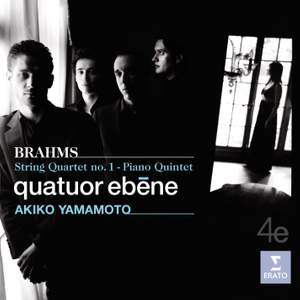
Brahms - Piano Quintet & String Quartet No. 1

Brahms - Piano Quintet & String Quartet No. 1


Brahms:

String Quartet No. 1 in C minor, Op. 51 No. 1

Piano Quintet in F minor, Op. 34

Akiko Yamamoto (piano)


For their second Virgin Classics release the members of the Quatuor Ebène turn from the native French repertoire of their first release (Debussy, Ravel, Fauré) to music firmly in the Austro-German tradition, Brahms’ first string quartet and first piano quartet. Joining them for the quintet is the Japanese pianist Akiko Yamamoto; when the five musicians played the piece together in London in 2006, the Independent newspaper had the following to say: “This talented group wound up their concert with a brilliant performance of Brahms' Piano Quintet in F minor, with the piano acting as a firm anchor, while the strings sang their hearts out. Come back soon.”

The Ebène’s debut on Virgin Classics, the programme of French quartets released in September, has been receiving high praise: “Three French masterpieces (Debussy, Fauré, Ravel) played by young musicians with a rare degree of expressive subtlety, blended sonorities and electrifying joy. The late Fauré quartet achieves a fine balance between sounding suave and pulsing with life. Debussy quivers with febrile emotions, while the Ravel soars to heaven with refinement and poise,” said The Times, awarding the recording five stars. Also in the UK the Independent described the quartet as: “a Gallic equivalent of the Kronos Quartet, a widely acclaimed, award-winning group of young players whose dynamism and open-minded versatility is helping transform French classical music ... This set encompassing the principal string quartets of early-20th-century French music demonstrates something of the breadth and intensity of their abilities, not least in the different emphases they place on the passages, disruptively blending bowed and pizzicato notes which characterise the second movements of Debussy's String Quartet in G Minor and Ravel's String Quartet in F Major. Ravel modelled his piece as a homage to the earlier composition, and it's in the striking dynamic range which, despite its restricted pace, the Quatuor Ebène bring to the très lent third movement that best demonstrates their elegant command of the material. In Fauré's String Quartet in E Minor, they brilliantly negotiate the contrast between the melancholy cast of the first two movements and the more contented, even animated tone of the final movement, by allowing the lingering impressions of the second movement's see-sawing undulations to haunt the rest of the piece. “

The Debussy quartet also featured in the Quatuor Ebène’s programme at last year’s 2008 Salzburg Festival, eliciting the following reactions from leading Austrian media:

“The quartet plays on a sensational technical level with a commitment that assures expressivity for every note, keeping the overall sound lush and colourful while also providing a well-rounded harmonic subtlety. The very first bars of the Debussy quartet gave evidence of the application, fascinating in its clarity, of a pastel artist’s technique, illuminating the polyphonic connections ... [and] squaring, so to speak, the quartet circle, a feat which this ensemble, though still young, carries off in masterly fashion. Moreover, the Quatuor Ebène ensures that scrupulously conceived musical structures are also sensuous in quality, and the musicians are sensitive to the play of tensions in directional chordal shadings – that beauty in dissonance, so to speak, which can so captivate the listener.” (Die Presse)

“In the space of just a few years [the Quatuor Ebène] has made its way to become one of the world’s top quartets. Beyond youthful French charm, the quartet is notable for its distinctive musical approach and technical supremacy. From its first bars, Claude Debussy’s G minor quartet fascinated with is variety of colours, delicate nuances and the specific sensibility of sound. For all the loving attention to detail, there was a sense of scale and passion. Vibrato was used sparingly, but in absolutely the right way. It is unusual for a quartet to be cheered after the first work in its programme, but that was the case on this occasion.

Naturally the Quatuor Ebène has a special connection with the spirit and tonal precision of the French repertoire, but its interpretations in other idioms are also on the highest level.” (Salzburger Nachrichten)

“The C minor Quartet requires playing of the utmost passion if its complex textures are not to sound clogged, and this is what it receives here, though the delicacy and affection the players bring to the two middle movements are also admirable qualities too seldom heard. Akiko Yamamoto proves to be an ideal partner in the Piano Quintet, which achieves an extraordinary sense of drive and emotional abandon in the Finale.” BBC Music Magazine, October 2009 ****

Building a Library

First Choice - September 2010

Virgin - 2166222

(CD)

$12.50

In stock - usually despatched within 1 working day.

Brahms - Piano Quartet and Quintet

Brahms - Piano Quartet and Quintet


Brahms:

Piano Quartet No. 2 in A major, Op. 26

Piano Quintet in F minor, Op. 34


Prisca Benoit (piano), Roland Daugareil, Christophe Poiget (violins), Michel Michalakakos (viola) & Roland Pidoux (cello)

The Quartet dates from 1861 and received mixed reviews after its premiere. The critic, Hanslick, thought it ‘dull and boring’ the violinist Joseph Joachim could find no fault with it. The Quintet went through a number of changes over a period of years before Brahms was satisfied with it.

BNL - BNL112948

(CD)

$17.50

In stock - usually despatched within 1 working day.

Piano Quintets

Piano Quintets


Brahms:

Piano Quintet in F minor, Op. 34

Dvorak:

Piano Quintet in A major, Op. 5

Piano Quintet in A major, Op. 81

Schubert:

Piano Quintet in A major, D667 'The Trout'

Schumann:

Piano Quintet in E flat major, Op. 44


Elisabeth Leonskaja, Rudolf Buchbinder, Phillippe Entremont & Georg Hörtnagel

Alban Berg Quartett

“A variable success. Whilst the Alban Berg Quartet perform with beauty of tone an incisive ensemble, Leonskaja lacks real charm in the Schubert and her Brahms fails to deliver.” BBC Music Magazine, July 2008 ***

EMI Gemini - 5176442

(CD - 2 discs)

$11.50

In stock - usually despatched within 1 working day.

Brahms - String Quartet & Piano Quintet

Brahms - String Quartet & Piano Quintet


Brahms:

Piano Quintet in F minor, Op. 34

String Quartet No. 2 in A minor, Op. 51 No. 2


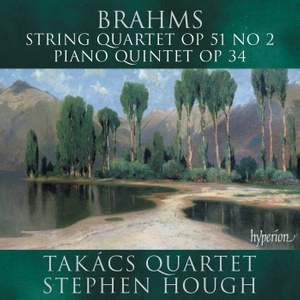
“This is the finest recording of Brahms’s Piano Quintet since the electrifying Eschenbach/Amadeus version … Stephen Hough and the Takács Quartet push the music about as far as it can go … one senses from the start that [Hough] is really fired up and the Takács follow him every inch of the way with playing of beguiling tonal sophistication and thrilling intensity … this is an exceptional account of a truly exceptional masterwork … the Takács gently caress and cosset this extraordinary music with a glowing sensitivity and insight … highly recommended, especially to those who normally find Brahms a composer they admire rather than fall in love with” International Record Review

“These new versions from Stephen Hough and the Takács Quartet strike me as even better, and in more modern sound … in both Quintet and Quartet the performers give bright, focused, alert, almost ‘classical’ readings, very different from the ponderous brown studies that marked Brahms performances of yesteryear … this is an altogether recommendable release” BBC Music Magazine

“a model for what chamber music should be” The Guardian

“In the Brahms Second Quartet the Takács fins a most appealing lightness of touch. … the Piano Quintet… has fire and passion aplenty… There's a feeling of coming together of ideas, with these artists… sparking off one another in a very unstudio-ish way.” Gramophone Magazine, Janurary 2008

“In both Quintet and Quartet the performers give bright, focused, alert, almost 'classical' readings…” BBC Music Magazine, January 2008 ****

“In the Brahms Second Quartet the Takács find a most appealing lightness of touch. They reveal anew the extraordinarily imaginative way in which the work begins, and breathe air into the intricate textures which precede the vacillating second theme. There's an absolute unanimity to their playing, but a fetching liveliness too. Compared to such groups as the Alban Berg, who revel in the lushness of Brahms's writing, the Takács are more febrile and transparent. Their third movement creeps in, skittering, but there's no lack of sweetness of tone when required. And the fugal section has a spring in its step. Brahms isn't all seriousness, they remind us.
The other major selling-point of this disc is the Piano Quintet, for which the Takács are joined by Stephen Hough. There's nothing cosy about this latest reading, which has fire and passion aplenty, and the recording places Hough pleasingly within the overall texture rather than unduly spotlighting him. There's a feeling of coming together of ideas, with these artists – masters of colour all of them – sparking off one another in a very unstudio-ish way. And throughout, Hough's virtuosity makes light of Brahms's unforgiving textures.”
Gramophone Classical Music Guide, 2010

Hyperion - CDA67551

(CD)

$17.25

In stock - usually despatched within 1 working day.

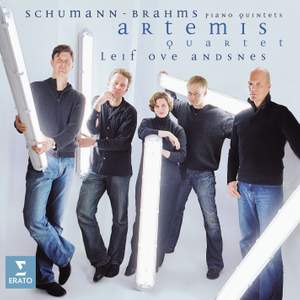
Brahms & Schumann: Piano Quintets

Brahms & Schumann: Piano Quintets


Brahms:

Piano Quintet in F minor, Op. 34

Schumann:

Piano Quintet in E flat major, Op. 44


“With an almost ideal balance between piano and strings, the variety of articulation in their playing brings a marvellous textural variety to the full-blooded writing in the outer movements of the Brahms. …the performances… can be confidently recommended as among the finest modern recordings of both works.” BBC Music Magazine, November 2007 *****

“Leif Ove Andsnes has an uncanny knack of revealing the inner truth of the music he plays without recourse to excessive gimmickry. He also has exquisite taste when it comes to choosing his chamber music collaborators, as this pairing of the two cornerstones of the piano quintet repertoire demonstrates.
Schumann's Quintet has become the most famous of his chamber works, with its boundless energy and melodic generosity. Andsnes and the Artemis let the notes speak for themselves, never lingering too lovingly on mere details. It's an approach that serves the work well, and an ideal instrumental balance helps illuminate the work's compelling textures throughout.
It's a similar story in the Brahms. Andsnes and the Artemis are alive to all the possibilities in the pregnant opening phrases of each movement and maintain the intensity of the impetuous passion implicit in this youthful music. The Brahms hasn't fared as well on disc as the Schumann and this recording of it can certainly take its place among the finest. As for the Schumann, it's undoubtedly up there with the best.”
Gramophone Classical Music Guide, 2010

“Andsnes, whose playing is full of personality, and the Artemis Quartet, who have a fine presence, give a magisterial account of the Brahms and are no less compelling in the Schumann.” Penguin Guide, 2011 edition

GGramophone Awards 2008

Best of Category - Chamber

Building a Library

First Choice - April 2008

BBC Music Magazine

Chamber Choice - November 2007

Virgin - 3951432

(CD)

$16.00

In stock - usually despatched within 1 working day.

Brahms: String Quartets & Piano Quintet


Brahms:

String Quartet No. 1 in C minor, Op. 51 No. 1

String Quartet No. 2 in A minor, Op. 51 No. 2

String Quartet No. 3 in B flat major, Op. 67

Piano Quintet in F minor, Op. 34

Rudolf Serkin (piano)


Sony Tandem - 88697099432

(CD - 2 discs)

$12.50

In stock - usually despatched within 1 working day.

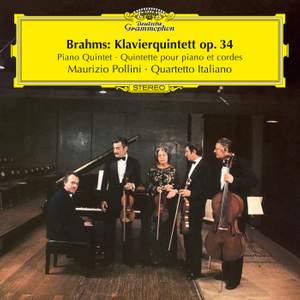
Brahms: Piano Quintet in F minor, Op. 34

Brahms: Piano Quintet in F minor, Op. 34


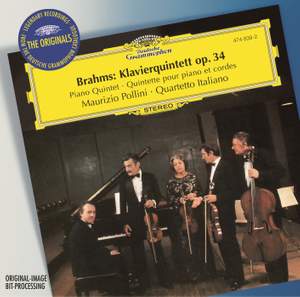
“…it's one of the quartet's last recordings, but the legendary luminosity of sound is still there, as is the beautiful precision, perfectly complemented by Pollini's clarity and control of touch. But it's by no means a cold, clinical performance - the first movement is powerfully dramatic, the Andante expansively lyrical, and the start of the Scherzo has never sounded darker or more mysterious.” Gramophone Magazine, December 2005

DG Originals - 4748392

(CD)

$11.50

In stock - usually despatched within 1 working day.

Page: 

 1   2   3   4   5   6 

 Next >>

Copyright © 2002-13 Presto Classical Limited, all rights reserved.