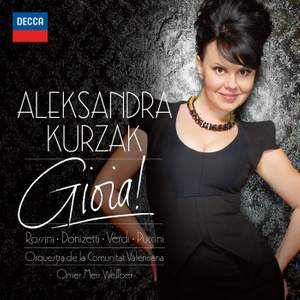
All recordingsPrices shown exclude VAT. (UK tax is not payable for deliveries to United States.) See Terms & Conditions for p&p rates. | |  | Aleksandra Kurzak: Gioia!
The lyric soprano Aleksandra Kurzak is one of the most exciting young singers on the international stage - thrilling press and public alike with her performances in Europe and the US. "Gioia", her debut on Decca, is the eagerly anticipated proof of her excellence. This debut is capturing the current state of Aleksandra's voice by contrasting lyric and coloratura arias, focusing on roles which she has performed on stage. The album features much-loved Puccini arias from La Bohème and Gianni Schicchi, bel canto showpieces from I Puritani and Lucia di Lammermoor and the taxing First Act aria from La traviata "Sempre libera" which showcases both her effortless agility and the full, warm intensity of a Verdi lyric soprano. “A rising-star soprano with flashing eyes and cover-girl looks” (The Observer). “Kurzak impresses as a coloratura soprano of the old school” BBC Music Magazine, September 2011 *** “So, what's special? The tone quality of the voice, in which an apparently endless sparkle is subtly coloured by darker, East European tints. The accuracy of pitch and intervals...The ability to act with the voice (Adele and Lauretta, which follow each other here, sound really radically different). Also, and it's not as common as you may think, she conveys a real understanding of the text.” Gramophone Magazine, October 2011 “there’s no doubt that her voice is stupendous: firm, true, crystal-clear in coloratura, beautifully rich in legato. I enjoyed this far more than recent releases by more famous sopranos.” The Times, 21st January 2012 **** “There's a gamine appeal about young Polish soprano Aleksandra Kurzak, who brings an innocent enthusiasm to the arias on this debut collection, negotiating the richly ornamented phrases with an almost exultant relish. Her joie de vivre is well-suited to the "laughing aria" from Die Fledermaus...while her vibrato during "Regnava nel silenzio"...is so controlled it's astonishing to learn she received no vocal training till she was 19.” The Independent, 27th January 2012 “Kurzak's technique is well honed, scale-work clearly surmounted, no slovenly sliding through the fioritura, and her timbre is most agreeable, having no rawness to spoil the euphony. One can say that her voice does not have the number of colours that a soprano with a larger voice might display, but I did not find that I was bored at any time.” International Record Review, February 2012 “her musical intelligence ensures that there is no hint of monotony here even in some over-exposed repertoire...She achieves everything without resorting to show-off tactics; indeed, a few numbers might almost be described as reserved. Every track gives pleasure, but highlights include a seductive ‘Deh vieni’” Opera | | | In stock - usually despatched within 1 working day. |
|
|
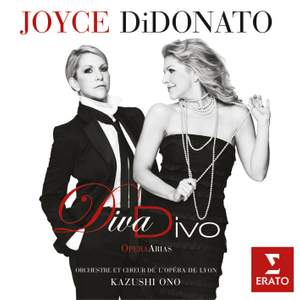
| |  | Joyce DiDonato: Diva, Divo
Bellini: | Ascolta! Se Romeo t'uccise un figlio...La tremenda ultrice spada (from I Capuleti) Edgaras Montvidas (tenor), Nabil Suliman (baritone) | Berlioz: | La Damnation de Faust: D'amour l'ardente flamme Roméo et Juliette, Op. 17: Premiers transports que nul n'oublie | Gluck: | Se mai senti spirarti sul volto (from La clemenza di Tito) | Gounod: | Faites- lui mes aveux (from Faust) | Massenet: | Je suis gris! Je suis ivre! (from Chérubin) Allez, laissez-moi seul...Coeur sans amour, printemps sans roses (from Cendrillon) Ô frêle corps.... Chère Cypris (from Ariane) | Mozart: | Giunse alfin il momento... Deh, vieni, non tardar… (from Le nozze di Figaro) Ecco il punto...Non più di fiori vaghe catene (from La clemenza di Tito) Voi che sapete (from Le nozze di Figaro) | Rossini: | Contro un cor (from Il barbiere di Siviglia) Edgaras Montvidas (tenor) Nacqui all'affanno, al pianto...Non più mesta (from La Cenerentola) Elena Semenova (soprano), Pascale Obrecht (mezzo), Edgaras Montvidas (tenor), Nabil Suliman (baritone), Paolo Stupenengo (bass) | Strauss, R: | Sein wir wieder gut (from Ariadne auf Naxos) |
Joyce DiDonato celebrates the rich dramatic variety of the mezzo-soprano voice in this collection of arias for different characters – of both sexes – from a single opera, or from different operatic treatments of the same story. Joyce DiDonato’s capacity for characterisation is as astounding as the range and flexibility of her voice. As her Virgin Classics recitals of Handel and Rossini have proven, she can charm and touch as a good girl, seduce and seethe as a bad girl, and slip believably into the trousers of a hero. As Opera News said of the Rossini disc, ‘Colbran, The Muse’: “With her sure sense of line and colour, DiDonato takes possession of the repertory, mining every musical and vocal gesture to inhabit each character confidently … Her theatrical sense is magnificent. Musically and dramatically, the disc is perfection.” This new collection showcases DiDonato’s multi-faceted art – and the wealth of opportunities open to a mezzo-soprano – by presenting her as different characters, both male and female, from the same opera or from different musical treatments of the same story. As DiDonato explains: “This recital celebrates the vast and fabulous world of the mezzo-soprano. Aside from the obvious Toscas or Cio-Cio Sans, I've never regretted the length of my vocal cords! I have the privilege and unmitigated joy of playing boys and young men, as well as girls and grown women … It’s an exploration of the human palette of emotions. “I wanted to find a way to show this duality on disc, while highlighting some of the composers I'm most passionate about, such as Mozart, Bellini, Berlioz, Rossini, and Massenet. In exploring this idea, the possibility became clear for telling different sides of some of the most familiar tales which have served as inspiration for operatic legends: Cinderella, Faust, Romeo and Juliet … I've always thought of myself as a storyteller, and with this particular disc, I can showcase that side of me as never before. I'm ready to play!” The programme features several roles that DiDonato has sung on stage – such as Rossini’s Cenerentola (it was the character’s gentle, then exuberant ‘Nacqui all’affanno’ that launched her international career at Plácido Domingo’s Operalia competition, and subsequently at La Scala), Bellini’s Romeo and Mozart’s Cherubino. The ‘flip sides’ of those characters are roles that have not featured in her repertoire: the Prince from Massenet’s Cendrillon (a lavish treatment of the Cinderella story more likely to bring DiDonato in the title role – as at Santa Fe in 2006 and, in 2011, at Covent Garden); the Nurse from Berlioz’s Roméo et Juliette, and both Chérubin (from Massenet’s ‘sequel’ to Le nozze di Figaro) and Susanna. The Figaro connection continues with an excerpt from Il barbiere di Siviglia (Rosina, of course, later becomes Countess Almaviva), while other operas on the programme, from the Renaissance to late Romanticism, include La clemenza di Tito (Sesto and Vitellia), Faust, La Damnation de Faust, Mefistofele, Orphée et Eurydice, Orfeo and Orphée aux Enfers. Accompanying Joyce DiDonato in this tour de force is the Orchestre de l'Opéra National de Lyon under the company’s Principal Conductor Kazushi Ono, another artist who successfully embraces an extraordinary diversity of musical idioms. As John von Rhein wrote in Gramophone: “In complete control vocally, Joyce DiDonato is … consumed by the character. She embodies whomever she’s playing and whatever emotional situation she is evoking.” “It's playful, as well as an ideal vehicle for her glorious mezzo voice in which the most fiendish coloratura ornaments and trills sound effortless.” The Observer, 30th January 2011 “I can find nothing but praise...This recording gives enormous pleasure in rare as well as familiar repertoire...the mezzo invariably finding the right colour for each portrayal...Perhaps the best thing about this recital is that everything DiDonato sings sounds spontaneous, as if the character her- or himself were actually experiencing it for the first time.” International Record Review, March 2011 “she is steadily terrific: technically secure, nimble and clean in her flourishes and roulades, always alert to dramatic nuance. Nor do we lack variety. First, a swaggering, tipsy aria for Cherubino from the luxuriously coloured Chérubin (Massenet again). Then we jump to Mozart’s Susanna, intimate and tender in The Marriage of Figaro. So it goes: jolting, fascinating, entertaining.” The Times, 11th February 2011 **** “[This collection] draws together paired arias of male and female roles from the same story...the youthful Siebel's declaration of love for Marguerite, from Gounod's Faust, receives an anachronistic response from Berlioz's La Damnation de Faust. Clever stuff.” The Independent, 11th February 2011 *** “DiDonato’s is a five-star voice, perhaps the finest lyric mezzo before the public today...Ono’s Lyons orchestra and chorus give her voice luxury support, and her growing army of fans won’t be disappointed.” Sunday Times, 20th February 2011 **** “[DiDonato] underlines what has been increasingly obvious from her stage appearances – she is a consummate professional” Financial Times, 11th February 2011 **** “DiDonato's tone and phrasing catch a genuine male authority in the first entry of Bellini's Capuleti Romeo...Cendrillon and the (to Anglophones) rare Ariane are utter, and quite dark, delights. Elsewhere the Mozart is enjoyed and well negotiated - the lower colouring makes Susanna sound mature and knowing.” Gramophone Magazine, April 2011 “Proof of DiDonato's consummate musicianship is everywhere here...For sheer beauty of tone, legato that defies gravity and singing that restores your faith in human nature, listen last of all to what Joyce DiDonato does with Berlioz's 'D'amour l'ardente flamme'. Diva or Divo, this is the real thing.” BBC Music Magazine, April 2011 ***** “Listening to DiDonato depict both [Cherubino and Susanna]...brings home just how deeply this singer can inhabit character...The American mezzo delivers this ambitious, imaginative programme with intelligence, musicality, vocal brilliance and immense charm. There's some lovely playing from the Lyon Opera Orchestra too.” Classic FM Magazine, May 2011 ***** BBC Music Magazine
Opera Choice - April 2011 |
| | | In stock - usually despatched within 1 working day. |
|
|
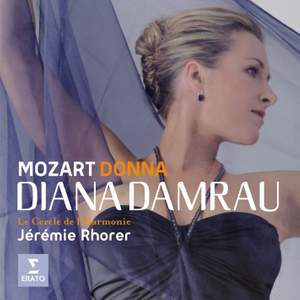
| |  | Diana Damrau - DonnaMozart opera and concert arias
Mozart: | Vorrei spiegarvi, oh Dio! K418 No, che non sei capace, K419 Senti l’eco, ove t’aggiri (from La finta semplice) Martern aller Arten (from Die Entführung aus dem Serail) Durch Zärtlichkeit und Schmeicheln (from Die Entführung aus dem Serail) Ach, ich fühl's (from Die Zauberflöte, K620) Crudele? Ah no, mio bene! ... Non mi dir, bell'idol mio (from Don Giovanni) In quali eccessi ... Mi tradì quell'alma ingrate (from Don Giovanni) Giunse alfin il momento... Deh, vieni, non tardar… (from Le nozze di Figaro) E Susanna non vien! … Dove sono i bei momenti (from Le nozze di Figaro) Al destin che la minaccia (from Mitridate, rè di Ponto) S’altro che lagrime (from La clemenza di Tito) Ecco il punto...Non più di fiori vaghe catene (from La clemenza di Tito) |
Diana Damrau (soprano) Le Cercle de l’Harmonie, Jérémie Rhorer In her second recording as an exclusive Virgin Classics artist Diana Damrau interprets concert and operatic arias by Mozart in a programme which displays her virtuosity and impressive vocal range. Indeed Diana Damrau’s new recital shows she can sing practically all of Mozart’s notably varied soprano roles – ranging from the bravura (Donna Anna, Konstanze, Donna Elvira…) via the more serious (Pamina) to the lighter soprano (generally soubrette roles such as Susanna, Blonde…). From her first recording everyone noted her outstanding Queen of the Night – here she is Pamina (in New York’s Met last Fall, Diana Damrau alternated the two roles with brio). She is also Susanna and the Contessa (Le Nozze di Figaro), Konstanze and Blonde (Die Entführung), Donna Anna and Elvira (Don Giovanni), Servilia and Vitellia (La Clemenza di Tito), pairing major soprano roles within the operas, and concert arias. As for her first recital, ‘Arie di bravura’, French conductor Jérémie Rhorer, who is rapidly gaining international recognition, directs his French period-instrument ensemble Le Cercle de l’Harmonie “Diana Damrau's intelligently planned and superbly executed recital… I can’t remember when I last enjoyed a Mozart recital of this kind so much.” BBC Music Magazine, December 2008 ***** “…Jérémie Rhorer draws tangy, rhythmically lively playing from his period band. "Taste", "fire", "flexibility", "sweetness", "grace of execution" - these were the qualities especially prized in singers of Mozart's day. On this showing Damrau, like Lucia Popp before her, has them all.” Gramophone Magazine, March 2009 | | | In stock - usually despatched within 1 working day. |
|
|
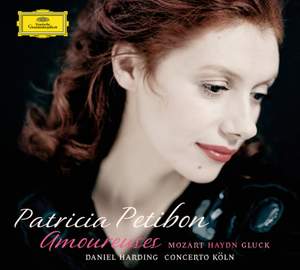
| |  | Amoureuses - Patricia Petibon
Gluck: | Venez, secondez mes désirs from Armide Non, cet affreux devoir... Je t'implore et je tremble (from Iphigénie en Tauride) Ah! Si la liberté me doit être ravie from Armide | Haydn: | Ragion nell'alma siede (from Il mondo della luna) Salamelica from Lo speziale Odio, furor, dispetto from Armida Numi possenti aita!...Dov'è l'amato bene?...Del mio core (from L'anima del filosofo, ossia Orfeo ed Euridice) Fra un dolce deliro from L'isola disabitata | Mozart: | Vorrei spiegarvi, oh Dio! K418 Der Hölle Rache kocht in meinem Herzen (from Die Zauberflöte) L'ho perduta, me meschina (from Le Nozze di Figaro) Giunse alfin il momento... Deh, vieni, non tardar… (from Le nozze di Figaro) Vanne, t'affretta… Ah se il crudel periglio (from Lucio Silla) Fra i pensier più funesti (from Lucio Silla) Tiger! Wetze nur die Klauen! (from Zaïde) Le perfide Renaud me fuit from Armide |
Exceptional French soprano Patricia Petibon joins the DG roster with her debut album Amoureuses, featuring arias by Mozart, Haydn and Gluck Petibon has established herself as one of the most interesting and versatile sopranos of our day and has been widely acclaimed for her outstanding acting abilities that make her merge completely with whatever role she sings and represents on stage With Amoureuses Petibon circles around the ever-important topic of love and desire – in a series of character-portraits she explores how the very different female characters in the operas of Mozart, Haydn, and Gluck respond to the challenges of love Ranging from the dramatic fury in Haydn’s Odio, furor, dispetto and Mozart’s Der Hölle Rache . . . to the sweetness in his Deh vieni, and from the desperate sadness of his L’ho perduta . . . me meschina! to the grandeur of Gluck’s Ah! Si la liberté, the album is the perfect showcase for Petibon’s exceptional skills of expression and characterization For Amoureuses Petibon teamed up with the acclaimed period-instrument band Concerto Köln and conductor Daniel Harding, a collaboration that guarantees an effervescent, entrancing approach to the music of the Viennese masters – a captivating debut to watch for! “The French soprano's DG debut is a considerable and attractive success. There are excerpts from Gluck's Armide, too, including a heartfelt air from Act 3. In the last scene, Petibon is mesmerising in the recitative - excellent support here, and indeed throughout, from Daniel Harding - before, again, bursting out in fury.” Gramophone Magazine, December 2008 “Patricia Petibon's choice of arias by the three greatest of late 18th-century opera composers is tailor-made to display her range, in terms of both drama and sheer vocal compass. …her debut disc for DG is pure pleasure, and Daniel Harding and Concerto Köln provide first-rate support.” BBC Music Magazine, November 2008 ***** | | | In stock - usually despatched within 1 working day. |
|
|
| |  | Claire Dux - RecitalThis CD features recordings made on the Grammophon label between 1911 and 1920 including arias from Tosca, Madam Butterfly, Il Trovatore and Rigoletto.
| | | In stock - usually despatched within 1 working day. |
|
|
| |  | Géori Boué
The French soprano Géori Boué was particularly associated with French repertoire. This collection includes works by Gounod, Massenet, Bizet and Berlioz as well as Italian composers of opera. Many of the recordings date from 1942-1949. | | | Usually despatched in 2 - 3 working days. |
|
|
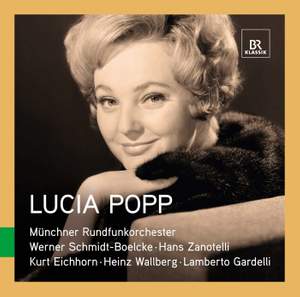
| |  | Great Singers Live: Lucia PoppSelection from „Sunday Concerts“ with the Münchner Rundfunkorchester given in 1968, 1972, 1979, 1980 and 1982
Lucia Popp is one of the best-documented and most versatile singers of her generation. Because of her linguistic and stylistic flexibility she was able to sing a very wide range of repertoire. Her acting talent was extraordinary as well. Before she began her vocal studies she had studied medicine and drama and acted in a number of movies. This new release shows a richly varied program with soprano arias by Mozart to Weber and Rossini all the way to Lehár and Stolz taken from concerts given in 1968 to 1982. Previously unreleased live recordings from the “Sunday Concerts” with the Münchner Rundfunkorchester. Singer portrait featuring Lucia Popp’s core repertoire, including famous arias from the likes of Mozart to Lehár. After Mirella Freni, Nicolai Ghiaurov and Margaret Price, this release continues the successful “Great Singers Live” series | | | (also available to download from $10.50) | Usually despatched in 2 - 3 working days. (Available now to download.) |
|
|
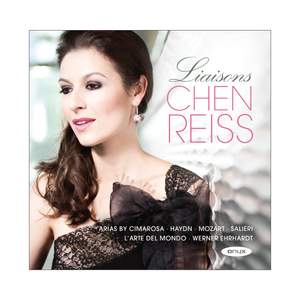
| |  | LiaisonsArias by Cimarosa, Haydn, Mozart and Salieri
Cimarosa: | Sinfonia 'Il matrimonio segreto' Perdonate, signor mio (Il matrimonio segreto) | Haydn: | Quando la rosa Signor, voi sapete Vada adagio | Mozart: | Giunse alfin il momento... Deh, vieni, non tardar… (from Le nozze di Figaro) Voi avete un cor fedele, K217 Una donna a quindici anni (from Così fan tutte) Chi sà, chi sà qual sia, K582 Un moto di gioia, K579 Ah se in ciel, benigne stelle, K538 | Salieri: | Tremo, bell’idol mio (Armida) Sinfonia (La scuola de gelosi) |
Chen Reiss (soprano) L’arte del mondo, Werner Ehrhardt Chen Reiss appears in leading roles at La Scala, Vienna State Opera, Bavarian State Opera, Semperoper Dresden, Deutsche Oper Berlin, Hamburg State Opera, and Frankfurt Opera. She also sang the soundtrack to the film ‘Das Parfum’ (Perfume) with the Berlin Philharmonic under Sir Simon Rattle. Chen Reiss starred with Rolando Villazon on German TV in an opera gala show. She sings Sophie in Der Rosenkavalier in December 2011 at the Staatsoper Wien. “What a stimulating assemblage of arias, and in intelligent, standard-setting performances...Unexpected insights arrives at every turn...Reiss makes [Salieri and Cimarosa] feel like worthy companions, always looking to find their specific character and never falling into soubrette cuteness...My favourite moment is how wonderstruck her Susanna sounds while absorbing the beauties of the night in the Act 4 Figaro aria.” Gramophone Magazine, November 2011 “Reiss has an agile, bell-bright, fluty timbre that's well suited to the soubrette and coloratura repertoire here. She's best in the showy numbers - the glittering roulades of the Mozart concert aria 'Ah se in ciel' and Salieri's 'Tremo bell'idol mio' are bright and fresh. She also displays a lovely line in the short, sweet 'Quando la rosa'” Classic FM Magazine, December 2011 *** “Reiss is a properly pert Despina (Cosi) and an affecting Susanna...Her attention to detail in the recitative is scrupulous...Reiss's diamond bright coloratura is a mighty weapon...All told, this is a beguiling combination of top-drawer musicianship and fresh ideas about opera in Enlightenment Vienna.” BBC Music Magazine, January 2012 ***** BBC Music Magazine
Opera Choice - January 2012 |
| | | Usually despatched in 3 - 4 working days. |
|
|
| |  | Elisabeth Schwarzkopf sings Mozart, Schubert and Strauss
| | | Usually despatched in 4 - 5 working days. |
|
|
| |  | Mostly Mozart
Bach, J C: | À qui pourrai-je avoir recours? (from Amadis de Gaule) | Holzbauer: | Es ist geschrieben (from Günther von Schwarzburg) Ihr Rosenstunden (from Günther von Schwarzburg) Die Klüfte sausen! (from Günther von Schwarzburg) | Mozart: | Tiger! Wetze nur die Klauen! (from Zaïde) Quando avran fine omai ... Padre, germani, addio! (from Idomeneo) Ruhe sanft, mein holdes Leben (from Zaïde) Batti, batti, o bel Masetto (from Don Giovanni) (with preceding recitative, from 'Ma se colpa io non...') Giunse alfin il momento... Deh, vieni, non tardar… (from Le nozze di Figaro) Vedrai, carino (from Don Giovanni) Ach, ich fühl's (from Die Zauberflöte, K620) Se il padre perdei (from Idomeneo) | Paisiello: | Il mio ben quando verrà (from Nina, o sia La pazza per amore) | Salieri: | Par les larmes dont votre fille (from Les Danaïdes) Père barbare, arrache-moi la vie! (from Les Danaïdes) |
Mojca Erdmann’s Deutsche Grammophon recording debut combines a variety of Mozart’s best beloved arias and works by his contemporaries such as J.C. Bach, Holzbauer, and Paisiello. The album also features Andrea Marcon and the outstanding period instrumentalists of La Cetra Baroque Orchestra, Basle. Plans in 2011 include her debut at New York’s Metropolitan Opera as Zerlina in a new Don Giovanni. “Agile, clean, bright: Mojca Erdmann’s soprano voice was made for Mozart...it’s easy to enjoy her natural ease and golden glow, backed by high-class playing from Andrea Marcon and the Basel period orchestra, La Cetra. The booklet has plenty of starstruck pictures.” The Times, 30th April 2011 **** “The two arias from Zaide show off Erdmann's strengths: the outer sections of 'Tiger!' are full of fire, and 'Ruhe sanft' is delicate without being merely pretty...Erdmann's spirited, impeccably tuned soprano is a delight to hear, and this unhackneyed recital is richly enjoyable.” Gramophone Magazine, July 2011 “Erdmann clearly has a lot going for her in terms of sheer musicianship. A notably well-schooled artist, she shapes phrases (in 'Ruhe sanft', to name one example) with a precision that is almost clinical...Marcon and La Cetra, his brilliant period-instrument orchestra, support the soprano with considerable sensitivity.” International Record Review, July 2011 “Erdmann is certainly an interpreter of major gifts, most obvious in the more regular Mozart assignments, which all possess dramatic individuality as well as musical and vocal distinction...But contributing just as much to the disc's success is the orchestral playing under Andrea Marcon. The Basel-based period-instrument ensemble maximises the characterful elements of the writing throughout.” BBC Music Magazine, July 2011 **** | | | Usually despatched in 2 - 3 working days. |
|
|
| |
|