All recordingsPrices shown exclude VAT. (UK tax is not payable for deliveries to United States.) See Terms & Conditions for p&p rates. | |  | Brahms: The Complete Songs Volume 4 (Robert Holl)
Brahms: | An die Nachtigall, Op. 46 No. 4 (Text: L.C.H. Hölty) Schwermut, Op. 58 No. 5 Dein blaues Auge, (No. 8 from Acht Lieder und Gesänge, Op. 59) Heimweh, Op. 63 No. 8 Heimweh I, Op. 63 No. 7 Heimweh III, Op. 63 No. 9 Alte Liebe, Op. 72 No. 1 Sommerfäden, Op. 72 No. 2 O kühler Wald, Op. 72 No. 3 Verzagen, Op. 72 No. 4 Todessehnen ('Ach, wer nummt von meiner Seele'), Op. 86 No. 6 Lieder (5), Op. 94 Komm bald, Op. 97 No. 5 (Groth) Wie Melodien zieht es mir, Op. 105 No. 1 Auf Dem See op.106 No.2 Maienkätzchen, Op. 107 No. 4 Vier ernste Gesänge, Op. 121 |
Graham Johnson’s latest Lieder project for Hyperion reaches its fourth volume. Brahms is of course a giant of the Romantic era but his songs and vocal works are rather less well known than much of his other music. There is so much to discover and enjoy in the beautiful, often elegiac melodies and characteristic piano writing. In some of these recitals an opus number will be presented in its entirety: here it is the songs of Op 94, as well as the Vier ernste Gesänge of Op 121. The singer is the bass-baritone Robert Holl, acclaimed as simply one of the most profound artists of the genre and recently praised for the ‘unparalleled depth and complexity’ of his live performance (The Independent). “Holl's voice, reminiscent of Fischer-Dieskau's but rather more of a real bass...is rich, true and resonant. He uses it simply, without self-conscious artifice, and the result is some very beautiful singing. Johnson's accompeniment is always skilled and perceptive...This disc, while the whole recital has notable integrity and quality, would be worth having for [the Four Serious Songs] alone.” International Record Review, September 2012 “[Holl is] dark-toned, at times to the point of grittiness, and you might find your admiration for the emotional truth of his singing offset by moments of unwieldiness and an occasional pulse in his tone. It works best if you listen selectively...The effect is awesome, but makes for difficult listening.” The Guardian, 13th September 2012 *** “Holl's true bass register resonates eloquently with this programme of very serious songs...Holl has the ability to draw the listener in...For the Four Serious Songs themselves, Holl brings a deep sense of empathetic humanity to the live, deeply felt and thoughtfully reasoned inner monologues which he makes of them.” BBC Music Magazine, November 2012 **** “Holl fields a bass-baritone of slightly grizzled nobility, with impressive sonorous depth...he catches all the terrible nihilism and life-weariness of the first two songs and the opening of the third...Johnson's fastidiously textured playing, like his detailed commentaries, is always illuminating...But be prepared for a protracted Brahmsian gloomfest.” Gramophone Magazine, November 2012 “Holl, here approaching his mid-sixties, is still a flexible and nuanced singer with the ability to lighten the tone when appropriate. In spite of a long operatic career with often heavy roles - he has been a regular at Bayreuth since 1996 - the voice is largely unscathed and the tone noble...[Johnson] is the ever-flexible partner in what is a duo of equal merits.” MusicWeb International, January 2013 | | | In stock - usually despatched within 1 working day. |
|
|
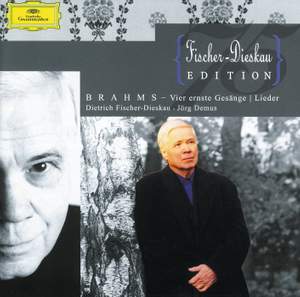
| |  | Fischer-Dieskau sings Brahms & Schumann
Brahms: | Vier ernste Gesänge, Op. 121 Sommerabend, Op. 85 No. 1 Mondenschein, Op. 85 No. 2 Es liebt sich so lieblich, Op. 71 No. 1 Meerfahrt, Op. 96 No. 4 Es schauen die Blumen, Op. 96 No. 3 Der Tod, das ist die kühle Nacht, Op. 96 No. 1 Mit vierzig Jahren, Op. 94 No. 1 Steig auf, geliebter Schatten, Op. 94 No. 2 Mein Herz ist schwer, Op. 94 No. 3 Kein Haus, keine Heimat, Op. 94 No. 5 Herbstgefühl, Op. 48 No. 7 Alte Liebe, Op. 72 No. 1 Abenddämmerung, Op. 49 No. 5 Heimweh, Op. 63 No. 8 Auf dem Kirchhofe, Op. 105 No. 4 Verzagen, Op. 72 No. 4 Regenlied (No. 3 from Acht Lieder und Gesänge, Op. 59) Nachklang (No. 4 from Acht Lieder und Gesänge, Op. 59) Fruhlingslied, Op. 85, No. 5 Auf dem See (No. 2 from Acht Lieder und Gesänge, Op. 59) Feldeinsamkeit, Op. 86 No. 2 An eine Äolsharfe, Op. 19 No. 5 Der Frühling, Op. 6 No. 2 Wie die Wolke nach der Sonne (No. 5 from Sechs Gesänge, Op. 6) Treue Liebe, Op. 7, No. 1 Heimkehr, Op. 7 No. 6 Juchhe! (No. 4 from Sechs Gesänge, Op. 6) Nachwirkung, Op. 6 No. 3 Mondnacht, WoO 21 Ein Sonett, Op. 14 No. 4 (Herder) Ständchen, Op. 14 No. 7 Vor dem Fenster Op. 14 No. 1 Scheiden und Meiden, Op. 19, No 2 Gang zur Liebsten, Op. 14 No. 6 Von verwundeten Knaben, Op. 14 No. 2 Murrays Ermordung, Op. 14 No. 3 Sehnsucht 'Mein Schatz ist nicht da', Op. 14 No. 8 Volkslied Kerstin Meyer (contralto) Duette (4), Op. 28 | Schumann: | Dichterliebe, Op. 48 |
‘You sing as if you had written it yourself!’ Jean Cocteau once told Dietrich Fischer-Dieskau. This anthology of lieder by Brahms and Schumann is a prime example of the great singer doing just that, mining every nuance of emotion from a song while, at the same time, sounding as spontaneous and free as if he were making it up on the spot. One of the hallmarks of Fischer-Dieskau’s legacy is the ease with which he creates the spell of each individual song, drawing the listener – apparently effortlessly – into the drama created by the words and the music. Fischer-Dieskau recorded extensively for Deutsche Grammophon, and the bulk of his archive has been mined on CDs. These recordings, however, are rarities. The songs on CD1 appeared only as part of the Fischer-Dieskau Edition for his 75th birthday. The Brahms songs on CD2 make their first appearance on CD. And the 1957 recording of Schumann’s Dichterliebe with his long-time pianist Jörg Demus, only appeared as part of Deutsche Grammophon’s centenary edition. CD2 includes the Four Duets, Op. 28 in which Fischer-Dieskau is partnered by an artist not heard enough on records, the contralto Kerstin Meyer. This release marks the launch of an Eloquence series of notable recitals of songs and opera arias by some of the great voices of Decca and Deutsche Grammophon. “A moving Brahms Four Serious Songs from a young and physically impassioned Fischer-Dieskau, and a fascinatingly exploratory Dichterliebe from 1957, both incomparably accompanied.” BBC Music Magazine, June 2012 ***** “Fischer-Dieskau is a superb interpreter of the cycle” Gramophone Magazine (Dichterliebe) “this is a masterly performance, a towering interpretation of these dark, noble songs” Gramophone Magazine (Brahms: Four Serious Songs) “Fischer-Dieskau is splendid in the furious little Hahm setting, Kein Haus, keine Heimat, the shortest of all Brahms’s songs, and gives a ravishing account of Feldeinsamkeit. … [His] performance is clearly among the greatest” Gramophone Magazine (Brahms) | | | In stock - usually despatched within 1 working day. |
|
|
| |  | The Flagstad Recitals Volume 1Schubert, Brahms, Schumann, Wolf & Strauss - Lieder
Brahms: | Vier ernste Gesänge, Op. 121 Treue Liebe, Op. 7, No. 1 Am Sonntag Morgen Op. 49 No. 1 Auf dem Kirchhofe, Op. 105 No. 4 Wie Melodien zieht es mir, Op. 105 No. 1 Alte Liebe, Op. 72 No. 1 Bei dir sind meine Gedanken (No. 2 from Sieben Lieder, Op. 95) Wir wandelten, wir zwei zusammen Op. 96/2 Dein blaues Auge, (No. 8 from Acht Lieder und Gesänge, Op. 59) | Schubert: | Dem Unendlichen, D291 (Klopstock) Erlkönig, D328 Am Grabe Anselmo's D504 Des Mädchens Klage D191b Ave Maria, D839 | Schumann: | Der Nussbaum, Op. 25 No. 3 Die Soldatenbraut Op. 64 No. 1 Meine Rose, Op. 90 No. 2 Liebeslied, Op. 51 No. 5 Die Lotosblume, Op. 25 No. 7 Widmung, Op. 25 No. 1 Lust der Sturmnacht, Op. 35 No. 1 In der Fremde (No. 1 from Liederkreis, Op. 39) Zum Schluß, Op. 25 No. 26 Previously Unpublished | Sinding: | Leit etter livet og liv det! Op. 55, No. 5 Sylvelin, Op. 55, No. 1 Der skreg en fugl, Op. 18, No. 5 Den Jomfru gik i valmu-Vang? Op. 50, No. 5 | Strauss, R: | Befreit, Op. 39 No. 4 Mit deinen blauen Augen, Op. 56 No. 4 Lob des Leidens, Op. 15 No. 3 Ich trage meine Minne, Op. 32 No. 1 Ständchen, Op. 17 No. 2 Geduld Op. 10 No. 5 | Wolf, H: | Gesang Weylas (No. 46 from Mörike-Lieder) Gebet (No. 28 from Mörike-Lieder) Über Nacht Lieder aus der Jugendzeit Der Freund (No. 1 from Eichendorff-Lieder) Heb’ auf dein blondes Haupt (No. 18 from Italienisches Liederbuch) Anakreons Grab (No. 29 from Goethe-Lieder) Morgenstimmung Zur Ruh, zur Ruh! |
The first of four 2-CD “Flagstad Recitals” features Kirsten Flagstad in Brahms and Schubert on CD1 as well as CD premieres of songs by Schumann (including her previously unpublished “Zum Schluss”), Strauss, Wolf and Sinding on CD2. Her great power and control placed her among those with the natural capacity for success in the ‘big’ songs with its special thrill, but there is no want of gentleness in the quieter ones. The American critic, Virgil Thomson, probably spoke for the whole audience when he wrote on Flagstad’s return to the United States in 1947: ‘Never in this writer’s concert-going lifetime has there been available any other vocal artistry of such sumptuous natural acoustics, such perfect technical control and such sound musicianship’. "Throughout, one is stirred by the sheer beauty of the sound." Gramophone “deeply felt … wonderfully radiant tone … very touching” [Brahms] “the operatic drama of Der Erlkönig is as memorable as the gently ravishing cantilena of Am Grabe Anselmos” The Penguin Guide to Bargain Compact Discs "…worth having for the Wolf group alone." Gramophone | | | In stock - usually despatched within 1 working day. |
|
|
| |  | Dietrich Fischer-Dieskau sings Lieder
Brahms: | Feldeinsamkeit, Op. 86 No. 2 Auf dem See (No. 2 from Acht Lieder und Gesänge, Op. 59) Abenddämmerung, Op. 49 No. 5 Alte Liebe, Op. 72 No. 1 Verzagen, Op. 72 No. 4 Regenlied (No. 3 from Acht Lieder und Gesänge, Op. 59) | Schubert: | Liebesbotschaft, D957 No.1 Der Atlas, D957 No. 8 Ihr Bild, D957 No. 9 Das Fischermädchen D957 No. 10 Die Stadt, D957 No. 11 Am Meer, D 957 No. 12 Die Taubenpost, D965A (D957 No. 14) Am feierabend (No. 5 from Die schöne Müllerin, D795) Trockne Blumen (No. 18 from Die schöne Müllerin, D795) Nacht und Träume, D827 | Schumann: | In der Fremde (No. 1 from Liederkreis, Op. 39) Waldesgesprach (No. 3 from Liederkreis, Op. 39) Mondnacht (No. 5 from Liederkreis, Op. 39) Schöne Fremde (No. 6 from Liederkreis, Op. 39) Auf einer Burg (No. 7 from Liederkreis, Op. 39) Wehmut (No. 9 from Liederkreis, Op. 39) Im Walde (No. 11 from Liederkreis, Op. 39) Frühlingsnacht (No. 12 from Liederkreis, Op. 39) |
“The main purpose of this frustratingly fragmentary and unevenly mastered compilation of Lieder treasure seems to be to give a sampler tasting of the young Fischer-Dieskau in the 1950s, with a varied palette of accompanists.” BBC Music Magazine, February 2010 **** “The voice is again in finest condition, the art wonderfully flexible in its transitions from light-heartedness to the intensity of despair. The Liederkreis songs include a magical "Mondnacht" and a vividly "faced" "Im Walde". The Brahms group opens with Feldeinsamkeit, masterly in control, technical and expressive. The remastered sound is very immediate, sometimes almost uncomfortably so, but the impression is strong, probably ineffaceable.” Gramophone Magazine, December 2009 | | | In stock - usually despatched within 1 working day. |
|
|
| |  | Brahms: Lieder
Brahms: | Sommerabend, Op. 85 No. 1 Therese, Op. 86 No. 1 Vor dem Fenster Op. 14 No. 1 Alte Liebe, Op. 72 No. 1 Wir wandelten, wir zwei zusammen Op. 96/2 Mädchenlied, Op. 107 No. 5 Abendregen, Op. 70 No. 4 Meine Liebe ist grün, Op. 63 No. 5 Feldeinsamkeit, Op. 86 No. 2 Das Mädchen spricht, Op. 107 No. 3 Immer leiser wird mein Schlummer, Op. 105 No. 2 Der Jäger (No. 4 from Sieben Lieder, Op. 95) Regenlied (No. 3 from Acht Lieder und Gesänge, Op. 59) Der Schmied Op. 19/4 Mädchenfluch (No. 9 from Neun Gesänge, Op. 69) Liebestreu, Op. 3 No. 1 Salome (No. 8 from Neun Gesänge, Op. 69) Von ewiger Liebe, Op. 43 No. 1 Der Tod, das ist die kühle Nacht, Op. 96 No. 1 |
| | | In stock - usually despatched within 1 working day. |
|
|
| |  | Brahms: Lieder
Brahms: | Wir wandelten, wir zwei zusammen Op. 96/2 Alte Liebe, Op. 72 No. 1 Das Mädchen spricht, Op. 107 No. 3 Immer leiser wird mein Schlummer, Op. 105 No. 2 Meine Liebe ist grün, Op. 63 No. 5 Von ewiger Liebe, Op. 43 No. 1 Der Tod, das ist die kühle Nacht, Op. 96 No. 1 Ständchen, Op. 106 No. 1 Mädchenlied, Op. 107 No. 5 Sommerabend, Op. 84 No. 1 Der Kranz, Op. 84 No. 2 Liebestreu, Op. 3 No. 1 Der Jäger (No. 4 from Sieben Lieder, Op. 95) Von waldbegranzter Hohe (No. 1 from Acht Lieder und Gesänge, Op. 57) Wenn du nur Zuweilen lächelst (No. 2 from Acht Lieder und Gesänge, Op. 57) Es träumte mir (No. 3 from Acht Lieder und Gesänge, Op. 57) Ach, wende diesen Blick (No. 4 from Acht Lieder und Gesänge, Op. 57) Unbewegte laue Luft (No. 8 from Acht Lieder und Gesänge, Op. 57) Der Gang zum Liebchen, No. 1, Op. 48 Vergebliches Ständchen, Op. 84 No. 4 Wie Melodien zieht es mir, Op. 105 No. 1 Salamander, Op. 107 No. 2 Agnes Op. 59, No. 5 Therese, Op. 86 No. 1 Feldeinsamkeit, Op. 86 No. 2 Wiegenlied, Op. 49 No. 4 (Lullaby) Botschaft, Op. 47 No. 1 |
For many years, Barbara Hendricks has been communicating her love of the lied in concerts and on disc. After Schumann, Schubert, Beethoven, Spanish songs and those of Poulenc, it is the turn of Brahms to find sublimation in this disc from the Swedish soprano, magnificently accompanied on the piano by her partner Roland Pöntinen and recorded between 2002-7. Brahms composed more than 200 lieder throughout his career, though for the most part between 1851 and 1888. In the choice of texts he was generally guided by the climate or message of a poem, more than by its formal perfection; it was no doubt for this reason that he set very little Goethe to music, whose poems, he said, “are all so accomplished that music cannot be added to them”. His favourite theme was, naturally enough, love, in all its forms, whether evoking joy, optimism or nostalgia, loss, resignation, memory… One finds in these lieder authentic, personal experiences of Johannes Brahms. Caught between romanticism and classicism, he offered in his lieder music that is individual and consummate. | 
| | | Scheduled for release on 3 June 2013. Order it now and we will deliver it as soon as it is available. |
|
|
| |  | Brahms: Lieder
Brahms: | Bei dir sind meine Gedanken (No. 2 from Sieben Lieder, Op. 95) Wie Melodien zieht es mir, Op. 105 No. 1 Sapphische Ode, Op. 94 No. 4 Feldeinsamkeit, Op. 86 No. 2 Nachtigall, Op. 97 No. 1 Verzagen, Op. 72 No. 4 Alte Liebe, Op. 72 No. 1 An die Nachtigall, Op. 46 No. 4 (Text: L.C.H. Hölty) Das Mädchen spricht, Op. 107 No. 3 Dein blaues Auge, (No. 8 from Acht Lieder und Gesänge, Op. 59) Geheimnis, Op. 71 No. 3 Ständchen, Op. 106 No. 1 Von ewiger Liebe, Op. 43 No. 1 Der Tod, das ist die kühle Nacht, Op. 96 No. 1 Auf dem Kirchhofe, Op. 105 No. 4 Die Mainacht, Op. 43 No. 2 Anklänge, Op. 7 No. 3 Spanisches Lied, Op. 6 No. 1 Mädchenlied (No. 6 from Sieben Lieder, Op. 95) Am Sonntag Morgen Op. 49 No. 1 Liebestreu, Op. 3 No. 1 Vergebliches Ständchen, Op. 84 No. 4 Das Mädchen (No. 1 from Sieben Lieder, Op. 95) Therese, Op. 86 No. 1 Mädchenlied, Op. 107 No. 5 Der Jäger (No. 4 from Sieben Lieder, Op. 95) Der Schmied Op. 19/4 Der Gang Zum Liebchen, Op. 31 No. 3 Sonntag, Op. 47 No. 3 Mädchenlied, Op. 85 No. 3 Wiegenlied, Op. 49 No. 4 (Lullaby) |
| 
| | | Scheduled for release on 3 June 2013. Order it now and we will deliver it as soon as it is available. |
|
|
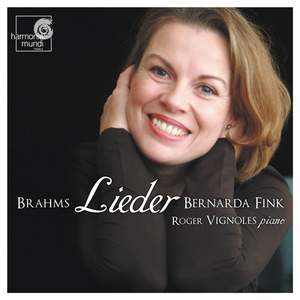
| |  | Brahms - Lieder
Brahms: | Bei dir sind meine Gedanken (No. 2 from Sieben Lieder, Op. 95) Wie Melodien zieht es mir, Op. 105 No. 1 Sapphische Ode, Op. 94 No. 4 Feldeinsamkeit, Op. 86 No. 2 Nachtigall, Op. 97 No. 1 Verzagen, Op. 72 No. 4 Alte Liebe, Op. 72 No. 1 An die Nachtigall, Op. 46 No. 4 (Text: L.C.H. Hölty) Das Mädchen spricht, Op. 107 No. 3 Dein blaues Auge, (No. 8 from Acht Lieder und Gesänge, Op. 59) Geheimnis, Op. 71 No. 3 Ständchen, Op. 106 No. 1 Von ewiger Liebe, Op. 43 No. 1 Der Tod, das ist die kühle Nacht, Op. 96 No. 1 Auf dem Kirchhofe, Op. 105 No. 4 Die Mainacht, Op. 43 No. 2 Anklänge, Op. 7 No. 3 Spanisches Lied, Op. 6 No. 1 Mädchenlied (No. 6 from Sieben Lieder, Op. 95) Am Sonntag Morgen Op. 49 No. 1 Liebestreu, Op. 3 No. 1 Vergebliches Ständchen, Op. 84 No. 4 Das Mädchen (No. 1 from Sieben Lieder, Op. 95) Therese, Op. 86 No. 1 Mädchenlied, Op. 107 No. 5 Der Jäger (No. 4 from Sieben Lieder, Op. 95) Der Schmied Op. 19/4 Der Gang Zum Liebchen, Op. 31 No. 3 Sonntag, Op. 47 No. 3 Mädchenlied, Op. 85 No. 3 Wiegenlied, Op. 49 No. 4 (Lullaby) |
"Brahms was capable - as were all his great predecessors - of writing a melody that was his own property, right down to the smallest inflection, and yet sounded like a folksong. Or, to put it another way, a melody that was a real, genuine folksong - and yet was by Brahms." Wilhelm Furtwängler, 1931 “From Roger Vignoles's first light-filled notes in 'Bei mir sind meine Gedanken', with Bernada Fink's smiling, wide-eyed voice, these performers make it sound as though the ink is still wet on Brahms's manuscripts. The real skill of Fink and Vignoles is to capture that fusion of physical and emotional movement within a song - and to recreate it with real spontaneity.” BBC Music Magazine, March 2007 **** “'Bei dir sind meine Gedanken', one of Brahms's happiest songs, makes an inviting aperitif. Buoyed by the evanescent shimmer of Roger Vignoles's accompaniment, Bernarda Fink is all confiding eagerness, phrasing deftly and gracefully and showing a natural feeling for Brahmsian rubato. One would expect Fink's warm, luminous mezzo, flecked by darker, deeper tints, to be near ideal for, say, the nostalgia of 'Alte Liebe' or the many songs of elegiac loss and heartbreak, all touchingly done here. But having thought of her as an essentially 'serious' singer, dignified, eloquent, the vivacity and 'face' she brings to 'Bei dir sind meine Gedanken' and other lighter songs is sheer delight. 'Ständchen', here more sunlit than moonlit, is charmingly characterised, with an affectionate caress on the dreaming girl's 'Vergiss nicht mein'. Fink is playfully coquettish without archness in the delicious 'Spanisches Lied', and sings 'Vergebliches Ständchen' with an outgoing boldness and witty touches of timing – and the tender lingering on the penultimate 'Mein Knab' suggests that the boy's luck may soon be about to change. Other singers have brought a more intense yearning to 'Die Mainacht' and found greater mystery amid the slumberous balm of 'Feldeinsamkeit'. But Fink's flowing performances, sensitively shaped and inflected, are never less than satisfying. It is good to be reminded, too, that, for all its melancholy, 'Die Mainacht' is also a song of spring, suffused by warm major-key harmonies, with a hint of excited anticipation at the line 'Wann, o lächelndes Bild'. On the face of it, Fink's lyric mezzo would seem to be on the light side for 'Von ewiger Liebe'. But with Vignoles imaginatively 'orchestrating' the keyboard part, she gives a finely graded, deeply moving performance, vividly contrasting the contained passion of the boy's words with the girl's gentle candour. The glowing climactic avowal of eternal love is truly overwhelming, setting the seal on a Brahms recital of rare distinction.” Gramophone Classical Music Guide, 2010 “For all the tragic, premature loss last year of Lorraine Hunt Lieberson, Argentinian Bernarda Fink is just one of a golden generation of mezzos vying for the mantle of Janet Baker. One of the most versatile, as at ease in Baroque repertoire as in music from Handel and Mozart to Schumann, Fink's rich, warm voice boasts the perfect blend of colour and clarity for this selection of 31 songs from the almost 200 Brahms wrote. Her musical intelligence combines with the sensitivity of Roger Vignoles to capture the folk-song spirit behind their urbane polish.” The Observer | | | Usually despatched in 3 - 4 working days. |
|
|
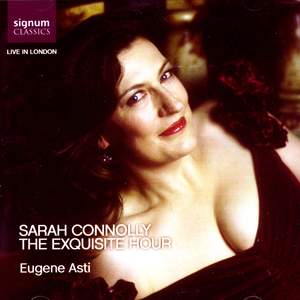
| |  | The Exquisite Hour
Brahms: | Ständchen, Op. 106 No. 1 Da unten im Tale (No. 6 from Deutsche Volkslieder, WoO 33) Nachtwandler, Op. 86 No. 3 Feldeinsamkeit, Op. 86 No. 2 Alte Liebe, Op. 72 No. 1 Die Mainacht, Op. 43 No. 2 Von ewiger Liebe, Op. 43 No. 1 | Britten: | Tit for Tat | Hahn, R: | À Chloris L'Enamourée Trois jours de vendange L'heure exquise Quand je fus pris au pavillon | Haydn: | Arianna a Naxos, cantata, Hob.XXVIb/2 | Ireland: | Her song | Korngold: | Glückwunsch Alt-Spanisch Sterbelied Gefasster adschied | Weill, K: | Lost in the stars Speak low |
“a hugely impressive disc, testifying to the versatility and range of a singer who has already drawn comparisons with Janet Baker” The Guardian “A national treasure” Evening Standard “Connolly's lovely singing reaches to the sensuous core” The Telegraph “Almost seven years ago we went to the Wigmore Hall expecting to hear a well known soprano only to find that she had been replaced by a less well-known mezzo. Sarah Connolly had already appeared with the English National Opera in major roles such as Handel's Xerxes and Donizetti's Mary Stuart. Disappointment at missing the scheduled artist vanished with the completion of the substitute's first phrases. Delight took its place and increased steadily throughout the recital. It was a clear, fresh and powerful voice, used with intelligent assurance, and by the final groups (Duparc and Falla) she had established with the audience the rapport of a much more experienced artist. What was true at the Wigmore holds for this concert at St John's, Smith Square, where her success with the audience is again unmistakable and fully merited. Again, her choice of programme contributes to the success: a judicious mixture of the familiar and out-of-the-way, and well suited to voice and style. The Brahms group is particularly satisfying, with Die Mainacht broadly phrased, Nachtwandler imaginatively hushed and Von ewigerLiebe warmly felt. The Hahn songs are equally (if contrastingly) delightful, the two pastiche pieces, A Chloris and Quand je fus pris au pavillon charmingly in period. Weill's Speak Low and Ireland's Her Song are winning encore pieces. That leaves Haydn's Arianna a Naxos, the long and demanding concert aria which opens the programme. Here we find a substantial achievement and a limitation. The style is admirably clean and the emotional range well probed, but the whole remains a little impersonal and one is driven to comparisons. Janet Baker brings warmer humanity and a more memorable timbre while Cecilia Bartoli is more vivid – hear her intense 'Tradita io sono' for instance, or the pale 'Già più non reggo' or the furious final 'Barbaro ed infedel'. That comparison does, however, throw into a very favourable light Eugene Asti's accompaniment: where András Schiff (for Bartoli) is over– assertive, Asti is sensitive and keeps proportion. And indeed he does so throughout: a constant pleasure and a major contribution to the recital's undoubted success.” Gramophone Classical Music Guide, 2010 “Connolly woos her audience with the calling-card for any and every mezzo: Haydn's dramatic cantata, Arianna a Naxos. And every second of its nervous and emotional life - its hopes, fears and final despair - are uncovered in Connolly's superbly observant voice and imagination.” BBC Music Magazine, March 2006 ***** “…a clear, fresh and powerful voice, used with intelligent assurance… The Brahms group is particularly satisfying, with Die Mainacht broadly phrased, Nachtwandler imaginatively hushed and Von ewiger Liebe warmly felt. The Hahn songs are equally… delightful, the two pastiche pieces, A Chloris and Quand je fus pris au pavillon charmingly in period. ...Weill's Speak Low and Ireland's Her Song are winning encore pieces.” Gramophone Magazine, May 2006 | | | Usually despatched in 3 - 4 working days. |
|
|
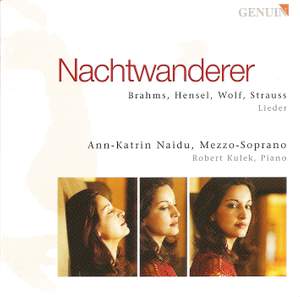
| |  | NachtwandererLieder by Brahms, Hensel, Wolf and Strauss
Brahms: | Über die Heide Op. 86 No. 4 Alte Liebe, Op. 72 No. 1 Mädchenlied, Op. 107 No. 5 Am Sonntag Morgen Op. 49 No. 1 Liebestreu, Op. 3 No. 1 Meine Lieder Op. 106 No. 4 Therese, Op. 86 No. 1 Die Mainacht, Op. 43 No. 2 Immer leiser wird mein Schlummer, Op. 105 No. 2 Der Tod, das ist die kühle Nacht, Op. 96 No. 1 | Mendelssohn: | Nachtwanderer Op. 7 No.1 (Eichendorff) | Mendelssohn, Fanny: | Der Eichwald brauset (Schiller) Die Mainacht, Op. 9 No. 6 (Text: Ludwig Hölty) | Strauss, R: | Die Nacht, Op. 10 No. 3 Zueignung, Op. 10 No. 1 Morgen, Op. 27 No. 4 | Wolf, H: | Die Nacht (No. 19 from Eichendorff-Lieder) (Eichendorff) Das verlassene Mägdlein (No. 7 from Mörike-Lieder) (Mörike) Verborgenheit (No. 12 from Mörike-Lieder) (Mörike) |
Ann-Katrin Naidu (mezzo-soprano), Robert Kulek (piano) | |
|
| |
|