Bizet: Carmen: Entr'actes

This page lists all recordings of Carmen: Entr'actes, by Georges Bizet (1838-75) on CD & download (MP3 & FLAC).

Recommendations

Orchestral Choice
June 2008
Disc of the Month
June 2008
Rosette

All recordings

Prices shown exclude VAT. (UK tax is not payable for deliveries to United States.)
See Terms & Conditions for p&p rates.

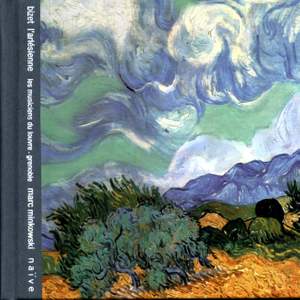
Bizet - L' Arlésienne Orchestral Suites

Bizet - L' Arlésienne Orchestral Suites

(CD/Book)


Bizet:

Carmen: Entr'actes

Carmen: Prelude to Act I

L'Arlesienne Suites 1 & 2

L'Arlésienne - Incidental Music, Op. 23

(version by Marc Minkowski)


Les Musiciens du Louvre & Chœur de l’opéra de Lyon, Marc Minkowski

Marc Minkowski, one of the most outstanding conductors of our time, has joined naïve for a long-term collaboration during which he will be surveying the music of Bach, Handel, Haydn and Mozart, among others. The first in this series of recordings features the works of Georges Bizet performed on instruments of the period. It brings an original approach to the music from two of his masterpieces, L’Arlésienne and Carmen.

In 1872, Bizet composed the incidental music for Daudet’s theatre play L’Arlésienne. Following the huge success of this music, he composed a suite for orchestra based on the best pieces included in the original incidental music. In 1879, four years after Bizet’s death, his friend Guiraud arranged a new orchestral suite, mainly based on Bizet’s music, but also adding new quotes from the incidental music. In 2007 Marc Minkowski selected the best pieces from the original incidental music and conceived his own fascinating suite. The program is completed with the Prelude” and three “Entr’actes” form Carmen.

“To hear Bizet played on period instruments, and in the hands of musicians steeped in the French repertoire, gives special pleasure...Iit is rare to hear the purely orchestral movements of Bizet’s operatic masterpiece delivered with such flair, colour and authentic flavour: Minkowski’s Musiciens give us a truly Mozartian approach, as the composer would have wished, to music all too often overlaid with anachronistic verismo dynamism. In the Girl from Arles music...the delicacy and brilliance of the playing evoke the unique Provençal atmosphere of Daudet’s play as vividly as the Carmen music depicts Spain. Minkowski catches to perfection the swagger and exhilaration of the famous Farandole [in both its settings]” Sunday Times, 25th May 2008 *****

“Minkowski has a ball with these suites, relishing their rich sonorities and glorious melodies, while at the same time investing them with a serious-minded sensitivity. The L’Arlésienne suites have rarely sounded so genuinely moving...The choral singing is splendid and the playing of Les Musiciens du Louvre alternates sparkle with delicacy of colour and feeling, while the recording and sumptuous packaging are first-class. This is now a clear first choice on virtually all counts for those wanting a disc combining music from Carmen and L'Arlésienne.” Gramophone Magazine

“I find it hard to know what to praise most, the vivid, taut rhythms of the various marches and dances… the sensuous orchestral colours of the quieter moments, of the passion that suddenly erupts… in the L'Arlésienne overture.” BBC Music Magazine, June 2008 *****

“Couplings of the Carmen and L'Arlésienne suites have long been a favourite, and Minkowski's new disc has the best of all worlds in demonstrating a Beechamesque flair (the opening cymbal crash of the Carmen Suite is immediately arresting) and in including three suites from L'Arlésienne, their content well thought out and lovingly prepared. They consist of the familiar First Suite (as Bizet designed it), the Second, arranged after the composer's death by Ernest Guiraud, including the borrowed Menuet from La jolie fille de Perth, and a third suite of excerpts from the original score. The collection is a delight, not least because of the beautifully elegant orchestral playing.
Minkowski's choice of tempi and crisp pointing of the woodwind are admirable – in the first Entr'acte from Carmen, for instance, and the Minuet which follows. The Farandole too, is given a splendid lift by Minkowski's virtual double-dotting, while the flute solos in both Carmen and L'Arlésienne all have a delicious delicacy. There is much pleasure too, from the sensitive phrasing and the light and shade of the playing. L'Arlésienne's famous Adagietto is very affecting at the slower pacing, and it touchingly returns before the final reprise of the exuberant Farandole, heard first with men's voices and then full choir in imitation.
Gramophone Classical Music Guide, 2010

“The orchestral playing is first-rate in every way, with an especially delicate contribution from the flutes...The Carmen Suite is vivaciously colourful and, throughout, the recording is of demonstration quality.” Penguin Guide, 2011 edition

GGramophone Magazine

Disc of the Month - June 2008

Penguin Guide

Rosette Winner

BBC Music Magazine

Orchestral Choice - June 2008

Naive - V5130

(CD)

$16.75

(also available to download from $10.50)

In stock - usually despatched within 1 working day.

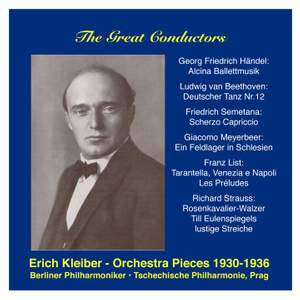
The Great Conductors: Erich Kleiber, Vol. 1

The Great Conductors: Erich Kleiber, Vol. 1


Beethoven:

Dance No. 8 from 12 Deutsche Tänze WoO8 (Coda)

recorded in Berlin, 1933

Berlin Philharmonic Orchestra

Bizet:

Carmen: Prelude to Act I

recorded in Prague, 1936

Czech Philharmonic Orchestra

Carmen: Entr'actes

recorded in Prague, 1936

Czech Philharmonic Orchestra

Dvorak:

Scherzo capriccioso, Op. 66

recorded in Berlin, 1931

Berlin Philharmonic Orchestra

Handel:

Alcina: ballet music

recorded in Berlin, 1933

Berlin Philharmonic Orchestra

Liszt:

Tarantella, S. 162 No. 3 (from Venezia e Napoli)

recorded in Berlin, 1933

Berlin Philharmonic Orchestra

Les Préludes, symphonic poem No. 3, S97

recorded in Prague, 1936

Czech Philharmonic Orchestra

Meyerbeer:

Ein Feldlager in Schlesien: Overture

recorded in Berlin, 1933

Berlin Philharmonic Orchestra

Strauss, R:

Der Rosenkavalier - Concert Waltz

recorded in Berlin, 1931

Berlin Philharmonic Orchestra

Till Eulenspiegels lustige Streiche, Op. 28

recorded in Berlin, 1930

Berlin Philharmonic Orchestra


Released or re-released in last 6 months

JUBE The Great Conductors - JUBE1207

Download only from $10.50

Available now to download.

Bizet: L'Arlesienne Suites 1 & 2, etc.

Bizet:

L'Arlesienne Suites 1 & 2

Carmen: Entr'actes


Building a Library

First Choice - July 2011

DG Grand Prix - 4776350

(CD)

$11.25

Usually despatched in 2 - 3 working days.

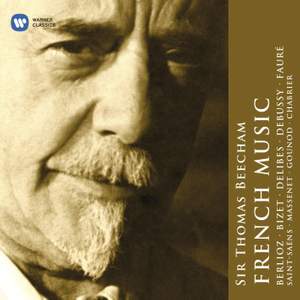
Sir Thomas Beecham conducts French Music

Sir Thomas Beecham conducts French Music


Berlioz:

Symphonie fantastique, Op. 14

Le Corsaire Overture, Op. 21

Marche troyenne (from Les Troyens)

Chasse royale et Orage (from Les Troyens)

Le carnaval romain Overture, Op. 9

King Lear Overture, Op. 4

La Damnation de Faust, Op. 24: Ballet des Sylphes

La Damnation de Faust, Op. 24: Menuet des Follets

Bizet:

Symphony in C

L'Arlesienne Suites 1 & 2

Carmen: Prelude to Act I

Carmen: Entr'actes

Patrie Overture, Op. 19

Roma: Carnaval

Chabrier:

Gwendoline Overture

Joyeuse Marche

España

Debussy:

Prélude à l'après-midi d'un faune

L'Enfant prodigue: Cortege et Air de danse

Delibes:

Le Roi s'amuse: Incidental Music

Fauré:

Dolly Suite, Op. 56

Pavane, Op. 50

Franck, C:

Symphony in D minor

Gounod:

Faust - Ballet Music

Roméo et Juliette: Le Sommeil de Juliette

Gretry:

Ballet Suite Zémire et Azor

Lalo:

Symphony in G minor

Massenet:

Cendrillon Valse

La Vierge: Le Dernier Sommeil de la vierge (Légende sacrée)

Saint-Saëns:

Danse des Prêtresses de Dagon (from Samson et Dalila)

Bacchanale from Samson et Dalila

Le Rouet d'Omphale, Op. 31

Vidal, P-A:

Zino-zina: gavotte


London Philharmonic Orchestra, Royal Philharmonic Orchestra, Orchestre National de la Radiodiffusion Francaise, Sir Thomas Beecham

There can be few, if any, musicians who have singlehandedly done so much in the establishment of resources for musical performance than Sir Thomas Beecham.

During WWI he conducted and supported financially both the Hallé and London Symphony Orchestras and the Royal Philharmonic Society. In 1915 he formed the Beecham Opera Company which trained many young British singers in this field. Eight years later this became the British National Opera Company and was absorbed into Covent Garden in 1932 when Beecham returned to be its Musical Director.

To quote David Cairns “We are nationally and individually a more musically aware people because of him and what he gave us”. A forceful statement, true, but whose life could ever challenge it?

Dissatisfied by conditions and practices, notably the supply of deputies for rehearsals, prevalent in British orchestras, he formed the London Philharmonic Orchestra that same year. Beecham was now able to be at the fulcrum of all developments in music in Britain. WWII put an end to this halcyon period. With Covent Garden shut he travelled, primarily in America, and did not return to Britain until 1944. The London Philharmonic had now become a self-governing body so Beecham, then aged 67, launched the Royal Philharmonic Orchestra. This was the orchestra with which he committed to disc so many classic recordings with which EMI Classics marks the 50th anniversary of his passing.

It is true that Beecham had particular favourites in composers – Haydn, Mozart, Schubert, Berlioz, Bizet and Puccini spring immediately to mind; also his love for Handel – even though his performances were always BIG-scale! He was an early champion of Richard Strauss and became a most effective exponent of Sibelius. His name will always be inextricably linked with that of Delius whose music Beecham seemed to know better even than the composer and it is appropriate that they are buried not far apart in the graveyard at St. Peter’s Parish Church, Limpsfield, Surrey.

He was knighted in 1916, the year he succeeded to his father’s baronetcy, and made a Companion of Honour in 1957.This affable, brilliant, usually charming, ever-communicative, quick-witted – even, at times, to the point of cruelty, dedicated conductor was also the most gifted executive musician England has ever produced.

He was fortunate that his grandfather, a chemist, had created the highly successful pharmaceutical manufacturing business which bore his name. His father, who had started in the company whilst still a teenager, was also fond of music so he was prepared to fund his son’s enthusiastic appetite to attend operas and concerts both here and abroad.

Born on 29th April 1879 in St. Helens, he attended public school at Rossall where his talent at the piano became a legend (the only boy ever to have been allowed a grand piano in his study!). From there he briefly attended Oxford (Wadham) but the composition classes, with Charles Wood in London and Moszkowski in Paris, were funded privately. As a conductor he was purely self-taught.

He formed an orchestra in his home town and deputised for Richter at a Hallé concert when his father was mayor. His career path was clear: he would use his financial resources to support the art which he enjoyed with the aim of bringing it to as many as possible.

At the age of 30 he launched the Beecham Symphony Orchestra, all young and carefully chosen. They would tour, play for opera and ballet and give concerts of adventurous music. London duly welcomed him for a season of intensive opera performances and over the next three years introduced many new ones to British audiences, including by Strauss, Delius and the Russians. He also brought Diaghilev’s Ballets Russes starring Nijinsky and Karsavina to the British stage.

“The French accent he found for the RPO in Bizet's L'Arlesienne Suites is still deliciously colourful 55 years on. This is the box to explore first if you're a fan of Beecham's lollipops...no wonder he was awarded the Légion d'honneur for services to French music.” Gramophone Magazine, July 2011 ****

“The finesse of the detail, the fierce attack, individual flair, corporate precision, blazing warmth: the sum total is playing of tangible personality and, often, ineffable beauty...Listen to...the strings’ silken tenderness in Grétry’s Zémire et Azor...Then there’s the fizz of Beecham’s Berlioz.” The Times, 18th February 2011 *****

EMI Sir Thomas Beecham Edition - 9099322

(CD - 6 discs)

$29.00

In stock - usually despatched within 1 working day.

Copyright © 2002-13 Presto Classical Limited, all rights reserved.