All recordingsPrices shown exclude VAT. (UK tax is not payable for deliveries to United States.) See Terms & Conditions for p&p rates. | |  | Klara Min Plays Chopin Mazurkas
Chopin: | Mazurka No. 17 in B flat minor, Op. 24 No. 4 Mazurka No. 20 in D flat major, Op. 30 No. 3 Mazurka No. 21 in C sharp minor, Op. 30 No. 4 Mazurka No. 40 in F minor, Op. 63 No. 2 Mazurka No. 41 in C sharp minor, Op. 63 No. 3 Mazurka No. 45 in A minor, Op. 67 No. 4 Mazurka No. 32 in C sharp minor, Op. 50 No. 3 Mazurka No. 14 in G minor, Op. 24 No. 1 Mazurka No. 15 in C major, Op. 24 No. 2 Mazurka No. 34 in C major, Op. 56 No. 2 Mazurkas Op. 59 Nos. 1-3 Mazurka No. 44 in C major, Op. 67 No. 3 Mazurka No. 43 in G minor, Op. 67 No. 2 Mazurka No. 47 in A minor, Op. 68 No. 2 Mazurka No. 49 in F minor, Op. 68 No. 4 |
“Min plays with the most ravishing piano tone I’ve heard in the last 50 discs I’ve listened to, at least! Her dynamic control is out of this world … anybody’s music would be served well by Min’s touch.” Thus raved American Record Guide’s Stephen Estep in his review of a previous recording by distinguished Korean pianist Klara Min. With this release, Min brings her special touch to a seventeen-piece survey of her favorite Mazurkas – a unique “composer genre” from Frédéric Chopin (1810-1849): widely regarded as the most intimate, heartfelt, emotionally varied, and deeply personal music that this beloved “Poet of the piano” ever wrote. Loosely based on the traditional Polish mazurek dance-form, Chopin applied subtle classical sophistication and advanced (for his day) harmonic schemes to this mostly simple folk-form, elevating it into high musical art that is far better-suited to the concert stage (or classical recordings) than to dancing! Klara Min – justly renowned for her championing of Korean composers as well as her overall versatility – applies her “ravishing piano tone” to these lovely and affecting works, as well as her rare interpretive acumen, technical wizardry, plus a deeply intuitive and soulful affinity for Chopin’s music. | 
| | | (also available to download from $10.50) | In stock - usually despatched within 1 working day. |
|
|
| |  | Chopin: Mazurkas
Chopin: | Mazurka No. 3 in E major, Op. 6 No. 3 Mazurka No. 5 in B flat major, Op. 7 No. 1 Mazurka No. 11 in E minor, Op. 17 No. 2 Mazurka No. 13 in A minor, Op. 17 No. 4 Mazurka No. 15 in C major, Op. 24 No. 2 Mazurka No. 17 in B flat minor, Op. 24 No. 4 Mazurka No. 33 in B major, Op. 56 No. 1 Mazurka No. 41 in C sharp minor, Op. 63 No. 3 Mazurka No. 47 in A minor, Op. 68 No. 2 Mazurka No. 49 in F minor, Op. 68 No. 4 Scherzo No. 1 in B minor, Op. 20 Nocturne No. 13 in C minor, Op. 48 No. 1 Polonaise No. 7 in A flat major, Op. 61 'Polonaise-fantaisie' |
Cédric Tiberghien offers us a panorama of Chopin’s output, with three of the composer’s key works framed by a selection of mazurkas. “I devised a recital programme for the 150th anniversary of Chopin’s death in 1999. The idea was to offer a panoramic survey of his output featuring several representative ‘large’ pieces, with the mazurkas providing a sort of chronological thread between them. So ten years later it was a natural process to narrow the focus down to three key pieces from different periods of Chopin’s life, surrounded by a generous selection of mazurkas… One of the very first Chopin pieces I discovered was on a record telling the story of the composer’s life: the Mazurka op.68 no.2, which illustrates the nostalgia for his homeland, the melancholy so often present in his music. I think the mazurkas show the most intimate side of Chopin’s personality, with their mixture of improvisation, evocation, and the ephemeral. These short pieces were a way for him to stay in touch with the roots of his country; he has nothing to prove, he submits to no rule except that of his inner music. I find it fascinating to see how varied Chopin’s inspiration is despite the common basis of all the mazurkas. As I explored the fifty-one pieces in the collection, I rediscovered masterpieces I thought I knew already, while others that were new to me have now become essential parts of my life. Chopin wrote mazurkas throughout his adult career, from 1830 to 1849. The first ones (opp.6 and 7) emphasise the popular element, while the later examples (op.59, op.68 no.4) show an unprecedented harmonic refinement that betrays his contact with French culture. The Scherzo has always struck me with its violence, which grips you right from the first chord and never lets up until the magnificent ‘Christmas carol’ which is transcendent in its simplicity. The Nocturne illustrates how important melody was for Chopin. He insisted that all his pupils should practise singing so that they would sense the phrasing, the direction of the lines, the moments of tension and relaxation. The Polonaise-Fantaisie is a very special work. It’s at the very opposite pole from the mazurkas, if only in its dimensions; and it achieves a mysterious balance between its improvisatory aspect and the strength of its architecture, between extreme complexity and a feeling of intimacy. The opening chords warn the listener: ‘Prepare for an extraordinary journey.’ If I were allowed to keep only one work by Chopin, it would be this Polonaise-Fantaisie in A flat – a key which was very dear to him, incidentally. For me it’s the perfect expression of his personality.” Cédric Tiberghien “When Tiberghien next plays in London, be there.” Geoff Brown, The Times Concert reviews: Chopin Mazurkas “The case for the innovatory nature of Chopin's mazurkas, penetrating the deepest of emotions often with the sparsest of musical gestures, was formidably made.” Tim Ashley, The Guardian, 26 January 2010 “This is very close to what we know about Chopin's own playing...How well Tiberghien caught the gentle, musing melancholy of the opening, and how the silence before the ensuing storm seemed to press on our eardrums!” The Daily Telegraph “Tiberghien seems to have the poise and poetry of Chopin in his blood. He makes the piano sing...This is an imaginative disc of shifting moods that are readily within Tiberghien’s expressive orbit and which he interprets with sublime inspiration.” The Telegraph, 8th October 2010 ***** “Tiberghien says that if he was allowed to keep only one Chopin work, it would be the Polonaise-Fantasie, and he plays this once-neglected piece as if he treasures it: there's a sense of mystery in the way the dances are hinted at impressionistically.” BBC Music Magazine, December 2010 **** “Perhaps the C minor Nocturne, Op. 48 No. 1, adds up to this recital's best-realised interpretation, with its measured and sustained opening section and assiduous build into a shattering climax. Harmonia Mundi provides Tiberghien with attractively robust engineering.” Gramophone Magazine, November 2010 | | | In stock - usually despatched within 1 working day. |
|
|
| |  | Chopin Recital
Jean-Marc Luisada (piano) | | | In stock - usually despatched within 1 working day. |
|
|
| |  | Feu Sacre
Jean-Marc Luisada (piano), Macha Meril (narrator) Disc One intersperses the works with readings from George Sand's writings by Macha Meril; Disc Two presents them as a straight recital. | | | In stock - usually despatched within 1 working day. |
|
|
| |  | Chopin: Piano Works Vol. 3
Chopin: | Mazurka No. 11 in E minor, Op. 17 No. 2 Mazurka No. 12 in A flat major, Op.17 No.3 Mazurka No. 13 in A minor, Op. 17 No. 4 Mazurka No. 15 in C major, Op. 24 No. 2 Mazurka No. 17 in B flat minor, Op. 24 No. 4 Mazurka No. 20 in D flat major, Op. 30 No. 3 Polonaise No. 3 in A major, Op. 40 No. 1 'Military' Nocturne No. 14 in F sharp minor, Op. 48 No. 2 Scherzo No. 1 in B minor, Op. 20 Impromptu No. 2 in F sharp major, Op. 36 Étude Op. 10 No. 5 in G flat major 'Black Key' Waltz No. 5 in A flat major, Op. 42 Waltz No. 6 in D flat major, Op. 64 No. 1 'Minute Waltz' Andante spianato & Grande Polonaise, Op. 22 |
Chopin‘s oeuvre is extraordinarily manifold. It contains the whole spectrum of feelings that can stir the human soul: from the most subtle and profoundly personal emotions in the nocturnes and mazurkas to those grandiose feelings reflecting the epic of a whole nation in the polonaises and sonatas. Listening to his music is for us like experiencing a miracle. For a born Chopin interpreter is not someone who plays a lot of Chopin, but someone who finds that special “Chopin quality” in his own soul which enables him to discover in his interpretation of Chopin what no-one has discovered before him, but what is in harmony with Chopin’s world, Chopin’s poetry. Pianist Boris Bloch has a very familiar relationship to Chopin: “Today Chopin represents for me that ivory tower where I seek refuge in these troubled times in which we live.” | | | (also available to download from $10.50) | Usually despatched in 4 - 5 working days. (Available now to download.) |
|
|
| |  | A Chopin RecitalThe Fairfields Halls, Croydon-c.1965
Chopin: | Piano Sonata No. 2 in B flat minor, Op. 35 'Marche funèbre' Scherzo No. 4 in E major, Op. 54 Mazurka No. 14 in G minor, Op. 24 No. 1 Andante spianato & Grande Polonaise, Op. 22 Nocturne No. 5 in F sharp major, Op. 15 No. 2 Waltz No. 7 in C sharp minor, Op. 64 No. 2 Mazurka No. 15 in C major, Op. 24 No. 2 Mazurka No. 5 in B flat major, Op. 7 No. 1 | Liszt: | Polish Songs S480 No. 1 "Maiden's Wish" (after Chopin) Polish Songs S480 No. 5 'Mein Freuden' (Moja pieszczotka, My Joys)' (after Chopin) Hulanka (Drinking Song, after Chopin) Polish Songs S480 No. 3 'Pierscien' (The Ring) (after Chopin) |
“Despite slightly dated sound and occasional live-performance scrambles, Katin offers outstanding delicacy, flair and poetry - plus two mazurkas (Opp. 24 No. 2 and 7 No. 1) not on the track listing.” BBC Music Magazine, August 2012 ***** “Katin’s playing is heard on the wing with great immediacy.” MusicWeb International, May 2012 “These are deeply impressive performances, notable for the combination of architectural control and expressive poetry that Katin brings to his Chopin, which is most impressive in the B minor Sonata and the sometimes elusive Fourth Scherzo, played here with irresistible relish.” International Record Review, June 2012 | | | Usually despatched in 4 - 5 working days. |
|
|
| |  | Chopin: Nocturnes, Mazurkas, Waltz, Ballade & Polonaises
Chopin: | Nocturne No. 20 in C sharp minor, Op. post. Mazurka No. 13 in A minor, Op. 17 No. 4 Mazurka No. 14 in G minor, Op. 24 No. 1 Polonaise No. 3 in A major, Op. 40 No. 1 'Military' Mazurka No. 27 in E minor, Op. 41 No. 2 Mazurka No. 15 in C major, Op. 24 No. 2 Mazurka No. 47 in A minor, Op. 68 No. 2 Waltz No. 9 in A flat major, Op. 69 No. 1 'Farewell Waltz' Waltz No. 15 in E major, Op. post., KKIVa:12, B 44 Ballade No. 1 in G minor, Op. 23 Nocturne No. 13 in C minor, Op. 48 No. 1 Waltz No. 7 in C sharp minor, Op. 64 No. 2 Polonaise No. 6 in A flat major, Op. 53 'Héroïque' Nocturne No. 19 in E minor, Op. 72 No. 1 Mazurka No. 21 in C sharp minor, Op. 30 No. 4 Waltz No. 6 in D flat major, Op. 64 No. 1 'Minute Waltz' |
Janusz Olejniczak is one of the leading Polish pianists and began learning the piano at the age of only six. He has performed in almost every country in Europe as well as Japan, America, Australia and Cuba and has made many recordings. Here he performs on an 1838 Erard fortepiano. | | | Usually despatched in 2 - 3 working days. |
|
|
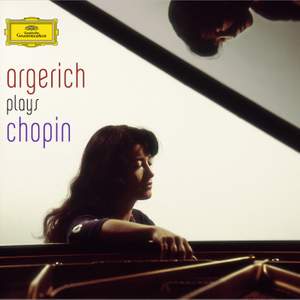
| |  | Argerich plays Chopin
Chopin: | Ballade No. 1 in G minor, Op. 23 Recorded: 26 January 1959, RIAS Studio 7 Étude Op. 10 No. 4 in C sharp minor Recorded: 3 December 1967, RIAS, Studio Lankwitz Mazurka No. 26 in C sharp minor, Op. 41 No. 1 Recorded: 3 December 1967, RIAS, Studio Lankwitz Mazurka No. 27 in E minor, Op. 41 No. 2 Recorded: 3 December 1967, RIAS, Studio Lankwitz Mazurka No. 15 in C major, Op. 24 No. 2 Recorded: 3 December 1967, RIAS, Studio Lankwitz Mazurka No. 40 in F minor, Op. 63 No. 2 Recorded: 3 December 1967, RIAS, Studio Lankwitz Mazurka No. 23 in D major, Op. 33 No. 2 Recorded: 3 December 1967, RIAS, Studio Lankwitz Nocturne No. 4 in F major, Op. 15 No. 1 Recorded: 3 December 1967, RIAS, Studio Lankwitz Nocturne No. 16 in E flat major, Op. 55 No. 2 Recorded: 3 December 1967, RIAS, Studio Lankwitz Piano Sonata No. 3 in B minor, Op. 58 Recorded live on 15 March 1967, Hochschule für Musik, Berlin Mazurkas Op. 59 Nos. 1-3 Recorded: 31 October 1967, Saal 2, WDR Köln |
“Not only one of the most talented virtuosi of her generation, she can do what at most only a dozen pianists in the world are capable of.” Joachim Kaiser (Süddeutsche Zeitung, 1967) A sensational solo Chopin recital for Chopin Year 2010 – previously unreleased radio recordings from 1959 / 1967 Includes works new to the Argerich discography (Ballade no.1, 4 Mazurkas, C# minor Etude) Taken from radio recordings made in Berlin and Cologne in 1959 and (mainly) 1967, here is over an hour of newly-discovered Martha Argerich solo recordings of Chopin, all released for the first time and including works otherwise not recorded by her (Ballade no. 1, Mazurkas opp. 24/2, 33 /2,41/1&2, C# minor Etude). From her epic First Ballade to the overpowering live Third Sonata — with exquisite performances of Mazurkas and Nocturnes in between — the recital demonstrates what a force of nature she already was in her first decade on the international music scene — “a veritable powerhouse of the emotions”, as Jürgen Otten writes in his liner notes. “Most notable of them all is a performance of the First Ballade, from 1959, when Argerich was 18, full of youthful fire and astonishing technical brilliance, while an account of the C sharp minor Etude, Op 10 No 4 from 1967 is equally dazzling.” The Guardian, 18th March 2010 ***** “...imbued with a youthful energy, particularly the dazzling, industrious Etude in C sharp minor which seems to encompass entire worlds within two minutes...a bravura display of technique in the service of emotion.” The Independent, 9th April 2010 **** “Of the playing here, I shall just say it's no wonder she won the Chopin Competition. Likewise in the three Mazurkas Op. 59...she captures their intimacy and lightning changes of mood to perfection....In the [concerto's] finale (for once truly agitato) she sweeps all before her with breathless exhilaration.” Gramophone Magazine, July 2010 “She was only 18 at the time, yet this belongs with other great interpretations for its mixture of poetry and virtuosity. At once shy and passionate, the performance is atmospheric in clean mono sound...Essential listening for anyone interested in Argerich, Chopin, or indeed the art of the piano.” BBC Music Magazine, July 2010 ***** “it captures the Argentine workhorse at her most powerful and alluring...Argerich, clearly focused, coaxes incredible narrative-led performances from these works...Exhausting, truthful and invigorating.” Daniel Ross, bbc.co.uk, 29th March 2010 CD Review
Critics' Disc of the Year - December 2010 |
| | | Usually despatched in 2 - 3 working days. |
|
|
| |  | Impressions on Chopin
To celebrate the bicentennial of Fryderyk Chopin's birth, Naïve are proud to re-issue, ‘Impressions on Chopin’ - a fascinating, charming and refreshing album that sees the internationally acclaimed jazz pianist Leszek Mozdzer perform his own arrangements of well known works by Chopin. An outstanding pianist, composer and producer, multi-award winning Leszek Mozdzer is one of Poland’s best-loved and most successful jazz pianists. In Mozdzer’s world of music without nationality, the Polish mazurka works alongside ragtime, flamenco and Cuban calypso and the typically Chopin rubato is occasionally replaced by a swing pulse. The original harmony too becomes a field for experimentation, and with the piano significantly ’prepared’ the sound of the music is entirely different, indeed at times, light years from the Chopin of tradition. All arrangements are by Leszek Mozdzer, except tracks 4 and 15 which were arranged by Leszek Mozdzer and Madjid Khaladj. Following its initial release, ‘Impressions on Chopin’ garnered Mozdzer international acclaim and resulted in him being ranked as among the most outstanding pianists and virtuosos of his generation. “Though unabashedly provocative, this highly inventive recital should win more friends than enemies.” BBC Music Magazine, Christmas 2010 *** | | | (also available to download from $10.50) | Usually despatched in 3 - 4 working days. (Available now to download.) |
|
|
| |  | Chopin: The Mazurka Diary
Chopin: | Mazurka No. 1 in F sharp minor, Op. 6 No. 1 Mazurka No. 2 in C sharp minor, Op. 6 No. 2 Mazurka No. 4 in E flat minor, Op. 6 No. 4 Mazurka No. 5 in B flat major, Op. 7 No. 1 Mazurka No. 6 in A minor, Op. 7 No. 2 Mazurka No. 9 in C major, Op. 7 No. 5 Mazurka No. 11 in E minor, Op. 17 No. 2 Mazurka No. 13 in A minor, Op. 17 No. 4 Mazurka No. 14 in G minor, Op. 24 No. 1 Mazurka No. 15 in C major, Op. 24 No. 2 Mazurka No. 18 in C minor, Op. 30 No. 1 Mazurka No. 19 in B minor, Op. 30 No. 2 Mazurka No. 20 in D flat major, Op. 30 No. 3 Mazurka No. 21 in C sharp minor, Op. 30 No. 4 Mazurka No. 25 in B minor, Op. 33 No. 4 Mazurka No. 27 in E minor, Op. 41 No. 2 Mazurka No. 32 in C sharp minor, Op. 50 No. 3 Mazurka No. 34 in C major, Op. 56 No. 2 Mazurka No. 36 in A minor, Op. 59 No. 1 Mazurka No. 37 in A flat major, Op. 59 No. 2 Mazurka No. 38 in F sharp minor, Op. 59 No. 3 Mazurka No. 40 in F minor, Op. 63 No. 2 Mazurka No. 43 in G minor, Op. 67 No. 2 Mazurka No. 44 in C major, Op. 67 No. 3 Mazurka No. 45 in A minor, Op. 67 No. 4 Mazurka No. 46 in C major, Op. 68 No. 1 Mazurka No. 47 in A minor, Op. 68 No. 2 Mazurka No. 48 in F major, Op. 68 No. 3 Mazurka No. 49 in F minor, Op. 68 No. 4 |
Frédéric Chopin was a devoted champion of the Mazurka. Anna Gourari has selected a programme of works illustrating his life, as if in a musical diary. She lends these triple-time pieces an irresistibly attractive pulse, painting an exquisitely defined and colourful image. In short, Anna Gouari’s performance is stunning. | | | Usually despatched in 4 - 5 working days. |
|
|
| |
|