All recordingsPrices shown exclude VAT. (UK tax is not payable for deliveries to United States.) See Terms & Conditions for p&p rates. | |  | The Very Best of Janet Baker
Bach, J S: | Christmas Oratorio, BWV248: Bereite dich, Zion Academy of St Martin-In-The-Fields, Sir Neville Marriner | Brahms: | Alto Rhapsody, Op. 53 Sir Adrian Boult, London Philharmonic Orchestra Geistliches Wiegenlied, Op. 91 No. 2 Cecil Aronowitz (viola), André Previn | Britten: | Corpus Christi Carol Gerald Moore (piano) | Duparc: | L'Invitation au voyage London Symphony Orchestra, André Previn | Duruflé: | Requiem, Op. 9: Pie Jesu Choir of King's College Cambridge, Sir Philip Ledger | Elgar: | Sea Pictures, Op. 37 London Symphony Orchestra, Sir John Barbirolli Softly and gently, dearly-ransomed soul 'Angel's Farewell' (from The Dream of Gerontius) Sir John Barbirolli | Fauré: | Two Songs, Op. 83 Gerald Moore (piano) Clair de Lune, Op. 46 No. 2 Gerald Moore (piano) | Handel: | Messiah: He was despised English Chamber Orchestra, Sir Charles Mackerras | Mahler: | Ich bin der Welt abhanden gekommen (Rückert-Lieder) Hallé Orchestra, Sir John Barbirolli | Mendelssohn: | Elijah: O rest in the Lord New Philharmonia, Rafael Frühbeck De Burgos Auf Flügeln des Gesanges, Op. 34 No. 2 Geoffrey Parsons (piano) | Schubert: | Ave Maria, D839 Gerald Moore (piano) Gretchen am Spinnrade, D118 Gerald Moore (piano) Wiegenlied, D498 Gerald Moore (piano) Die Forelle, D550 Geoffrey Parsons (piano) Auf dem Wasser zu singen, D774 Geoffrey Parsons (piano) An die Musik D547 Geoffrey Parsons (piano) An Sylvia, D891 Geoffrey Parsons (piano) Nacht und Träume, D827 Geoffrey Parsons (piano) Heidenröslein, D257 Geoffrey Parsons (piano) Du bist die Ruh D776 (Rückert) Geoffrey Parsons (piano) | Schumann: | Mondnacht (No. 5 from Liederkreis, Op. 39) Daniel Barenboim (piano) Du Ring an meinem Finger (No. 4 from Frauenliebe und Leben, Op. 42) Daniel Barenboim (piano) | Strauss, R: | Befreit, Op. 39 No. 4 Gerald Moore (piano) Morgen, Op. 27 No. 4 Gerald Moore (piano) | Vaughan Williams: | Linden Lea Gerald Moore (piano) | Warlock: | Pretty Ring Time Gerald Moore (piano) |
Compelling for her intensity and integrity as much as for her unmistakeable voice, Dame Janet Baker struck a distinctive path as a performer, primarily on the concert and recital stage. Among her most celebrated recordings are her interpretations of Elgar with Sir John Barbirolli, here complemented by songs and oratorio arias by composers such as Bach, Handel, Schubert, Schumann, Brahms, Mahler, Strauss, Fauré, Vaughan Williams and Britten. | | | In stock - usually despatched within 1 working day. |
|
|
| |  | Elgar: Violin Concerto
Following success in the 2009 Classic FM Gramophone Awards the Hallé and Sir Mark Elder return to the music of Elgar, coupling the much loved Violin Concerto with the Prelude to the lesser known oratorio The Kingdom and Elgar’s own arrangement of highlights from The Dream of Gerontius. A stunning new interpretation of Elgar’s masterpiece from one of the world’s most dynamic violinists. The performance is alive with passion and dynamism, yet imbued with the beautiful poetry for which Elder’s interpretations of Elgar have been acclaimed. Part of a planned trilogy of oratorios about the Apostles (which he never completed) was written in 1905 when Elgar underwent some spiritual crisis which shook his religious faith and he was also physically unwell. The music leaves an impression of lyrical tenderness and deep sadness. Elgar responded to demands, particularly from the conductor Henry Wood, for extracts from Gerontius which could be performed as concert pieces, in the manner of Wagner’s Prelude and Liebestod from Elgar’s solemn and elevating Prelude was an obvious choice for this treatment and, like Wagner, he then went to the end of the work and the point at which Gerontius’s guardian angel (mezzo-soprano) sings seraphically of how she will accompany him "o'er the penal waters" of Purgatory, bearing him “softly and gently” in her arms. When he worked on this arrangement at the end of 1900, Elgar removed the chorus lines and made the vocal part optional and he conducted it for orchestra only at Bradford on 16 February 1901. Four days later Wood conducted the first London performance (the first music by Elgar that he conducted) but included the vocal part, as on this recording. Thomas Zehetmair is one of the most significant violinists of his generation. He enjoys a successful international career thrilling audiences and critics with his abilities as a soloist, chamber musician and conductor and has been the recipient of many international recording awards. “…[the Hallé’s] form under Mark Elder is rock solid, splendiferous in ensemble and tone; I’d rather listen to them play English music than any other orchestra in the world.” The Times “a towering performance of Elgar’s Violin Concerto with Thomas Zehetmair, a soloist of fierce intelligence. Unlocking the work’s volcanic emotions …he certainly found the reflective tenderness. He and Elder’s taut yet flexible orchestra were at one in the visionary poetry of the finale, making this a performance of exceptional detail – happily one that will appear on the orchestra’s own CD label.” The Sunday Telegraph “Coote’s performance is a marvel … and perfectly nuanced throughout” The Guardian “...[an] exceptional recording of the work, Zehetmair's playing is...passionate and openly expressive.” The Guardian, 25th February 2010 ***** “risk-taking and passionately intense” The Telegraph, 26th March 2010 **** “Zehetmair...is able to marry impassioned purpose with appreciation of Elgar's complexity...Mark Elder's direction is stunning...there's a warm glow about the Hallé sound that adds an extra strand of specialness.” BBC Music Magazine, May 2010 ***** “Zehetmair and Elder scrupulously observe Elgar’s copious expression marks, the soloist’s expansive phrasing enhanced by judicious portamento and exquisite filigree decoration. Elder’s understanding of tempo variegation in this music is now second nature to him...he shows again that he and the Hallé have few rivals in this music.” Sunday Times, 18th April 2010 **** “...this latest version blows the others...out of the water..Zehetmair's reading is one of greater intimacy, whilst its intensity holds you in an iron grip from first note to last...In the slow movement Zehetmair and Elder are quietly moving, with the kind of unhistrionic approach that allows the music's latent beauty to flower” Gramophone Magazine, August 2010 “This is a fascinating document for Elgar-lovers, but Little's performance, wistful, poetic and powerful, with sympathetic accompaniment from Davis and the RSNO, demands attention in its own right.” The Observer, 7th November 2010 | | | In stock - usually despatched within 1 working day. |
|
|
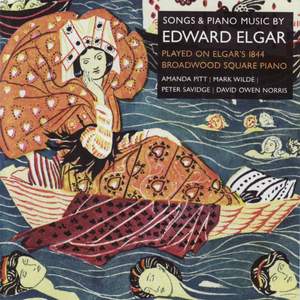
| |  | Elgar - Songs and Piano Music
Elgar: | Seven Lieder A War Song (Hayward), Op. 5 Is she not passing fair As I laye a-thynkynge (Ingoldsby) premiere recording Salut d'amour, Op. 12 The wind at dawn After (P.B.Marston) Op. 31, No. 1 Woodland Interlude from Caractacus Dry those fair, those crystal eyes (H.King) The Pipes of Pan Sea Pictures, Op. 37 (Elgar’s own piano version) Softly and gently, dearly-ransomed soul 'Angel's Farewell' (from The Dream of Gerontius) (Elgar’s own piano version) The Dream of Gerontius, Op. 38 - Prelude (Elgar’s own piano version) Come, Gentle Night (C.Bingham) In the Dawn, Op. 41, No. 1 Speak, Music, Op. 41, No. 2 Dream Children, Op. 43 Arabian serenade Canto Popolare (In Moonlight) Pleading, Op. 48 No. 1 Twilight, Op. 59 No. 1 Fringes of the Fleet "?" (March 1918) It isnae me (S.Holmes) XTC (unpublished, to Elgar’s own words) |
David Owen Norris (piano), The Works: Amanda Pitt (soprano), Mark Wilde (tenor) & Peter Savidge (baritone) A tribute to Elgar's 150th birthday (2007), David Owen Norris and The Works perform Elgar's songs and piano solos on Elgar's own 1844 Broadwood piano, including the world-premiere of his unpublished final song XTC, set to his own words. In all, this 2-CD set presents 32 of Elgar's finest songs for voice and piano, including a number never recorded before, and premiere recordings of Elgar's piano arrangements of the theme of the Cello Concerto, and the Prelude and Angel’s Farewell from Gerontius which, like Sea Pictures (sung here in its original soprano key) and the Woodland Interlude from Caractacus, were all composed at this piano. He even wrote these titles on its soundboard, along with his signature. These piano versions clearly remained in the forefront of Elgar’s mind and reveal his bold first thoughts before they may have been revised at the suggestion of others. The piano’s construction – keys slightly narrower than on a modern piano, the black keys set lower – illuminates Elgar’s intentions. The writing suddenly makes perfect sense, which it doesn’t always on a modern Steinway. The cover art is H.A. Payne’s The Enchanted Sea, which was part of the inspiration for Sea Pictures. “A veritable treasure-trove.” BBC Radio 3 | | | In stock - usually despatched within 1 working day. |
|
|
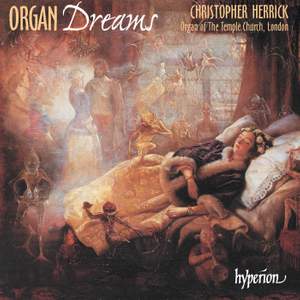
| |  | Organ Dreams 1
| | | In stock - usually despatched within 1 working day. |
|
|
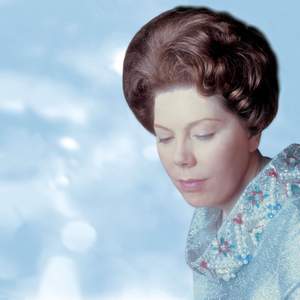
| |  | The Very Best of Janet Baker
Bach, J S: | Christmas Oratorio, BWV248: Bereite dich, Zion | Brahms: | Alto Rhapsody, Op. 53 Geistliches Wiegenlied, Op. 91 No. 2 | Britten: | Corpus Christi Carol | Duparc: | L'Invitation au voyage | Duruflé: | Requiem, Op. 9: Pie Jesu | Elgar: | Sea Pictures, Op. 37 Softly and gently, dearly-ransomed soul 'Angel's Farewell' (from The Dream of Gerontius) | Fauré: | Two Songs, Op. 83 Clair de Lune, Op. 46 No. 2 | Handel: | Messiah: He was despised | Mahler: | Ich bin der Welt abhanden gekommen (Rückert-Lieder) | Mendelssohn: | Elijah: O rest in the Lord Auf Flügeln des Gesanges, Op. 34 No. 2 | Schubert: | Ave Maria, D839 Gretchen am Spinnrade, D118 Wiegenlied, D498 Die Forelle, D550 Auf dem Wasser zu singen, D774 An die Musik D547 An Sylvia, D891 Nacht und Träume, D827 Heidenröslein, D257 Du bist die Ruh D776 (Rückert) | Schumann: | Mondnacht (No. 5 from Liederkreis, Op. 39) Du Ring an meinem Finger (No. 4 from Frauenliebe und Leben, Op. 42) | Strauss, R: | Befreit, Op. 39 No. 4 Morgen, Op. 27 No. 4 | Vaughan Williams: | Linden Lea | Warlock: | Pretty Ring Time |
One of this country’s finest and most popular singers, Dame Janet Baker has a special place in the hearts of music-lovers throughout the land. Since making her Covent Garden and New York debuts in 1966 she has become synonymous with a wide range of much-loved baroque and romantic repertoire. Janet Baker was made a Dame 25 years ago. Here, for the first time, EMI have gathered together some of her most memorable performances on one double CD. | | | In stock - usually despatched within 1 working day. |
|
|
| |  | Essential Choral Classics
Allegri: | Miserere mei, Deus | Bach, J S: | Mass in B minor, BWV232: Sanctus Mass in B minor, BWV232: Osanna St Matthew Passion, BWV244: Wir setzen uns mit tranen nieder Cantata BWV147 'Herz und Mund und Tat und Leben': Jesu, bleibet meine Freude | Beethoven: | Symphony No. 9 in D minor, Op. 125 'Choral' - Ode to joy (excerpt) | Brahms: | Wie lieblich sind deine Wohnungen (from Ein Deutsches Requiem, Op. 45) | Elgar: | Softly and gently, dearly-ransomed soul 'Angel's Farewell' (from The Dream of Gerontius) | Fauré: | Requiem: Sanctus Requiem: In Paradisum | Franck, C: | Panis Angelicus | Handel: | Coronation Anthem No. 1, HWV258 'Zadok the Priest' Messiah: For unto us a child is born Messiah: Hallelujah Chorus | Haydn: | Die Schöpfung: Die Himmel erzählen Kyrie (Nelson Mass) | Mahler: | Symphony No. 8 in E flat major 'Symphony of the Thousand' - Finale (excerpt) | Mendelssohn: | Hear My Prayer Thanks Be To God (Elijah) | Mozart: | Vesperae Solennes de Confessore, K339: Laudate Dominum Requiem in D minor, K626 - Lacrimosa Ave verum corpus, K618 | Orff: | Carmina Burana: O Fortuna | Rossini: | Petite Messe solennelle: Kyrie | Tallis: | Spem in alium for eight five-part choirs '40-part Motet' | Tavener: | Song for Athene | trad.: | Simple Gifts Deep River | Verdi: | Tuba mirum (from Requiem) | Vivaldi: | Gloria in excelsis Deo (Gloria in D) Gloria in D: Et in terra pax |
| | | Usually despatched in 2 - 3 working days. |
|
|
| |  | Yvonne Minton - The Essential Recordings
Bach, J S: | Mass in B minor, BWV232: Laudamus Te | Berlioz: | La Damnation de Faust: D'amour l'ardente flamme | Elgar: | Softly and gently, dearly-ransomed soul 'Angel's Farewell' (from The Dream of Gerontius) | Mahler: | Lieder eines fahrenden Gesellen (4 songs, complete) Das Lied von der Erde Das irdische Leben (Des Knaben Wunderhorn) Verlorne Müh' (Des Knaben Wunderhorn) Wo die schönen Trompeten blasen (Des Knaben Wunderhorn) Rheinlegendchen (Des Knaben Wunderhorn) | Mozart: | Parto, parto, ma tu ben mio (from La Clemenza di Tito) Non so più cosa son, cosa faccio (from Le nozze di Figaro) Voi che sapete (from Le nozze di Figaro) | Rossini: | Fac, ut portem Christi mortem from Stabat Mater | Strauss, R: | Da … Herr Kavalier! (from Der Rosenkavalier) Ist ein Traum, kann nicht wirklich sein (from Der Rosenkavalier) |
| | | Usually despatched in 2 - 3 working days. |
|
|
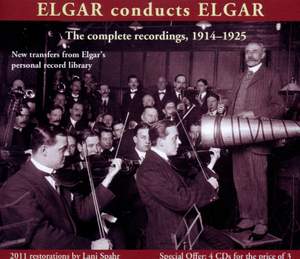
| |  | Elgar conducts ElgarThe complete recordings 1914 -1925 in new digital transfers from Elgar’s own record library
Elgar: | Carissima Recorded on 21st January 1914 The Sanguine Fan, Op. 81 Recorded on 24th February 1920 Fringes of the Fleet Recorded in July 1917 Charles Mott (baritone) Carillon, Op. 75 Recorded on 29th January 1915 Henry Ainley (speaker) Polonia Recorded on 22nd May 1919 Starlight Express Suite, Op. 78 Recorded on 18th February 1916 Agnes Nicholls (soprano), Charles Mott (baritone) Cockaigne Overture, Op. 40 'In London Town' Recorded on 28th February 1917 In the South (Alassio), Op. 50 Recorded on 26th October 1923 & 30th December Violin Concerto in B minor, Op. 61 Recorded 16th December 1916 Marie Hall (violin) Cello Concerto in E minor, Op. 85 Recorded on 16th November 1920 Beatrice Harrison (cello) Salut d'amour, Op. 12 Recorded on 26th June 1914 Chanson de Nuit, Op. 15 No. 1 Recorded on 22nd May 1919 Scenes from the Saga of King Olaf: A little bird in the air Recorded on 7th December 1921 The Dream of Gerontius, Op. 38 - Prelude Softly and gently, dearly-ransomed soul 'Angel's Farewell' (from The Dream of Gerontius) Recorded on 28th February 1917 The Light of Life, Op. 29 'Lux Christi' - Meditation Recorded April 1925 Sea Pictures, Op. 37 Recorded on 10th November 1922 & 8th January 1923 Leila Megane (contralto) Enigma Variations, Op. 36 Recorded 1920-21 Pomp and Circumstance March No. 1 in D major, Op. 39 No. 1 Pomp and Circumstance March No. 4 in G major, Op. 39 No. 4 Recorded 26th June 1914 Bavarian Dances (3) Recorded 26th June 1914 and 28th February 1917 Fantasia & Fugue in C minor, Op. 86 (after Bach, BWV 537) Recorded 7th December 1921 & 26th October 1923 Overture in D minor (after Handel, HWV247) Recorded 26th October 1923 The Wand of Youth Suite No. 1, Op. 1a Recorded 22nd May 1919 The Wand of Youth Suite No. 2, Op. 1b Recorded 28th February 1917 The Wand of Youth Suite No. 1, Op. 1a Recorded 22nd May 1919 (unpublished takes) The Wand of Youth Suite No. 2, Op. 1b: excerpts Recorded 22nd May 1919 (unpublished takes) Symphony No. 2 in E flat major, Op. 63 Recorded 5th & 20th March 1924 & 16th April 1925 |
The Symphony Orchestra & Royal Albert Hall Orchestra Andrew Neill writes: “Edward Elgar became an early star of the gramophone and the recordings he made (and supervised) between 1914 and 1934 remain among the great contributions to the recorded repertoire… Elgar was absolutely sure of himself as a conductor of his own works… He never tried to disguise the fact that his own music thrilled and delighted him.” This collection includes such gems as Beatrice Harrison playing the Cello Concerto and Fringes of the Flleet and will be of great interest to collectors. “Superb repackaging of Elgar's earliest recordings, before he re-made many works electrically. Sound is limited, but the music-making wonderfully evokes a vanished era.” BBC Music Magazine, June 2012 ***** “it’s legitimate to wonder whether a set of Elgar’s acoustic recordings made between 1914 and 1925 merits serious attention. The answer is an emphatic yes.” International Record Review, February 2012 “Lani Spahr has done a splendid job with these transfers, breathing new life into recordings, the oldest of which is now 99 years old. One takes it as read that the sound is limited but the spirit and character of the music comes across loud and clear. Impressively documented and presented this set is a major document, invaluable as part of our appreciation of one of England’s greatest composers.” MusicWeb International, 19th April 2013 “Elgar’s acoustic recordings have been issued before, but these transfers from the composer’s own gramophone library sound a lot clearer — some of them, paradoxically the earlier ones, remarkably so...this set is a precious historical document, not least for 1917’s charming Fringes of the Fleet.” Sunday Times | | | Usually despatched in 2 - 3 working days. |
|
|
| |  | Janet Baker: The Beloved Mezzo
Arne: | Where the Bee Sucks Martin Isepp (harpsichord), Ambrose Gauntlett (viola da gamba), Douglas Whittaker (flute) | Bach, J S: | Schlummer ein, ihr matten Augen from Cantata No. 82 Bath Festival Orchestra, Yehudi Menuhin Christmas Oratorio, BWV248: Bereite dich, Zion St John Passion, BWV245: Es ist vollbracht Bist du bei mir, BWV508 Academy of St Martin in the Fields, Sir Neville Marriner | Berlioz: | Les Nuits d'été, Op. 7 New Philharmonia Orchestra, Sir John Barbirolli | Boyce: | Tell, me lovely shepherd Martin Isepp (harpsichord), Ambrose Gauntlett (viola da gamba) | Brahms: | Alto Rhapsody, Op. 53 London Philharmonic Orchestra, John Alldis Choir (men's voices), Sir Adrian Boult | Campion: | Never love unless you can Oft have I sigh’d for him that hears me not If thou longst so much to learn Faine would I wed Robert Spencer (lute) | Chausson: | Poème de l'amour et de la mer, Op. 19 London Symphony Orchestra, Andre Previn | Dowland: | Come again, sweet love doth now invite Robert Spencer (lute) | Elgar: | Sea Pictures, Op. 37 London Symphony Orchestra, Sir John Barbirolli Softly and gently, dearly-ransomed soul 'Angel's Farewell' (from The Dream of Gerontius) Halle Orchestra, Sir John Barbirolli | Handel: | Messiah: He was despised English Chamber Orchestra, Sir Charles Mackerras Ah! Crudel, nel pianto mio, HWV 78: aria 'Per trofei di mia constenna' English Chamber Orchestra, Raymond Leppard Armida abbandonata, HWV 105: aria 'Ah! crudel, e pur ten vei' English Chamber Orchestra, Raymond Leppard | Liszt: | Die Lorelei Über allen Gipfeln ist Ruh (Wandrers Nachtlied II), S.306 Geoffrey Parsons (piano) | Mahler: | Kindertotenlieder Halle Orchestra, Sir John Barbirolli Rückert-Lieder (5 songs, complete) New Philharmonia Orchestra, Sir John Barbirolli Lieder eines fahrenden Gesellen (4 songs, complete) Halle Orchestra, Sir John Barbirolli Urlicht (from Symphony No. 2) City of Birmingham Symphony Orchestra, Sir Simon Rattle | Mendelssohn: | Neue Liebe, Op. 19a No. 4 Auf Flügeln des Gesanges, Op. 34 No. 2 Nachtlied, Op. 71 No. 6 Geoffrey Parsons (piano) | Munro, G: | My lovely Celia Martin Isepp (harpsichord), Ambrose Gauntlett (viola da gamba) | Purcell: | Sleep, Adam, and take thy rest, Z195 Lord, what is man?, Z192 Martin Isepp (harpsichord), Ambrose Gauntlett (viola da gamba) | Ravel: | Shéhérazade New Philharmonia Orchestra, Sir John Barbirolli | Schubert: | Gretchen am Spinnrade, D118 Ave Maria, D839 Gerald Moore (piano) Heidenröslein, D257 An die Musik D547 Die Forelle, D550 Auf dem Wasser zu singen, D774 Du bist die Ruh D776 (Rückert) Nacht und Träume, D827 An Sylvia, D891 Geoffrey Parsons (piano) | Schumann: | Frauenliebe und -leben, Op. 42 Daniel Barenboim (piano) | Strauss, R: | Liebeshymnus, Op. 32 No. 3 Das Rosenband, Op. 36 No. 1 Ruhe, meine Seele!, Op. 27 No. 1 London Philharmonic Orchestra, Sir Adrian Boult | Wagner: | Wesendonck-Lieder (5) London Philharmonic Orchestra, Sir Adrian Boult |
“this is a treasurable set” Penguin Guide, 2011 edition | | | In stock - usually despatched within 1 working day. |
|
|
| |
|